













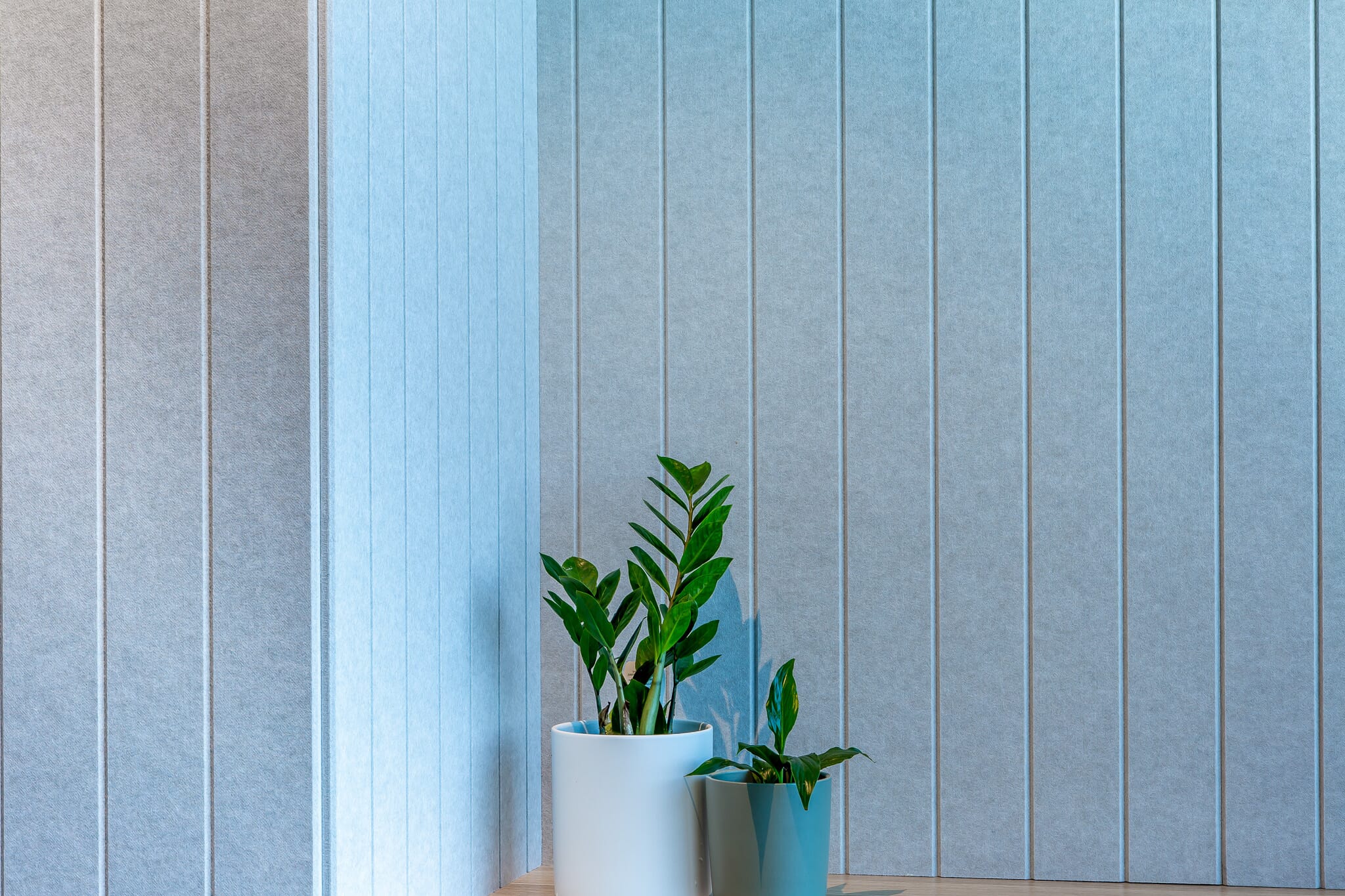
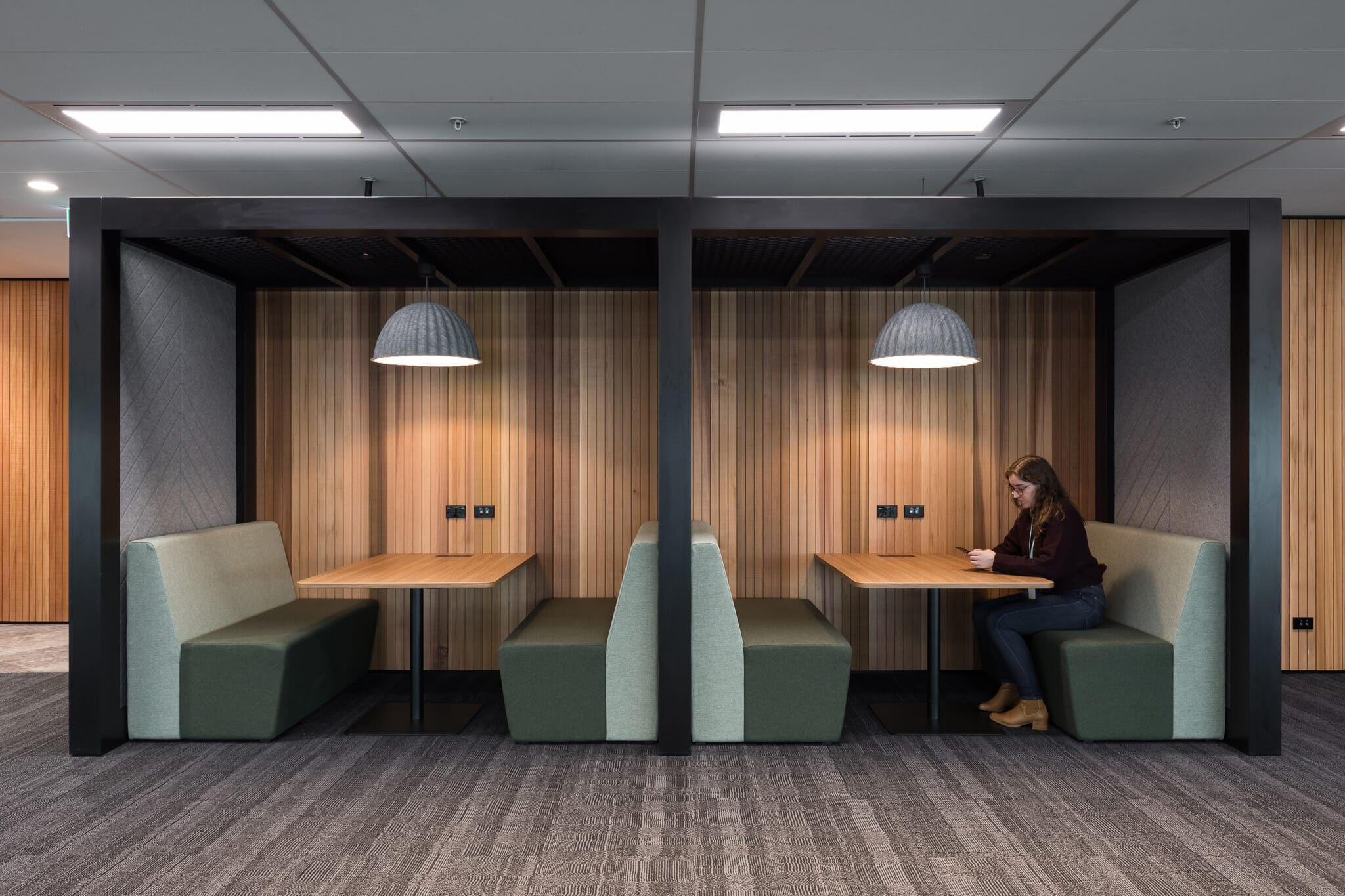
What are acoustic panels?
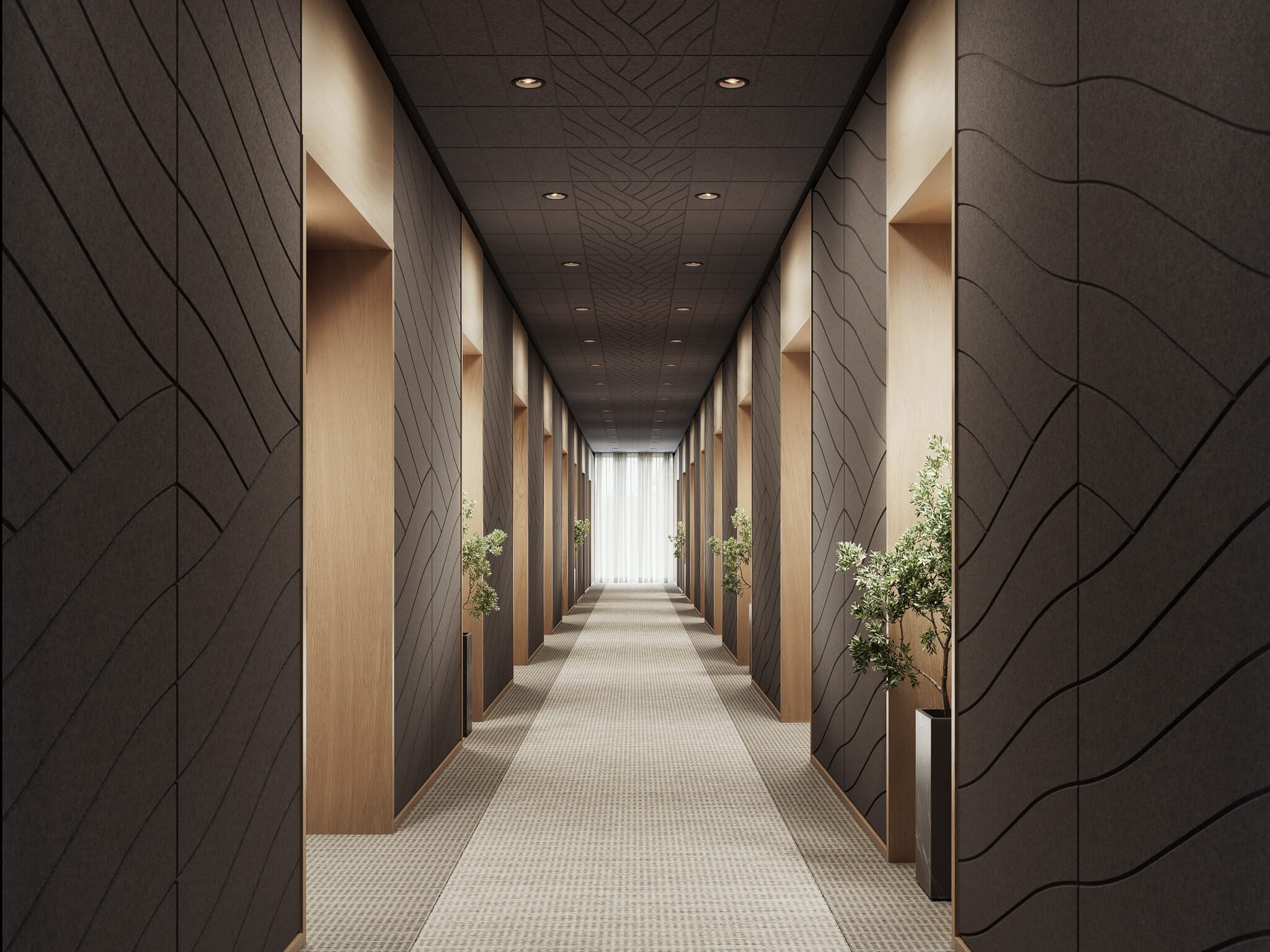
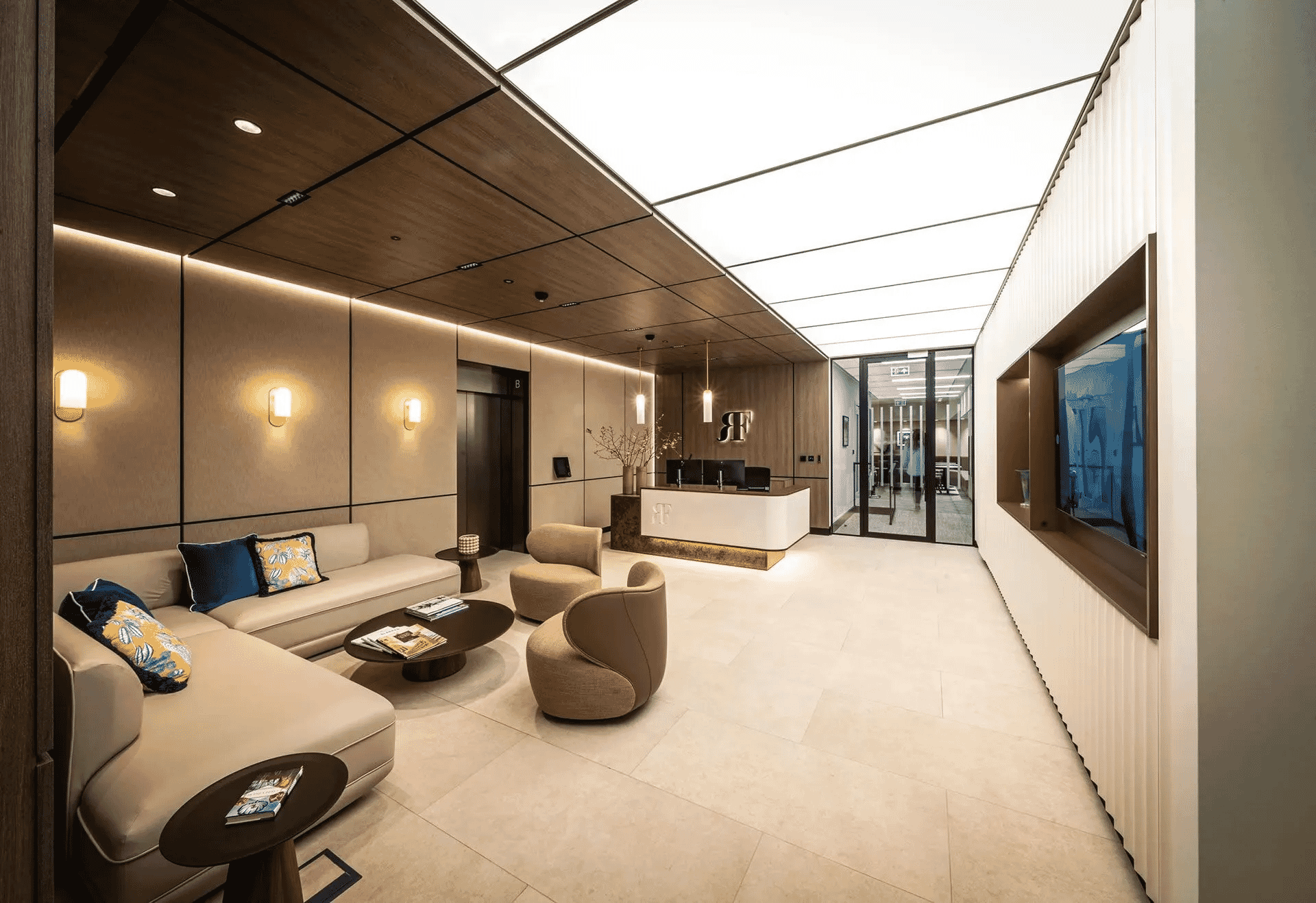
Acoustic panels are sound absorbing wall and ceiling products to reduce echo and reverberation. They make rooms calmer, speech clearer, and conversations easier. They come in many forms from fabric wrapped to recycled felt baffles.
With so many acoustic panels on the market, offering different materials, styles and absorption ratings, it can be overwhelming to know where to begin.
Resonics specialise in selecting the best panels for your project, tailoring our recommendations based on each space, acoustic goals and budget. We have helped offices, schools, village halls, restaurants and other commercial spaces select panels from over 50 manufacturers. We then supply and install them across the UK.
Get in touch to find out how we can help on your next project.












































Testimonials
Hear what our clients have to say
Expert help choosing acoustic panels
Not every space needs the same level of absorption. A lively school hall will need a very different approach than a small meeting room or open-plan office.
Involving an expert can ensure you get the best results. Resonics offer free, no-obligation acoustic surveys, either in person or remotely. We’ll assess your space, calculate what’s needed, and provide a clear, tailored plan that includes recommendations for the best-suited acoustic treatments.
Want a rough idea first? Try our room acoustics calculator.
Need expert acoustic advice?
Call us on 020 7858 1030 or request a quote below—we’ll contact you.
Request a Quote
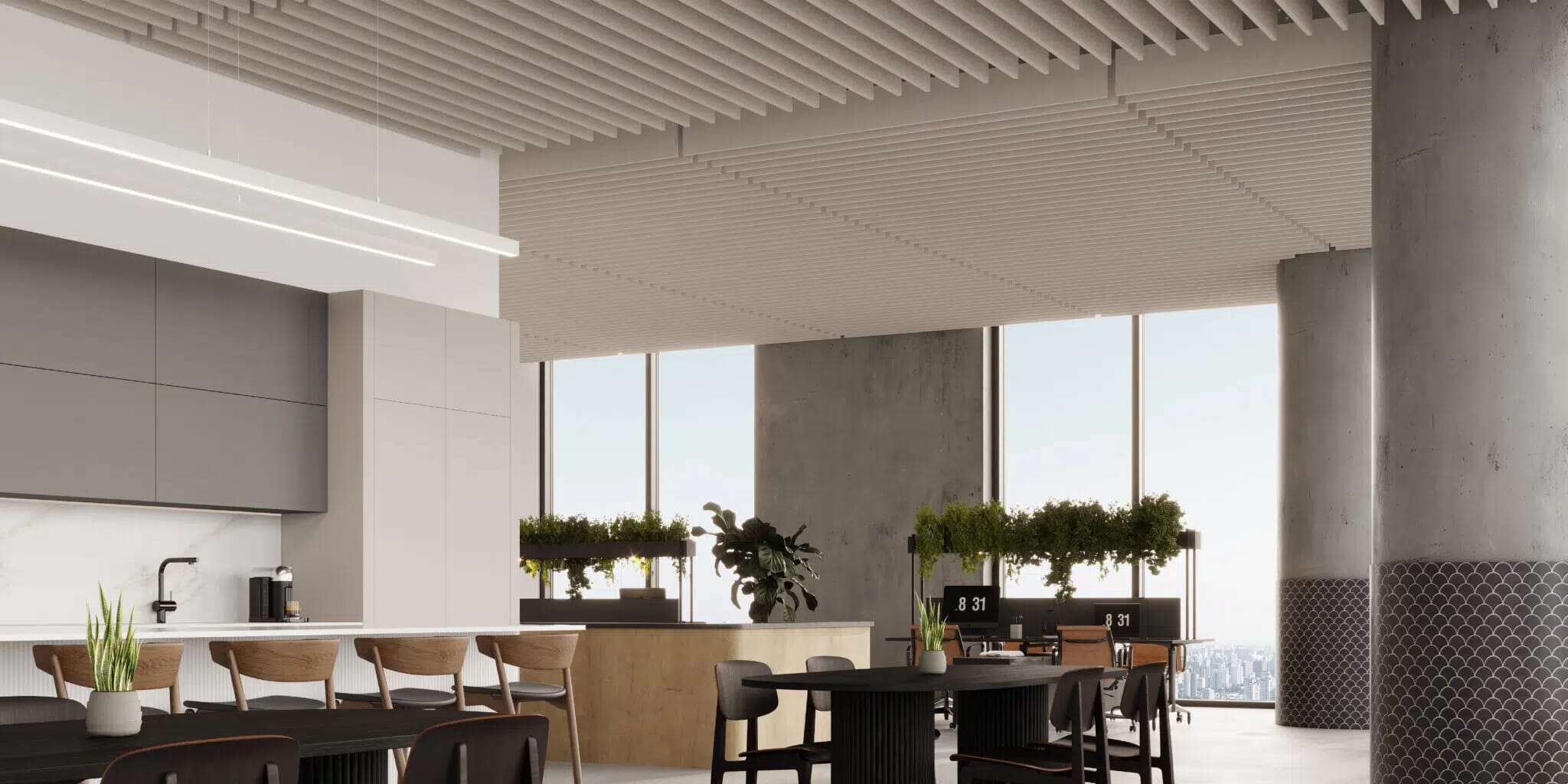
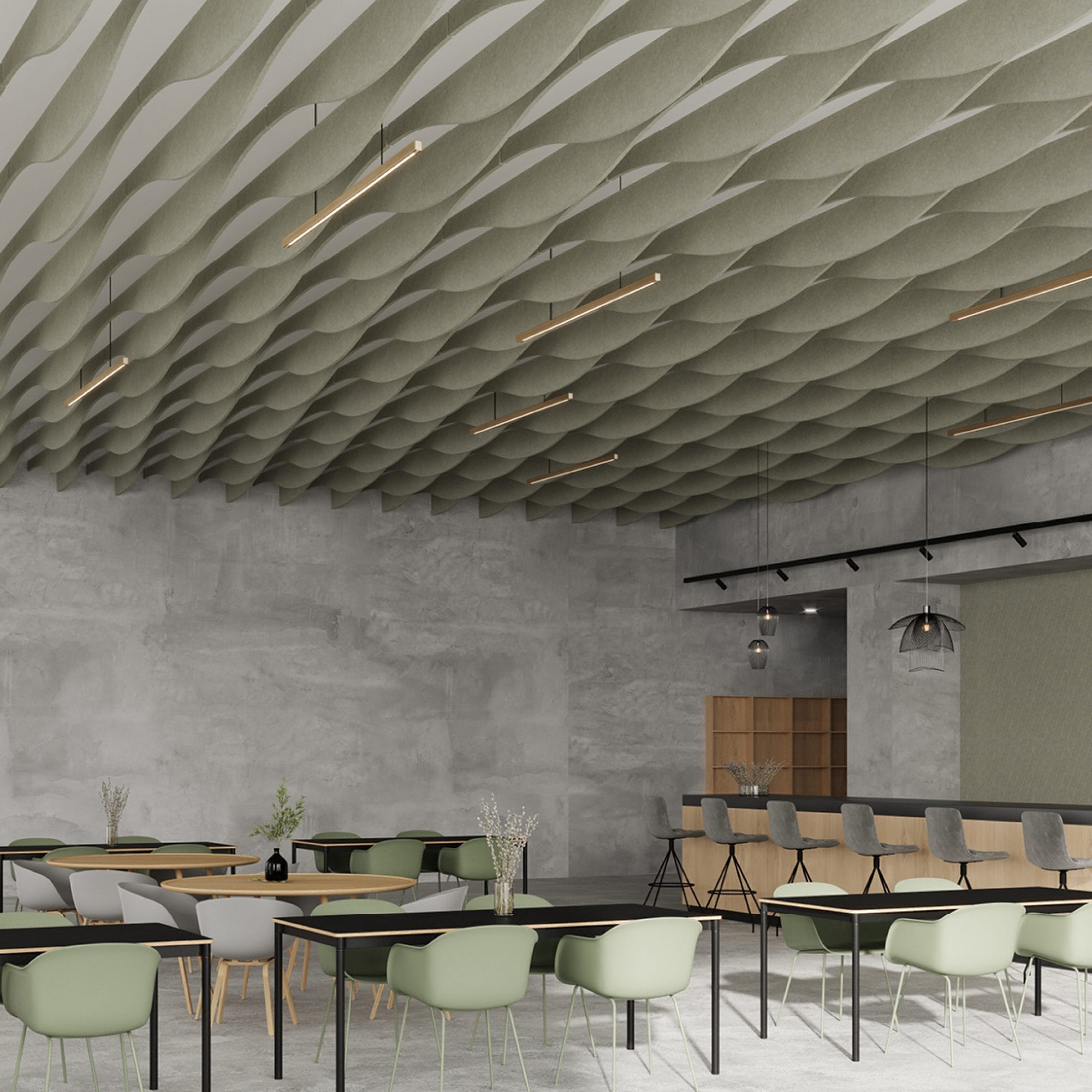
Acoustic Ceiling Baffles
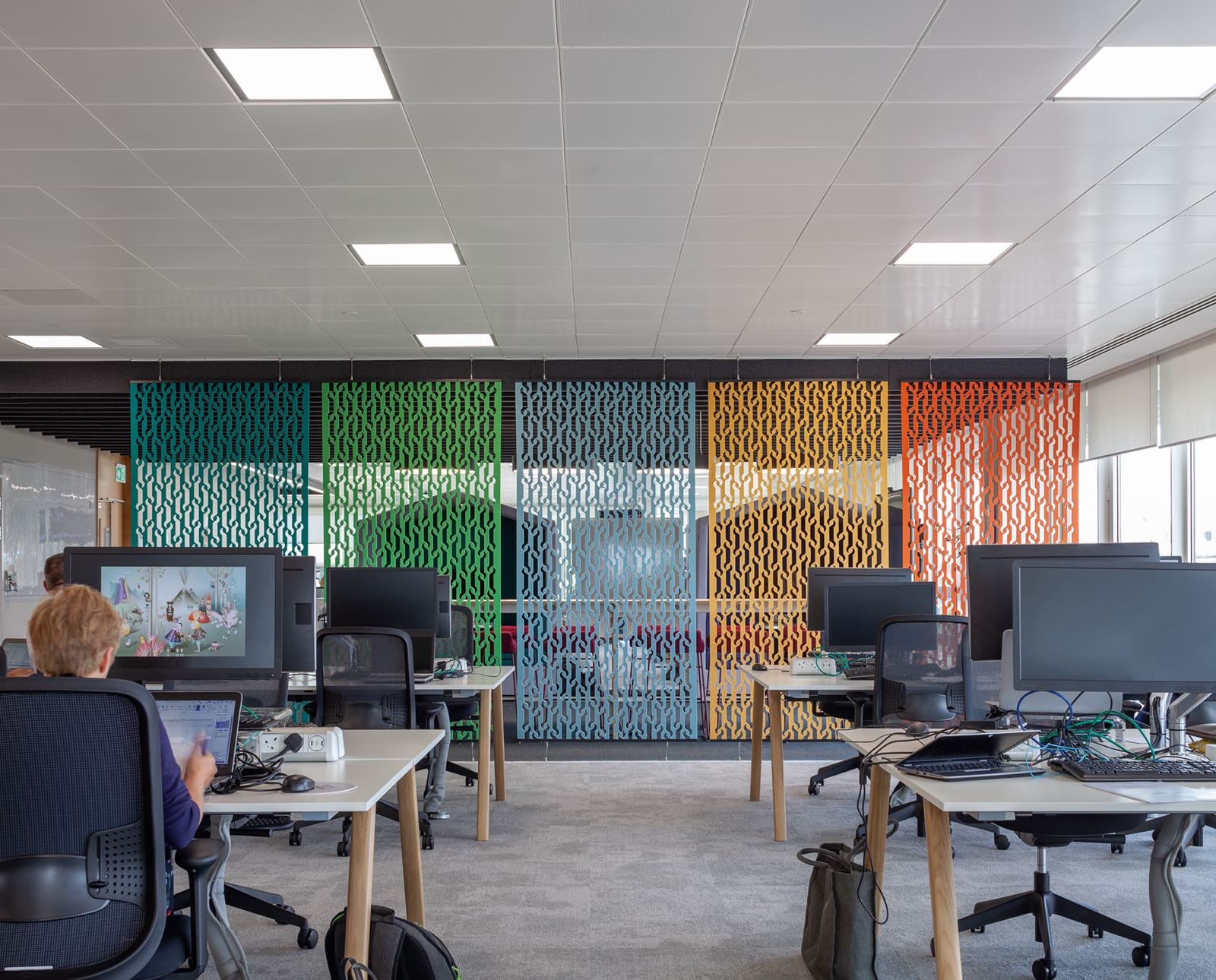
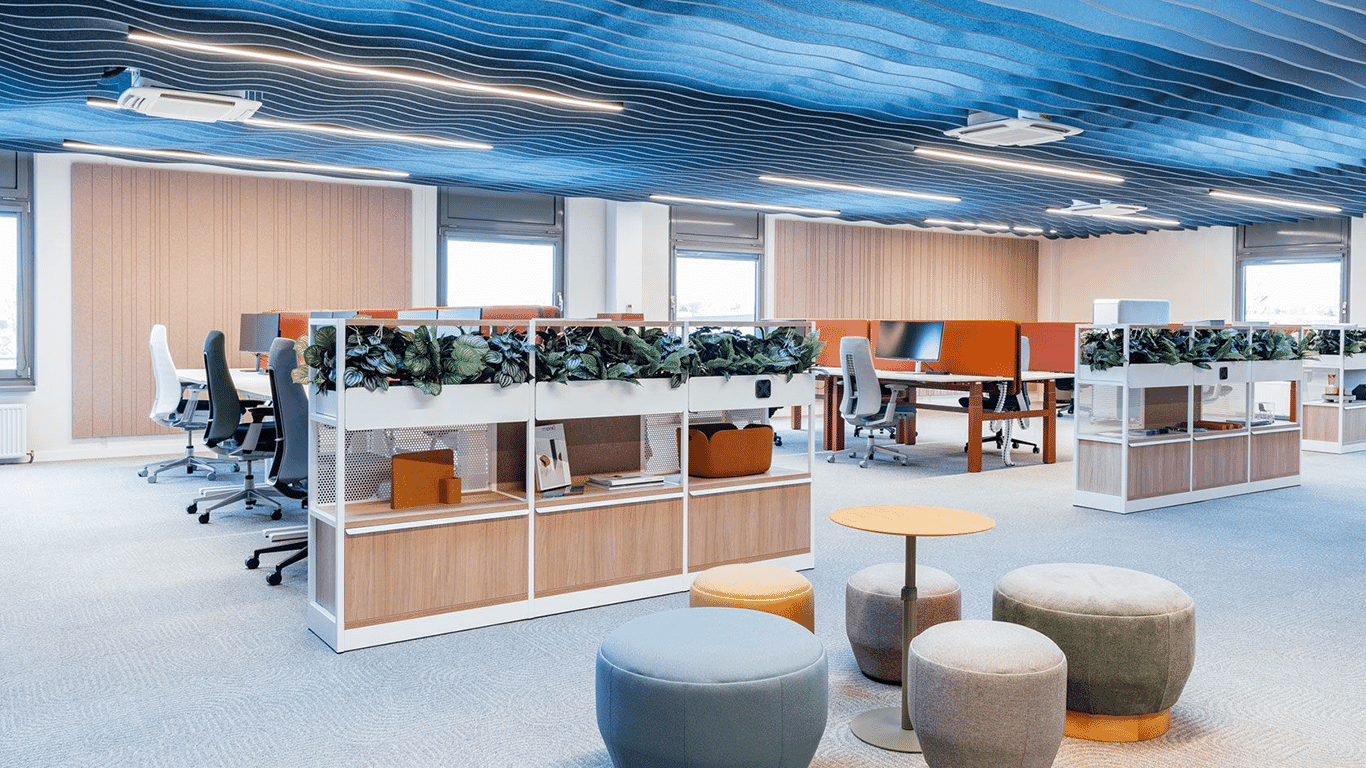
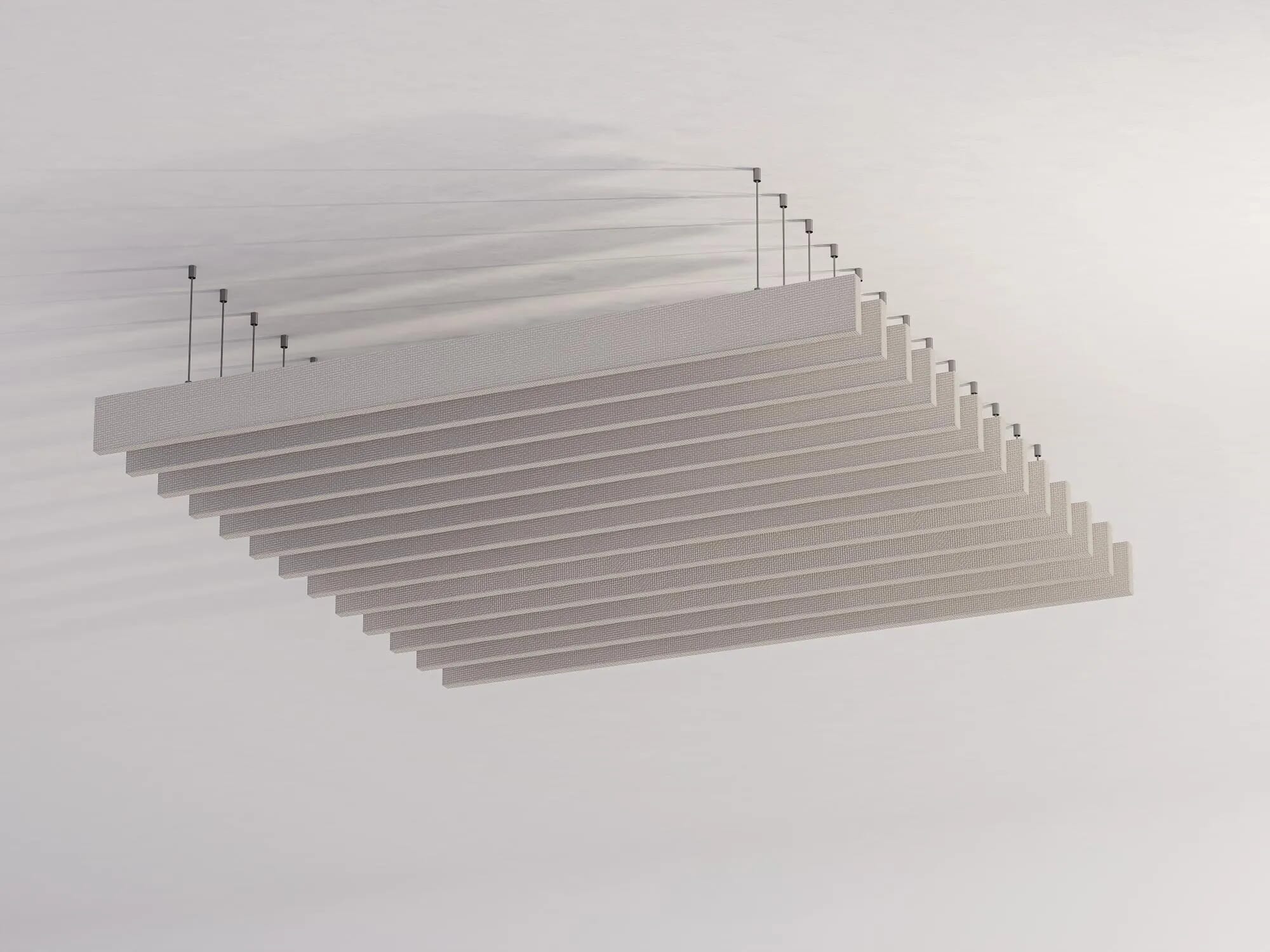
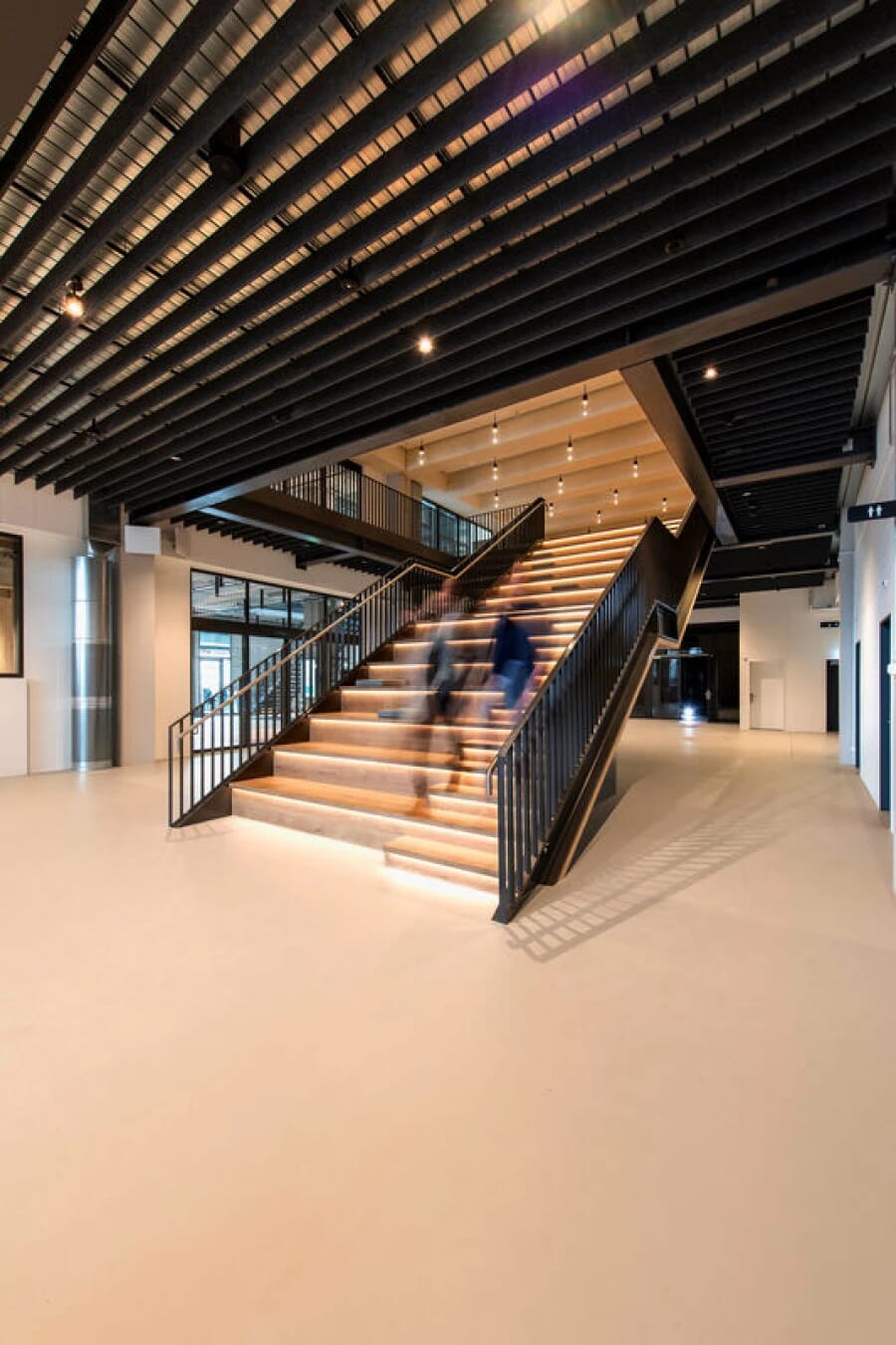
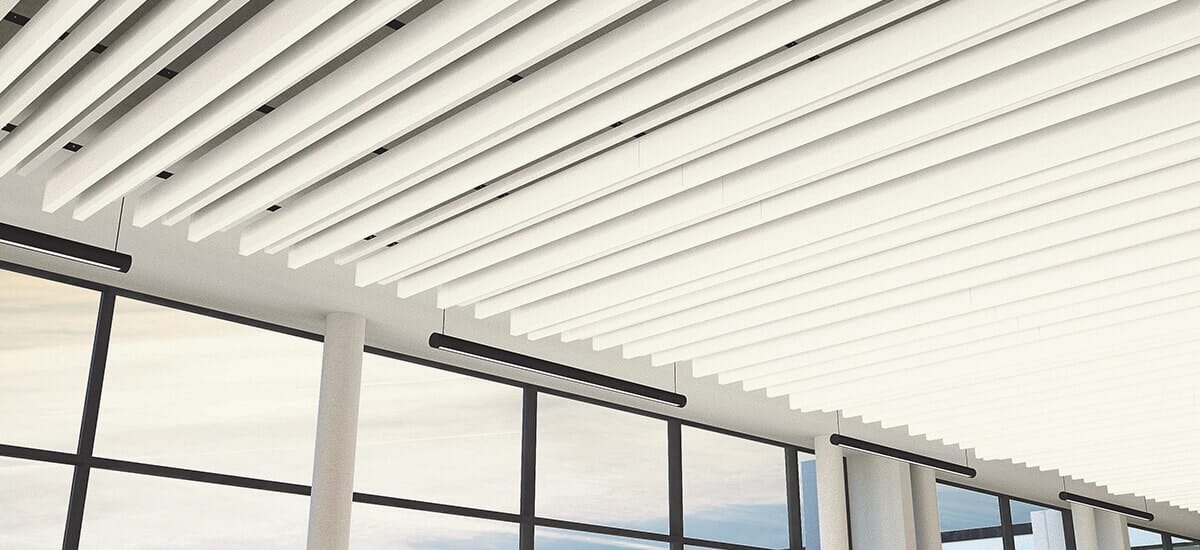
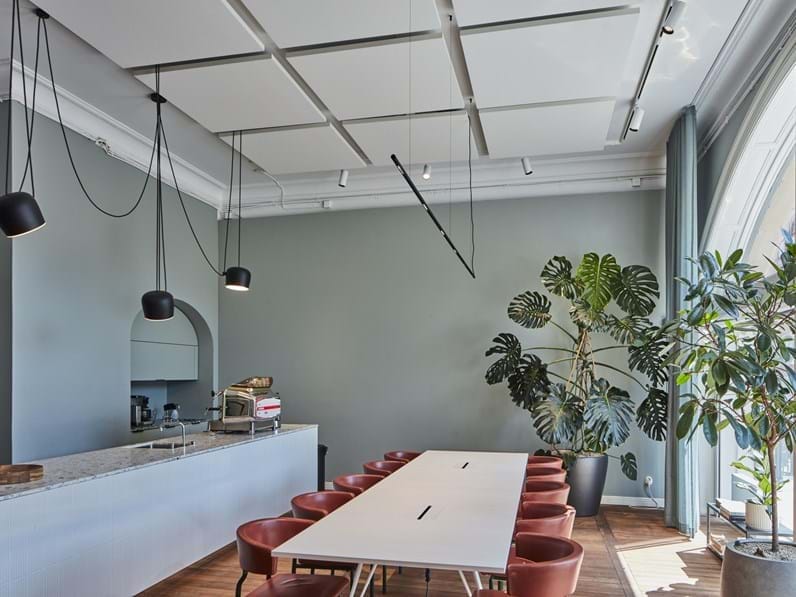
Baffles hang vertically in rows or grids and absorb sound on both faces. They’re a go-to for open-plan offices, sports halls, atriums and spaces with exposed services, where a flat ceiling isn’t practical.
Because they sit well above head height, they leave walls free and stay out of the way of knocks. Spacing and depth drive performance, and we calculate both for your CAD proposal.
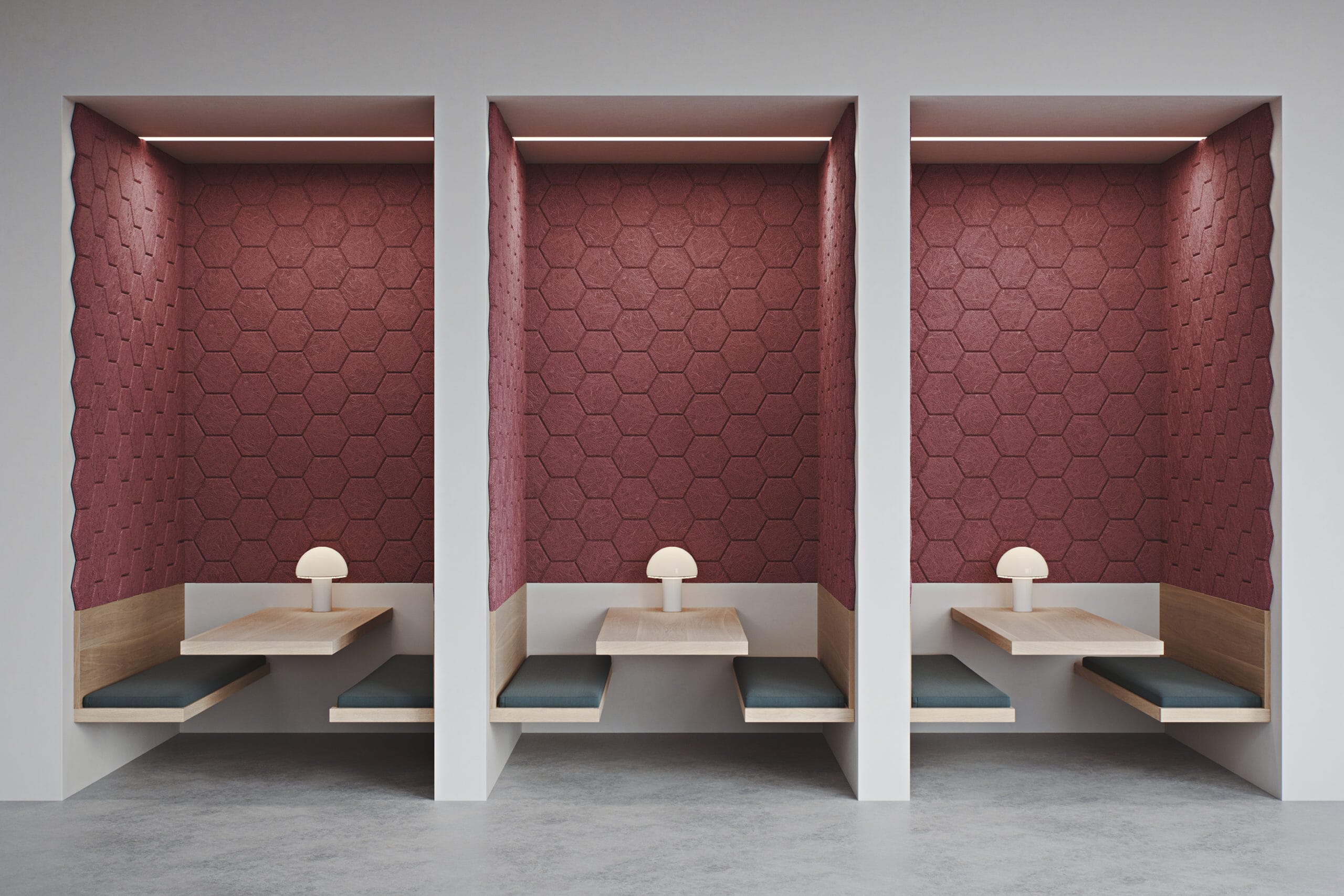
Acoustic Wall Panels
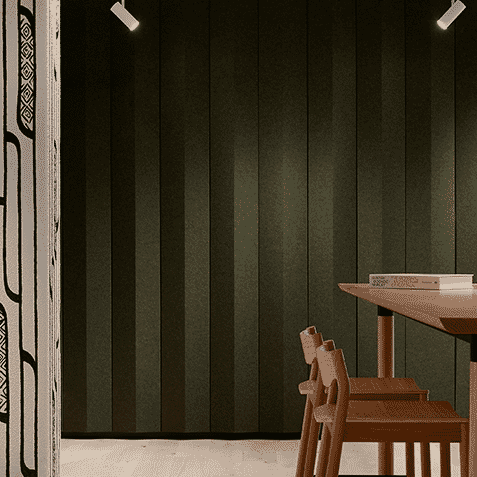
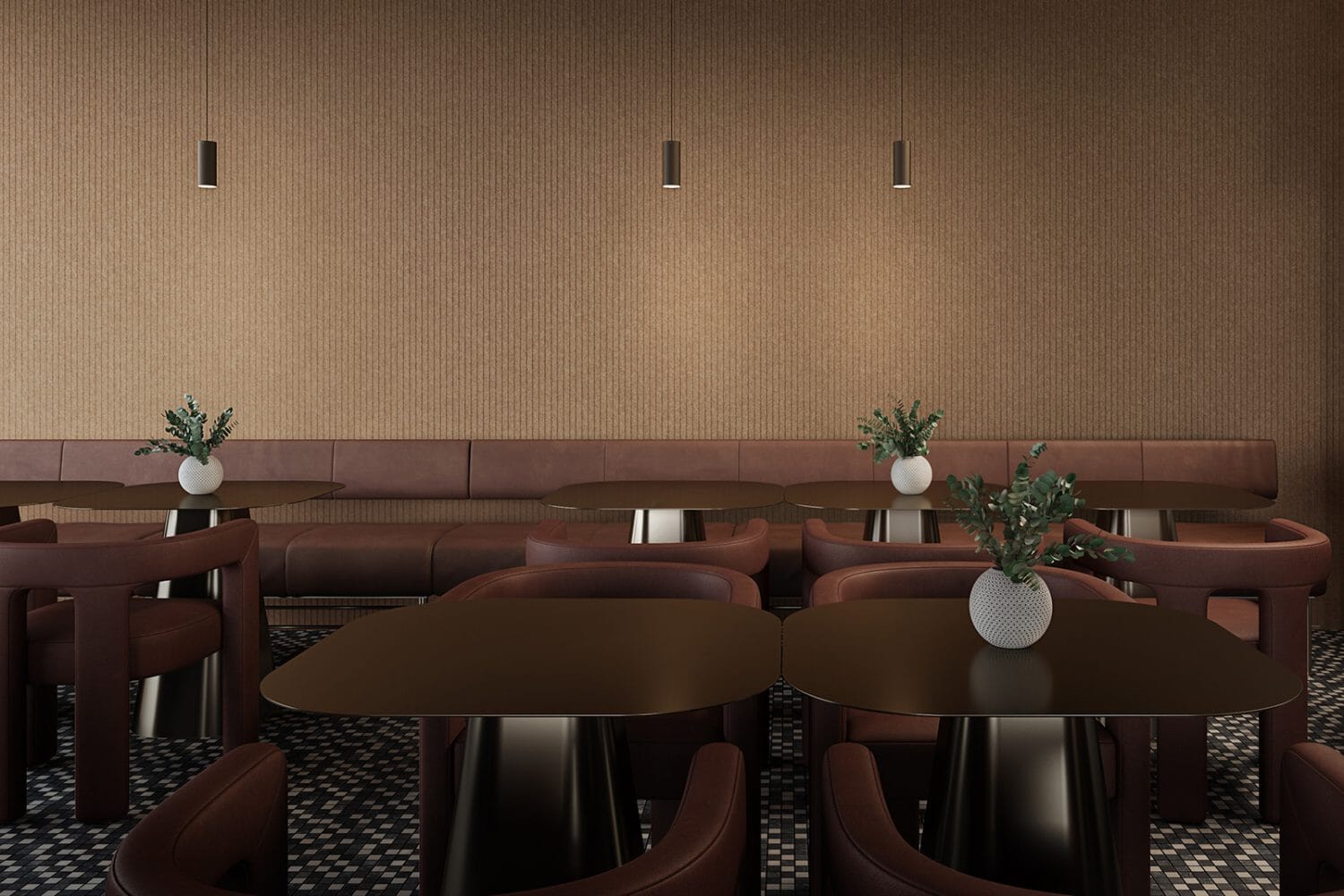
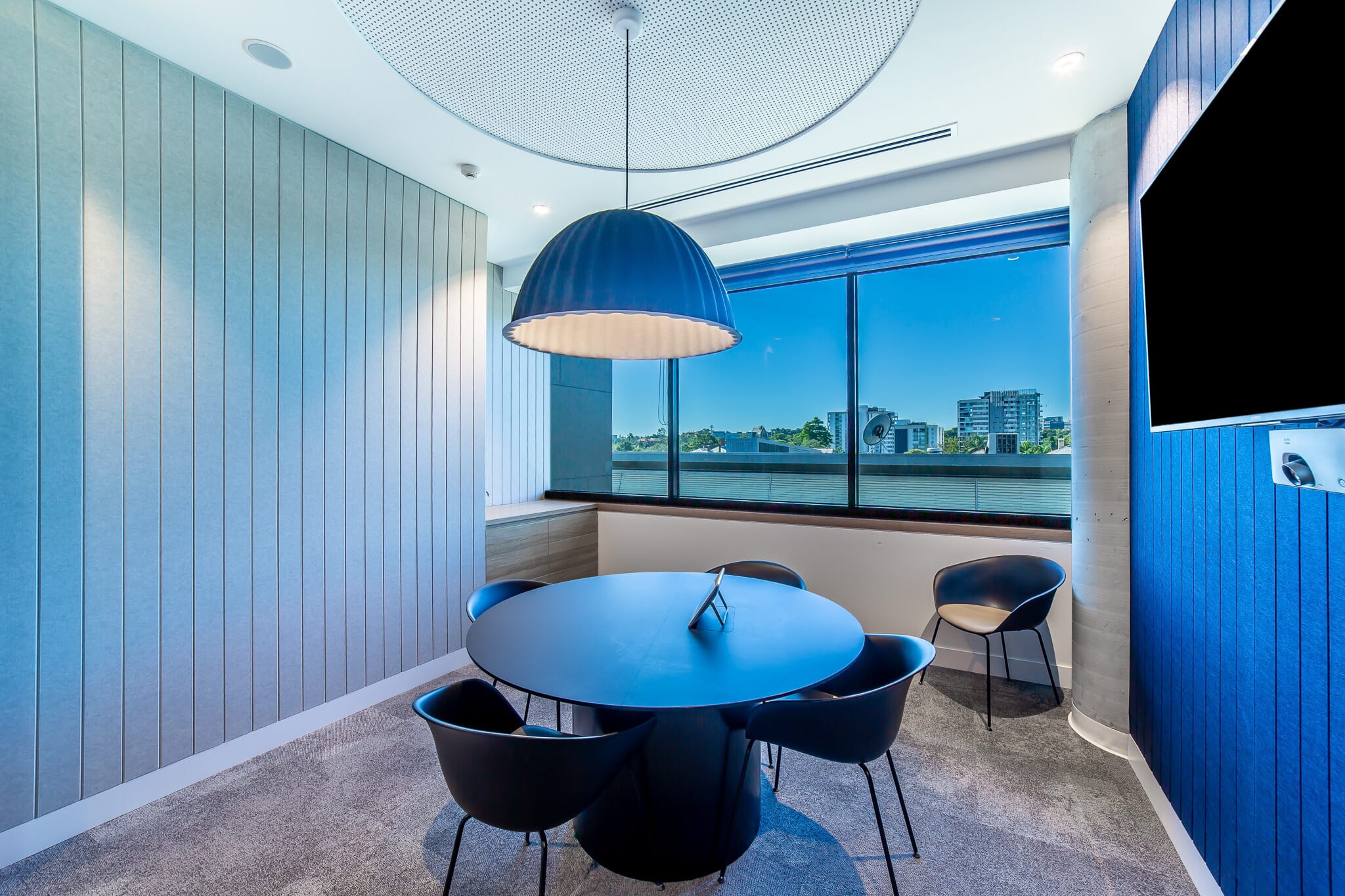
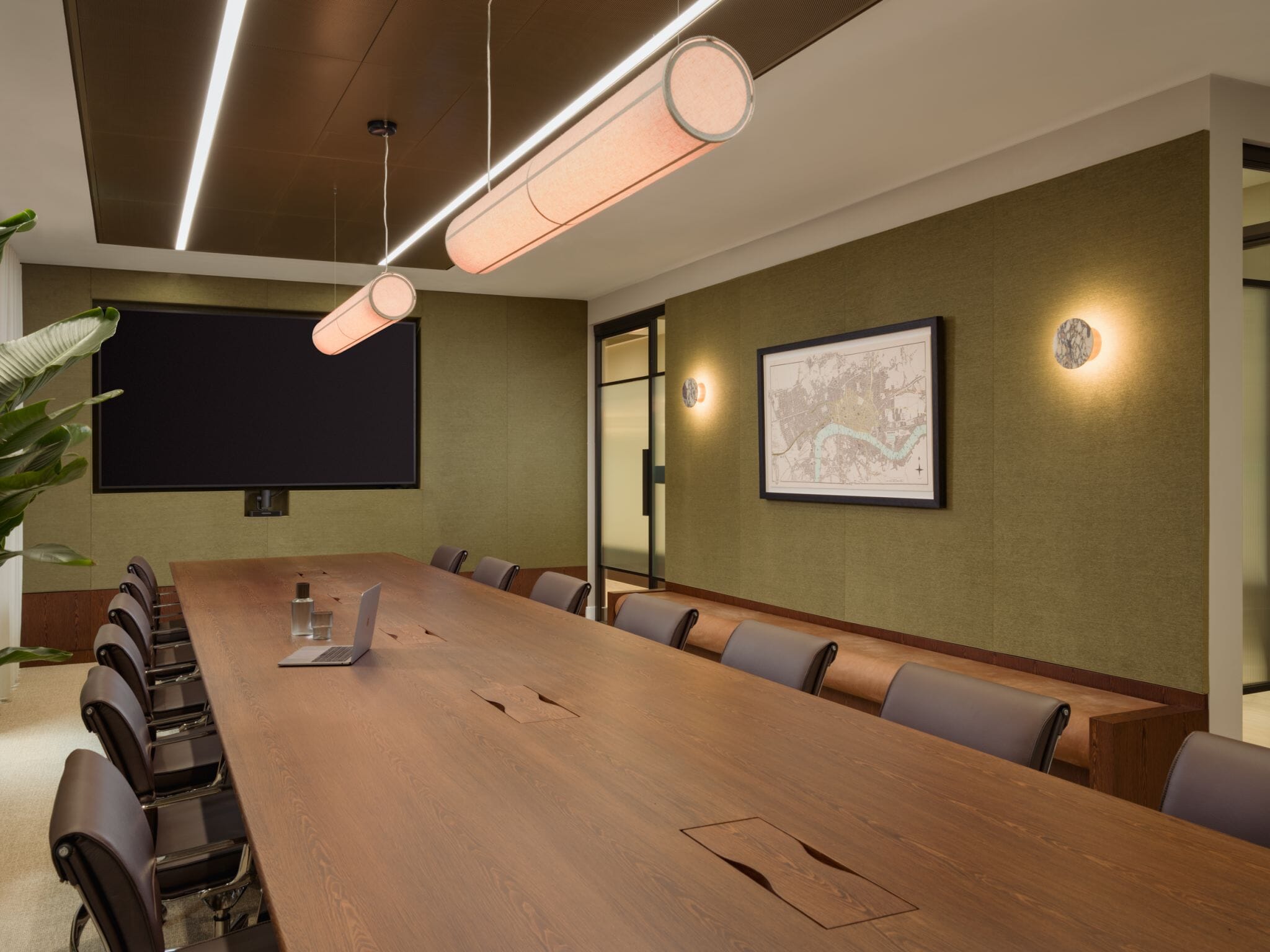
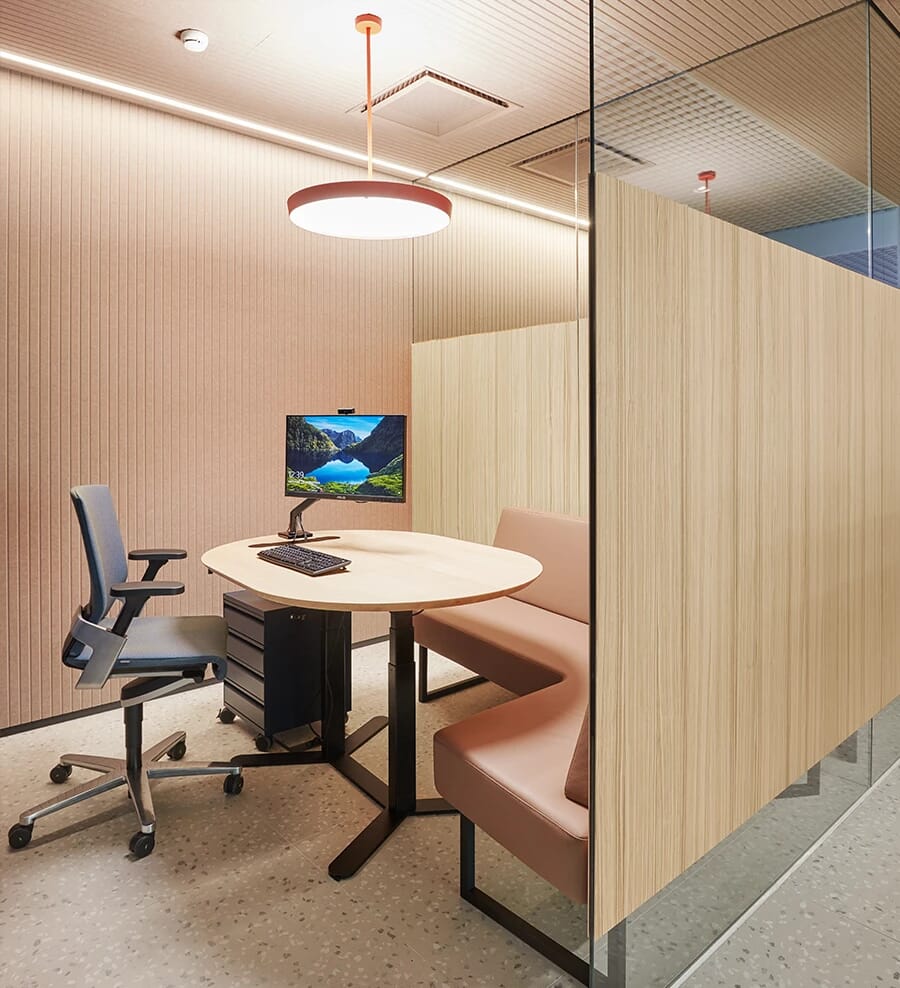
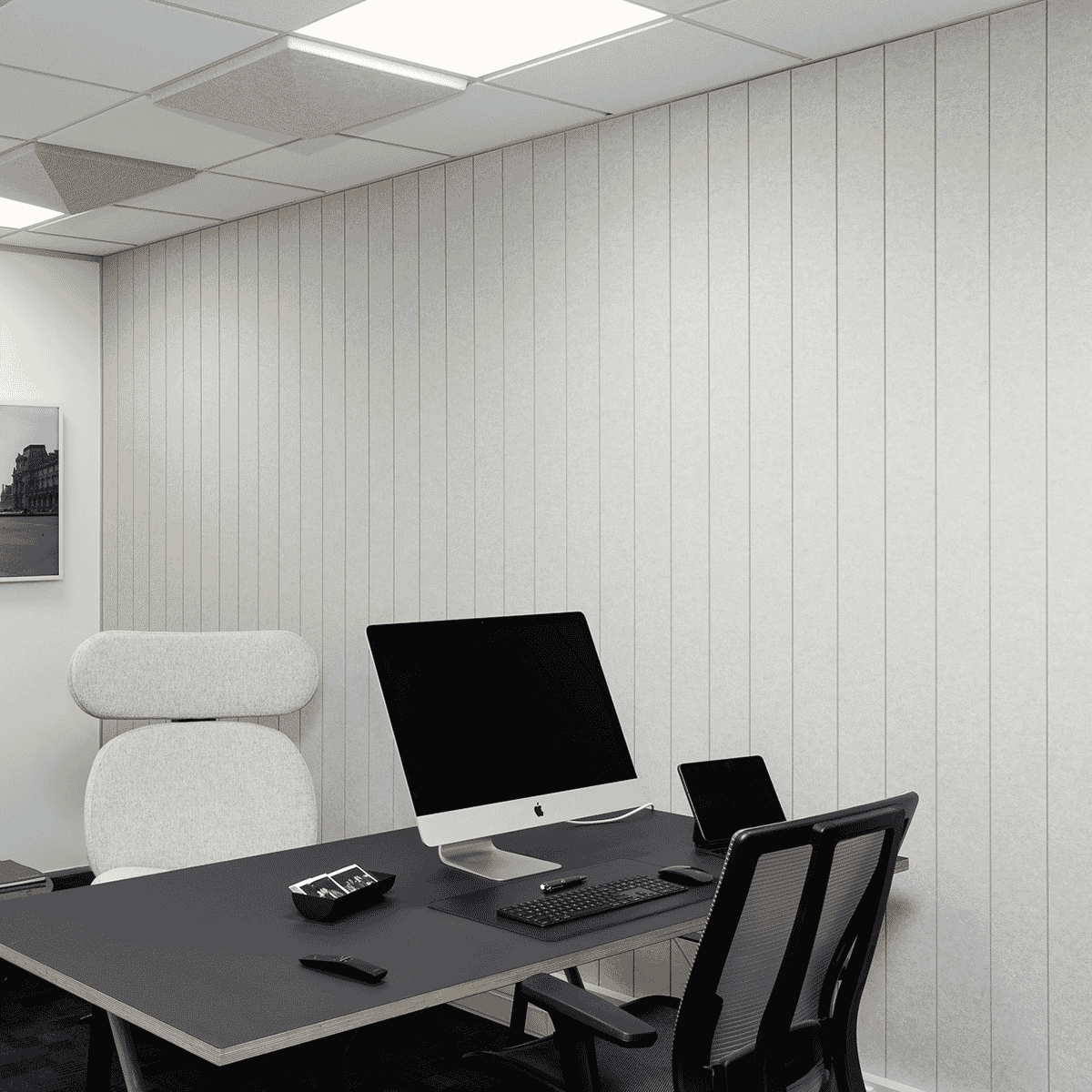
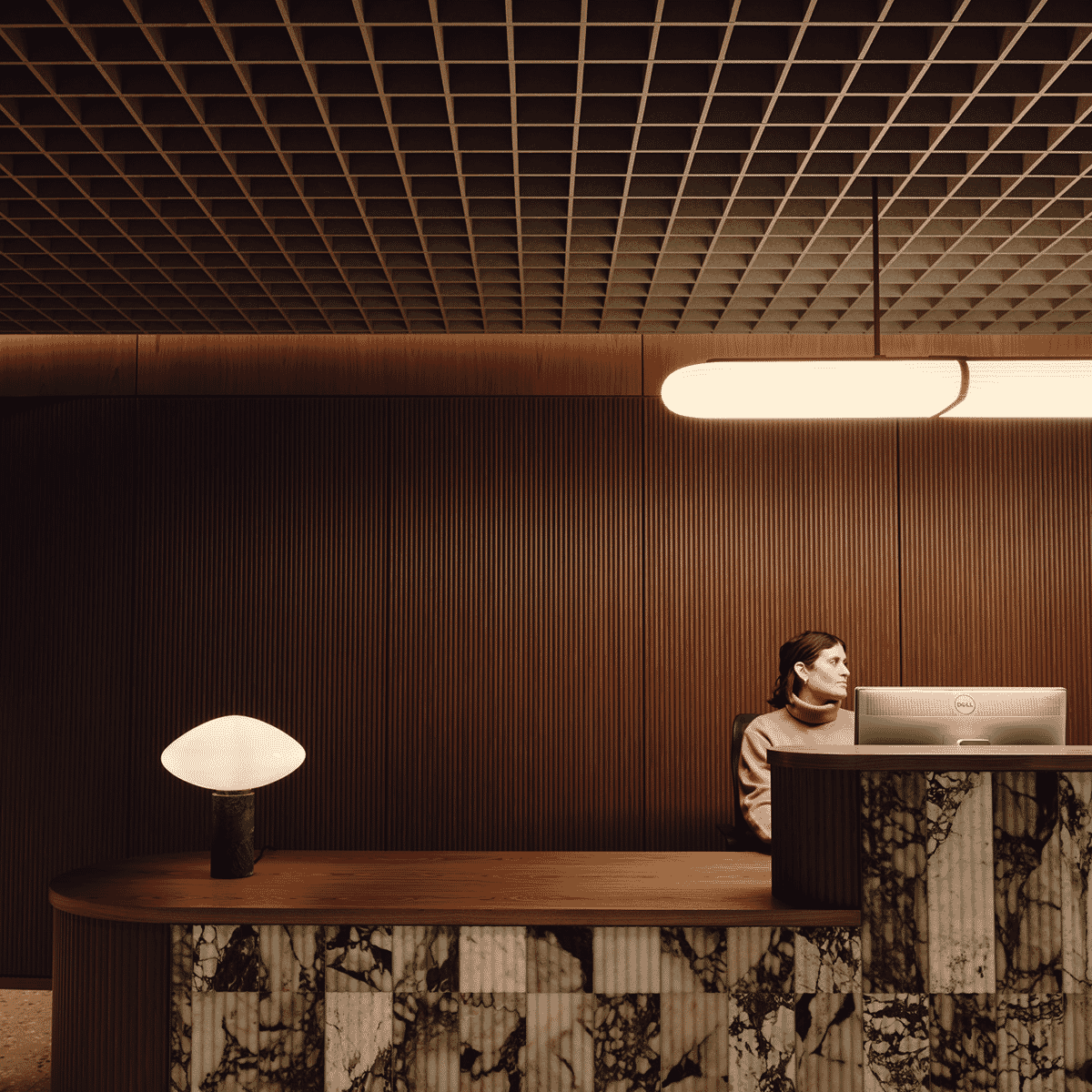
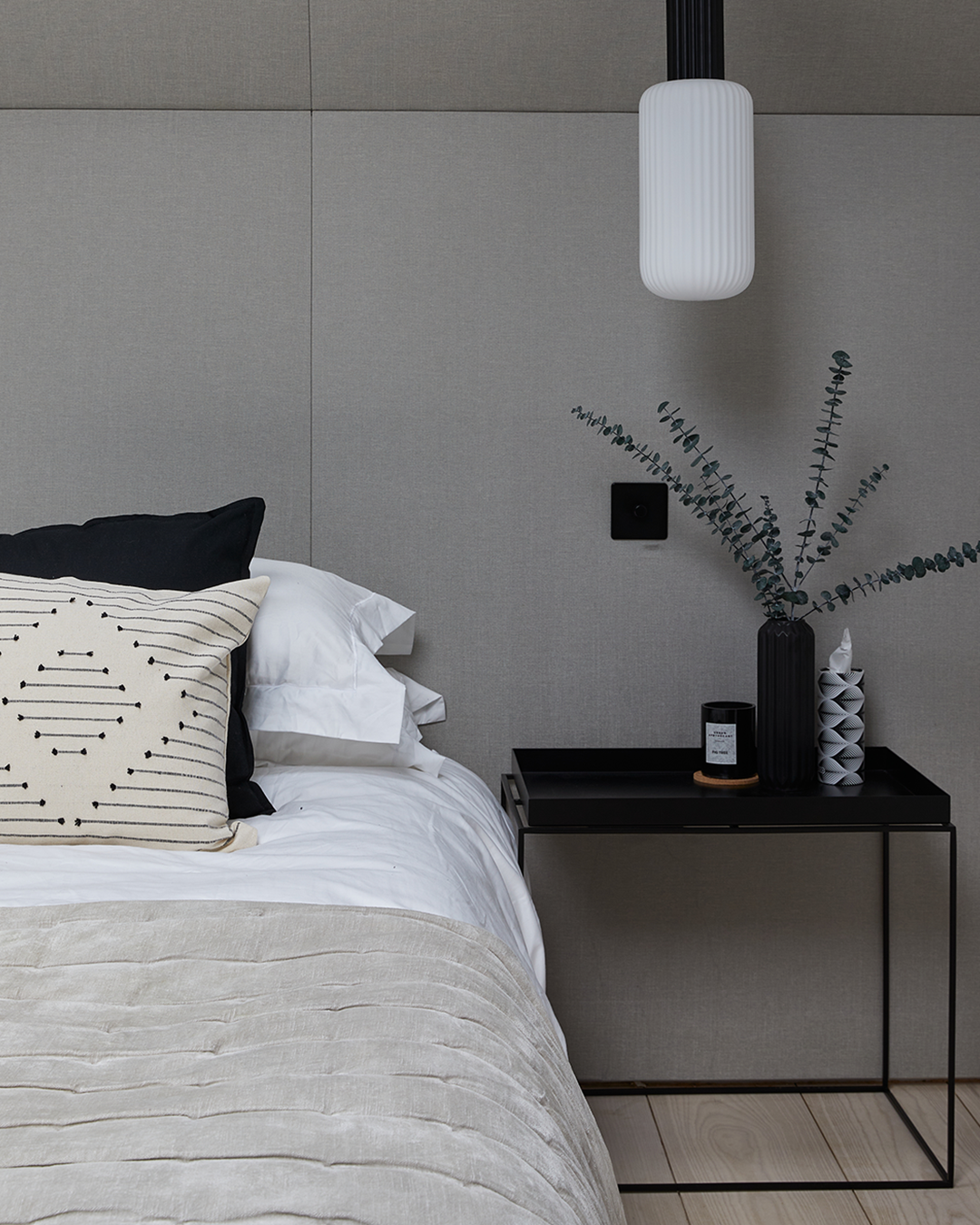
Wall panels are the most flexible way to treat a room. They’re fixed at head height where sound first reflects, and they help stop flutter echo bouncing between parallel walls. That makes them a natural fit for meeting rooms, classrooms and restaurants.
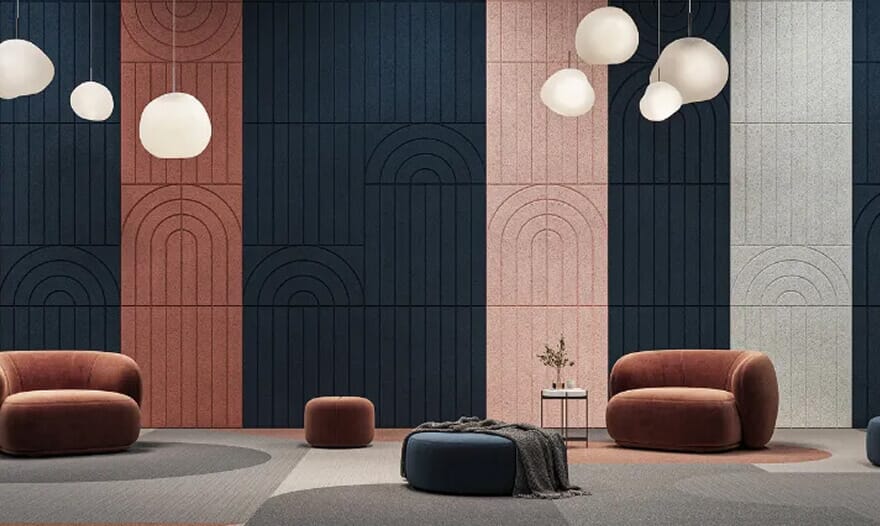
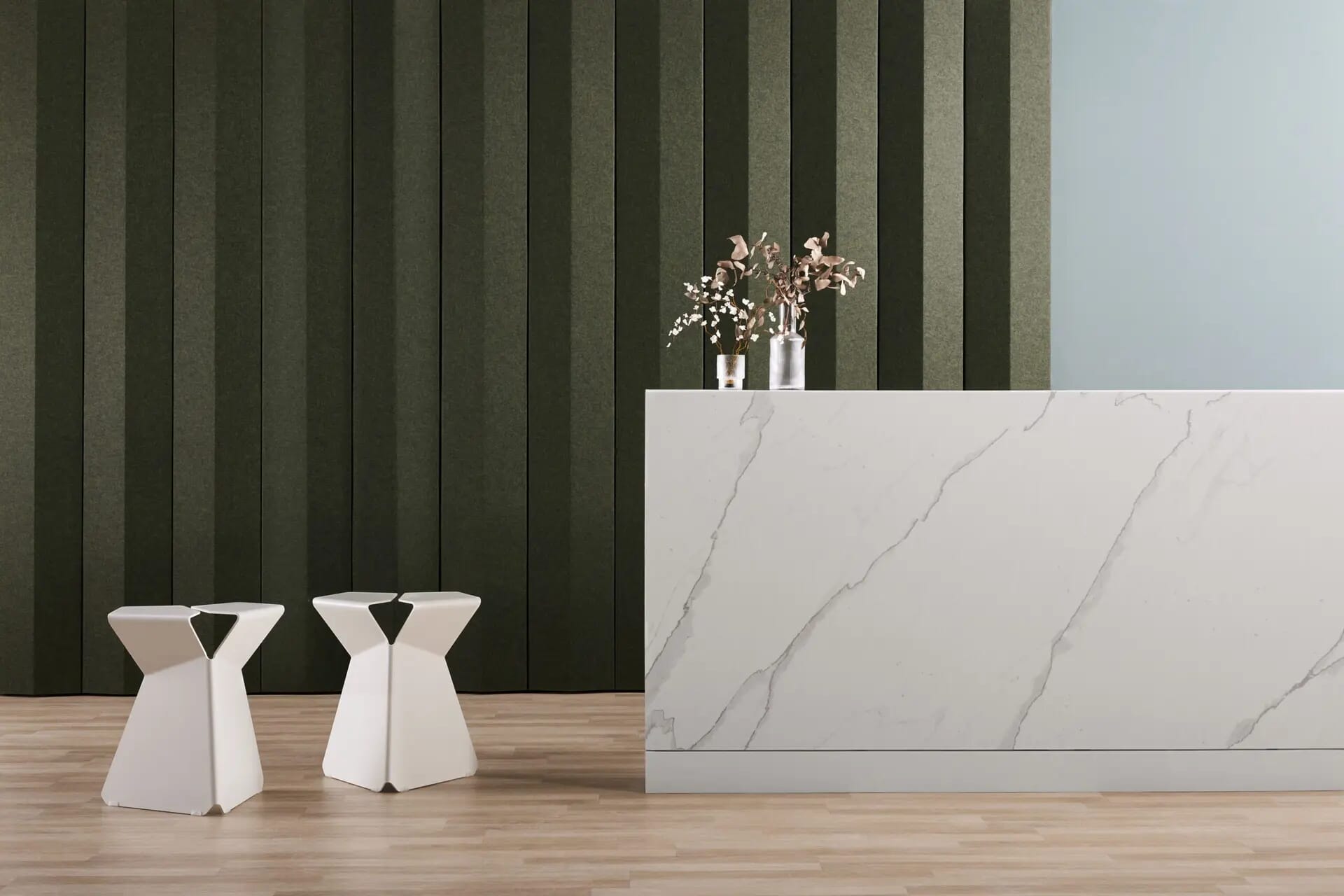
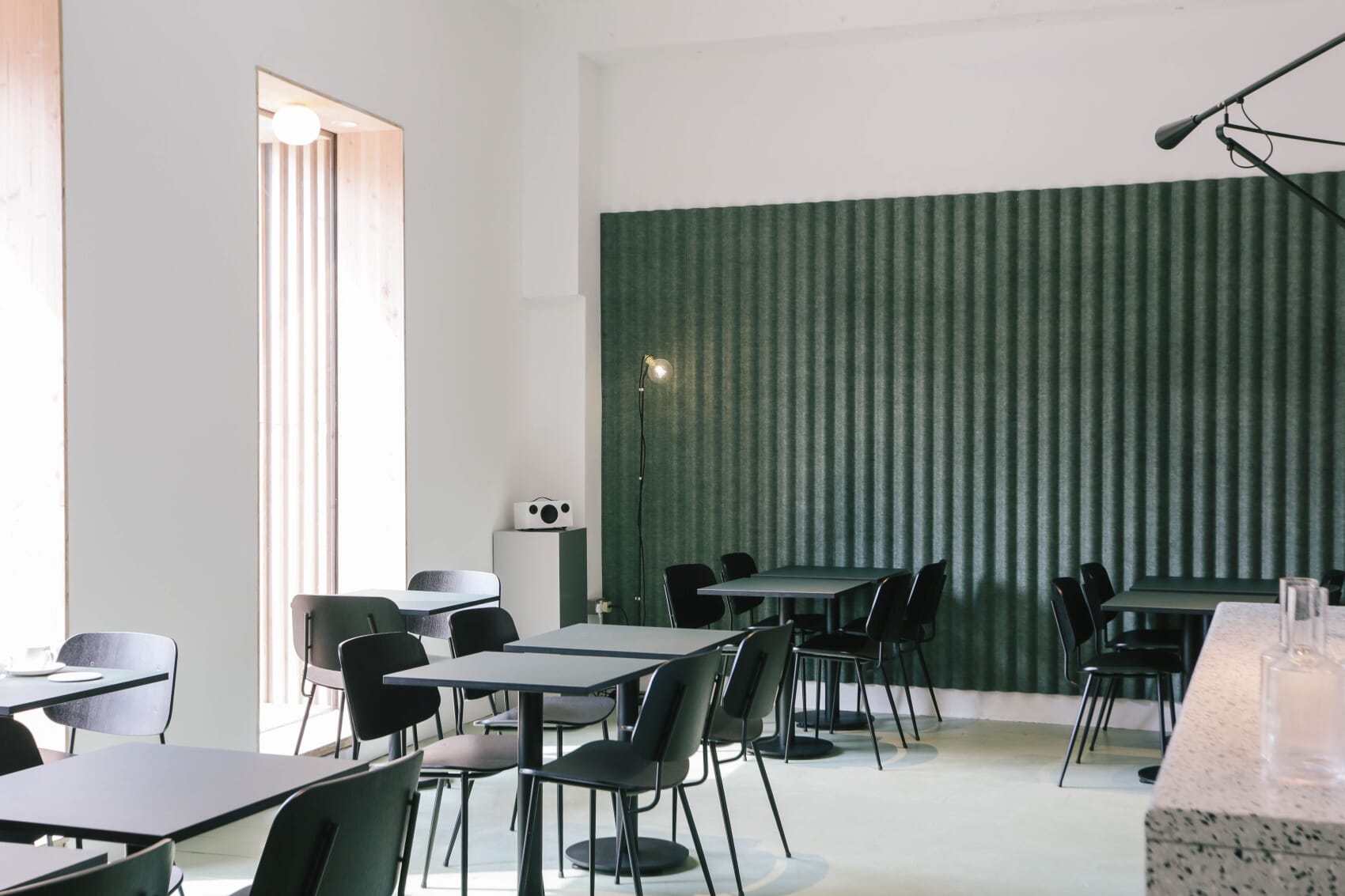
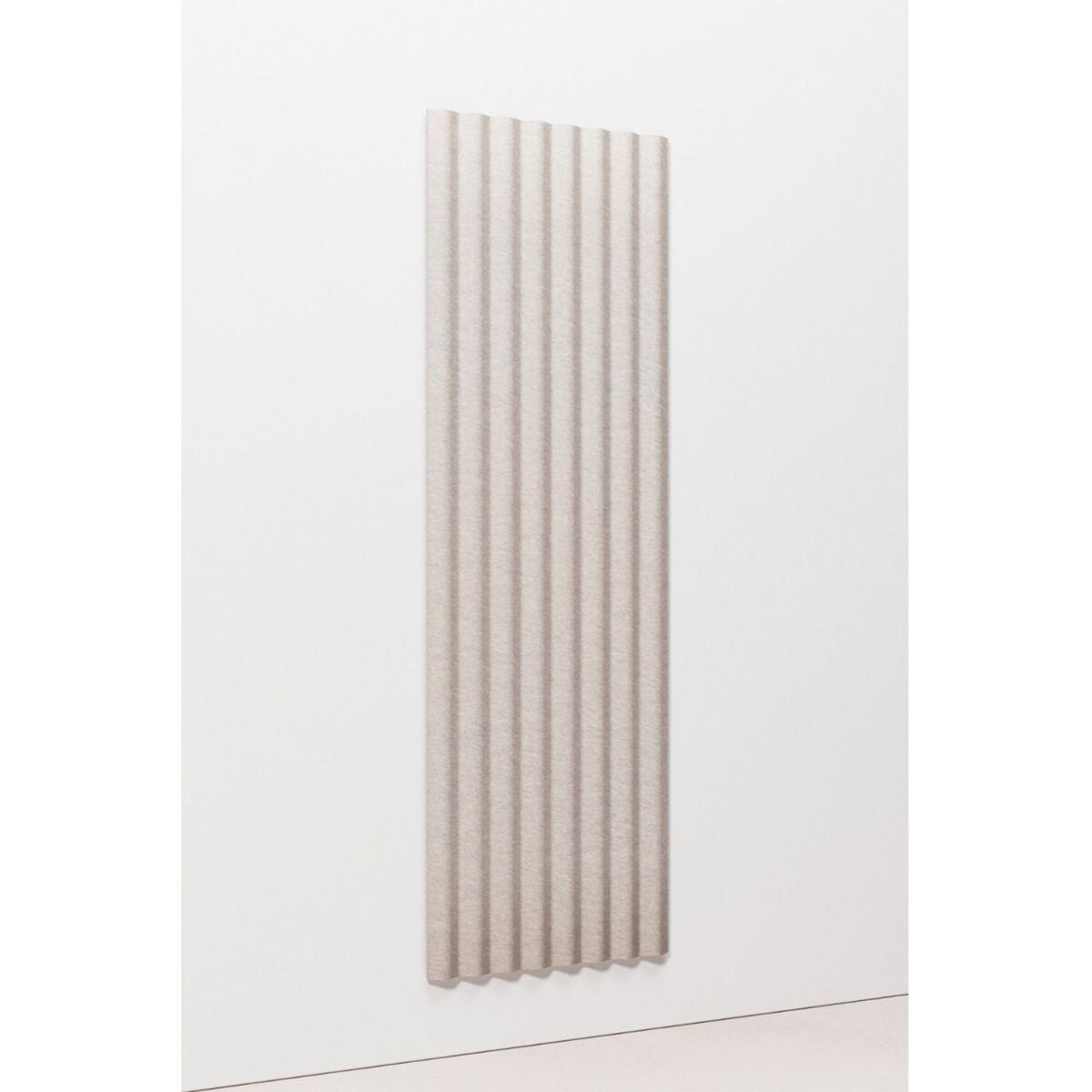
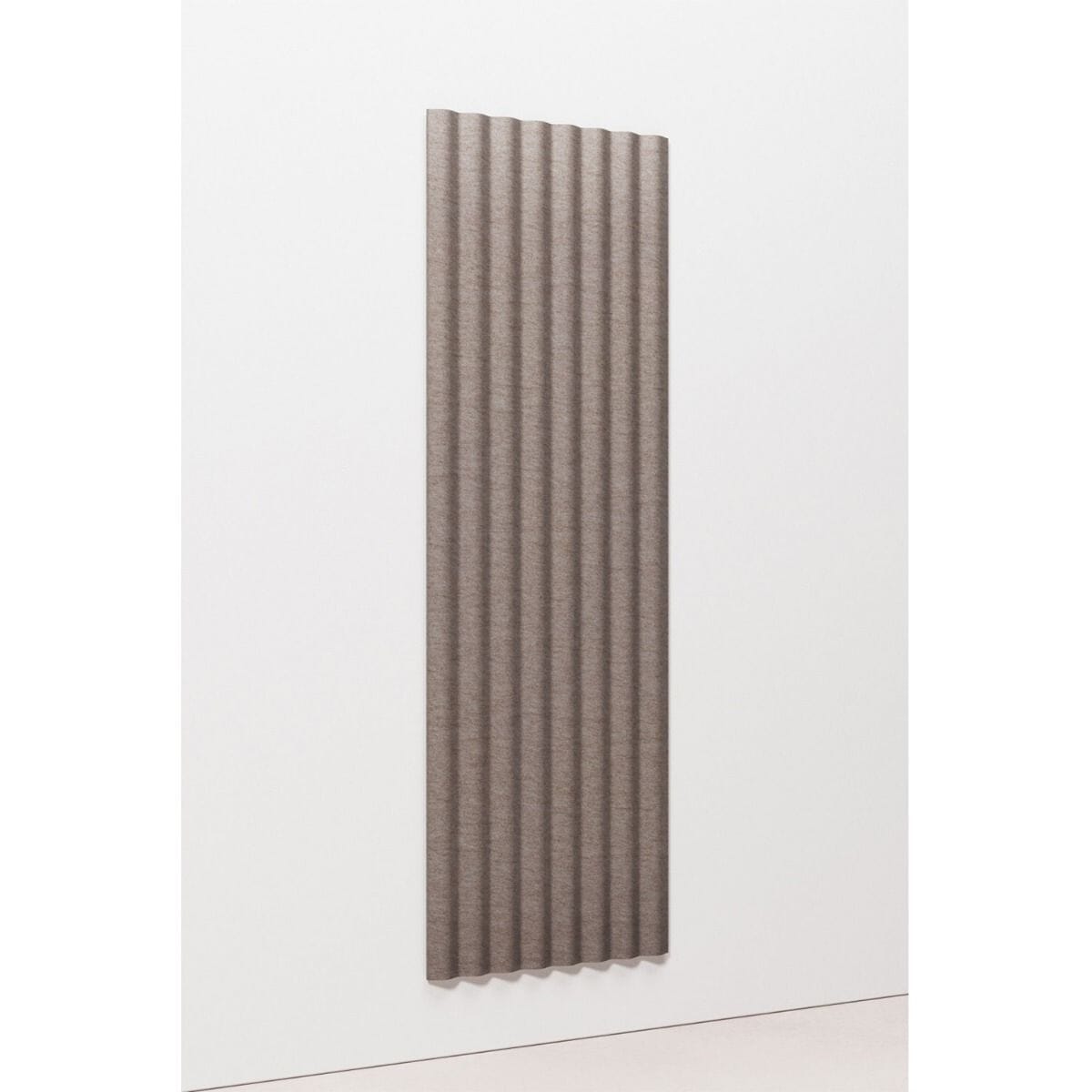
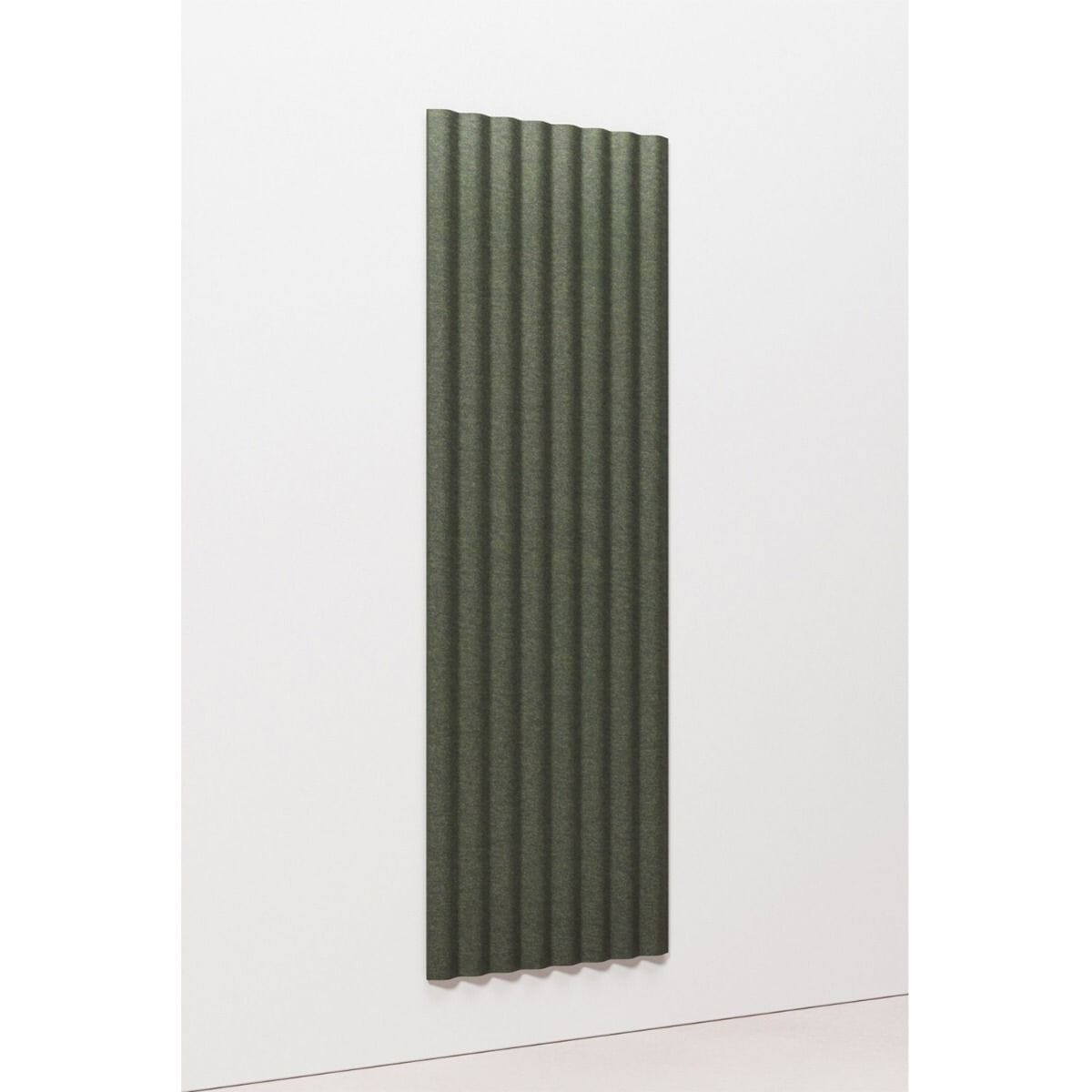
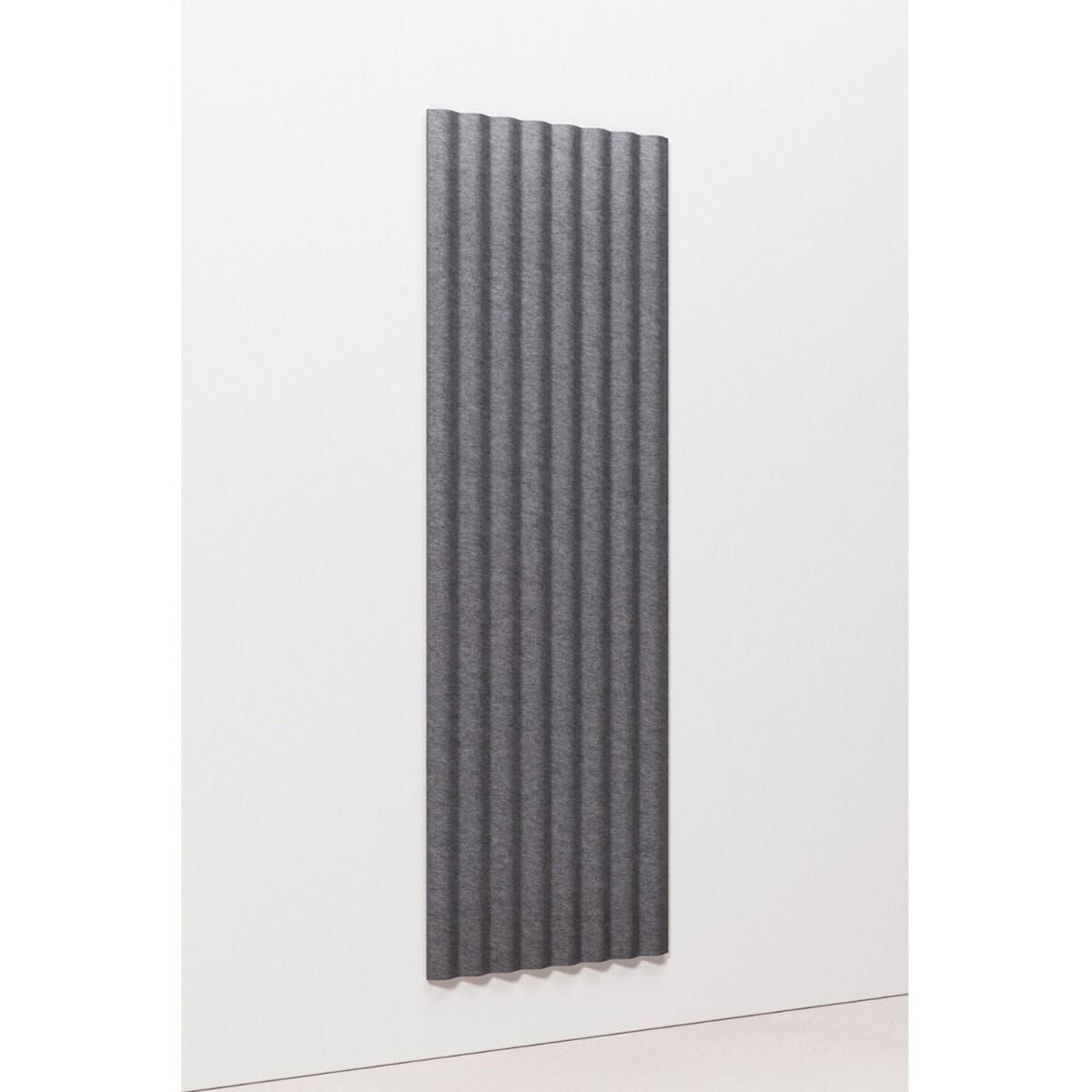
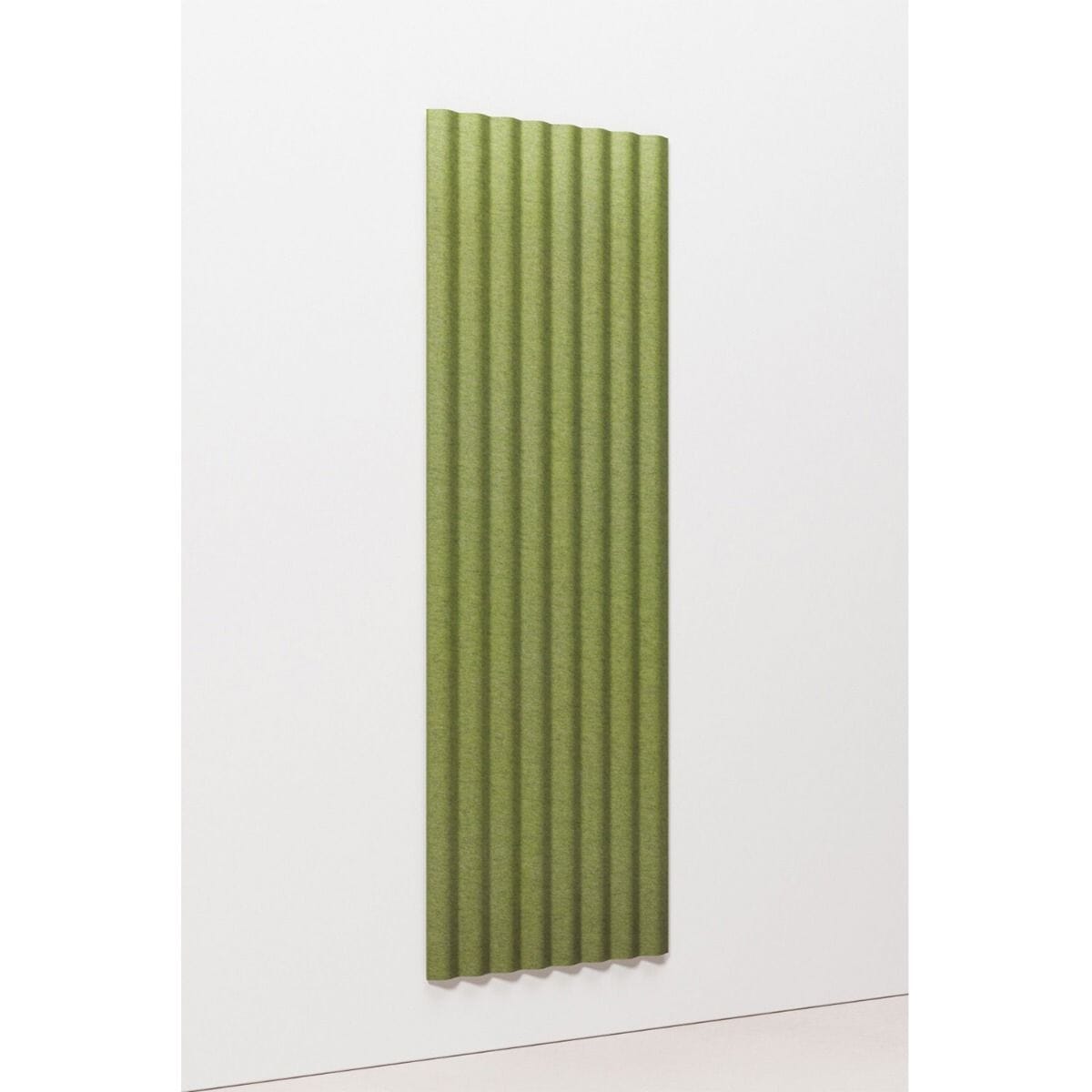
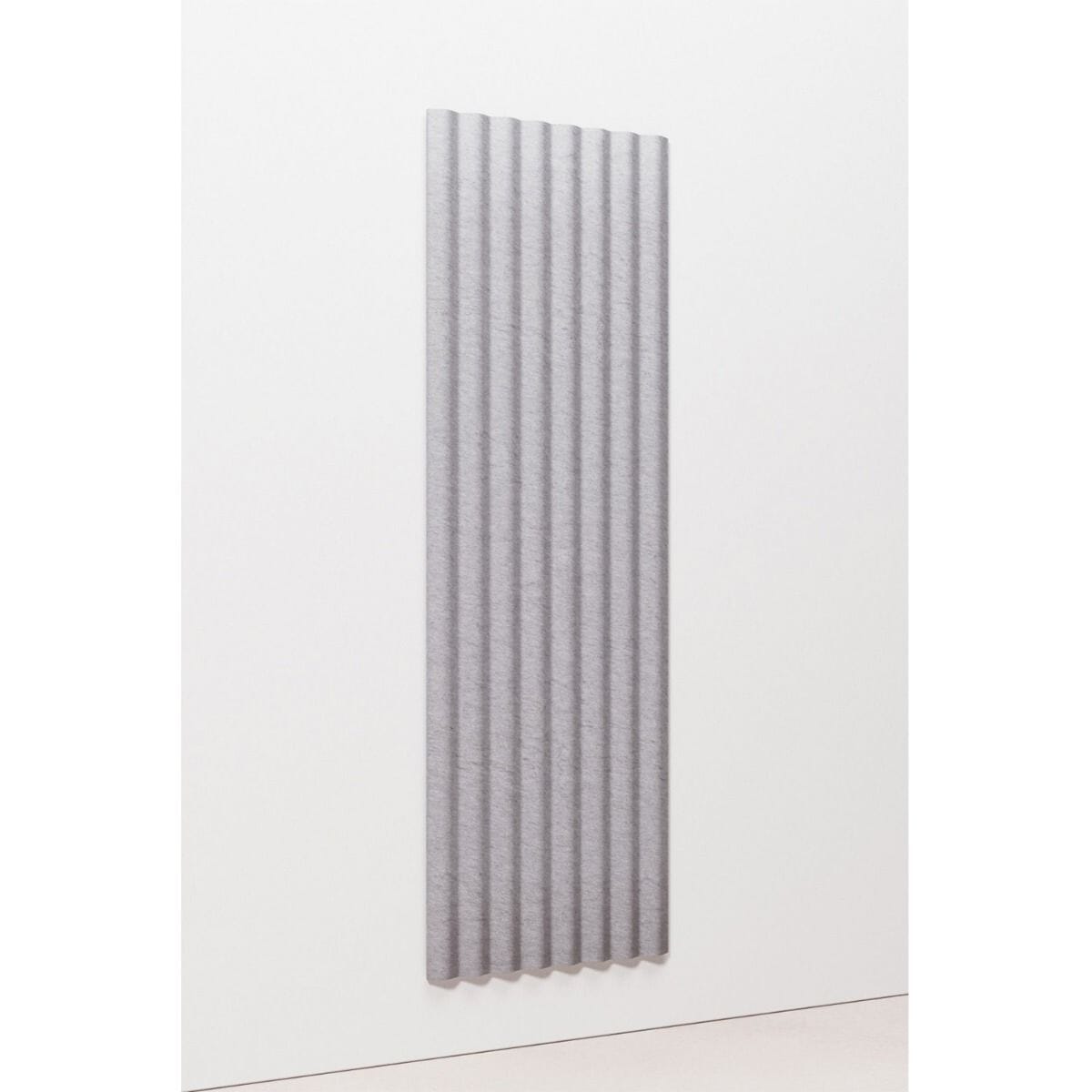
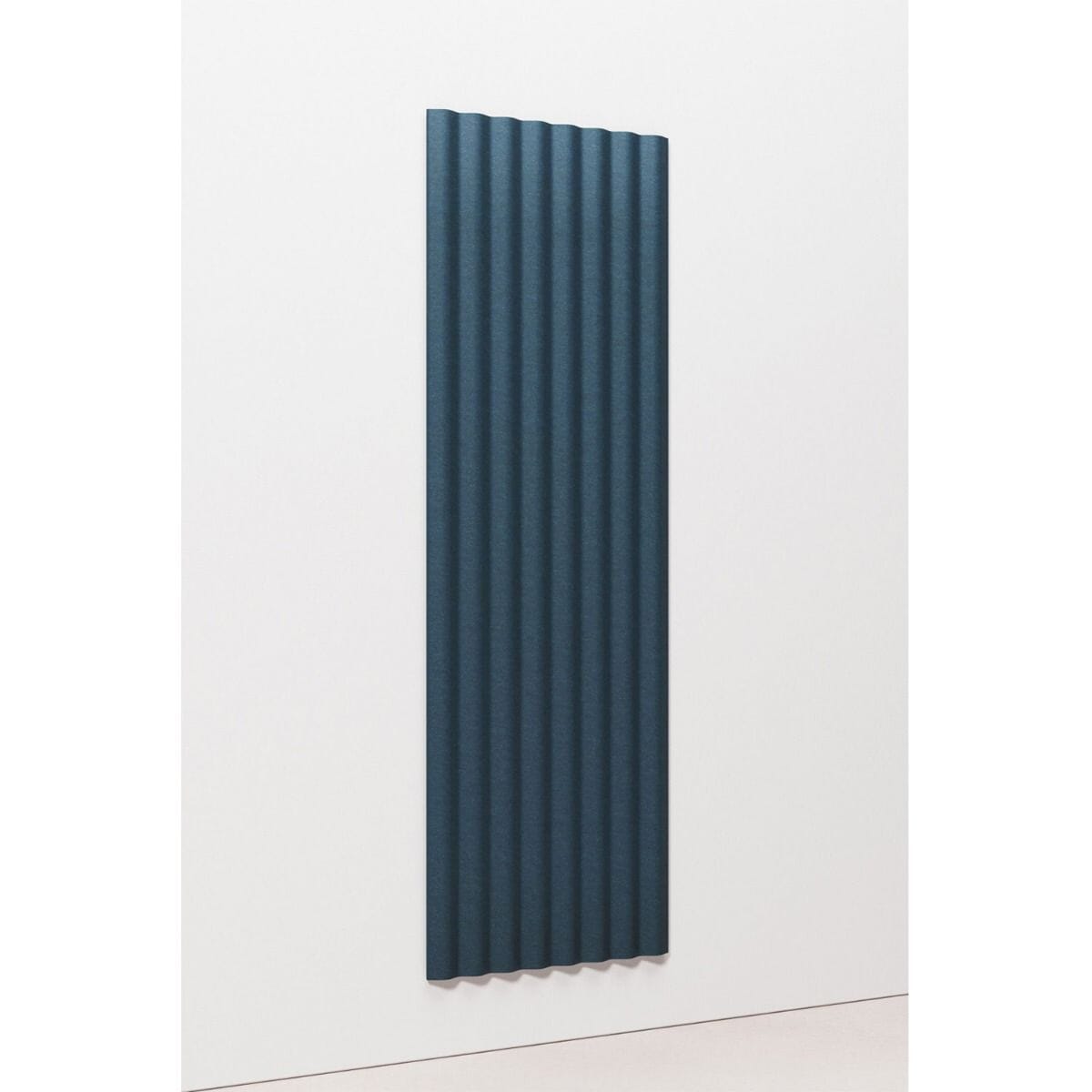
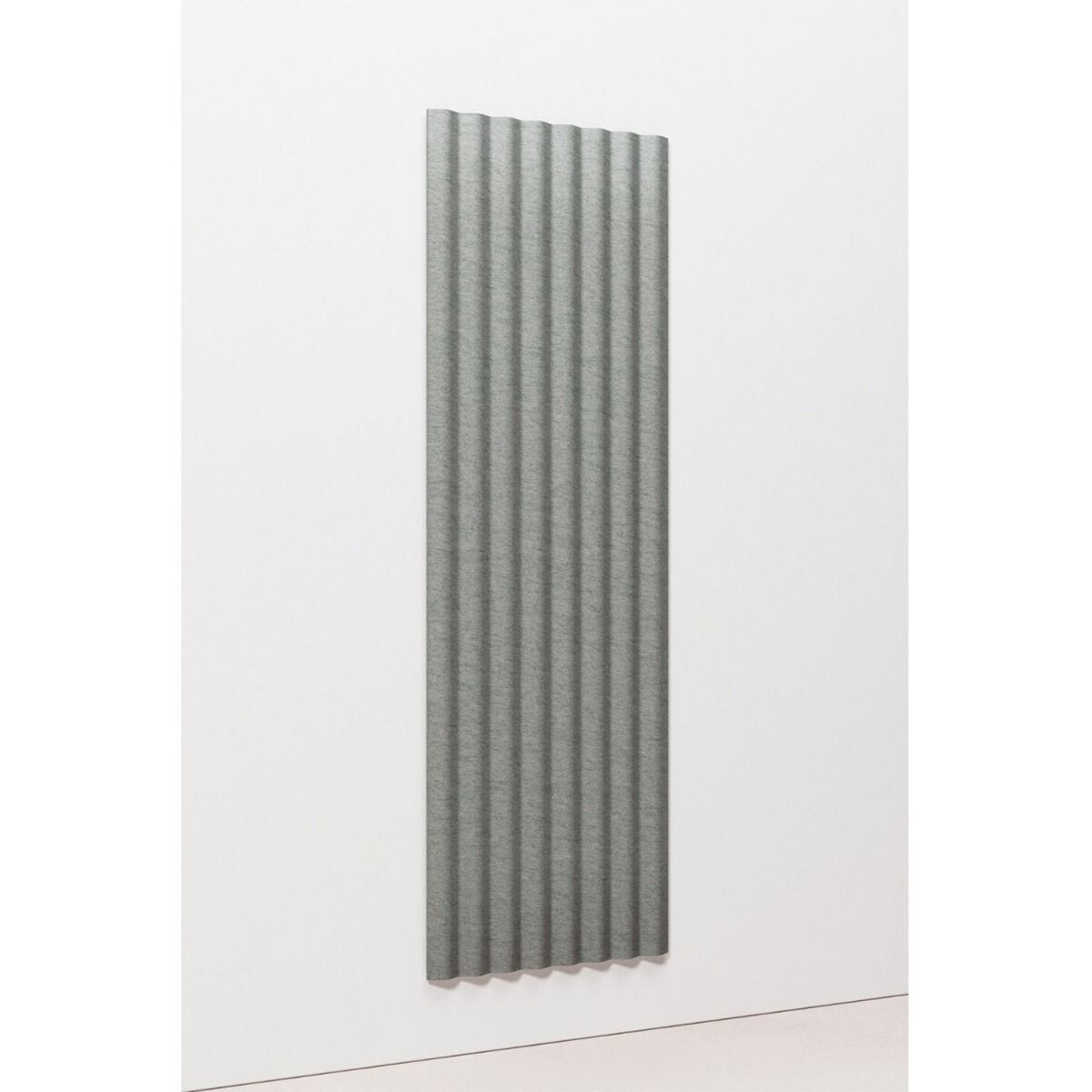
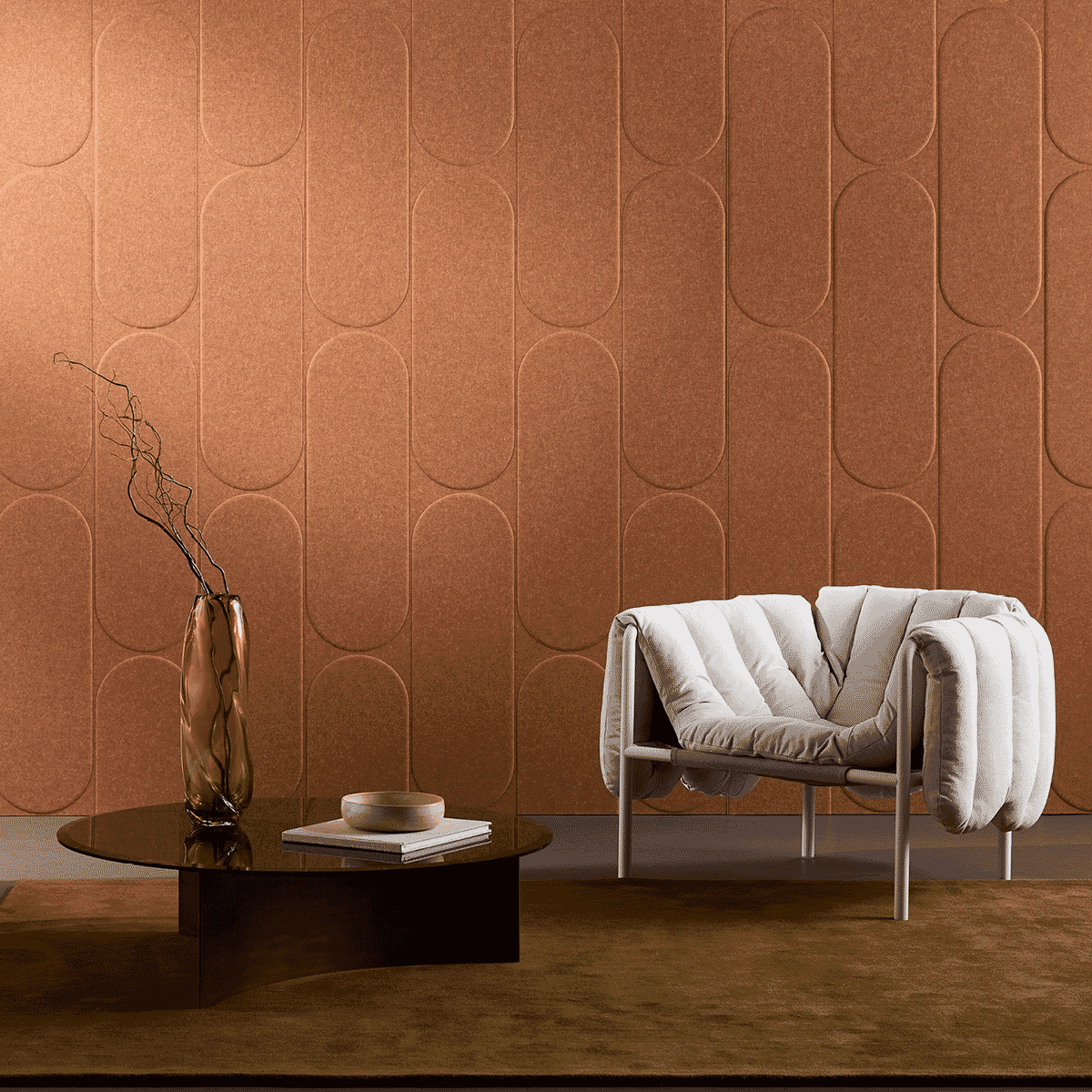
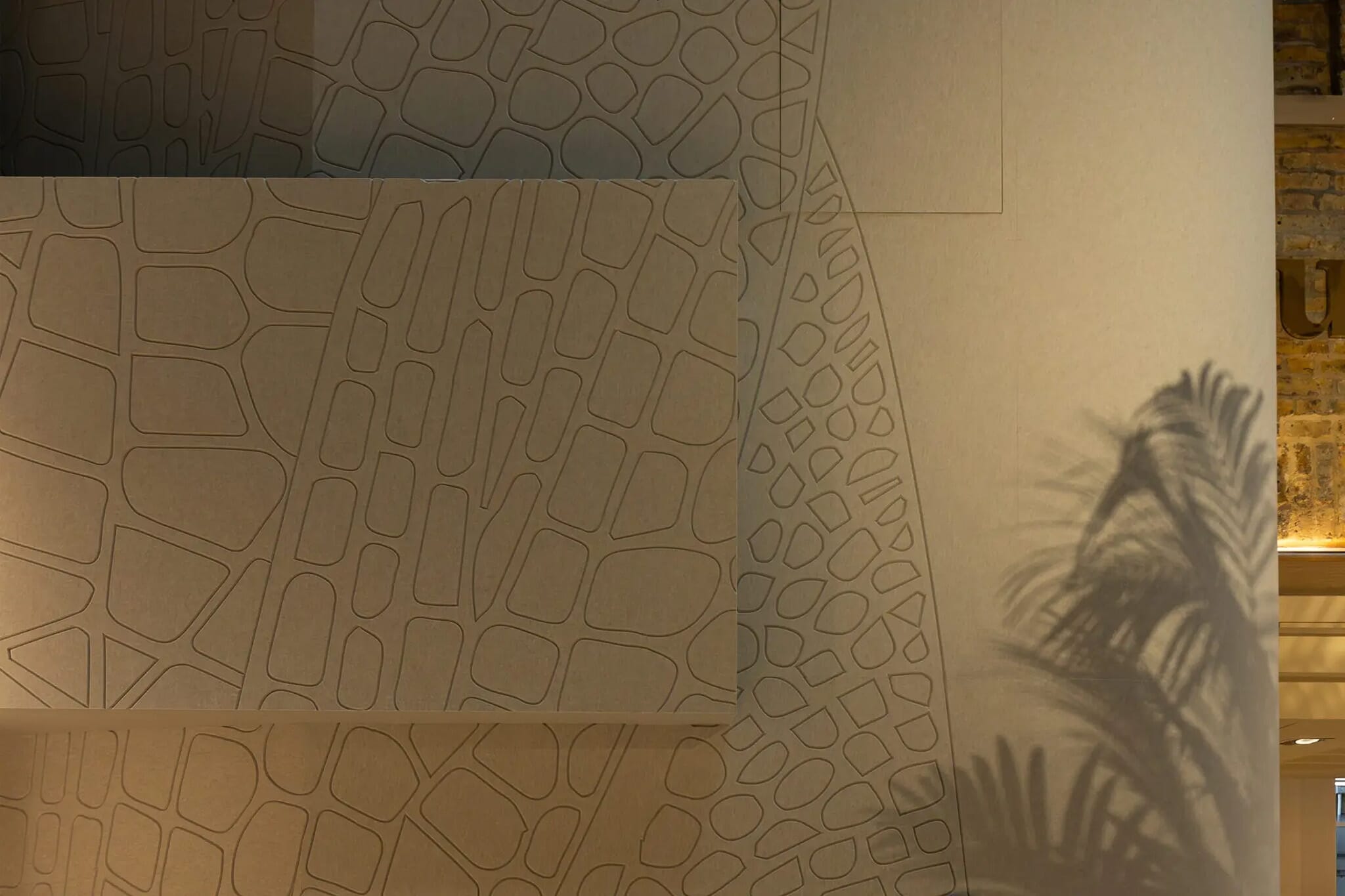
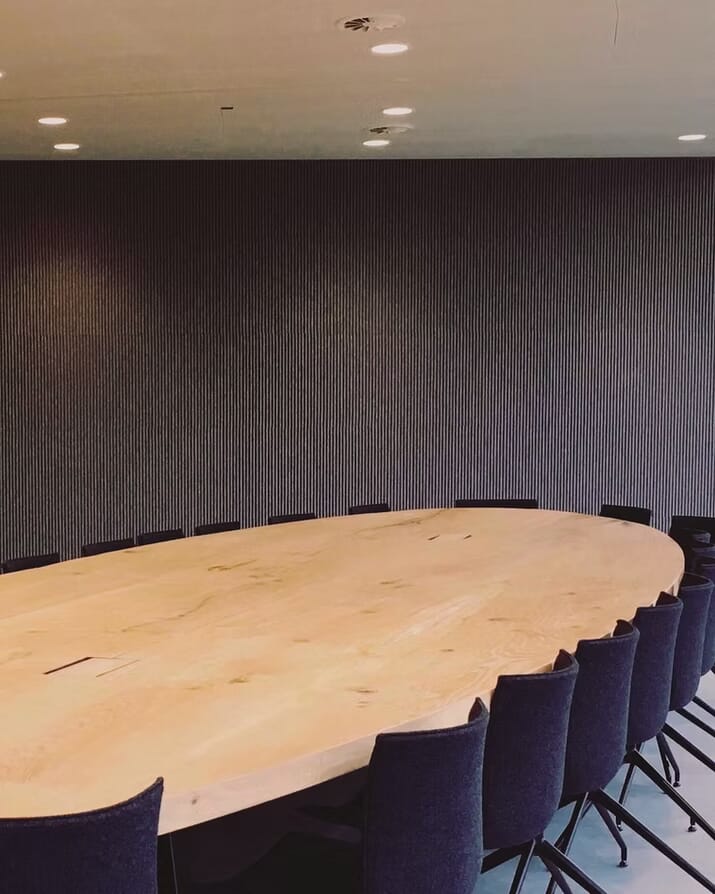
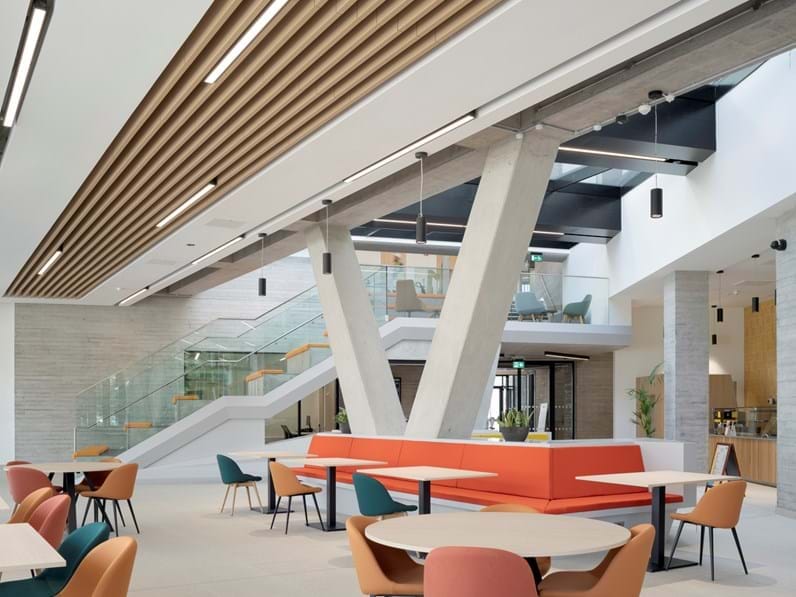
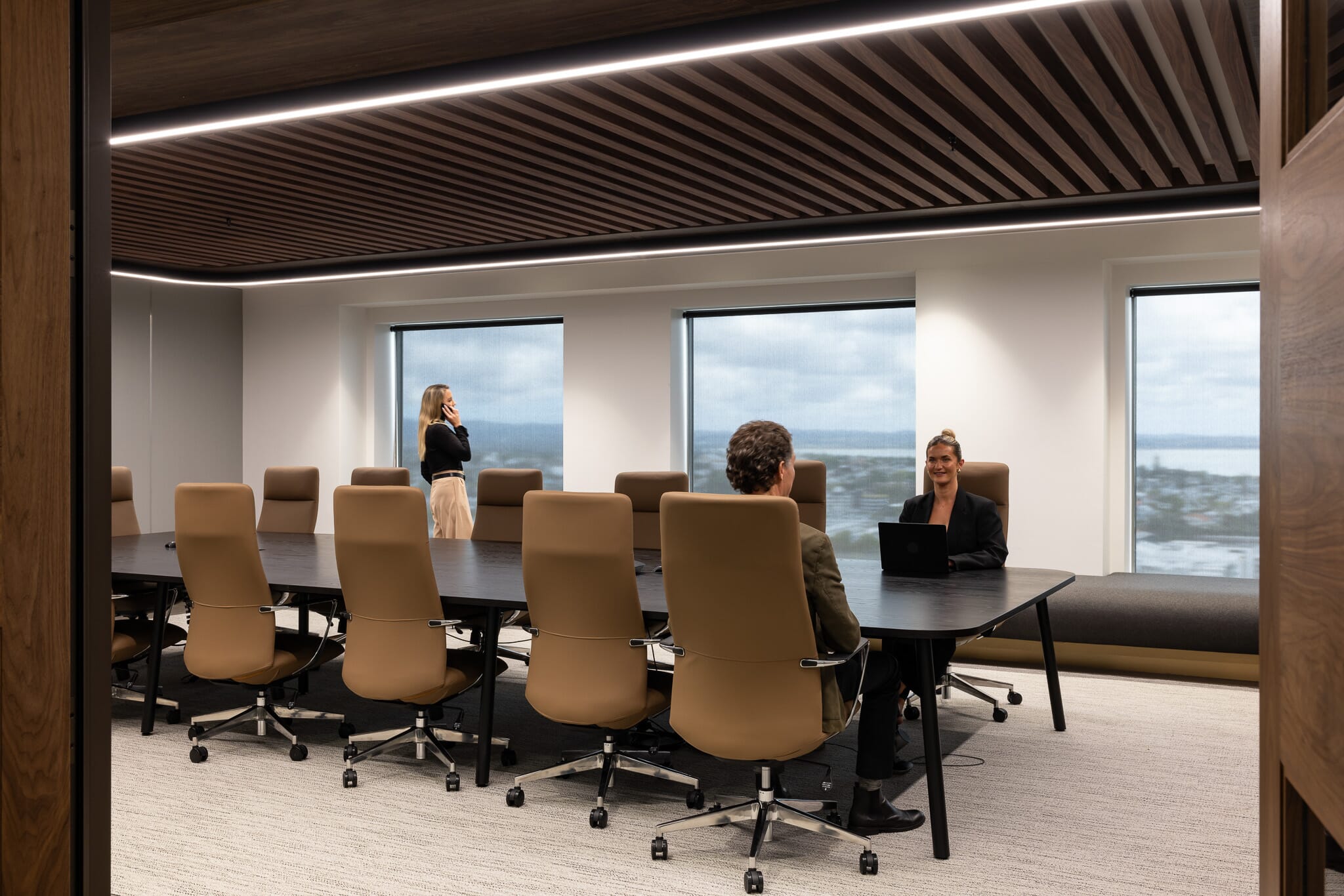
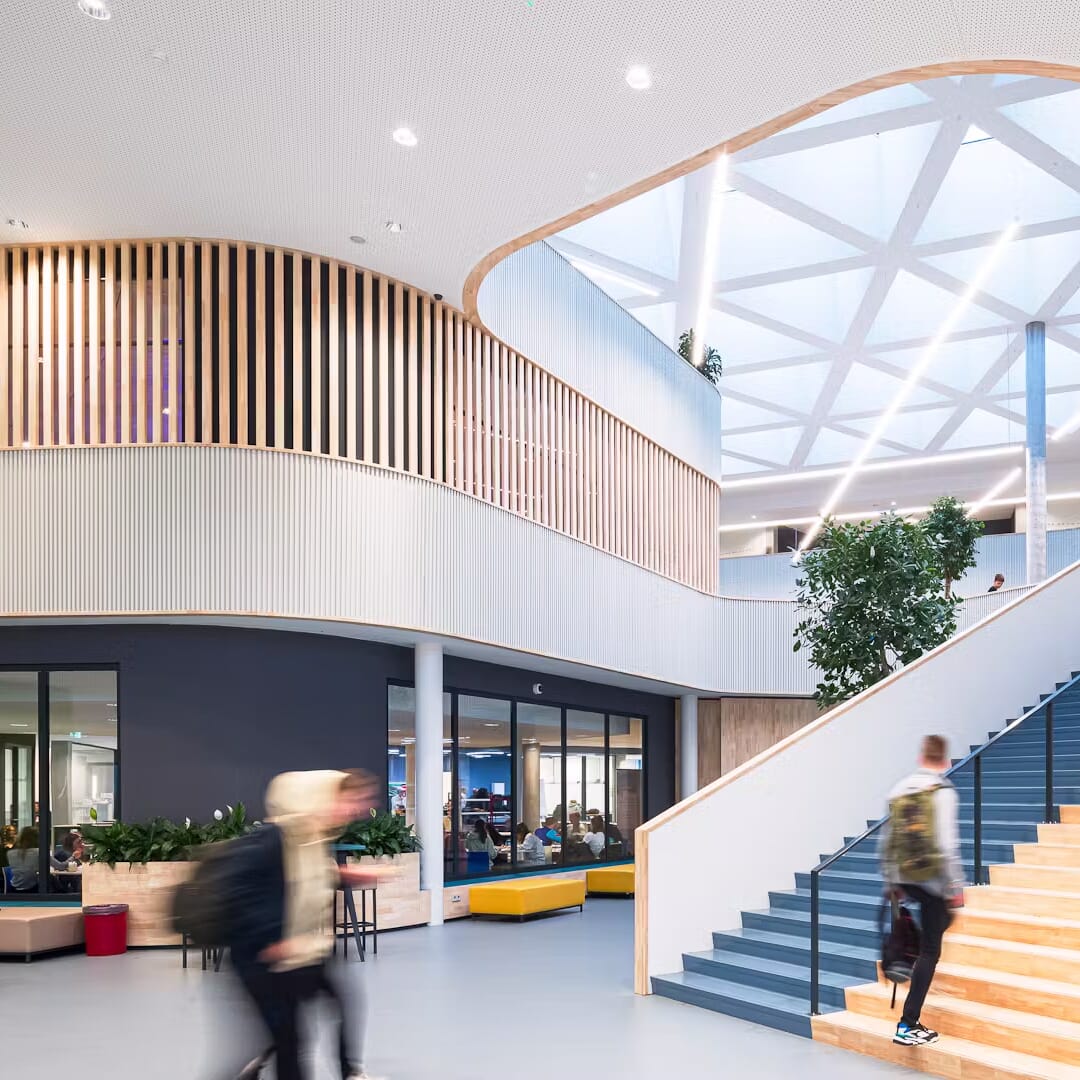
Finishes range from recycled PET felt and 3D sculpted designs to stretched fabric systems and slatted timber, so panels can sit quietly in the background or become a feature wall.



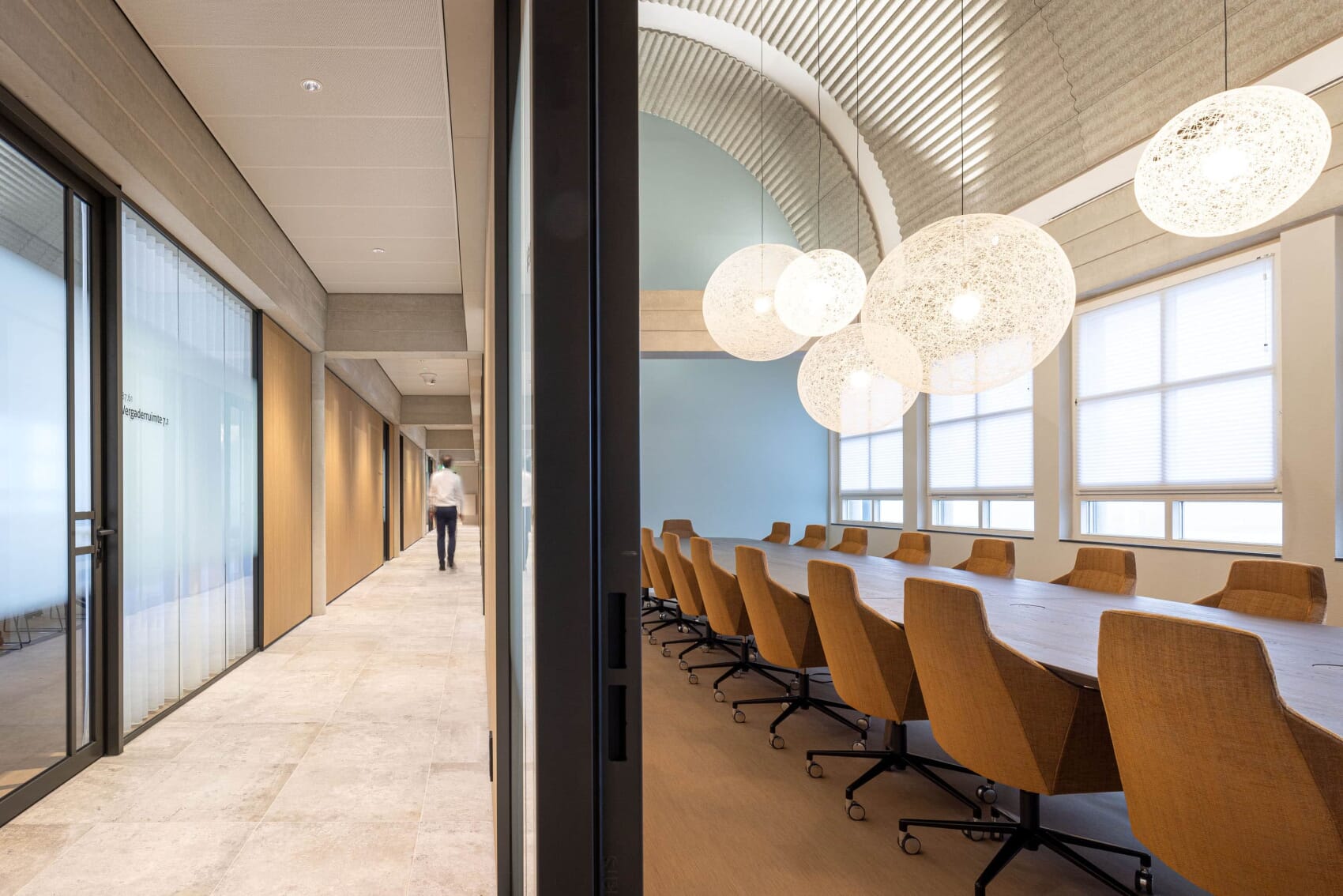
Acoustic Ceiling Rafts
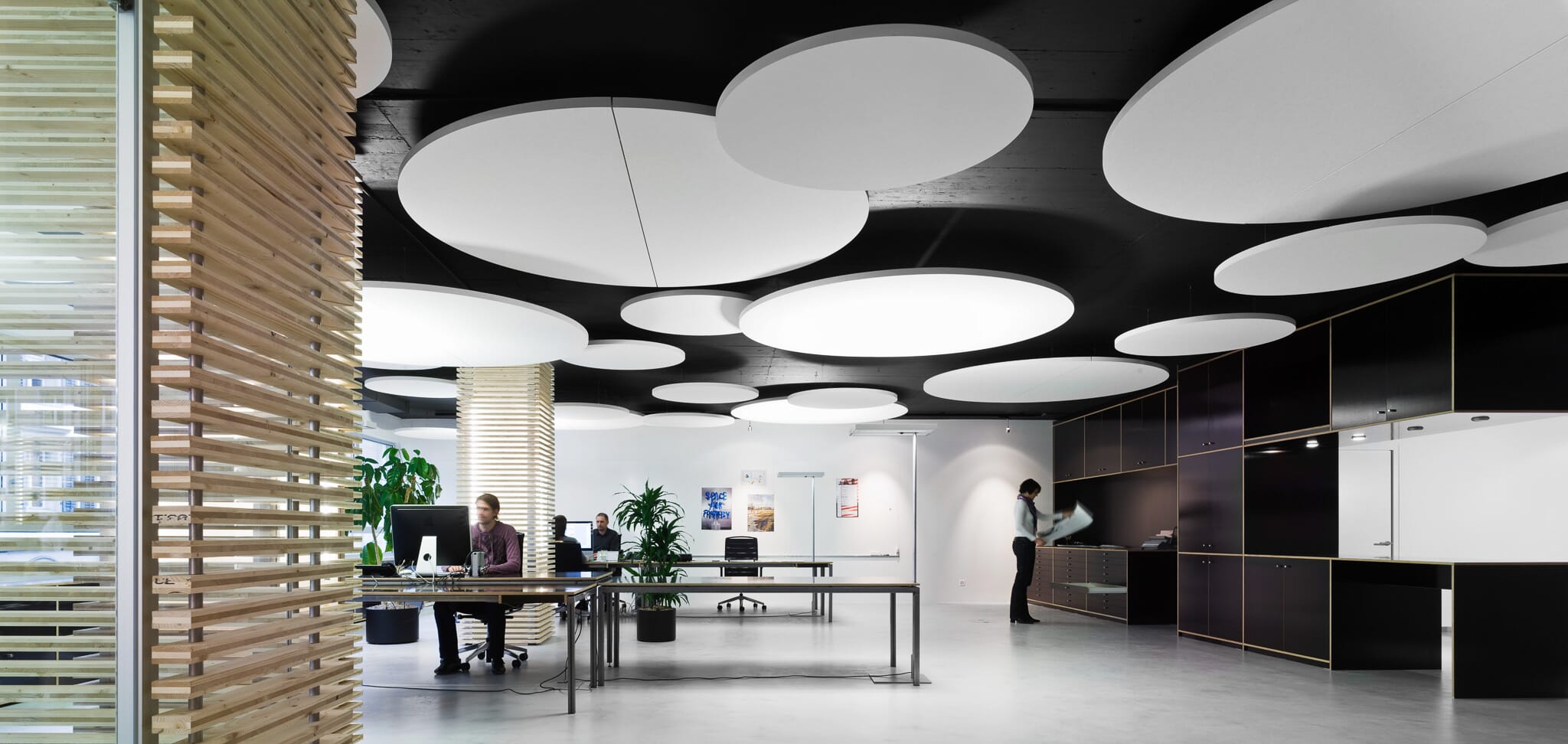
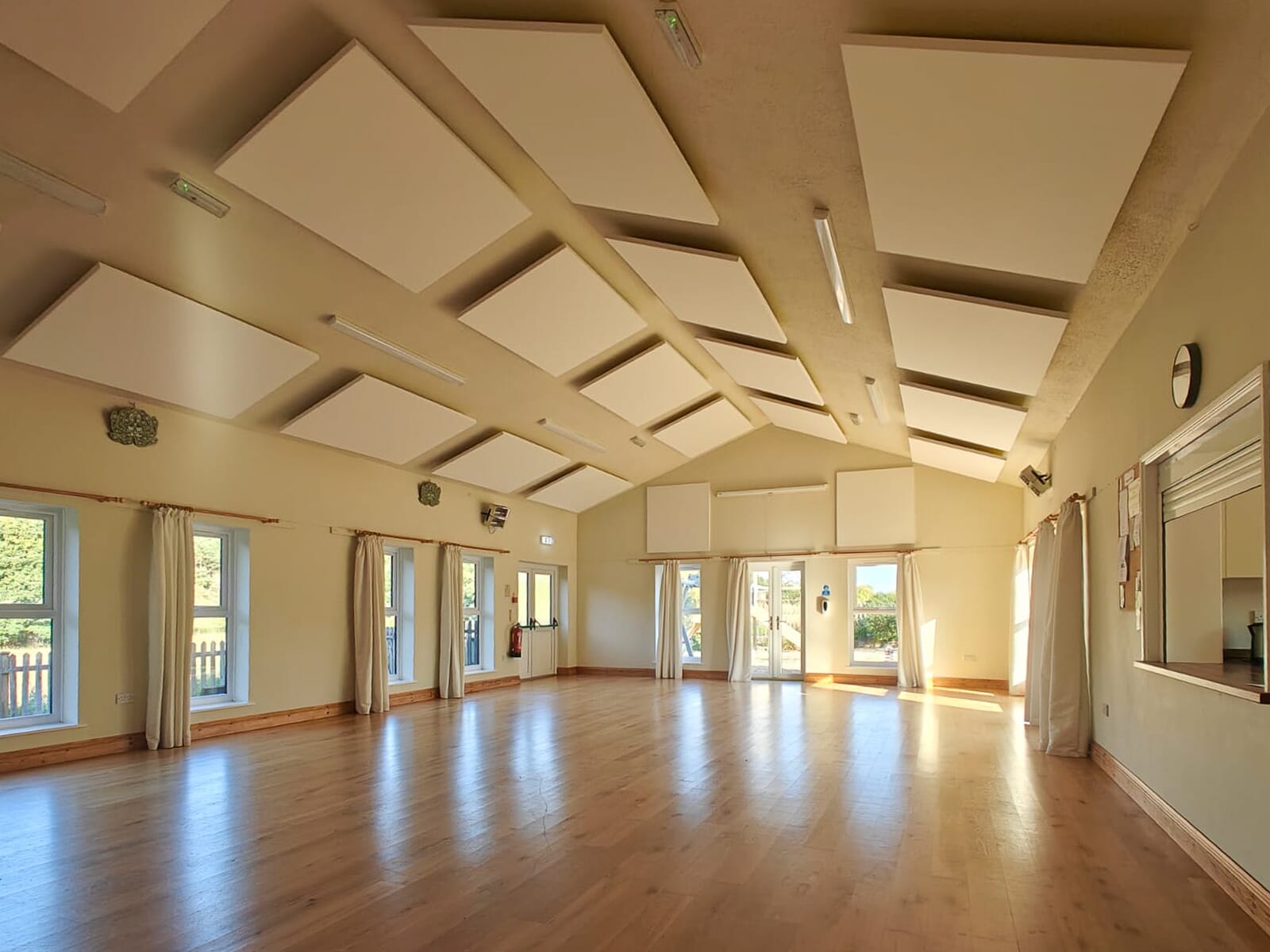
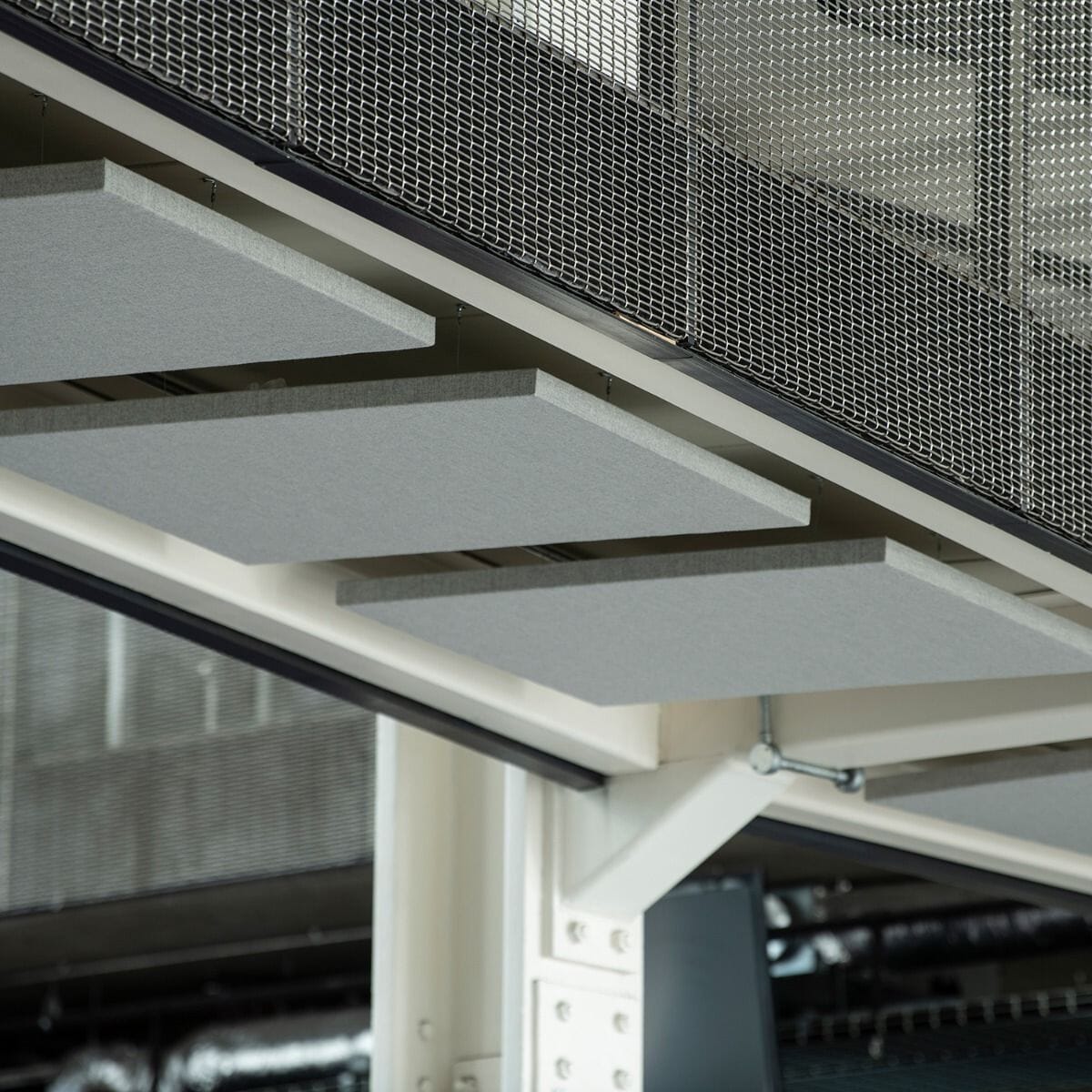
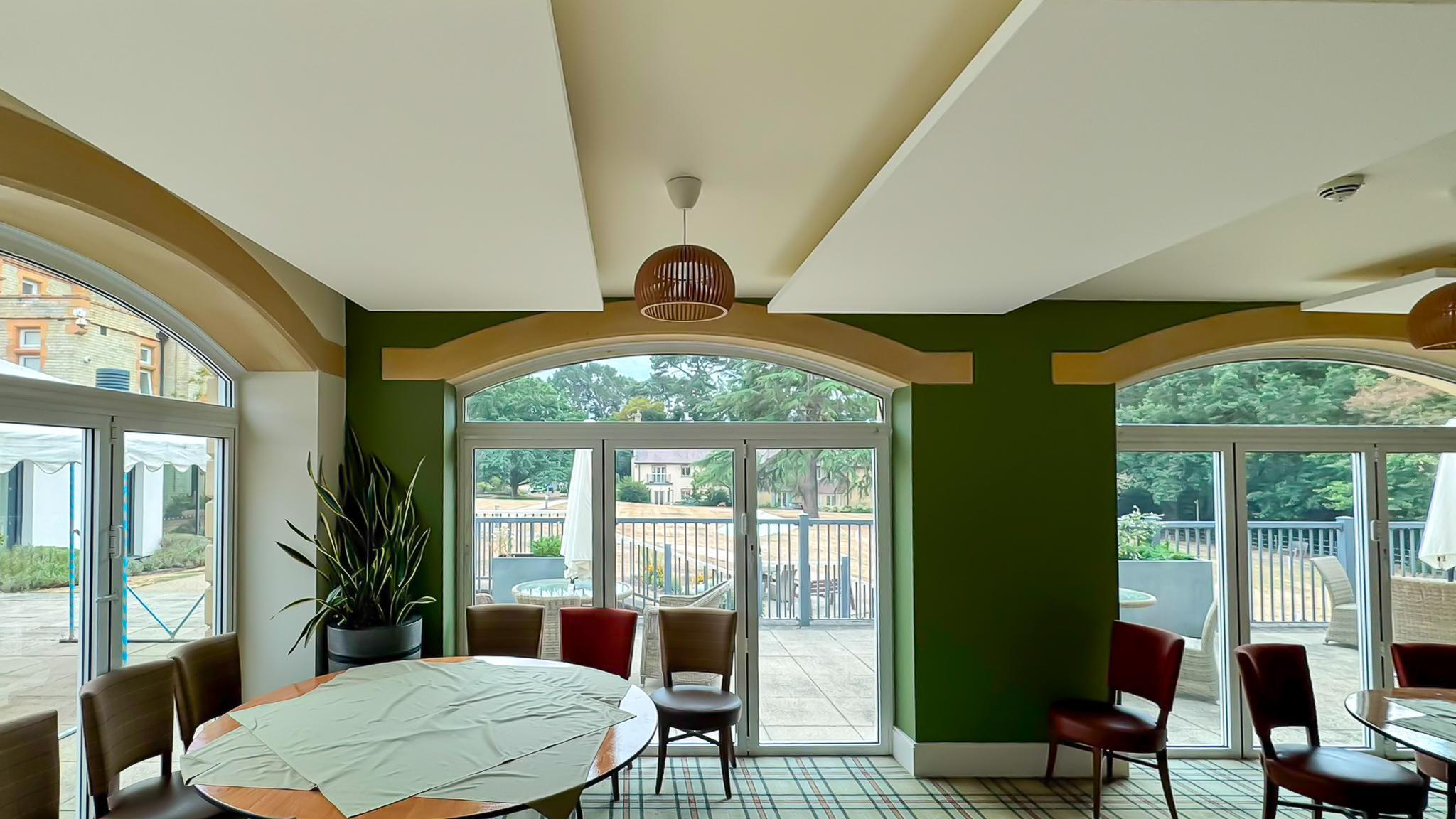
Rafts are flat panels suspended horizontally below the ceiling or fixed directly to it. They add a large amount of absorption without the cost or disruption of a full suspended ceiling, which suits offices, classrooms and halls with high or exposed ceilings.
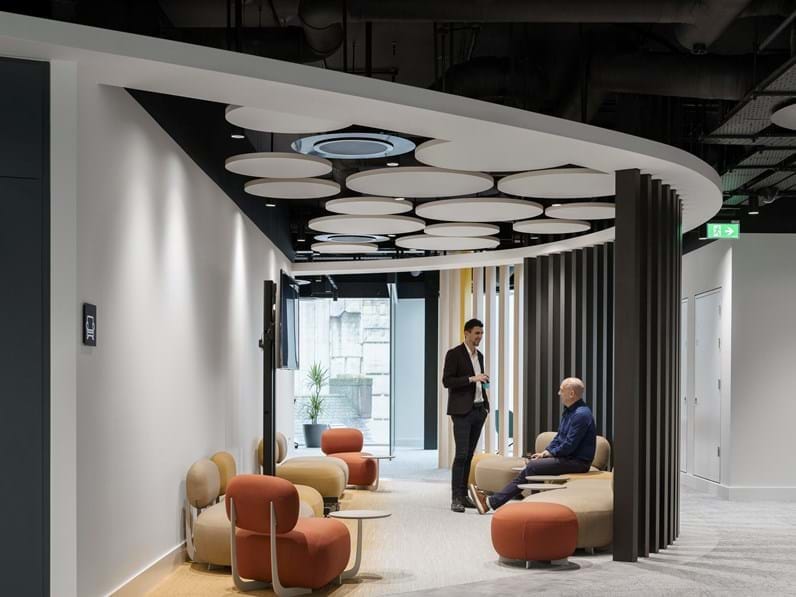
Round, square and bespoke shapes can also define zones above desks, tables and seating areas.
Acoustic panel materials compared
| Material | Examples We Supply | Typical Ratings | Best For |
|---|---|---|---|
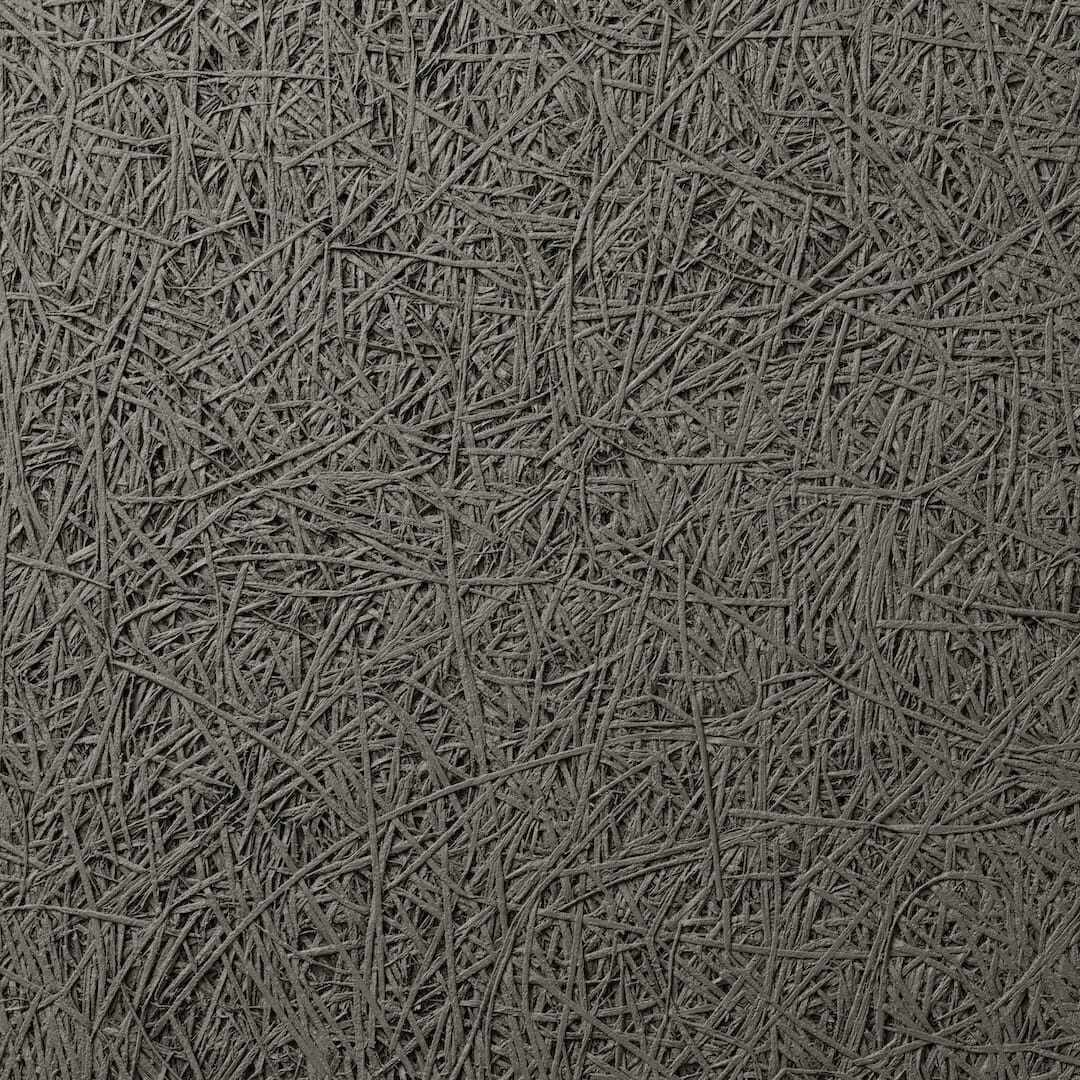
| PET Felt | Autex Lanes, Acoufelt Quietform, Impact Acoustic Wall Panels, De Vorm Mute Flow | Absorption: Class A–D Fire: B-s1,d0 |
Colourful, design-led treatment in offices, hospitality and education |
| Fabric-Wrapped | SilentSpace SilentWall, SilentSpace SilentRaft, Tenso Wall | Absorption: Class A Fire: varies with fabric |
Maximum absorption in meeting rooms and halls |
| Mineral Wool | Ecophon Solo, Rockfon Blanka | Absorption: Class A Fire: A1 or A2-s1,d0 |
Fire-critical areas such as schools, healthcare and circulation spaces |
| Wood Wool | BAUX Acoustic Tiles | Absorption: Class A–C Fire: B-s1,d0 |
Durable, impact-resistant surfaces in sports halls and schools |
| Slatted Timber | NatureWall SlatWall Grand | Absorption: Class C–D Fire: varies |
Warm, natural finishes in receptions and hospitality |
Ratings are typical ranges. Absorption depends on thickness, backing and mounting, and panels usually perform better with an air gap behind them. Fire ratings vary by product and finish, and fire-retardant versions of timber products are available. We check the manufacturer’s test data for every product we specify.
Sound absorption classes explained
| Class | Weighted Absorption (αw) | What It Means |
|---|---|---|
| Class A | 0.90–1.00 | Absorbs almost all sound that reaches it |
| Class B | 0.80–0.85 | Very high absorption |
| Class C | 0.60–0.75 | Good absorption |
| Class D | 0.30–0.55 | Moderate absorption |
| Class E | 0.15–0.25 | Low absorption |
From start to finish we handle everything

Consultation
Our acoustic consultants assess your space on-site (or remotely) and provide a detailed proposal. Every consultation includes acoustic design recommendations, product specifications, and reverberation analysis to ensure measurable improvements.

Assessment
We don’t just identify noise issues — we provide solutions that are cost-effective, design-conscious, and performance-led. Whether reducing echo, improving clarity, or addressing speech privacy, our expert guidance ensures the right acoustic fit for your space.
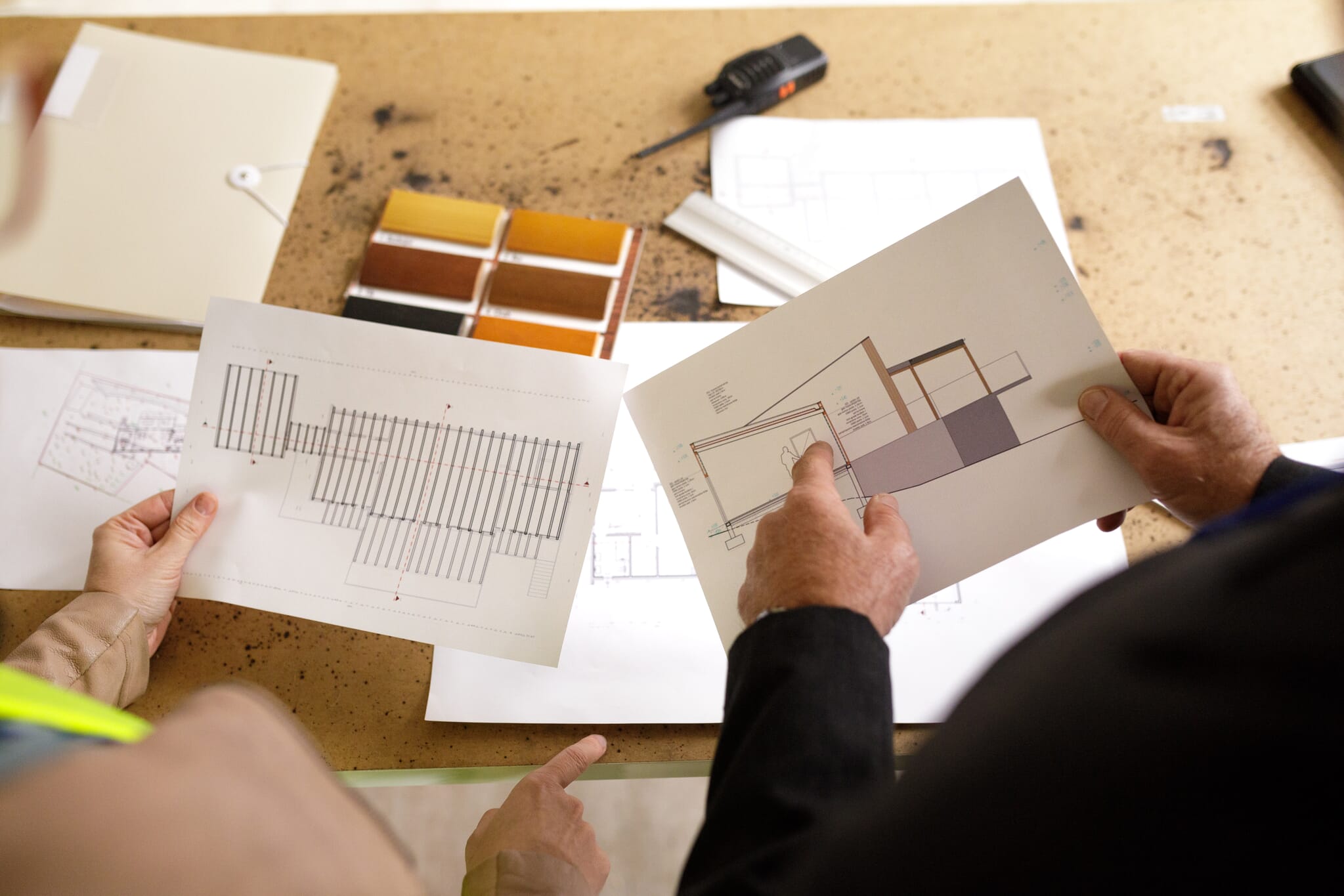
Design & Planning
Every project includes a tailored acoustic design with a free CAD proposal, showing product placement, specifications, and performance ratings. Our designs can blend seamlessly into interiors or become bold architectural features — always balancing form with function.
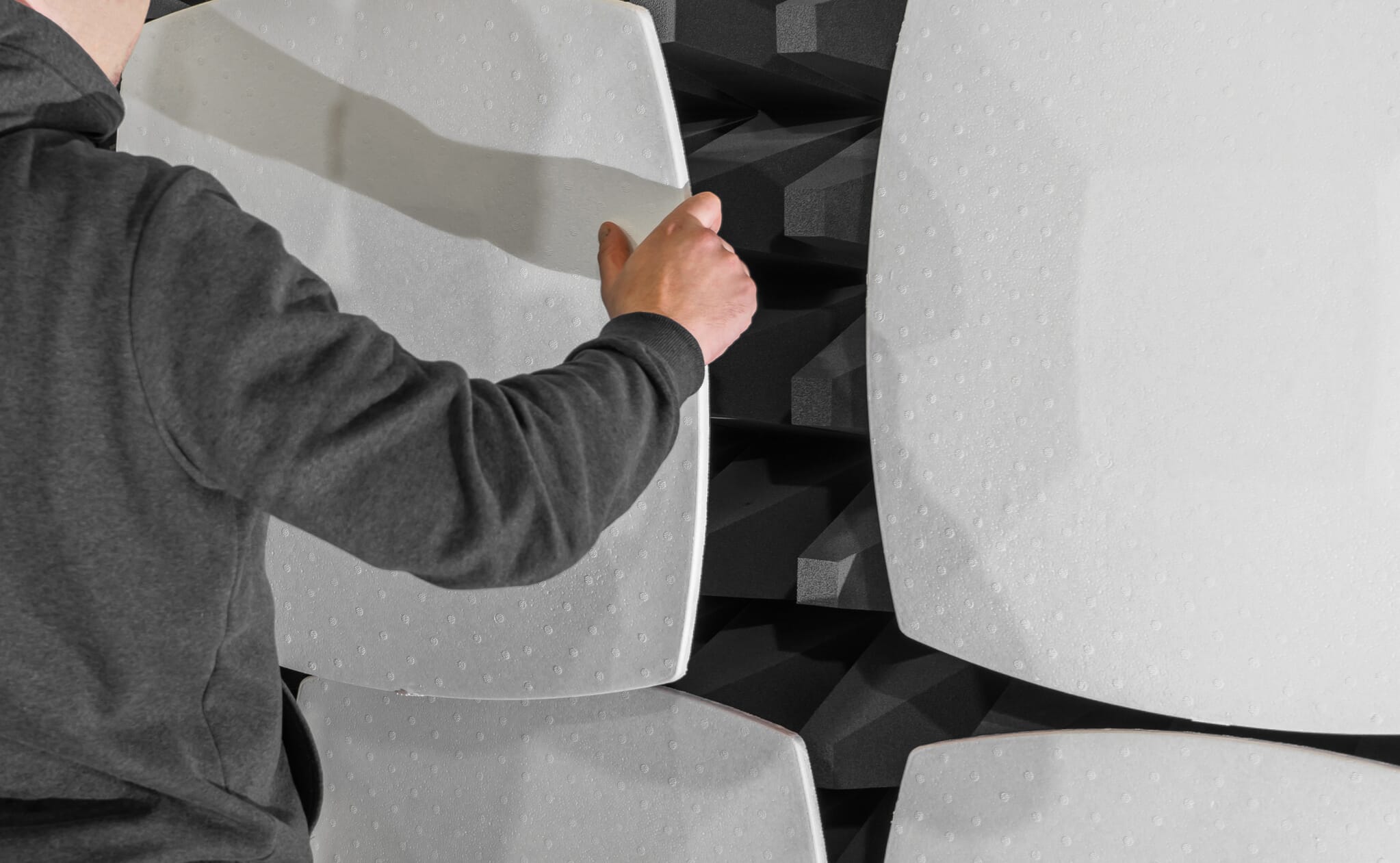
Supply & Installation
With over 5,000 projects completed nationwide, our in-house installation teams handle even the most complex acoustic projects. We work to strict health and safety standards, with IPAF-certified specialists, SSSTS/SMSTS-trained supervisors, and all installers CSCS accredited.
FAQs & tips for selecting the right acoustic panels
Yes. Acoustic panels absorb sound energy, reducing echo and controlling reverberation. Without treatment, sound bounces off hard surfaces such as glass, plaster, concrete and timber, creating a noisy, tiring environment. Panels made from sound-absorbing materials soak up that energy instead, so speech becomes clearer and background noise calmer.
At Resonics, we only use panels tested in independent acoustic labs, so their performance is certified and measurable. With 7,000+ projects completed, we’ve seen first-hand the difference they make in offices, schools, restaurants and community spaces.
Prices vary with size, material and finish. As a rough guide to product costs:
- Wall panels: £80–£200 each
- Ceiling rafts: £150–£400 each
- Baffles: £60–£120 each
For a typical commercial installation, allow roughly £130–£280 per m² of panel, supplied and installed. Higher-performing Class A products are often the most cost-effective, because you need fewer of them. Design-led finishes such as slatted timber tend to cost more for less absorption.
For office projects, our office acoustics guide breaks down typical costs by floor area. For an accurate price for your space, book a free acoustic survey and quotation.
The best placement depends on how the room is used:
- Offices and meeting rooms: at first reflection points, on the side walls and the ceiling above desks or tables, ideally across two adjacent walls to reduce flutter echo.
- Restaurants and classrooms: spread evenly across walls and ceilings to avoid hot spots, ideally covering more than 50% of the ceiling with Class A products.
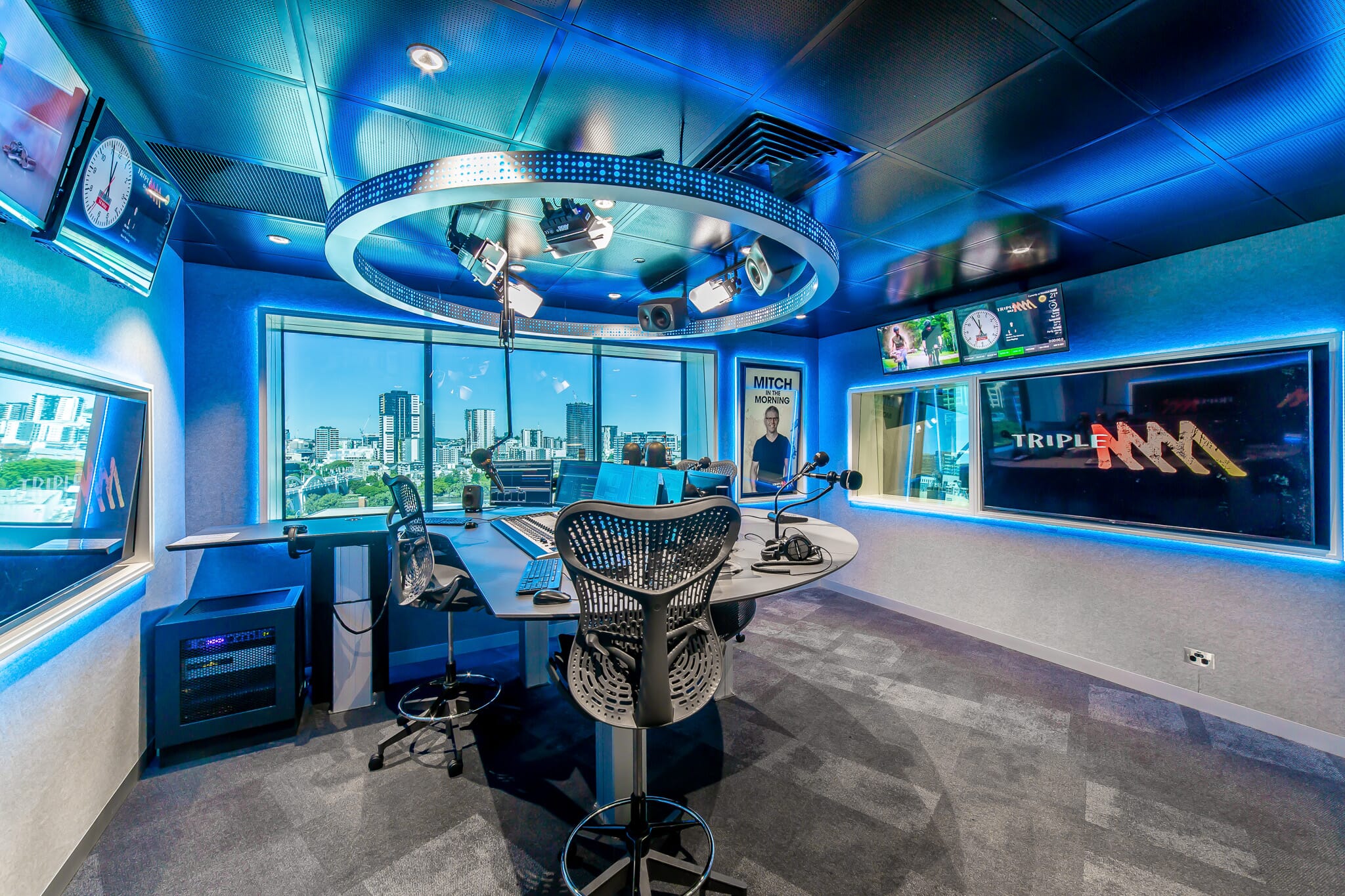
- Studios: at the first reflection points beside and behind speakers and microphones.
Ceilings are often the most effective surface because they’re large and unobstructed. Our free CAD proposals show exactly where each panel should go for the best performance.
For most spaces, yes. Poor acoustics make conversations harder to follow, add to fatigue and stress, and can affect learning in classrooms and the customer experience in restaurants and bars.
In offices, better acoustics reduce distractions and help people concentrate. In hospitality, noise levels can shape reviews and repeat visits. Compared with the ongoing cost of a space that doesn’t work as it should, acoustic treatment is usually a modest, one-off investment.
We specialise in commercial projects that we specify, supply and install. If you’re after panels to order online and fit yourself, for a home office, studio or smaller space, see our guide to buying acoustic panels online.
No, and it’s one of the most common misunderstandings. Acoustic panels absorb sound within a room, reducing echo and making speech clearer. They don’t stop sound travelling through walls, floors and ceilings into neighbouring spaces, because that depends on the building’s construction.
If conversations are being overheard between rooms, sound masking is often an effective and far less disruptive option. Our acoustic survey will pinpoint which problem you’re dealing with.
It depends on the size and shape of the room, its surfaces and how it’s used. A small meeting room might need as few as 6–8 wall panels, while an open-plan office could need dozens of ceiling baffles or rafts. The aim is to bring reverberation time down to a comfortable level, not to cover every surface.
Walls: Flutter echo happens between parallel surfaces, so good practice is to panel two adjacent walls, ideally from skirting to ceiling.
Ceilings: BS ISO 22955:2021 identifies the ceiling as the most important surface to treat in open-plan offices. We typically recommend around 50–60% ceiling coverage with Class A products.
For a quick estimate, try our room acoustics calculator. Our free survey and CAD layout then confirm exactly how many panels you need and where they should go.
Most commercial acoustic panels are tested to BS EN 13501-1 and carry a Euroclass rating, such as A2-s1,d0 or B-s1,d0. The rating you need depends on where the panels are going. Approved Document B sets higher standards for escape routes and circulation spaces than for individual rooms.
We check fire performance as part of every specification and can share manufacturer datasheets for your building control or fire strategy.
- Know your goal: Identify whether you need sound absorption, echo control, or noise containment – this will guide your choice of acoustic panels.
- Treat the ceiling first: In open-plan spaces, covering 50–60% of the ceiling with Class A panels makes the biggest impact.
- Placement is key: Position panels near noise sources or reflective surfaces for the best results.
- Get expert advice: Consulting an acoustic specialist will help you strike the right balance for your space.
- Prioritise placement: Position panels near noise sources or reflective surfaces to maximise sound absorption.
- Know the problem: If sound is transferring between rooms, absorption panels won’t help. A site sound test can pinpoint the issue.
- Consider sound masking: In many cases, it’s an effective solution for controlling sound spill between spaces.
- Get a room assessment: An expert evaluation will ensure the right products are used to create a balanced acoustic environment.
- Think durability: In high-traffic areas, go for stain-resistant, easy-to-clean panels that can handle daily wear.
- Highly absorbent and cost-effective: Choosing highly absorbent panels will help you meet BB93 regulations without blowing the budget.
- Prioritise safety: Make sure all acoustic products meet fire safety standards.
- Use impact-resistant solutions: For sports halls, opt for tough acoustic panels—Super G by Ecophon is a reliable, affordable choice.
- Start with the ceiling: Acoustic baffles or rafts are the most effective way to reduce echo and reverberation.
- Check the NRC rating: Choose panels rated 0.90 or higher for effective sound absorption.
- Verify performance: Use products backed by independent lab testing to ensure reliable results.
- Plan your budget: Full acoustic treatments typically range from £3,000–£12,000.
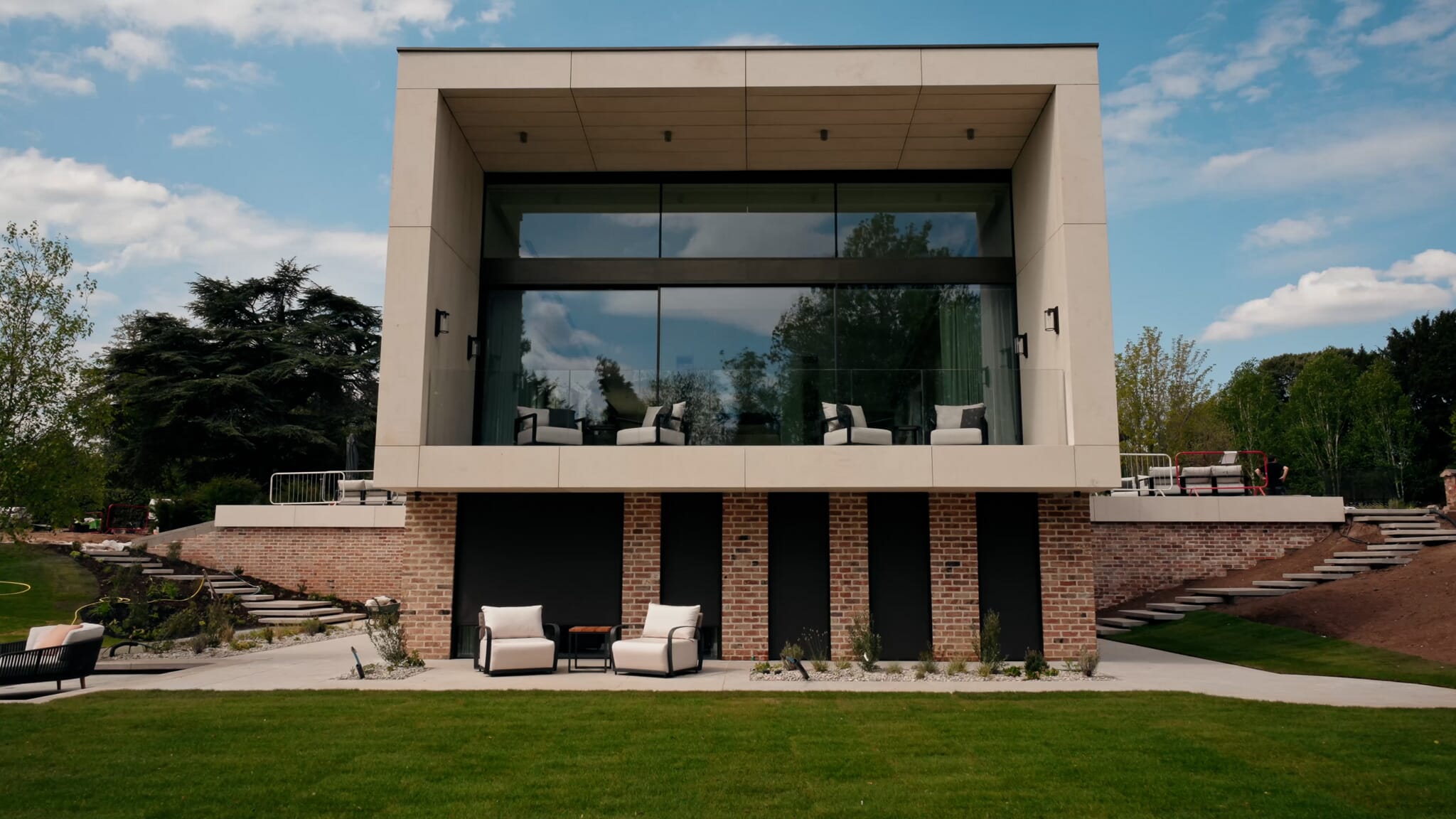
Featured Resonics case studies
View more case studiesSelect your space that needs acoustic treatment

Our clients