









7 Minute Read
Open Plan Office Acoustic Standards 2026
A practical guide to BS ISO 22955:2021 — what it requires, which acoustic treatments meet it, and how to assess your open plan office

Mark Irwin
19th Nov 2025
Categories
Guide
TL;DR – Summary
Open plan offices boost collaboration but often suffer from excessive noise that harms focus, well-being, and productivity. The BS ISO 22955:2021 standard provides clear guidance on acoustic design in open-plan workspaces.
Here’s what it means in practice:
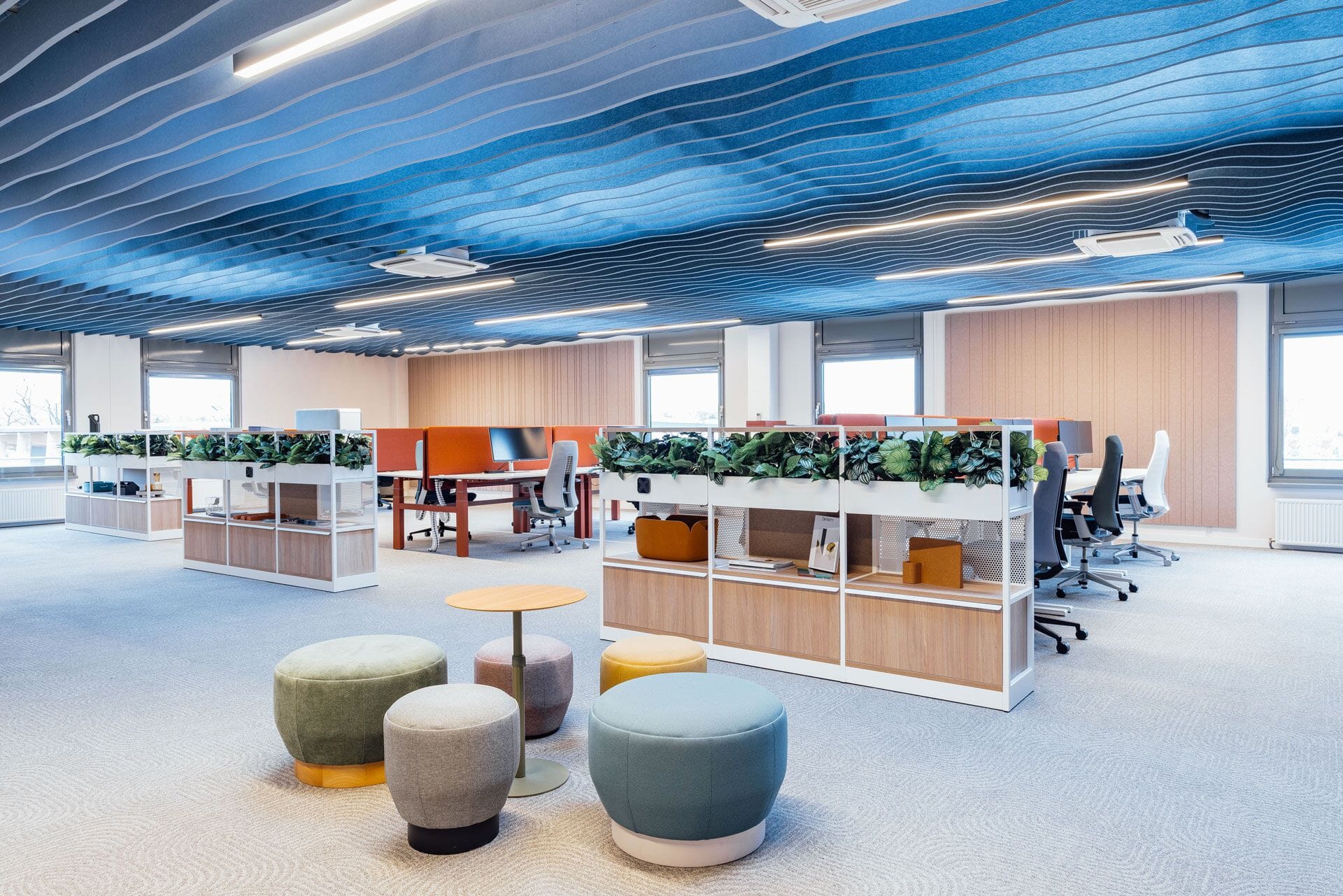
- Ceilings are the single most important surface to treat, the standard calls for Class A coverage across 50–60% of the ceiling area.
- Wall panels reduce flutter echo and support workstations near walls, particularly in corners.
- Flooring provides minimal acoustic benefit in most cases.
- Screens, acoustic furniture and sound masking all contribute, but none replace proper ceiling treatment.
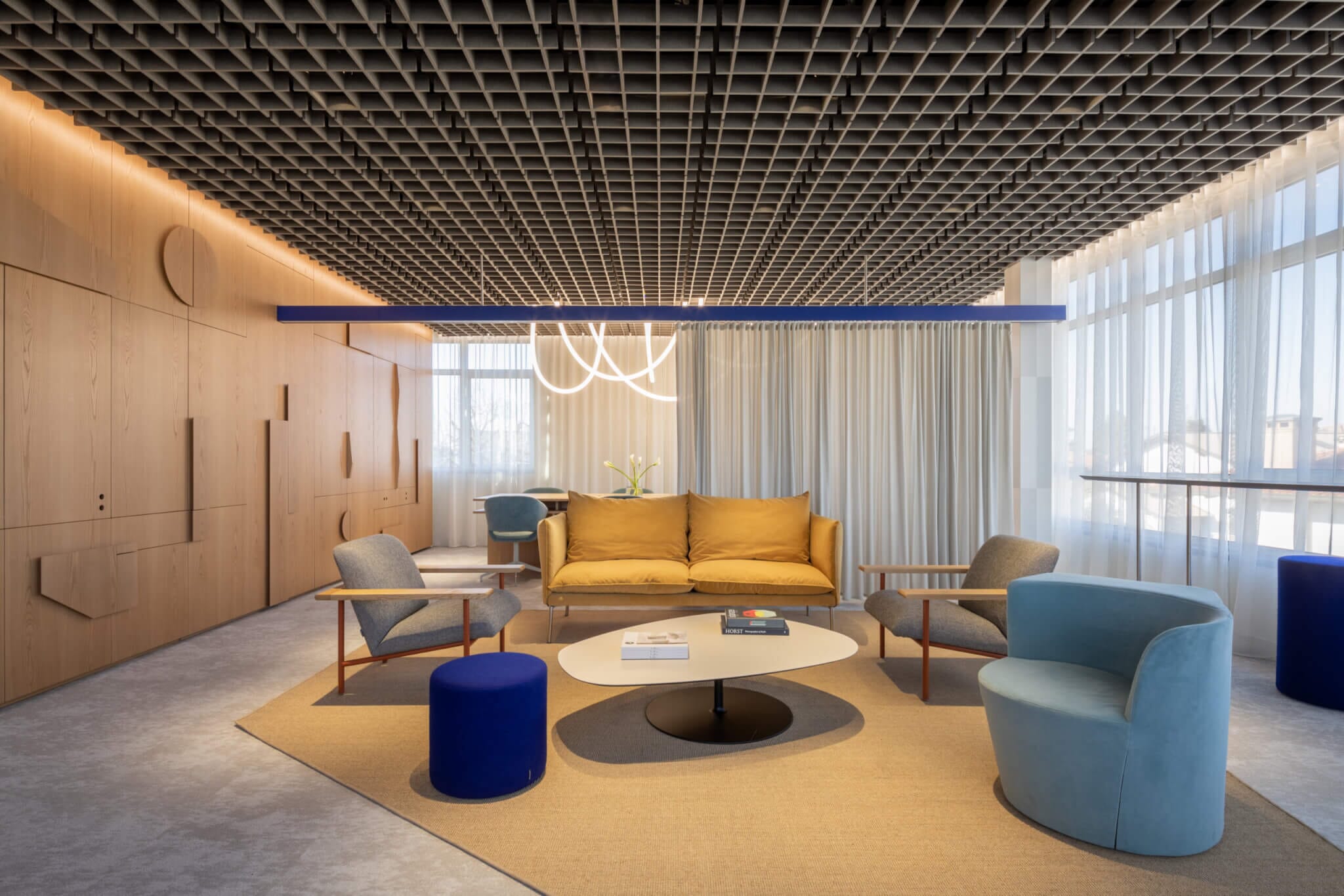
What is BS ISO 22955:2021?
BS ISO 22955:2021 is the British and International Standard for acoustic quality in open plan offices. Published in 2021, it replaced older guidance that had failed to keep pace with how modern offices actually work.
The standard doesn’t just set vague performance targets. It defines six distinct workspace activity types, each with its own acoustic requirements based on the nature of the work being done:
- Individual focused work — where minimising distraction is the priority
- Collaborative and group work — where speech intelligibility between team members matters
- Tele and video communication — where background noise must be tightly controlled to avoid disrupting calls
- Creative and collaborative work — typically livelier environments where a degree of ambient noise is acceptable
- Confidential communication — where speech privacy is essential
- Mixed activity — flexible spaces that need to support both focused and collaborative work
For each activity type, the standard defines measurable acoustic indicators, including maximum reverberation time, giving designers and specifiers clear, testable targets to work towards.
In practice, most open-plan offices contain a mix of these activity types. The standard’s value is in helping teams understand which acoustic conditions apply where and design accordingly.
What the Standard Prioritises
BS ISO 22955:2021 is clear about where acoustic treatment has the most impact, and in what order:
Ceiling — the most important surface
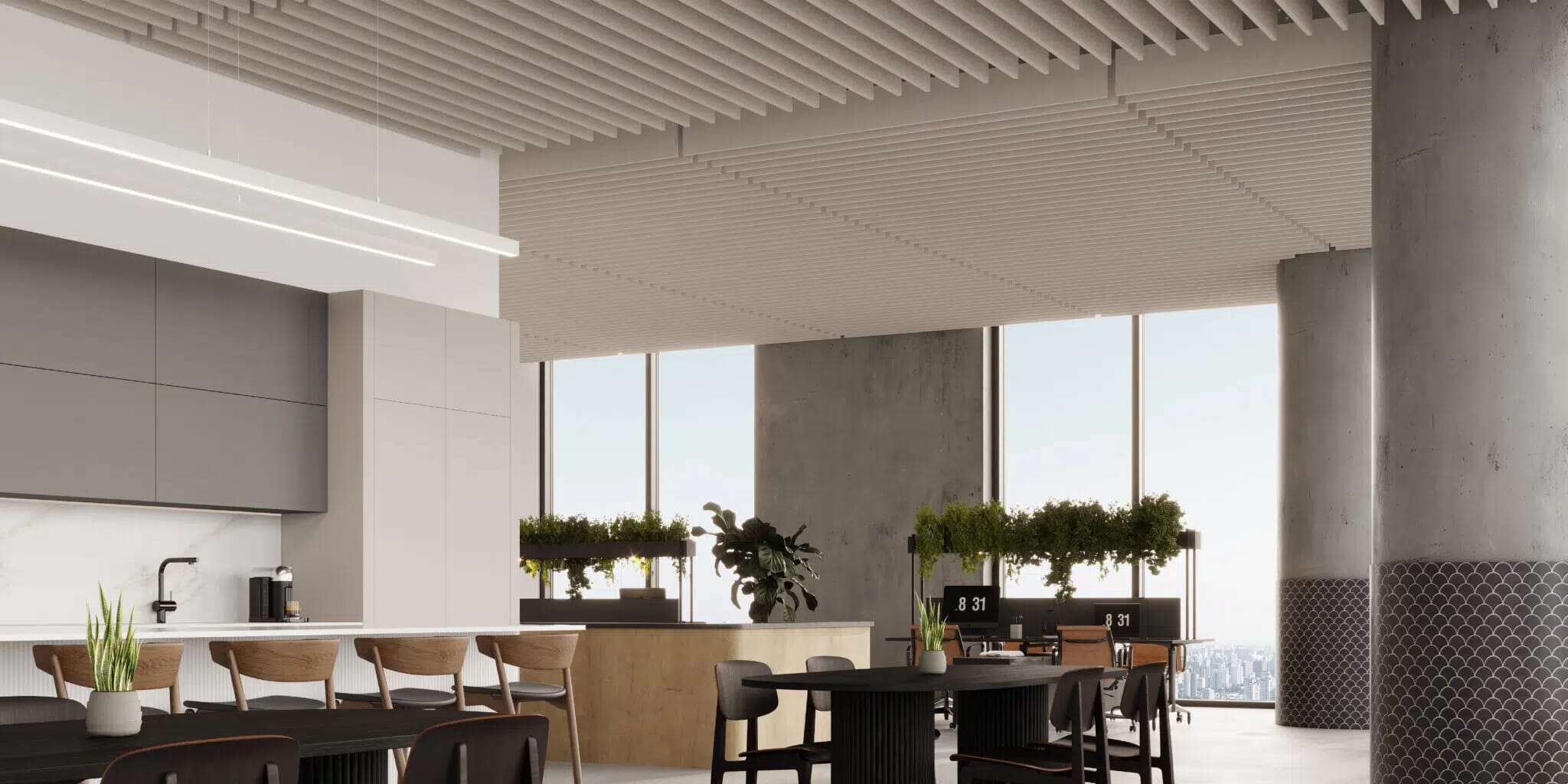
The ceiling is typically the largest uninterrupted surface in an open-plan office, and the primary driver of reverberation. Hard ceilings, exposed concrete, metal and plasterboard, reflect sound back into the space repeatedly, causing noise to build and intelligibility to suffer.
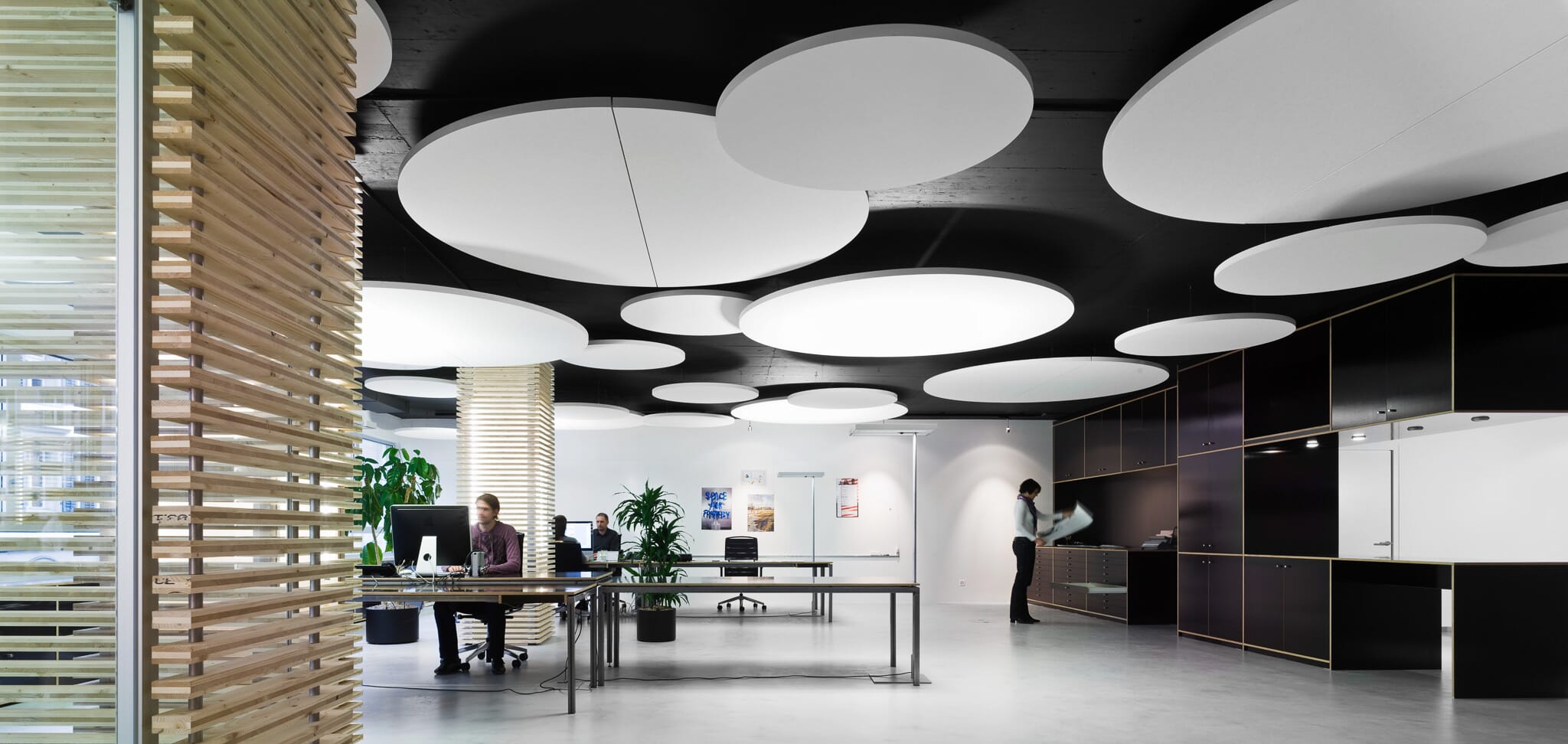
The standard recommends that the ceiling should be treated with Class A absorption products and that this coverage should extend across approximately 50–60% of the ceiling area.
Walls — targeted but valuable
Wall surfaces in open plan offices are often partially obscured by partitions, furniture and glazing, which limits their contribution compared to ceilings. However, strategic wall treatment still plays a meaningful role, particularly for workstations positioned close to walls or in corners, where flutter echo and sound reflection are most pronounced.
The standard recommends that wall panels be installed at the user’s ear height for maximum effect. Treating two perpendicular walls is considered good practice for reducing flutter echoes across the space.
Flooring — limited impact
Soft flooring, such as carpet, provides some absorption and reduces impact noise from footsteps and furniture movement. However, the standard is clear that floor treatment alone has no significant effect on overall room acoustics. It should be considered a minor supporting measure rather than a primary solution.
Recommended Ceiling Products for Open Plan Offices
Choosing the right ceiling product depends on the space. Ceiling height, exposed services, lighting requirements and aesthetic brief all influence the decision. The products below are the solutions Resonics specifies most frequently for open plan office environments.
Ecophon is one of the leading manufacturers of acoustic ceiling systems, and Resonics is an accredited Ecophon EPIC partner. Their products are engineered to deliver Class A absorption in commercial environments and independently tested to verify performance.
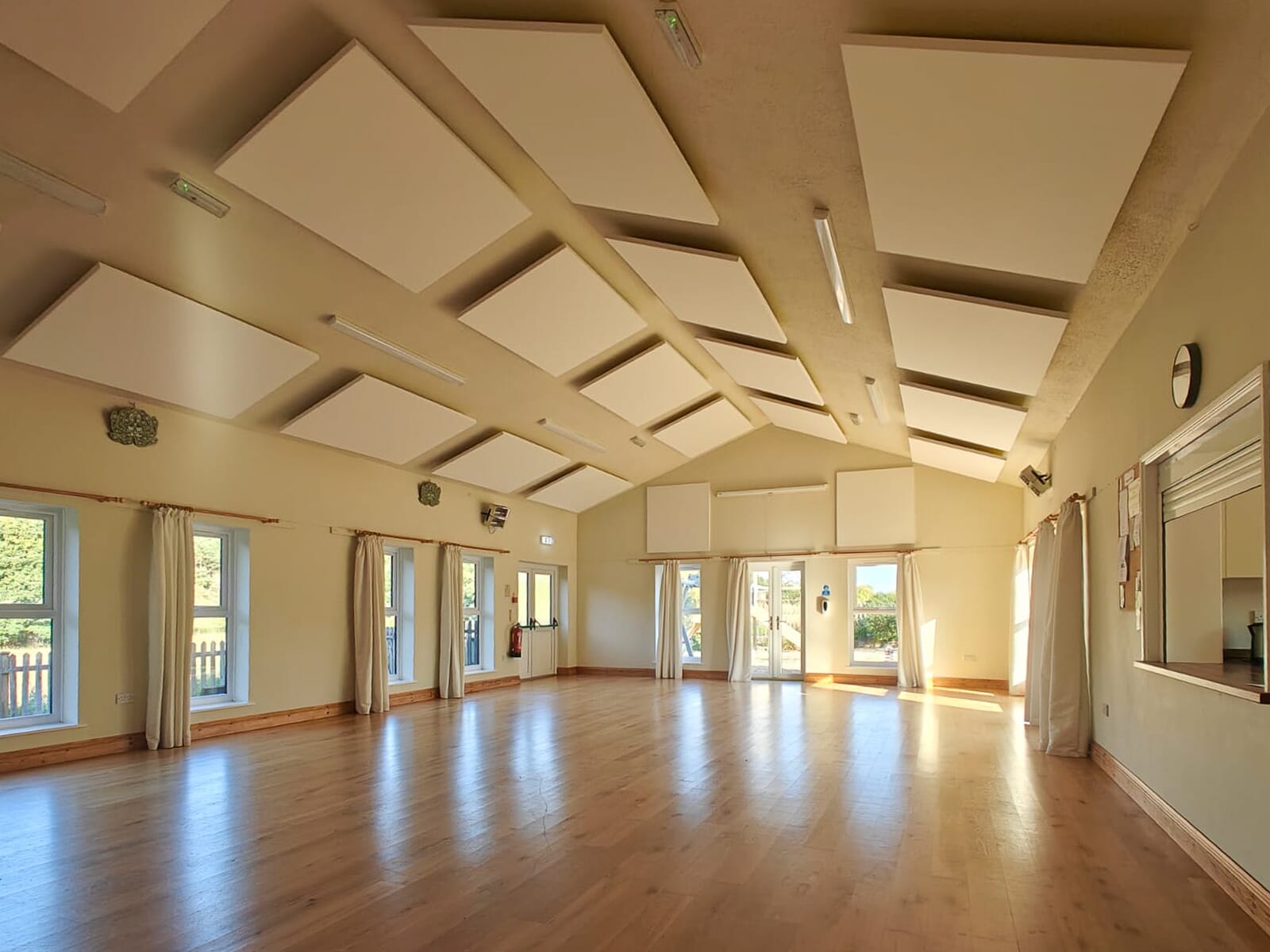
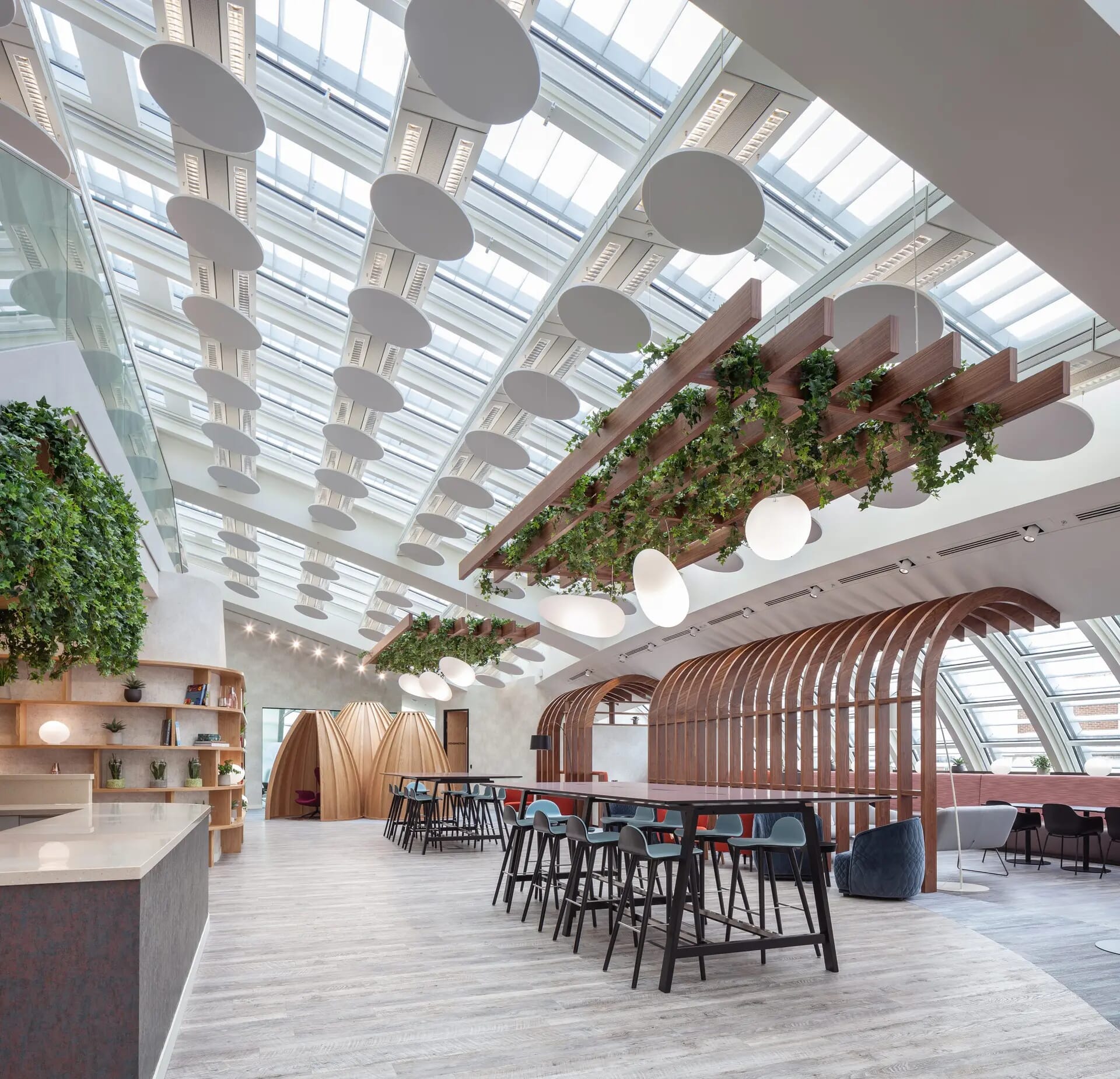
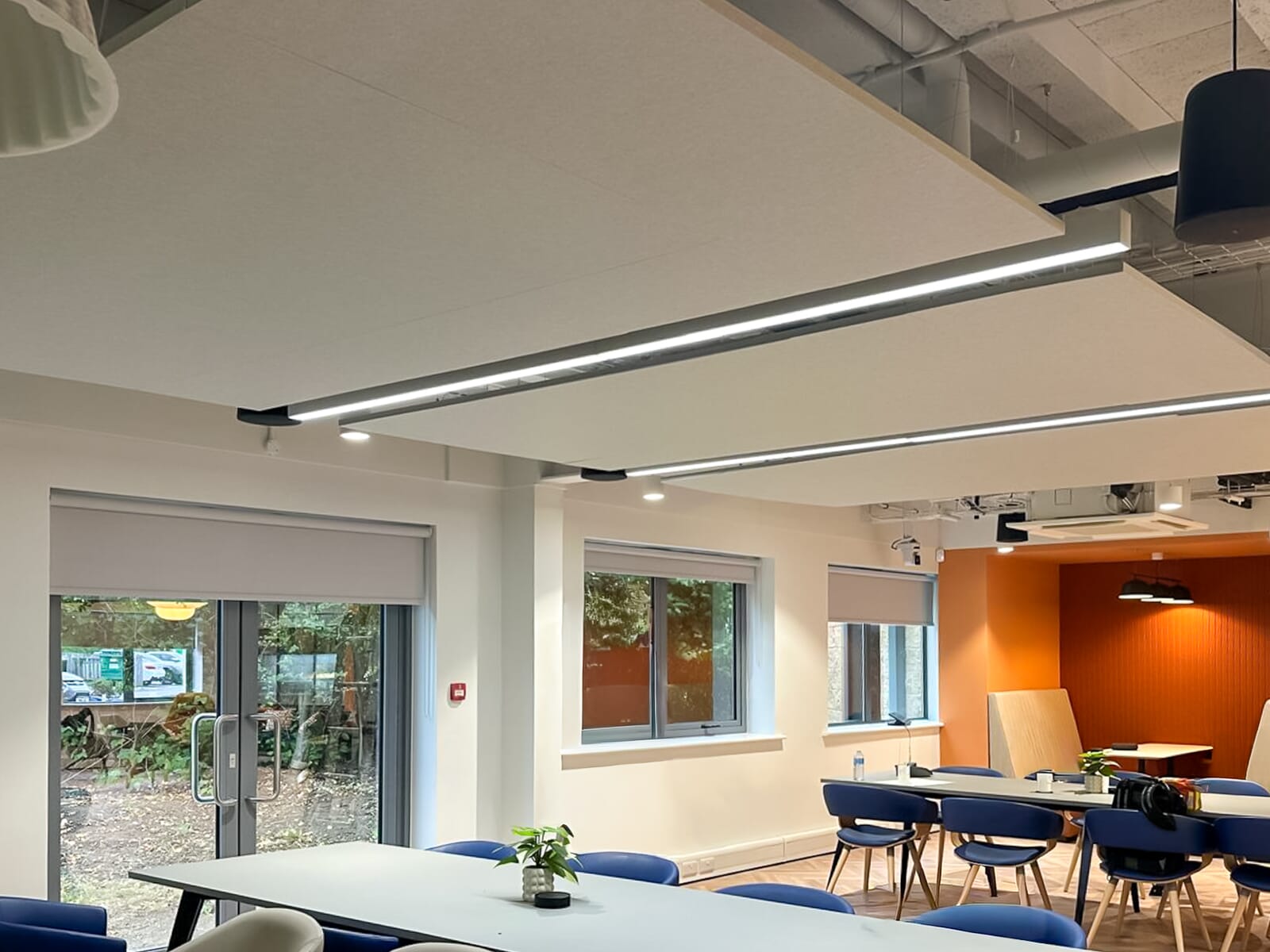
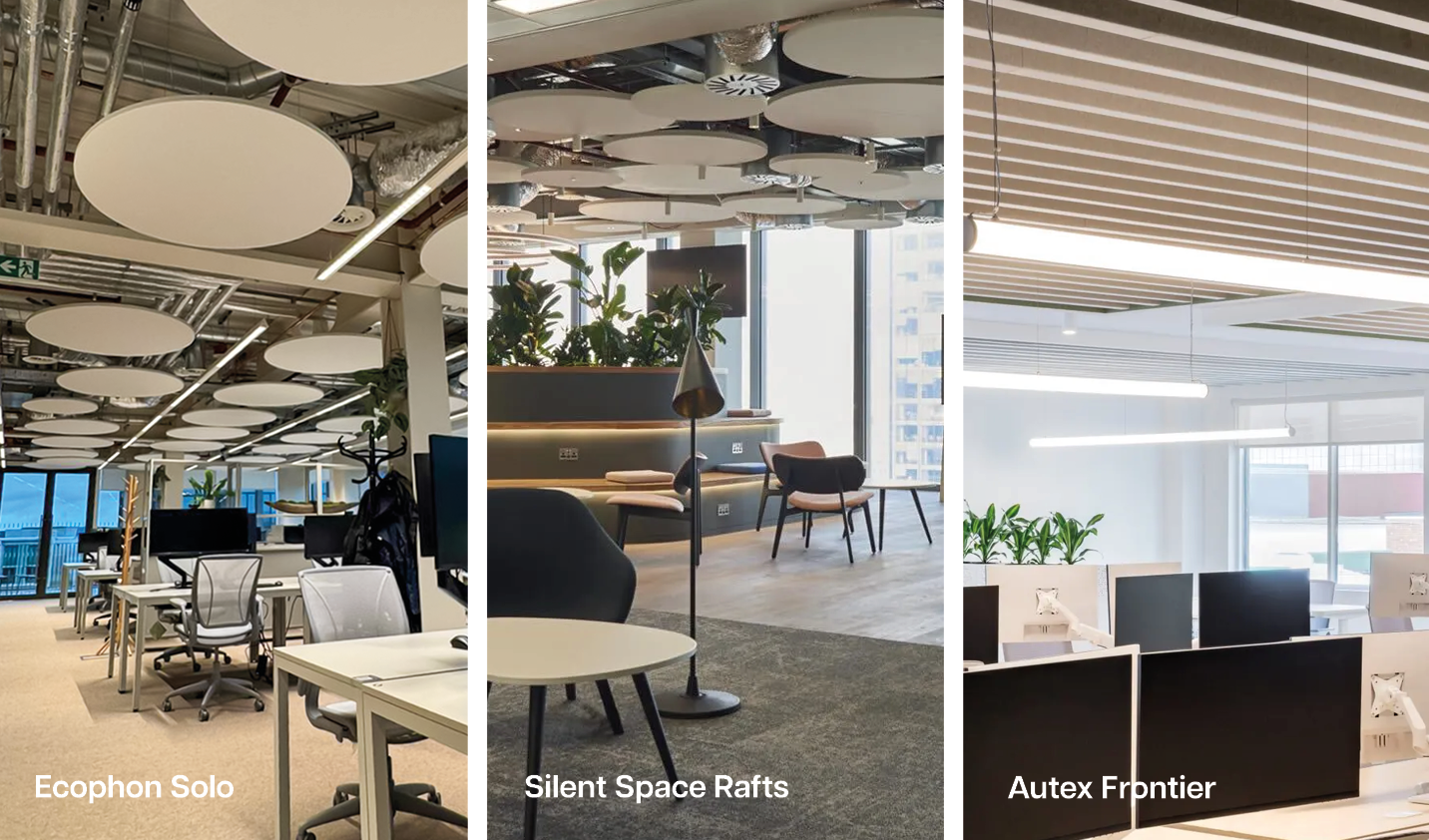
For open plan offices, the Ecophon Solo range suspends horizontally from the ceiling and integrates cleanly around services, lighting and sprinklers. Panels can be arranged to achieve the 50–60% coverage recommended by BS ISO 22955 — making them a practical and well-proven choice for offices where acoustic performance is a design requirement, not an afterthought.
Where budget flexibility matters, Silent Space SilentRaft panels offer a strong alternative. Available in a range of colours and fabric finishes, they integrate well into most ceiling designs and deliver meaningful acoustic improvement without compromising on appearance.
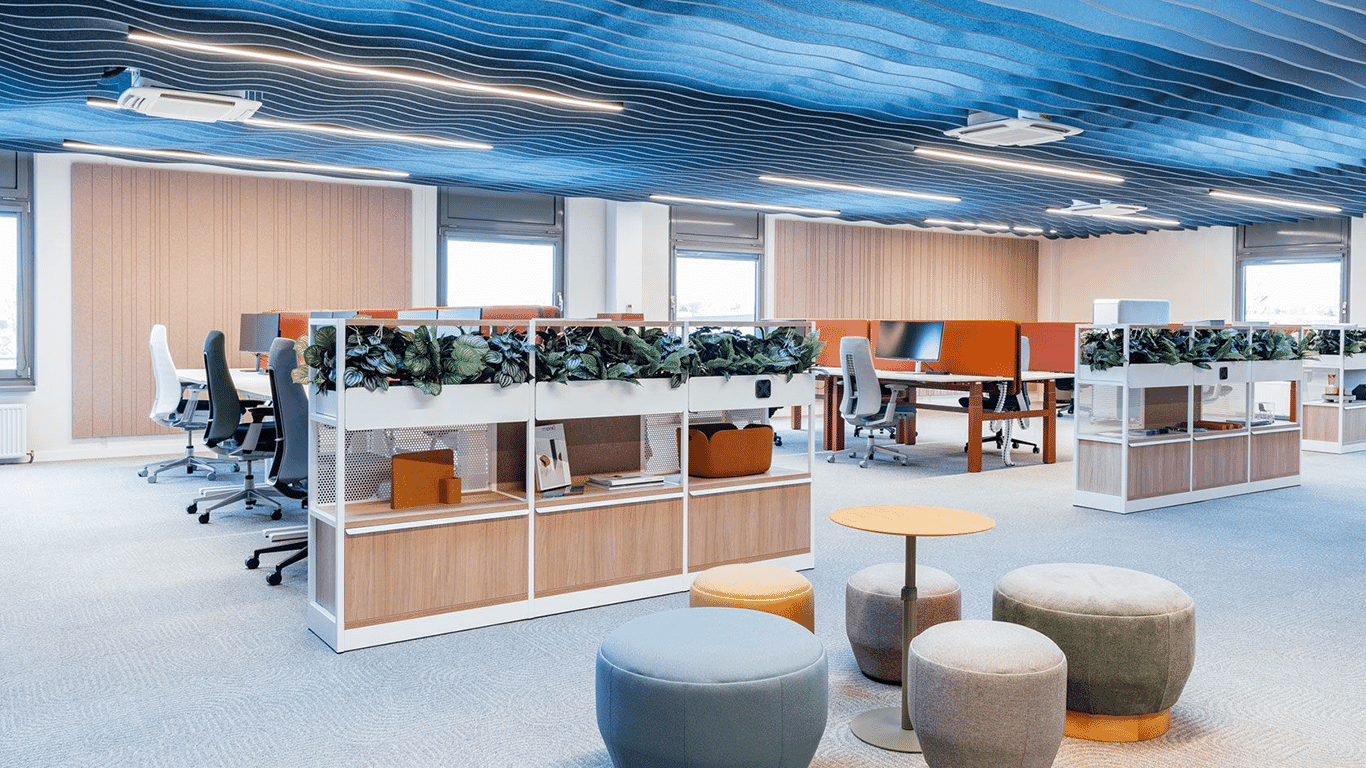
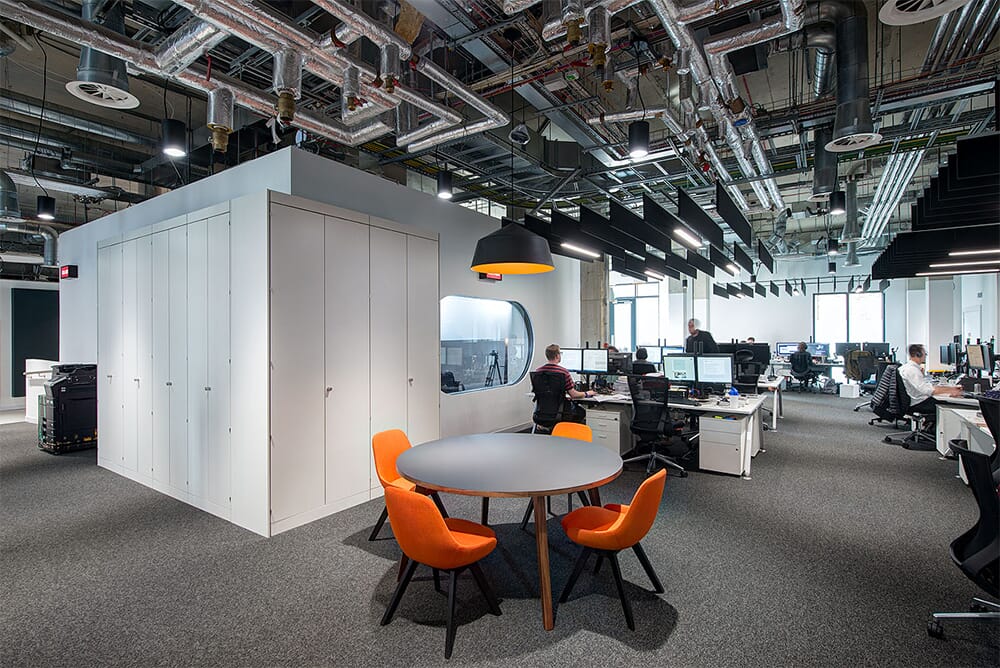
For offices with exposed ceilings or where installation flexibility is a priority, Autex ceiling baffles offer a different kind of solution. Manufactured from recycled PET felt and available in a wide range of colours, they’re increasingly specified in workplaces where acoustic performance and visual identity carry equal weight.
Recommended Wall Panels for Open Plan Offices
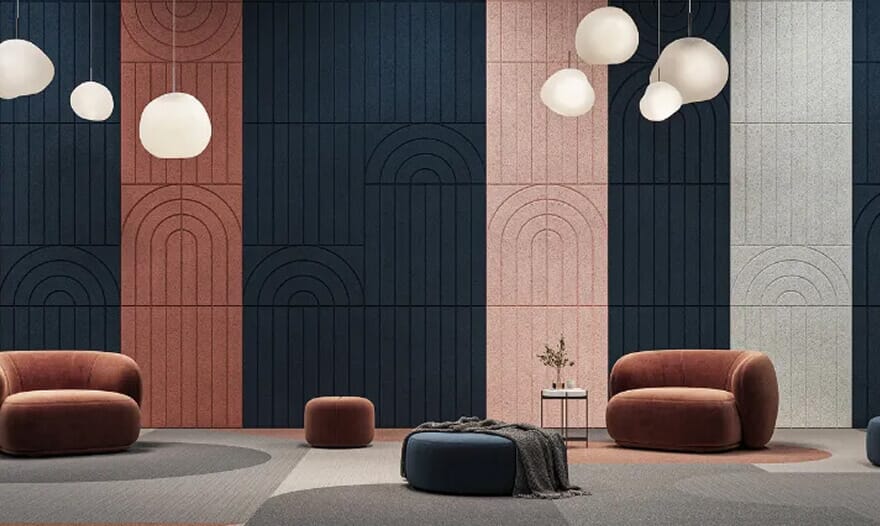
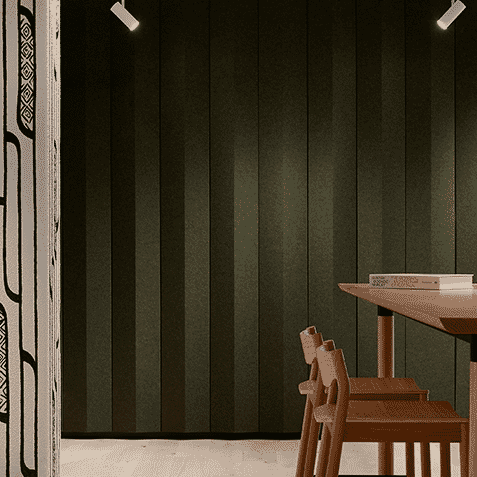
Wall treatment in an open plan office does two jobs: it improves the acoustic environment, and in most cases, it’s on show. The products Resonics specifies most often strike a balance between proven performance and considered design.
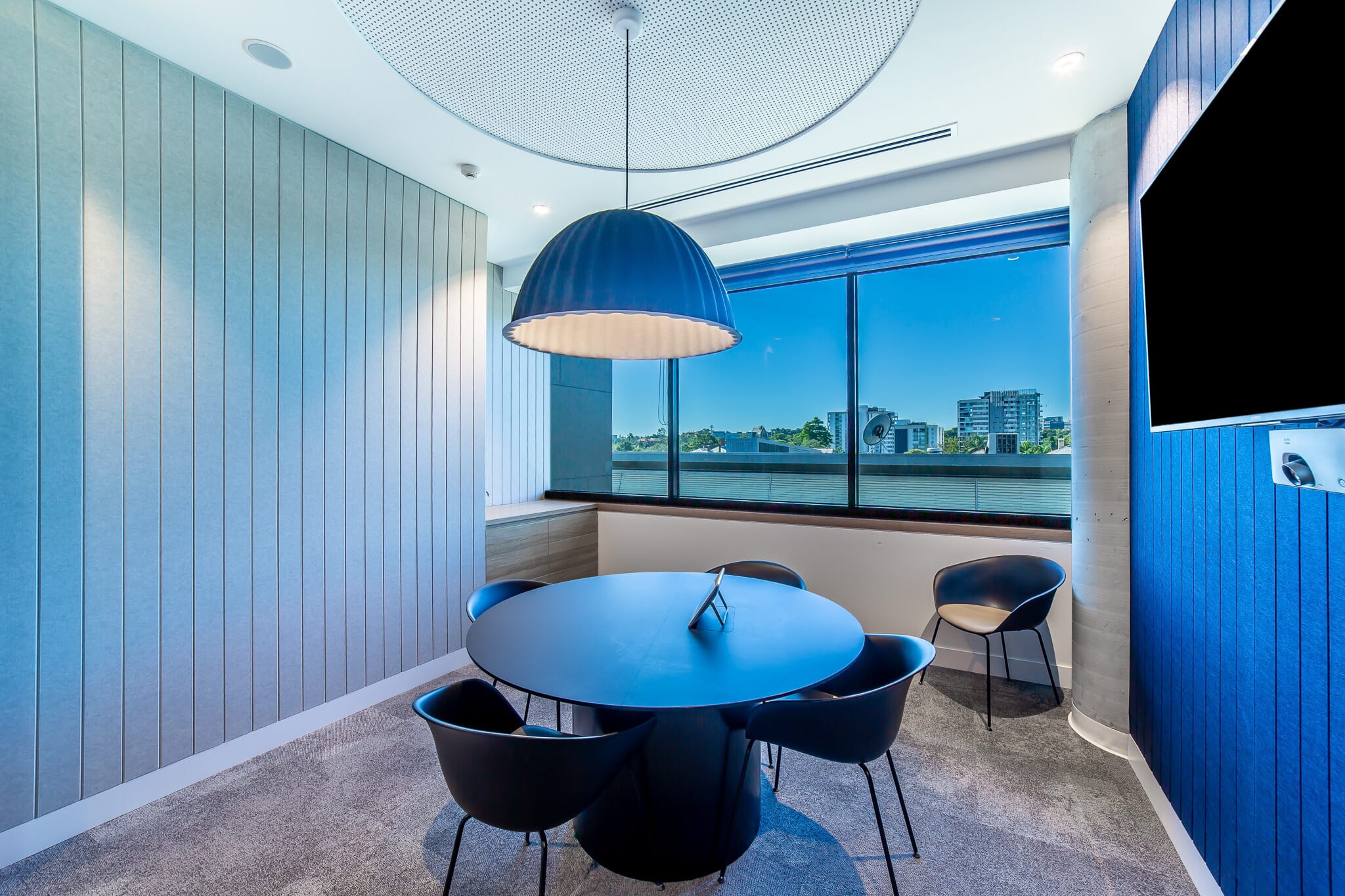
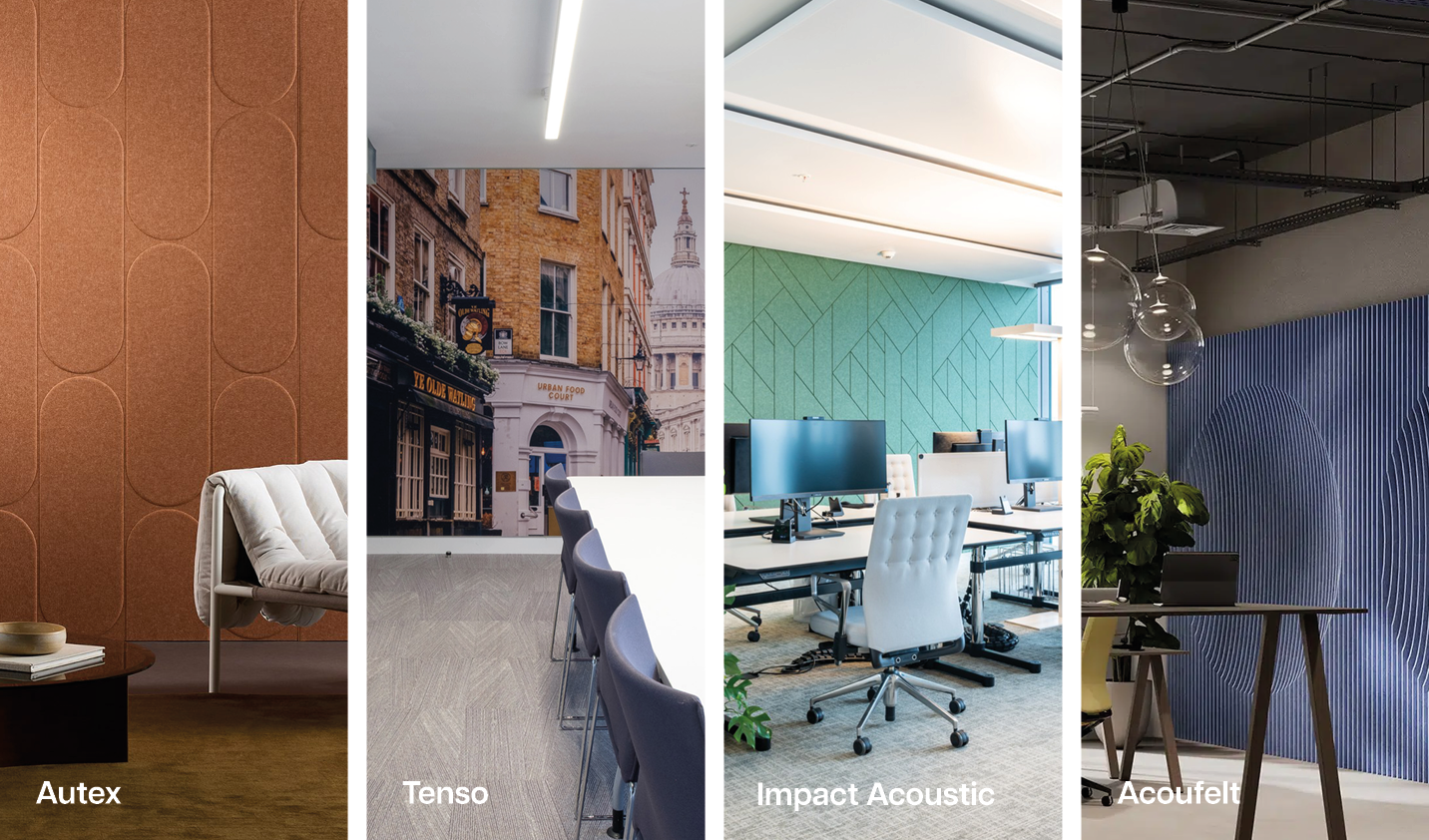
Resonics is the leading Autex Preferred Installer in the UK. Autex produces a range of PET acoustic panels, including Groove, Lanes and Cube, that combine strong acoustic performance with flexible design options. All Autex products are carbon neutral and made from at least 60% recycled material, which makes them a natural fit for projects with sustainability requirements. Panels can be custom-cut, printed on and tailored to almost any application.
Tenso Wall is a premium stretched-fabric system designed to create seamless, high-performance acoustic walls. Unlike panel-based solutions, it’s fully customisable, any fabric, any size, any shape, including curves, giving architects and designers considerable freedom without sacrificing performance. The system is capable of achieving Class A absorption.
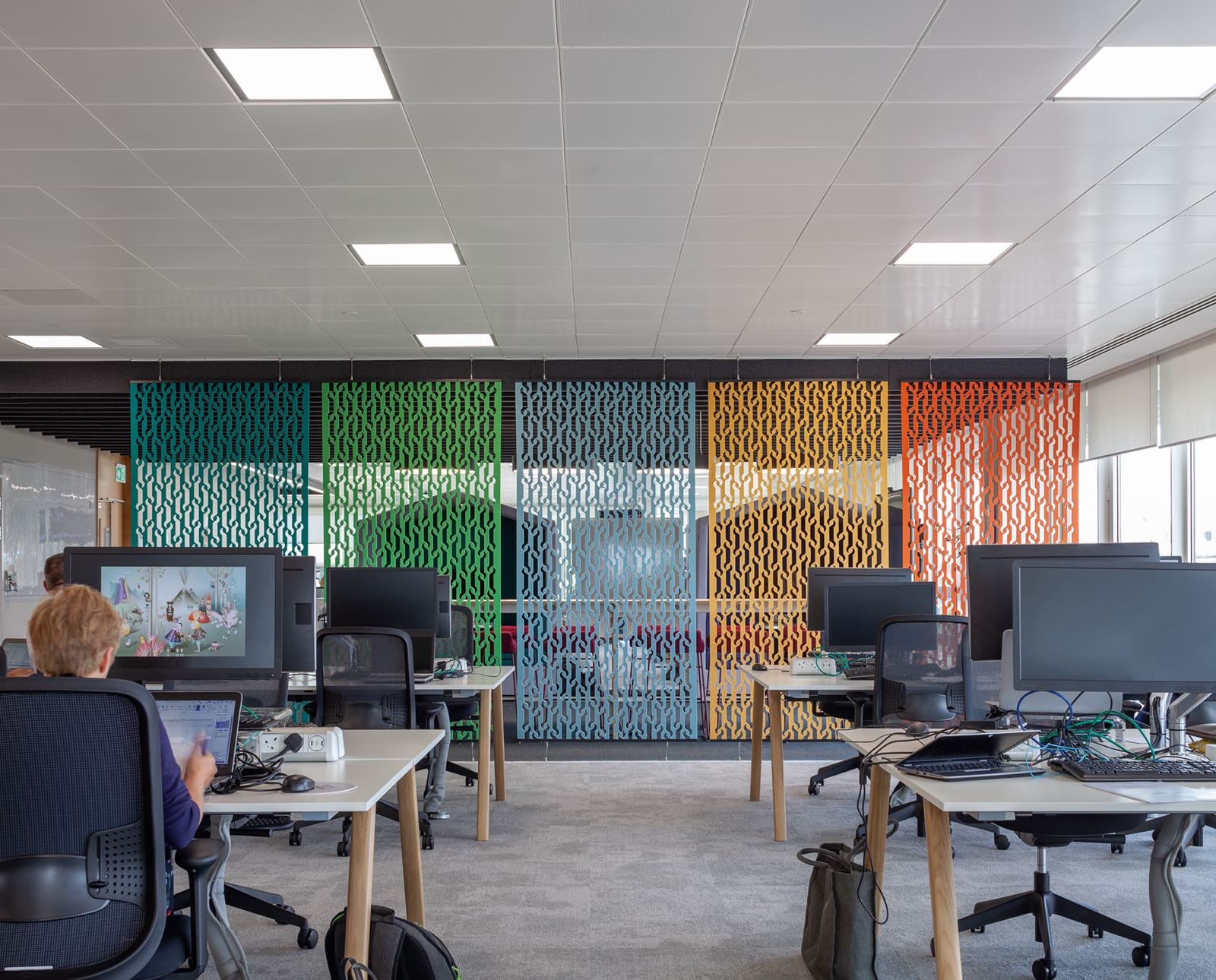
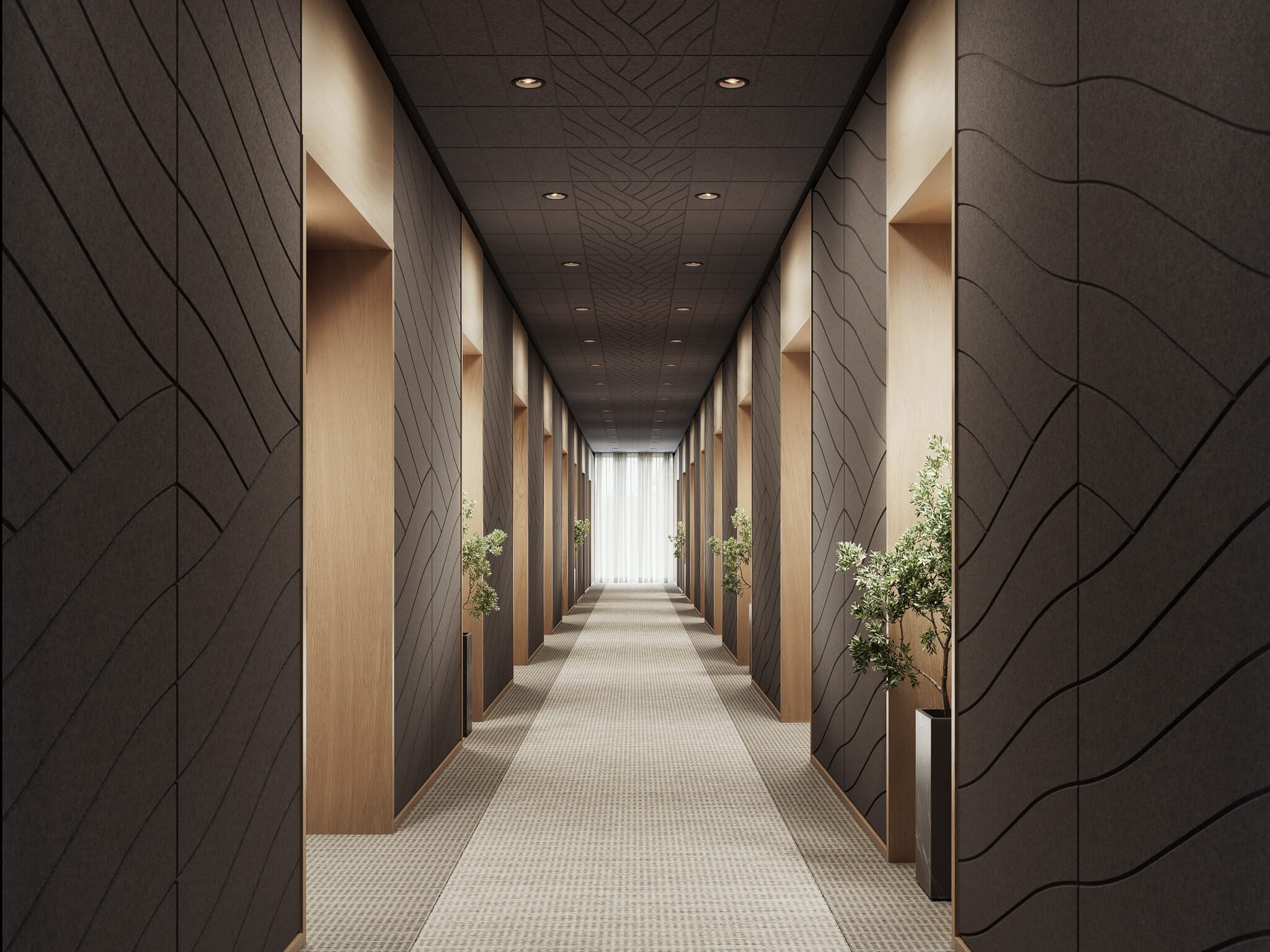
Impact Acoustic produces some of the more design-forward acoustic wall panels on the market, made from recycled PET and available in 36 colours and a range of finishes. Their panels carry strong absorption ratings and are regularly specified for offices where the treatment is meant to be seen, not hidden. They work well as feature walls, zoning elements or targeted treatment at key reflection points.
Acoufelt
Acoufelt builds acoustic products around responsible sourcing and circular economy principles, without trading performance for it. Their wall panels are independently tested and available in 41 colours, giving specifiers flexibility across a range of project types. Resonics is a preferred Acoufelt installer across its full product range.
Additional Treatments for Open Plan Offices
Acoustic furniture
Acoustic furniture has grown significantly as a product category, with manufacturers offering everything from phone booths to soft seating with integrated absorption. In isolation, most furniture provides minimal measurable acoustic benefit. Paired with a properly treated ceiling, however, it can reinforce acoustic separation between zones and help create semi-private working areas.
Acoustic screens and desk screens
Screens interrupt the direct path of speech between workstations. They need to sit above mouth height to be effective. Well-specified screens provide localised speech reduction, visual privacy and sound attenuation between neighbouring desks. Like furniture, they work as part of a wider strategy, not as a substitute for absorption.
Sound masking introduces a controlled, unobtrusive background noise that reduces speech intelligibility across a space. When properly designed and calibrated, as with systems from Soft dB, which adapt to real-time ambient conditions, it’s a genuinely effective complement to an acoustic treatment programme. Our surveying team can advise on whether sound masking is appropriate for your space and specify the right system.
How to Know if Your Office Meets the Standard
The most reliable way to understand whether your office meets the requirements of BS ISO 22955:2021 is an acoustic survey. At Resonics, our surveys include on-site measurement, reverberation analysis and a full treatment specification with CAD layout. This means you know exactly what’s needed, where, and at what coverage, before any products are specified or installed.
Article Author
Mark Irwin
Head of Marketing
19th Nov 2025