












5 Minute Read
BREEAM and WELL Acoustic Credits: A Guide for Specifiers
BREEAM and WELL both reward good acoustic design, but they measure it differently. We break down the requirements, compare the two schemes side by side, and explain where acoustic treatment can help you earn credits.

Mark Irwin
21st Oct 2026
Categories
Guide
BREEAM and WELL acoustic credits: what specifiers need to know
Acoustics is one of the more achievable areas of building certification, but only if you plan early. Decisions about layout, partitions and finishes are simple at the design stage but can be costly to change once ceilings and walls are in.
Under both BREEAM and WELL, acoustic performance ties directly to occupant health, comfort and productivity. Noise makes a space harder to work in, reducing productivity and increasing stress.
Below, we break down how each scheme approaches sound and where acoustic finishes fit in.

BREEAM acoustic performance
In BREEAM, acoustics sit in the Health and Wellbeing category (Hea 05). The criteria are built around three areas of performance, with targets that vary by building type, for example, offices, schools, healthcare and residential:
- Sound installation. How well partitions, floors and doors stop sound passing between spaces, which is key for privacy.
- Indoor ambient noise level. Background noise from building services and outside, kept within limits appropriate to each room’s use.
- Room acoustics. Reverberation time and sound absorption to keep speech clear and spaces from feeling echoey or tiring.
It’s also a prerequisite to appoint a Suitably Qualified Acoustician (SQA) early in the process to influence design. If the SQA isn’t appointed at the right stage, the acoustic credits can’t be awarded.
For schools, the targets align with BB93. For healthcare, they align with HTM 08-01. For most other buildings, they reference standards such as BS 8233.
Where do acoustic treatments contribute?
Room acoustics credit.
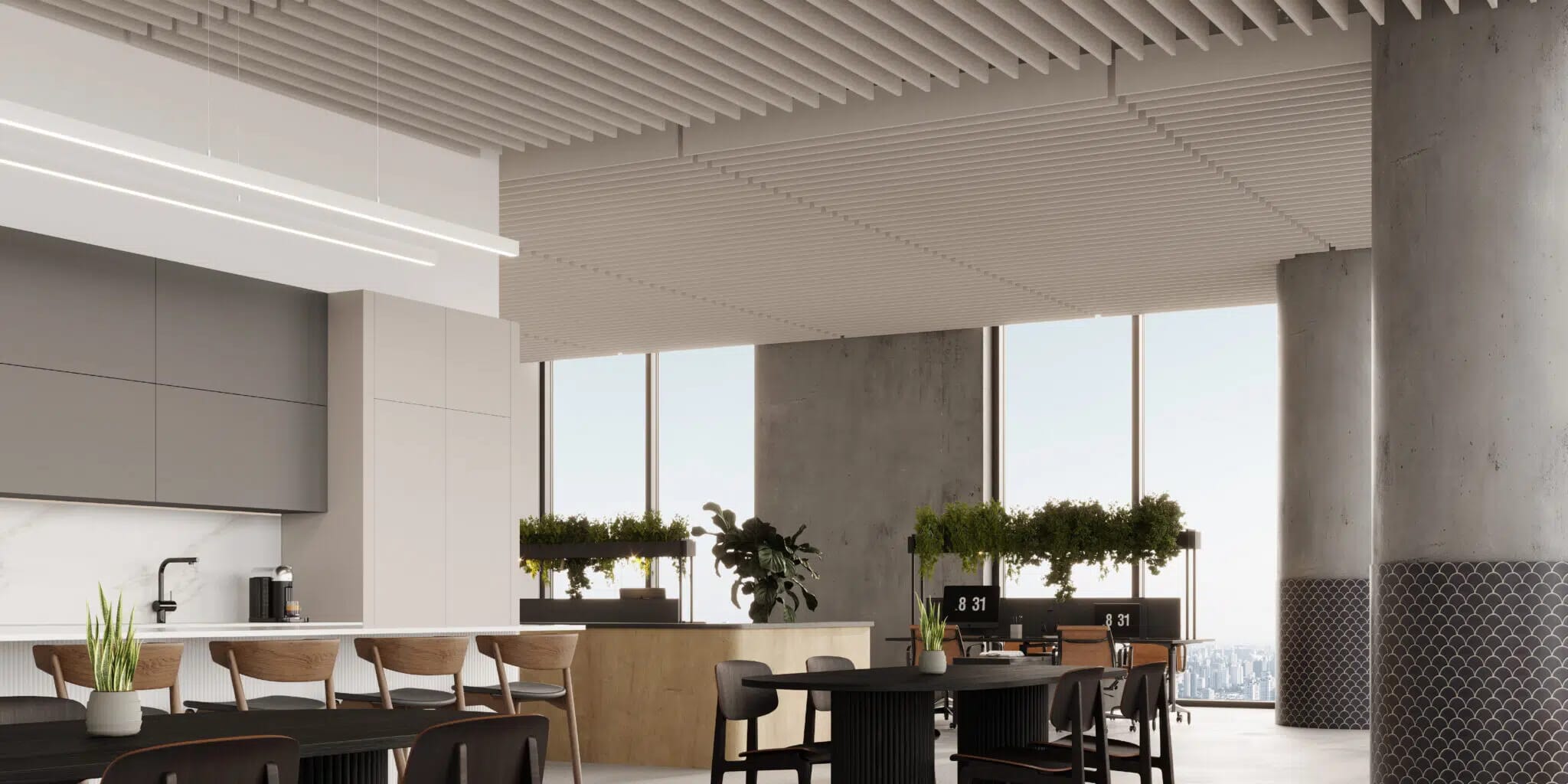
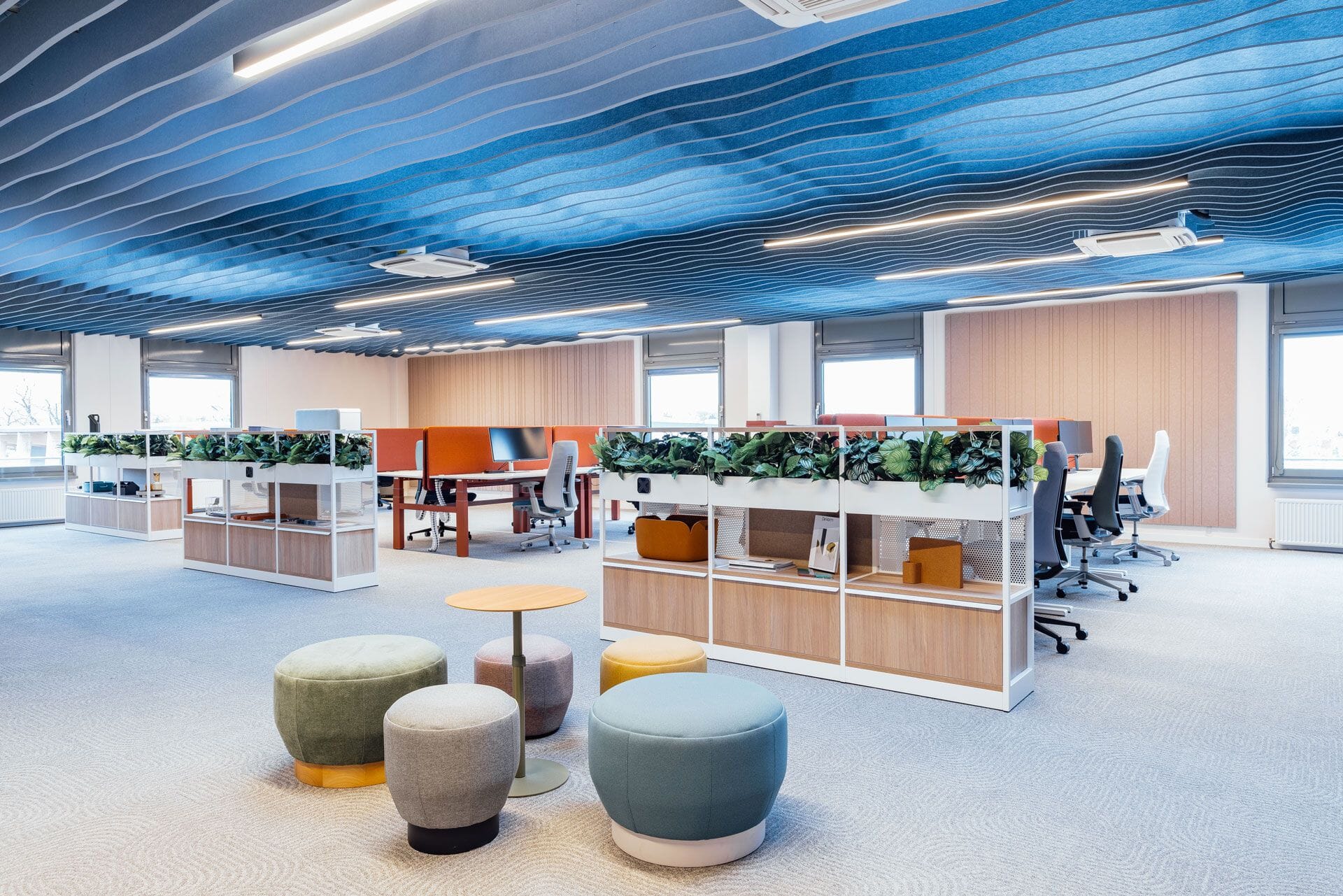
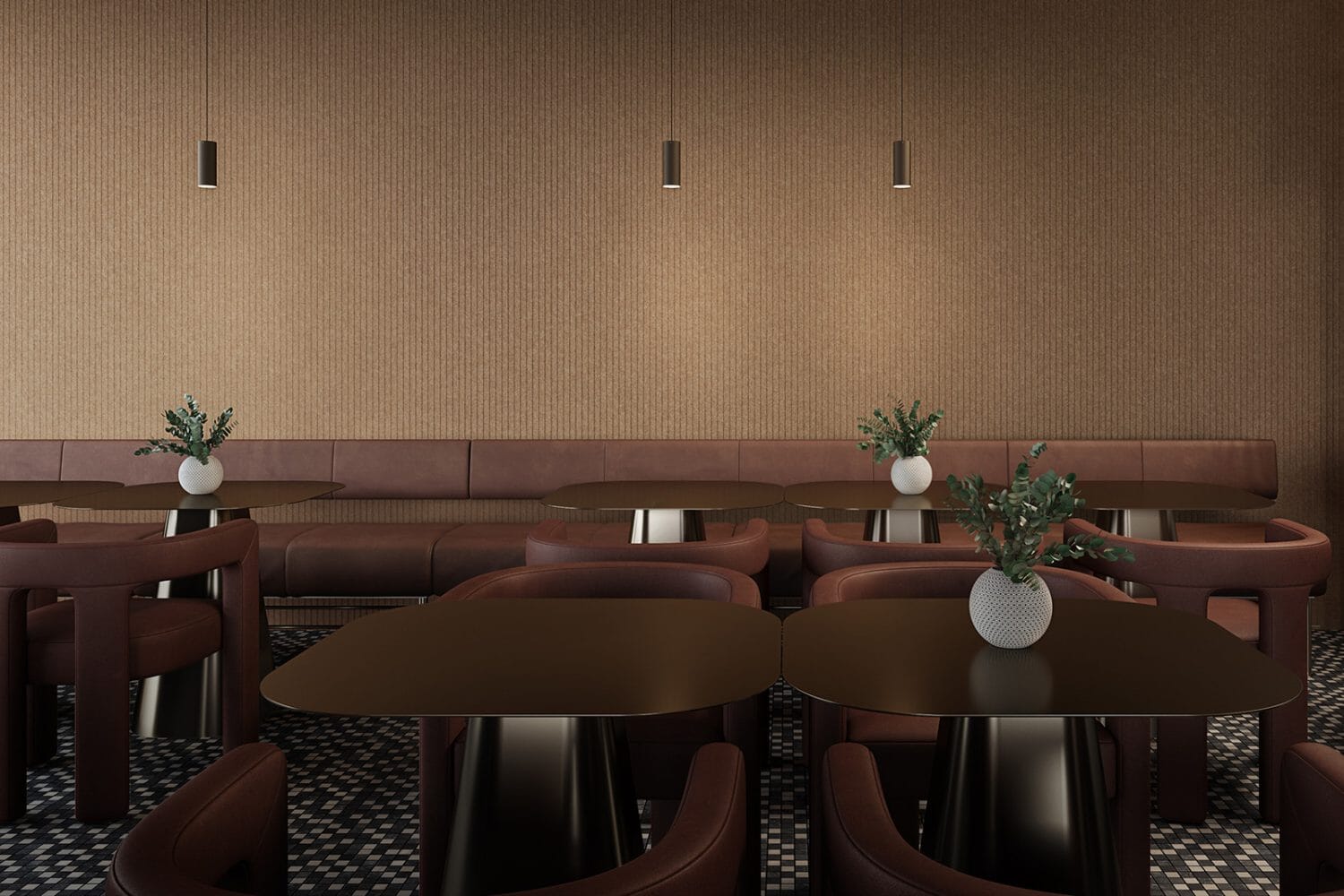
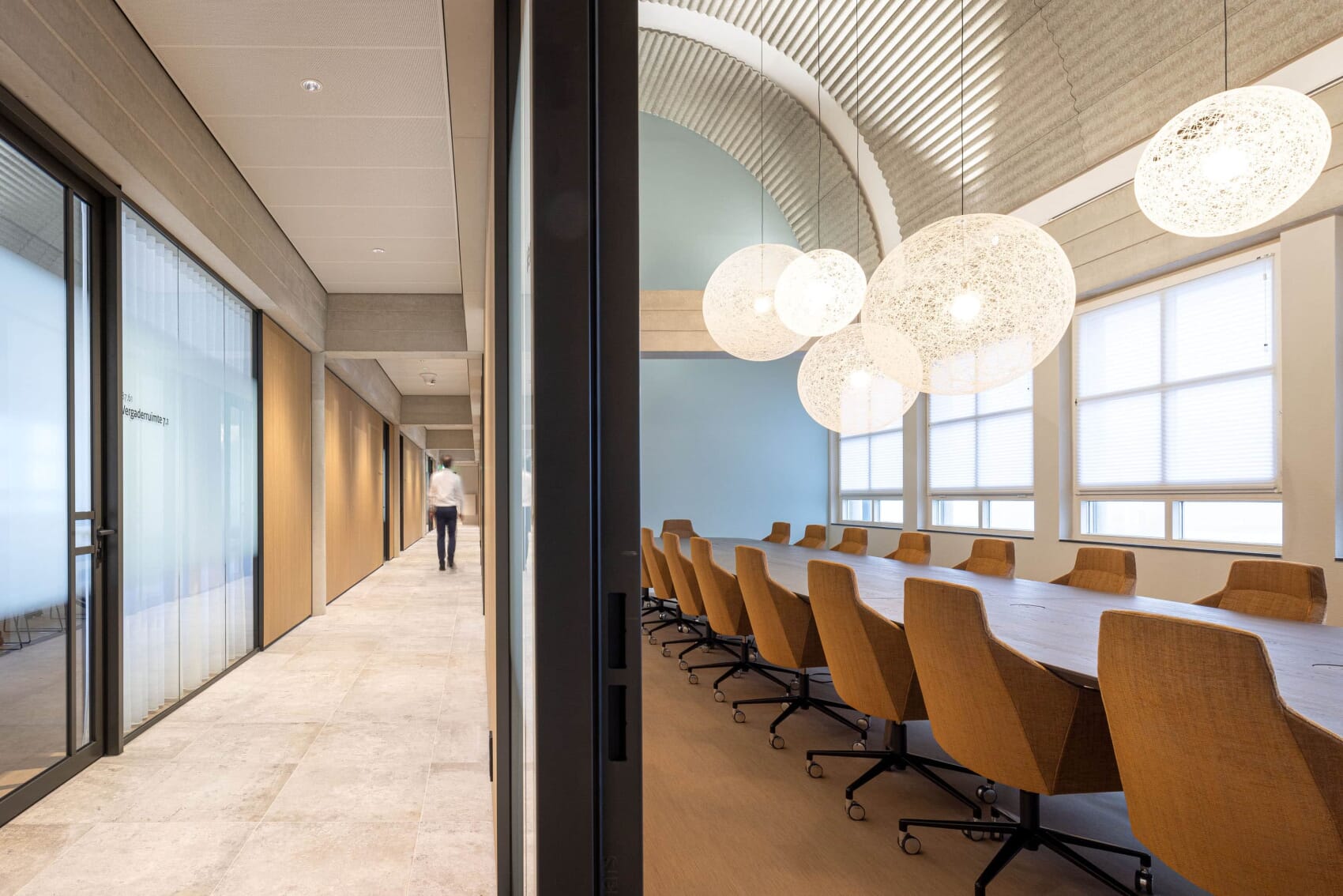
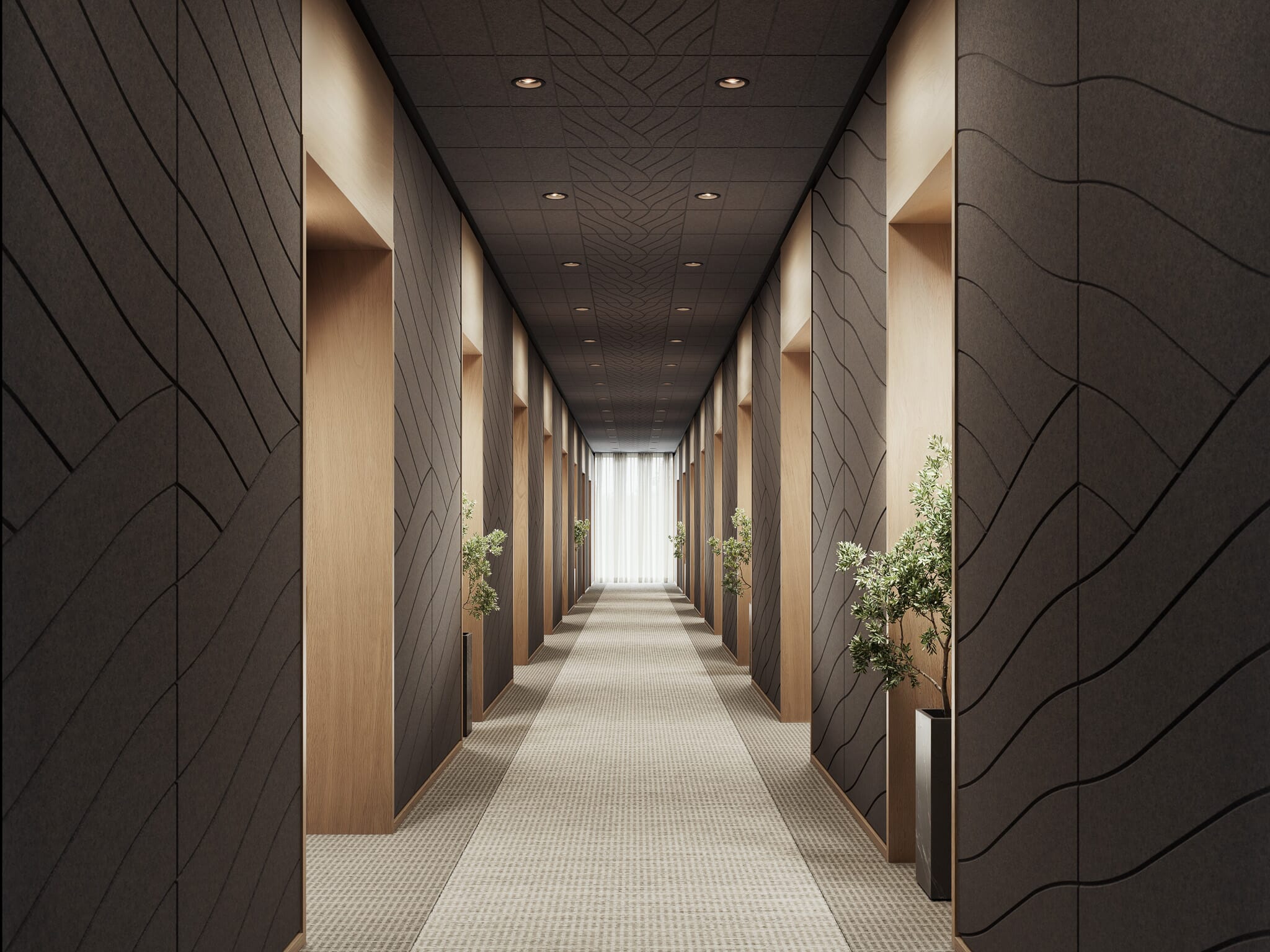
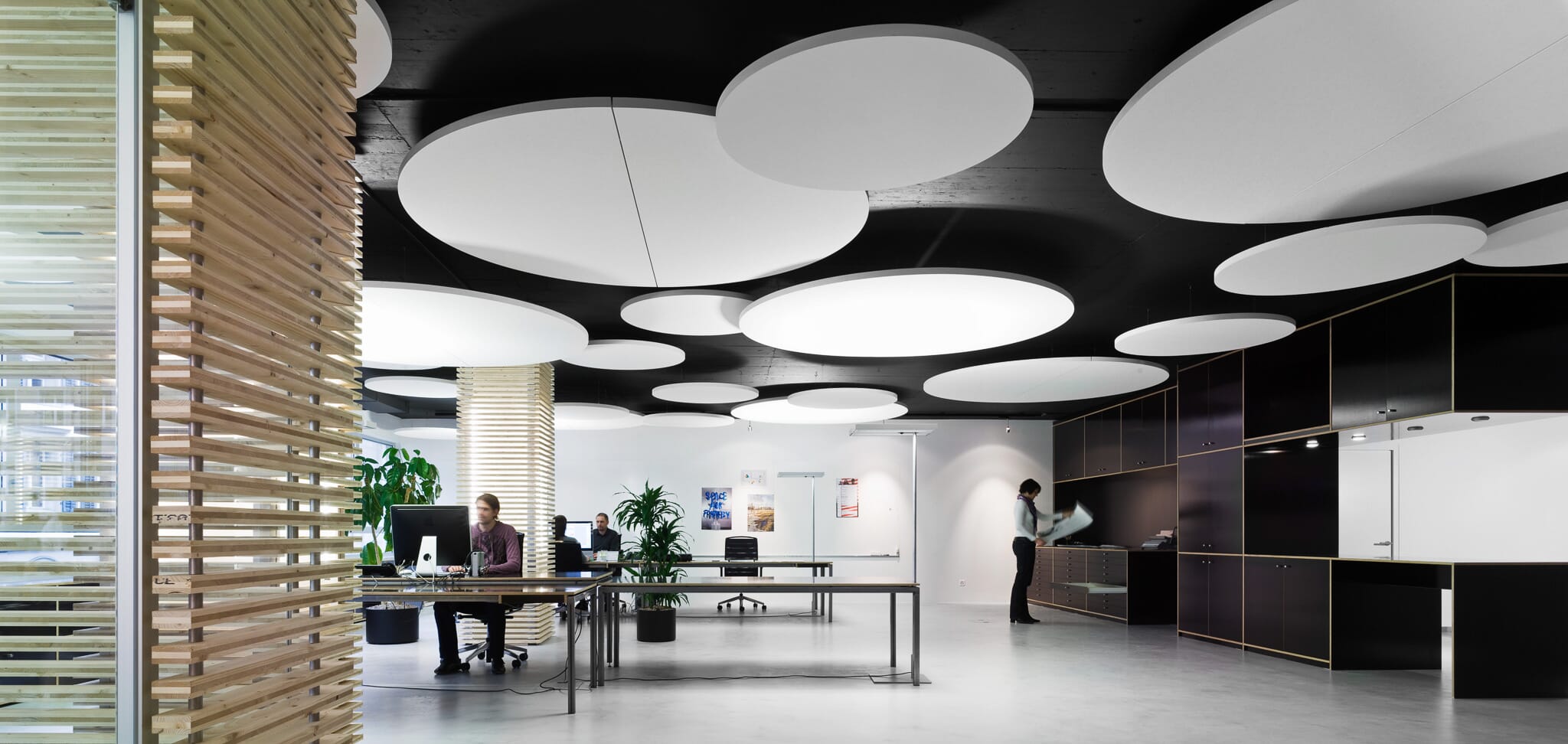
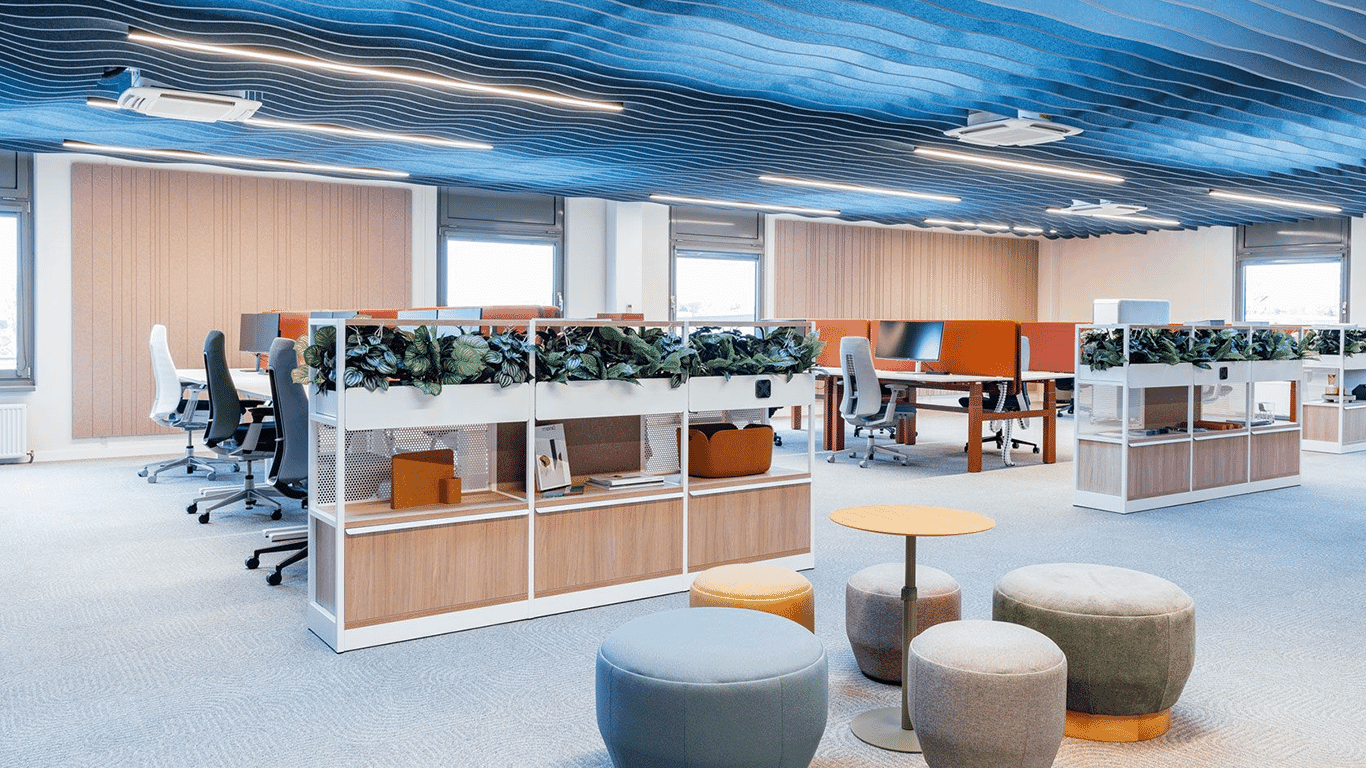
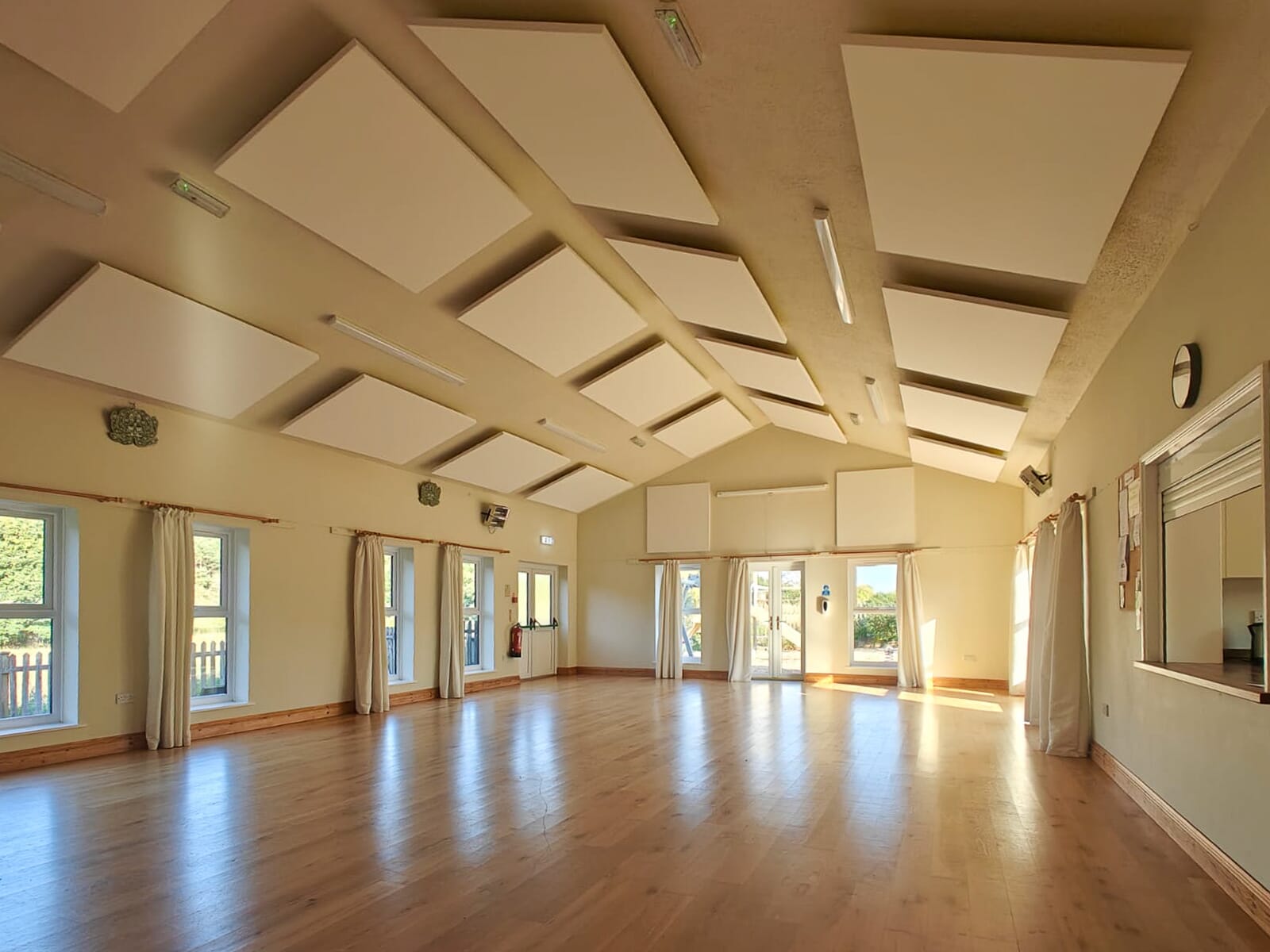
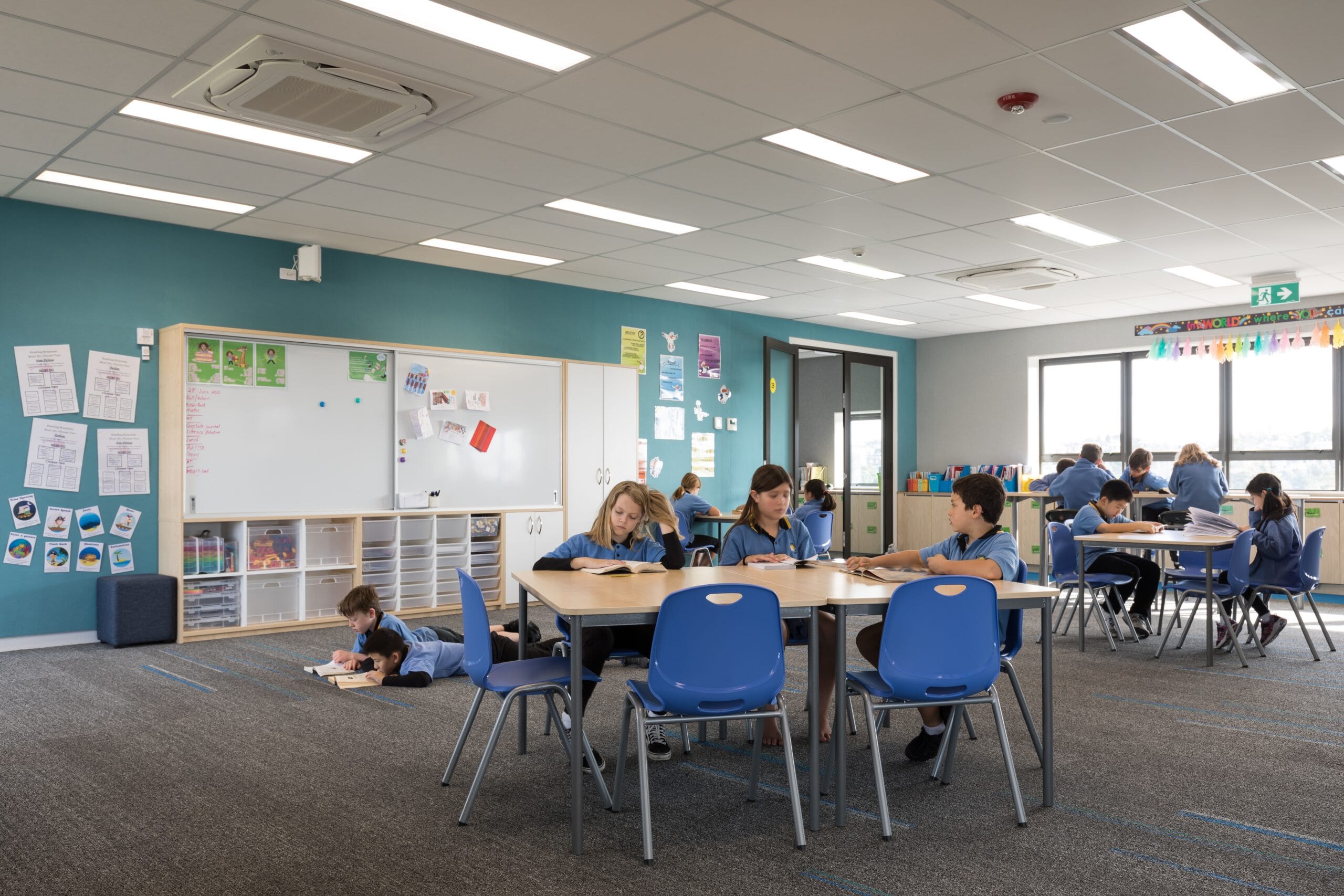
Acoustic ceilings, wall panels, baffles and rafts are how most projects hit their reverberation time targets, especially in classrooms, open-plan offices and dining spaces.

WELL v2: the sound concept
The WELL Building Standard puts more emphasis on how a space feels to the people using it. Its Sound Concept has one mandatory precondition and five optimisations that earn credits:
| Feature | Type | What it covers |
|---|---|---|
| S01 Sound Mapping | Precondition | Label zones as Loud, Quiet, Mixed or Circulation and set out an acoustic design plan. |
| S02 Maximum Noise Levels | Optimisation | Limits background noise from HVAC and outside. |
| S03 Sound Barriers | Optimisation | Sound insulation and speech privacy between enclosed spaces. |
| S04 Reverberation Time | Optimisation | Reverberation targets by space type. |
| S05 Sound Reducing Surfaces | Optimisation | Absorption across ceilings and other surfaces to lower overall noise levels. |
| S06 Minimum Background Sound | Optimisation | Using controlled background noise to cover up intrusive noise, often met with sound masking. |
A few things stand out for designers:
Sound mapping shapes everything. The zones you label in S01 set the targets for several other features. If a Loud zone (a kitchen, gym or music room) borders a Quiet zone, you need a plan to mitigate sound transfer or to move one of them.
S04 and S05 reward absorption. S04 sets reverberation targets for each space type. S05 asks for high-performing absorptive finishes over a set proportion of the ceiling and in open-plan areas, on surfaces between workstations. The same well-specified treatment can contribute to both.
A quieter office isn’t always better. S02 caps background noise, but S06 sets a minimum. A very quiet open-plan office makes every conversation noticeable, which affects privacy and concentration. Sound masking solves that problem, see our post on sound masking and speech privacy.


BREEAM vs WELL at a glance
| Criterion | BREEAM | WELL v2 |
|---|---|---|
| Focus | Environmental performance of the building | Health and wellbeing of occupants |
| Acoustic issue | Hea 05 | Sound concept (S01 to S06) |
| Mandatory requirements | Early SQA appointment (pre-requisite) | S01 Sound Mapping (precondition) |
| How compliance is shown | Typically pre-completion testing | Design documentation and performance testing |
| Where absorption helps | Reverberation time targets | S04 Reverberation Time and S05 Sound Reducing Surfaces |
Acoustic manufacturers leading the way in sustainability
Autex
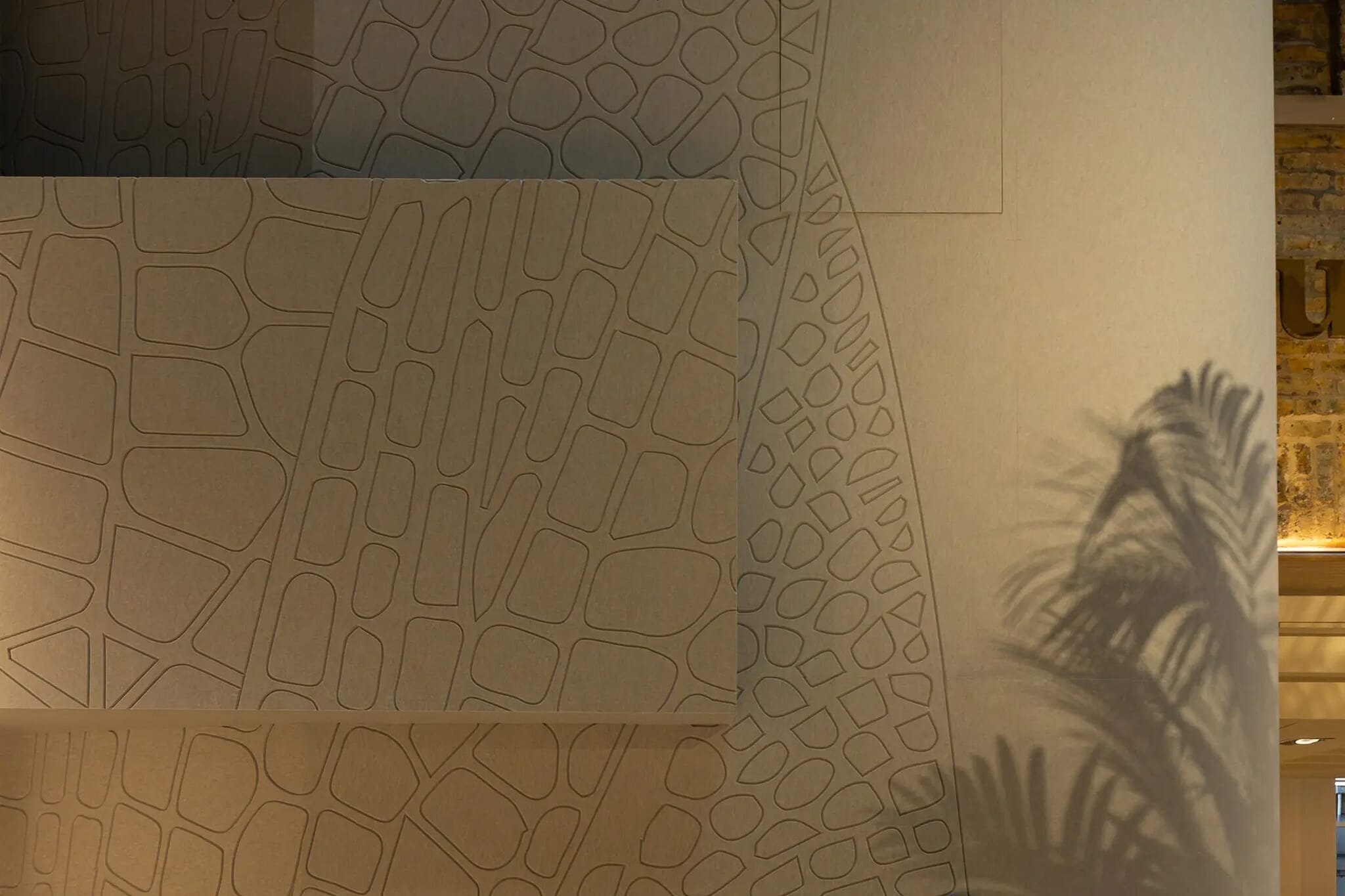
Autex is one of the manufacturers we work with regularly and a good example of what we look for: consistent product performance, transparent testing data, third-party verified sustainability credentials and a range that holds up once it’s on-site.
Their products are carbon neutral, with recycled content in ranges like Cube at 80%, and third-party verification through EPDs, ISO 14001, and Declare labels backing it up. Their range also meets the criteria for LEED, WELL and BREEAM, so specifying it can support a project’s broader sustainability goals. And we’re proud to be the UK’s leading Autex Preferred Installer.


Baux
BAUX has sustainability built into its business model. It’s backed up by the BAUX Circle, a take-back scheme where products are collected and either refurbished or recycled at end of life. Wood wool returns to the earth with no negative impact, Pulp panels are ground down and fed back into new production in a fully circular loop, and X-FELT and Felt products are reprocessed into fibres for reuse.
Customers even get documentation confirming what happened to their returned products, useful for their own sustainability reporting.


Impact Acoustic
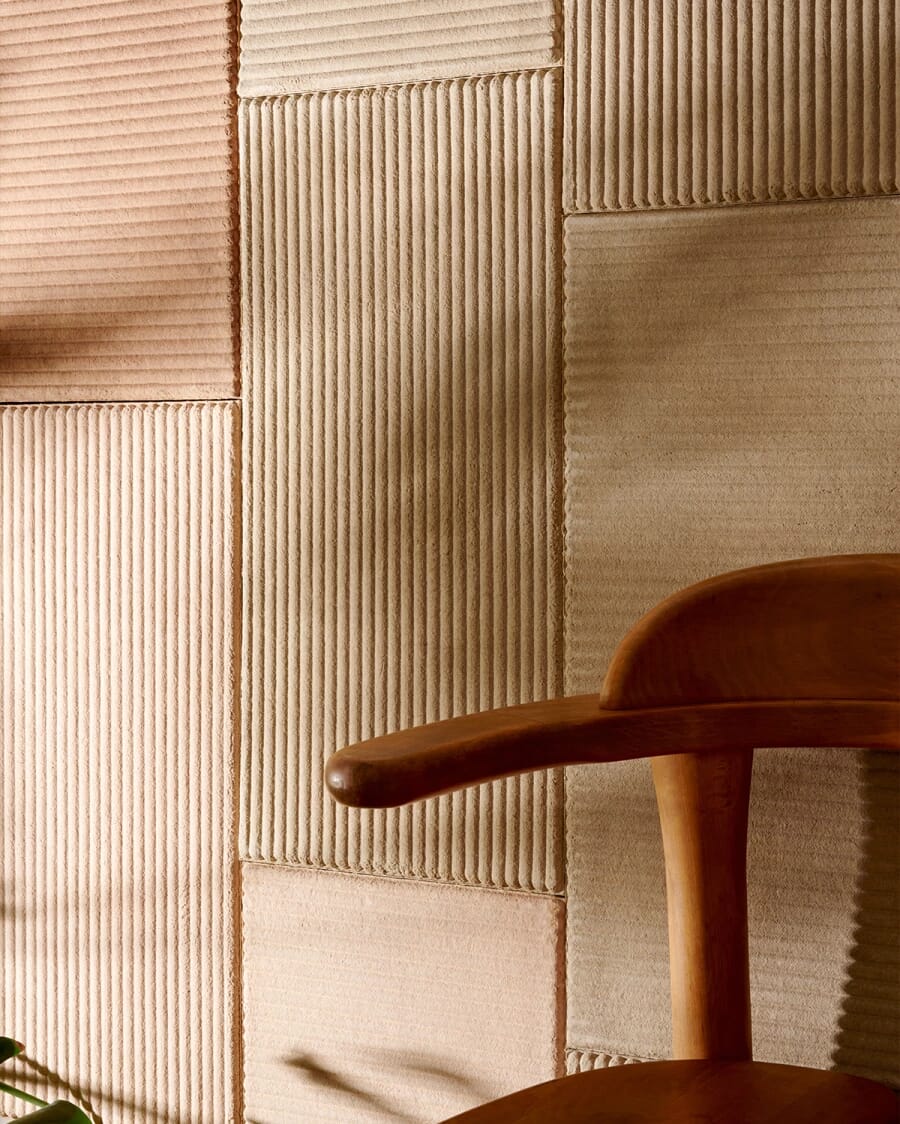
Committed to sustainable manufacturing practices, Impact Acoustic produces ARCHISONIC™ felt made from single-use plastic bottles. They use 88 post-consumer PET bottles for every square meter of finished material. Products can be recycled at the end of their life through their Take Back Program.
Impact Acoustic ARCHISONIC
View product
Impact Acoustic Ceiling Baffle
View product
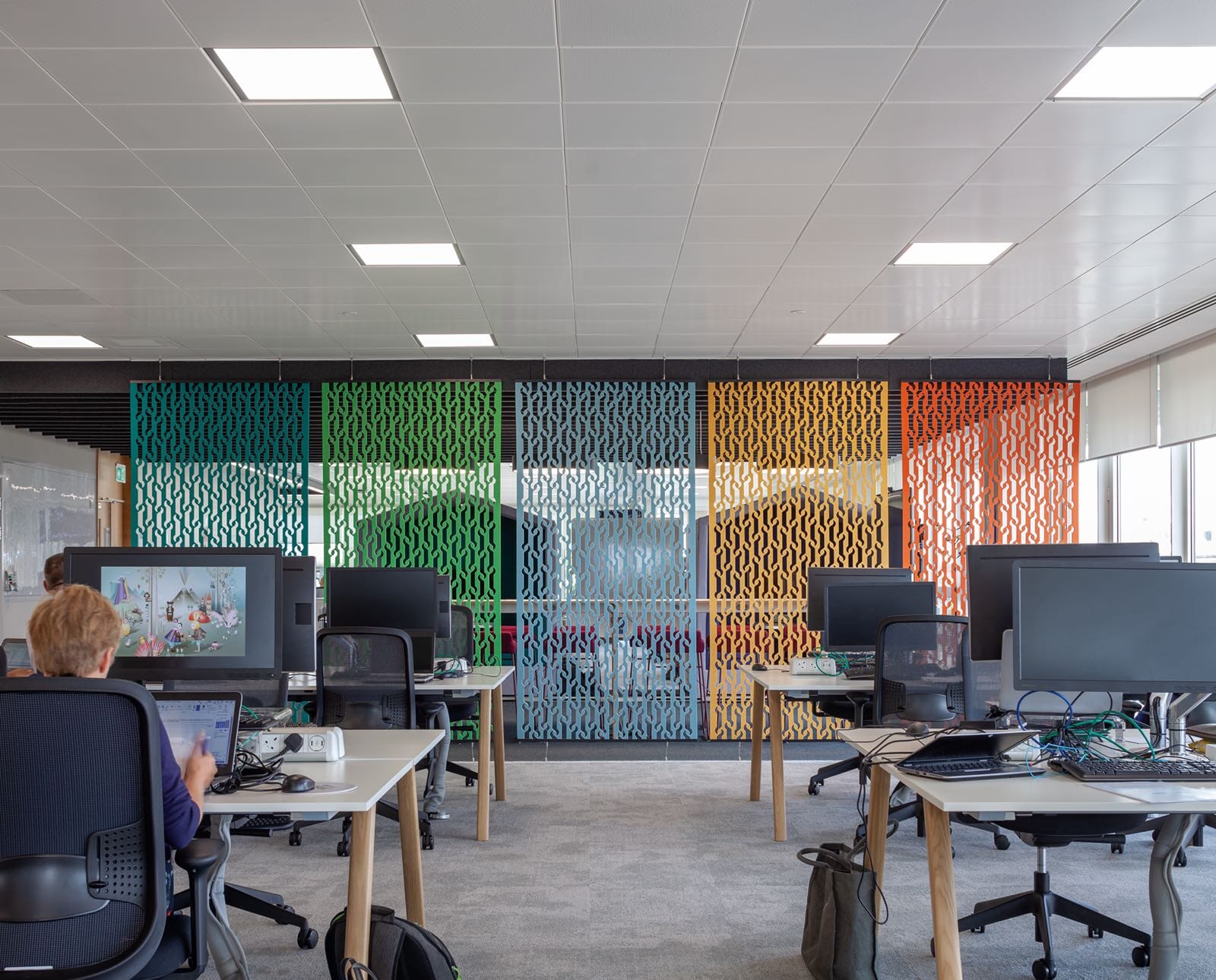
Impact Acoustic Room Dividers
View productGetting the most from your acoustic credits
- Bring acoustics in at the concept stage. Both schemes reward early planning and BREEAM requires it.
- Ask for test data. Absorption class and NRC ratings, tested to recognised standards, make compliance evidence straightforward.
- Look at the whole product. Acoustic panels with recycled content, low VOC emissions or Environmental Product Declarations can support other credits. Our guide to sustainability credentials for acoustic panels covers what to look for.
- Exposed concrete soffits help energy performance but are acoustically hard. Rafts and baffles can add absorption while leaving much of the soffit exposed.
How Resonics can help
If you’re specifying acoustic panels and want to understand which credentials are most relevant to your project, we’re happy to work through it with you.
We work with architects, contractors and designers to specify and install acoustic finishes that meet BREEAM and WELL targets and we provide the product data you need for your evidence pack.