





14 Minute Read
The Ultimate Office Acoustics Guide 2026
Noise is one of the top complaints in modern workplaces and one of the most solvable. This guide covers everything you need to know about office acoustics in 2026.

Mark Irwin
14th Nov 2025
Categories
Guide
TL;DR – Summary
Poor office acoustics reduce productivity, increase stress, and make it harder for people to do their best work. Getting it right means understanding your space, the activity it supports and the treatments available to you.
Key Takeaways:
- Noise and reverberation are different problems and need different solutions.
- Ceilings are the single most important surface to treat in open-plan offices.
- Hybrid working has raised the acoustic bar for meeting rooms and AV spaces.
- BS ISO 22955:2021 provides a clear, testable framework for open-plan acoustic design.
- Resonics provides end-to-end acoustic consultancy, design, supply and installation across the UK.
Indicative costs and acoustic impact of common office treatments
| Treatment | Supplied and installed | What it does acoustically |
|---|---|---|
| Ceiling rafts | £250–£350 per m² | The largest available reduction in reverberation time. Absorbs on both faces. The primary intervention under BS ISO 22955, at 50–60% ceiling coverage |
| Ceiling baffles | £100–£170 per linear metre | Comparable absorption to rafts at equivalent coverage. Vertical orientation suits exposed soffits and services |
| Wall panels | £150–£300 per m² | Reduces flutter echo and early reflections. Limited effect on overall reverberation, as available wall area is small relative to ceiling area |
| Sound masking | £15–£25 per m² | Shortens distraction distance by raising the background level. Does not reduce reverberation. Must stay below 45 dB(A) |
Why Office Acoustics Matter
Noise is consistently one of the top complaints in workplace surveys, and the effects are measurable rather than anecdotal. In a field study of office workers published in Ergonomics, Banbury and Berry found that 99% of respondents reported their concentration was impaired by office noise — and that people did not habituate to it over time.
Haapakangas et al. also examined the relationship between distraction distance and perceived disturbance across 21 open-plan offices, and found that as distraction distance increased, so did noise disturbance.
The sounds people rated most disruptive weren’t the loudest; they were nearby conversations and telephones, because speech that is intelligible enough to follow demands attention in a way that general ambient noise does not.
That distinction matters for design. The goal isn’t a silent office. It’s controlling how far intelligible speech travels before it stops being a distraction.
The Two Core Problems: Noise and Reverberation
Most acoustic problems in offices fall into two overlapping categories.
Background noise generated by people, such as conversations, phone calls, keyboard sounds, movement, and by equipment such as HVAC systems and AV technology. In open-plan environments, noise from one part of the floor can travel across the entire space. The problem isn’t just volume; it’s intelligibility. Hearing a nearby conversation clearly enough to understand it is more disruptive than general ambient noise.
Reverberation is what happens when sound reflects off hard surfaces and lingers. Exposed concrete ceilings, glazed partitions, timber floors and plasterboard walls all reflect rather than absorb sound. The result is a buildup of noise that makes speech harder to understand and the space feels louder than it actually is.
Solving both problems requires different approaches, and in most offices, both need to be addressed.
Open-Plan Offices: The Core Challenge
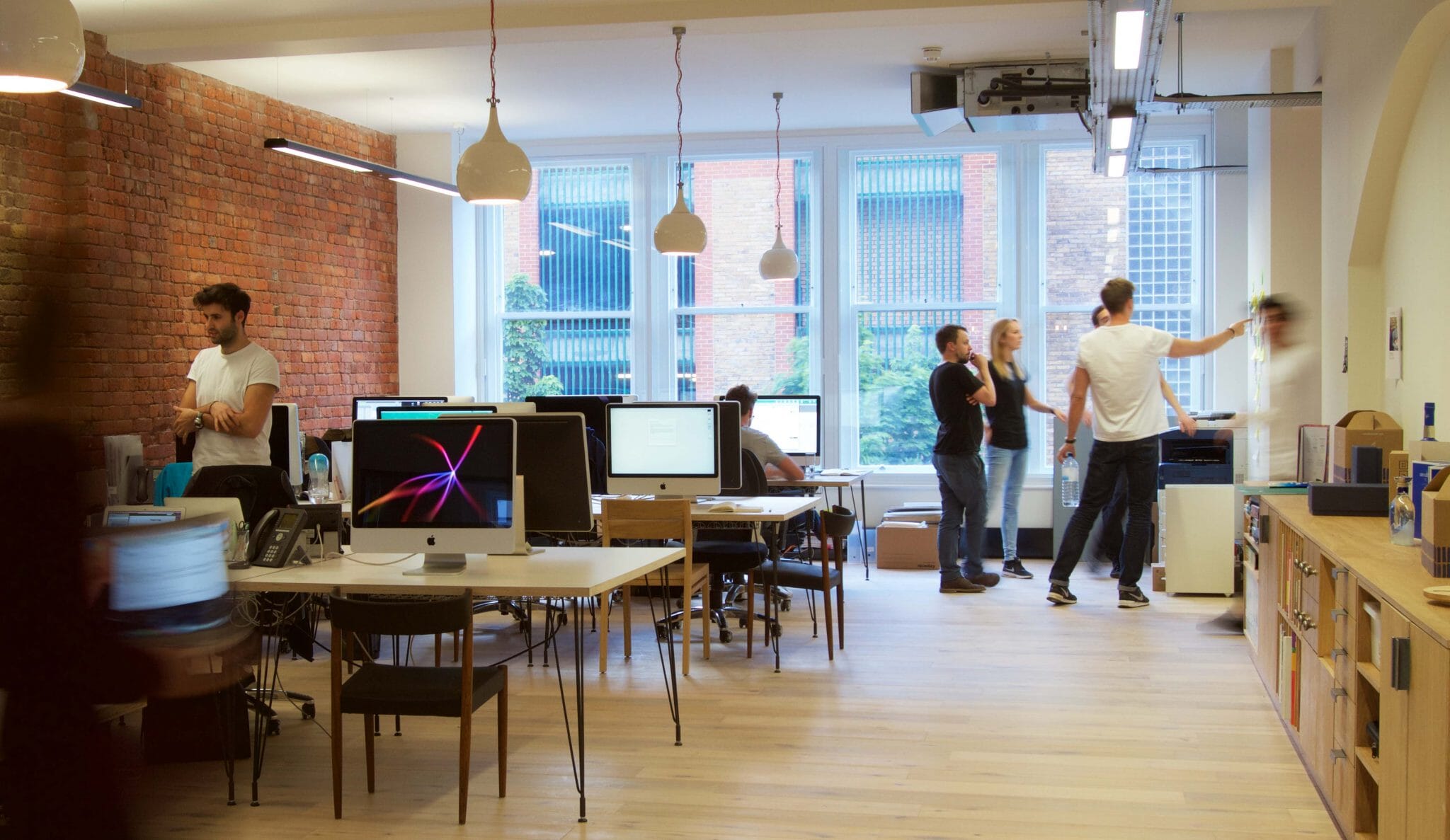
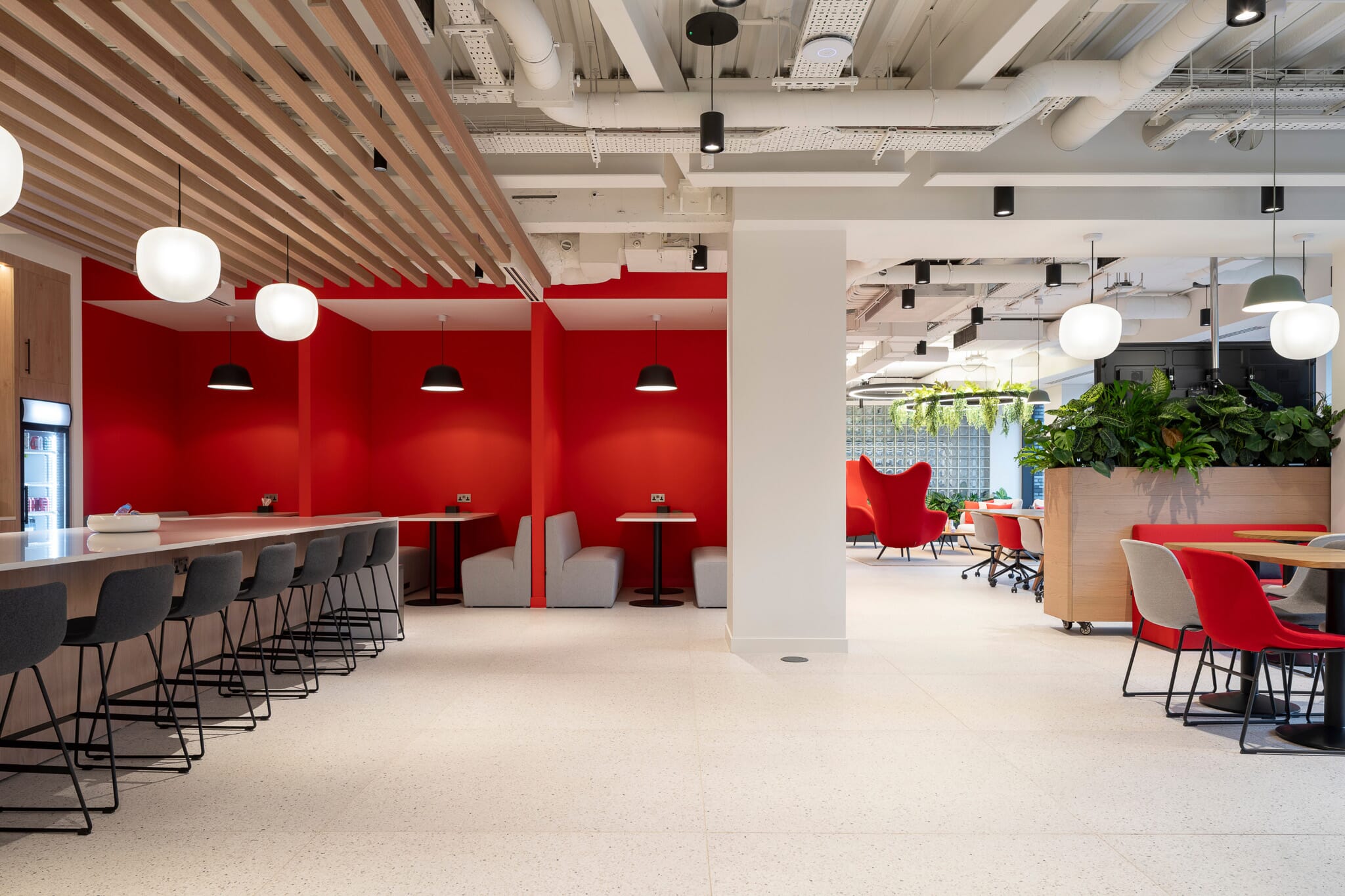
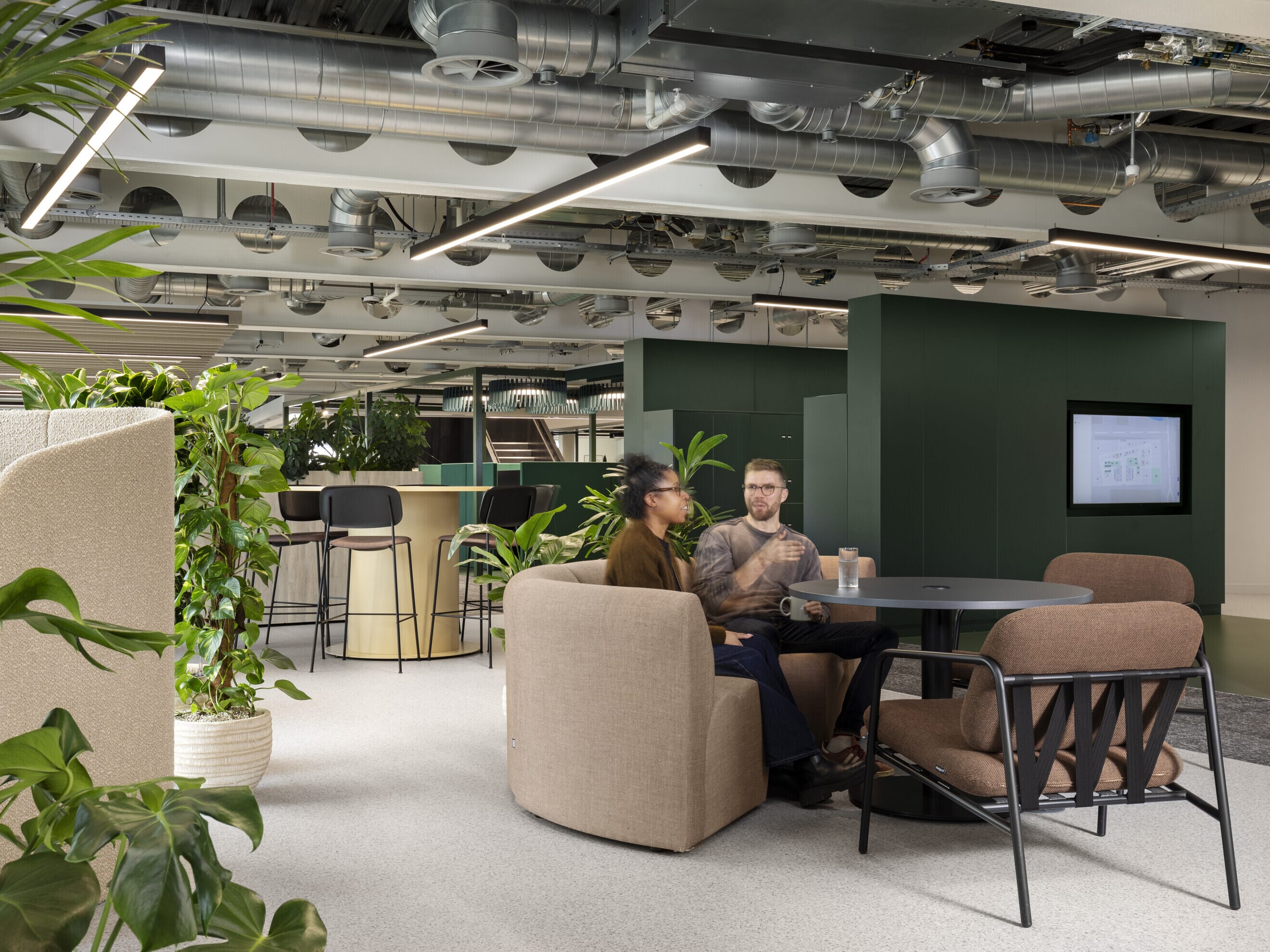
Open-plan layouts dominate modern office design for good reason. They support collaboration, communication and the kind of informal interaction that’s difficult to replicate remotely. But they also concentrate noise in a single shared space, with no walls to contain it.
In a typical open-plan floor with 20 or more people, conversations, calls and background noise overlap constantly. Without acoustic treatment, hard surfaces amplify the effect — sound bounces from ceiling to floor, wall to desk, and back again.
The most disruptive sounds in open-plan offices tend to be nearby speech that is just intelligible enough to draw your attention, intermittent noise from phone calls and video calls, and the general rise in ambient noise level as the floor fills up.
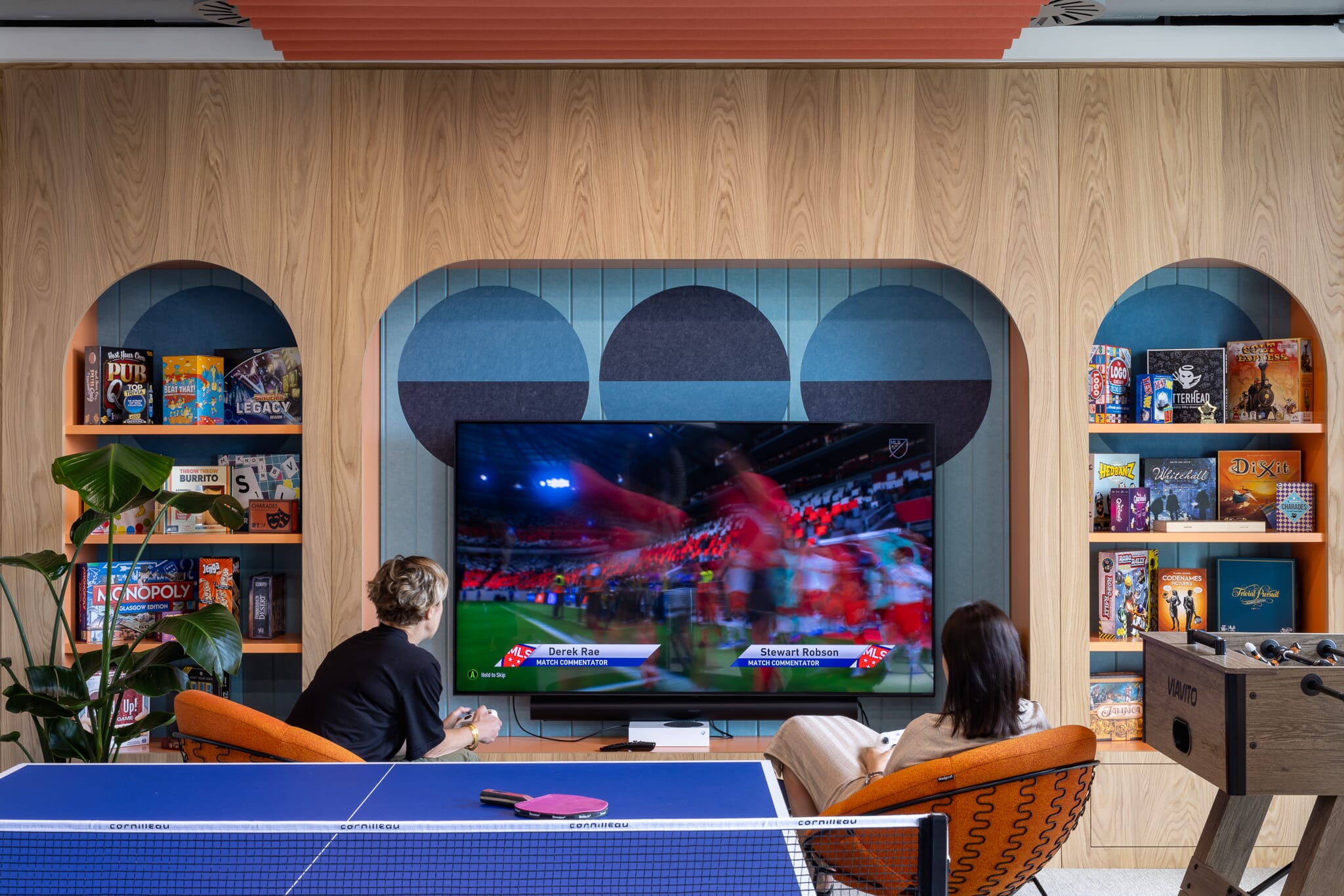
Activity-based working, where people move between collaboration zones, focus areas, and breakout spaces, has become common in UK offices. Each zone has different acoustic requirements. Quiet focus desks need low distraction. Collaboration hubs need controlled reverberation. Breakout areas need energy without excessive echo. Designing acoustics to support all of these in the same space is the central challenge of modern office acoustic design.
BS ISO 22955:2021: The Standard for Open-Plan Offices
BS ISO 22955:2021 is the British and International Standard for acoustic quality in open-plan office spaces. Published in 2021, it replaced older guidance that had not kept pace with how modern offices actually function. It works alongside BS EN ISO 3382-3, which defines how open-plan acoustics are measured, and adds what most specifications were previously missing: target conditions set according to the activity a space actually supports, rather than a single figure applied to a whole floor.
What it recommends in practice:
- Ceilings are the primary driver of reverberation in open-plan offices. The standard calls for Class A absorption products covering approximately 50–60% of the ceiling area. This is the single most impactful intervention available.
- Wall treatment plays a supporting role, particularly for workstations positioned close to walls or in corners. The standard recommends panels installed at ear height, with two perpendicular walls treated where possible to reduce flutter echo.
- Flooring provides limited acoustic benefit in most cases and should not be considered a substitute for ceiling or wall treatment.
- Acoustic screens, furniture and sound masking can all contribute, but the standard is clear: none of them replace proper ceiling absorption.
The targets, in broad terms. Open-plan office space should sit around 0.5–0.8 seconds reverberation time depending on the activity it supports, with distraction distance — the range at which nearby speech stops pulling focus — under 5 metres. Where sound masking is used, it should stay below 45 dB(A); above that it becomes a noise source in its own right and people raise their voices to compensate. The 50–60% Class A ceiling figure is the one intervention that moves all of these at once, which is why the standard puts it first.
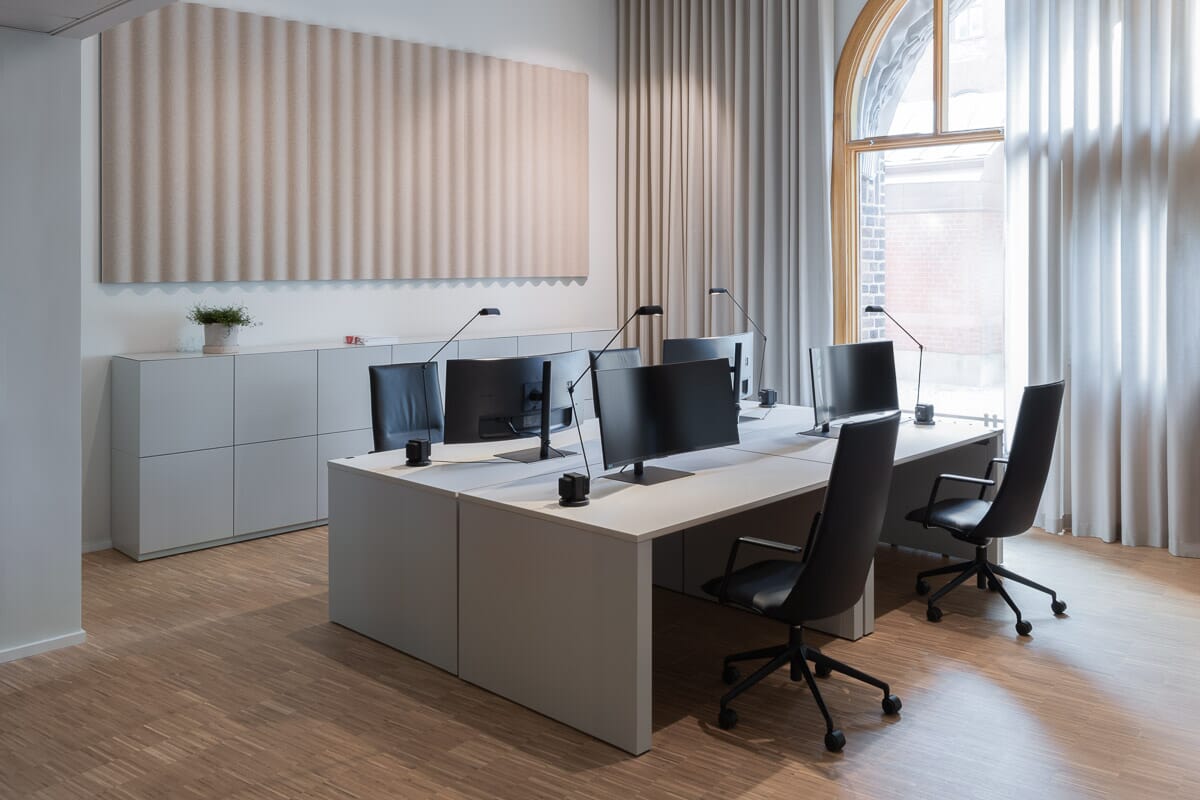
Resonics has a dedicated guide to BS ISO 22955:2021 and what it means in practice for architects, FMs and designers.
Hybrid Working and Meeting Room Acoustics
The shift to hybrid working has changed what offices need to do and raised the acoustic bar considerably, especially for meeting rooms and AV spaces.
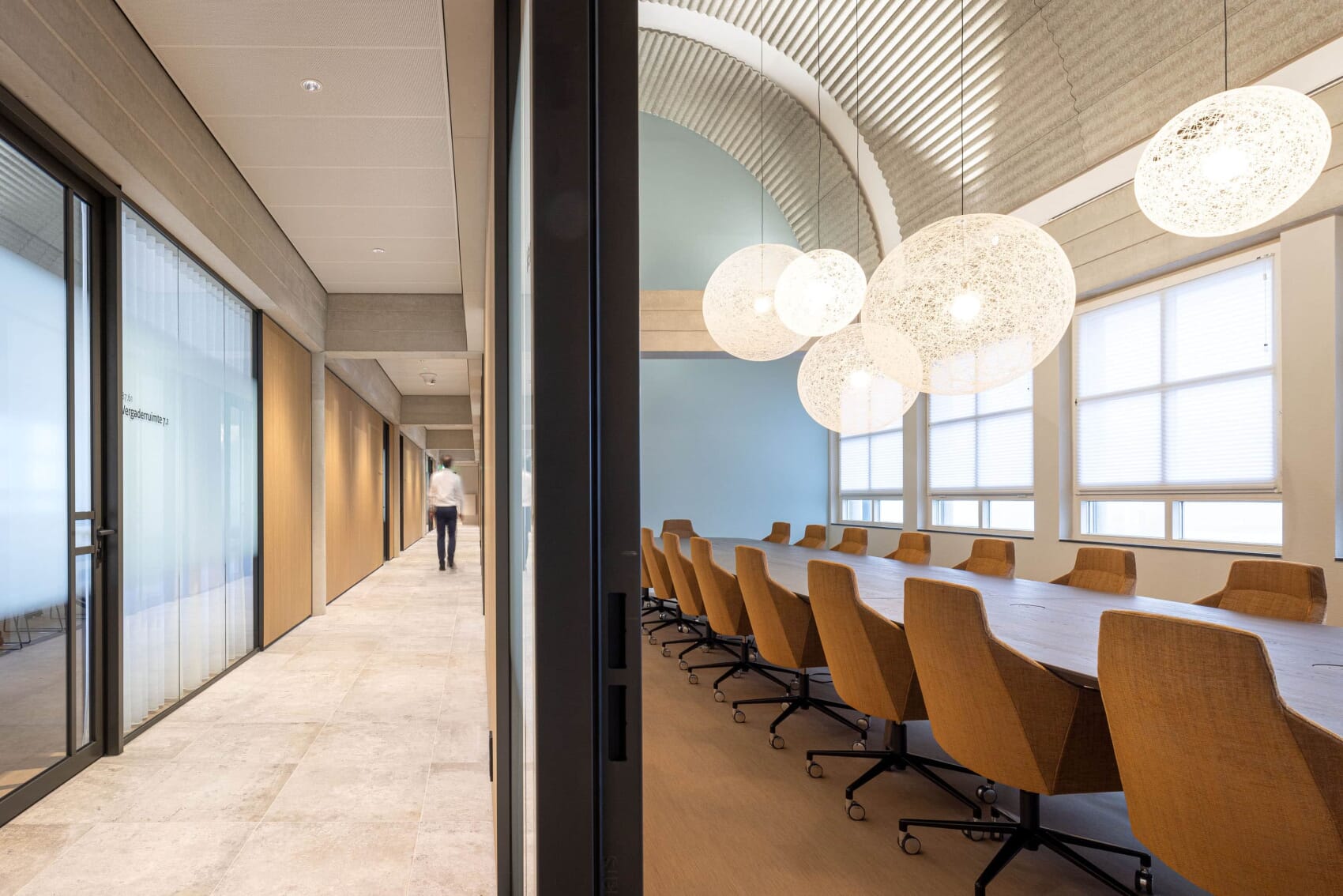
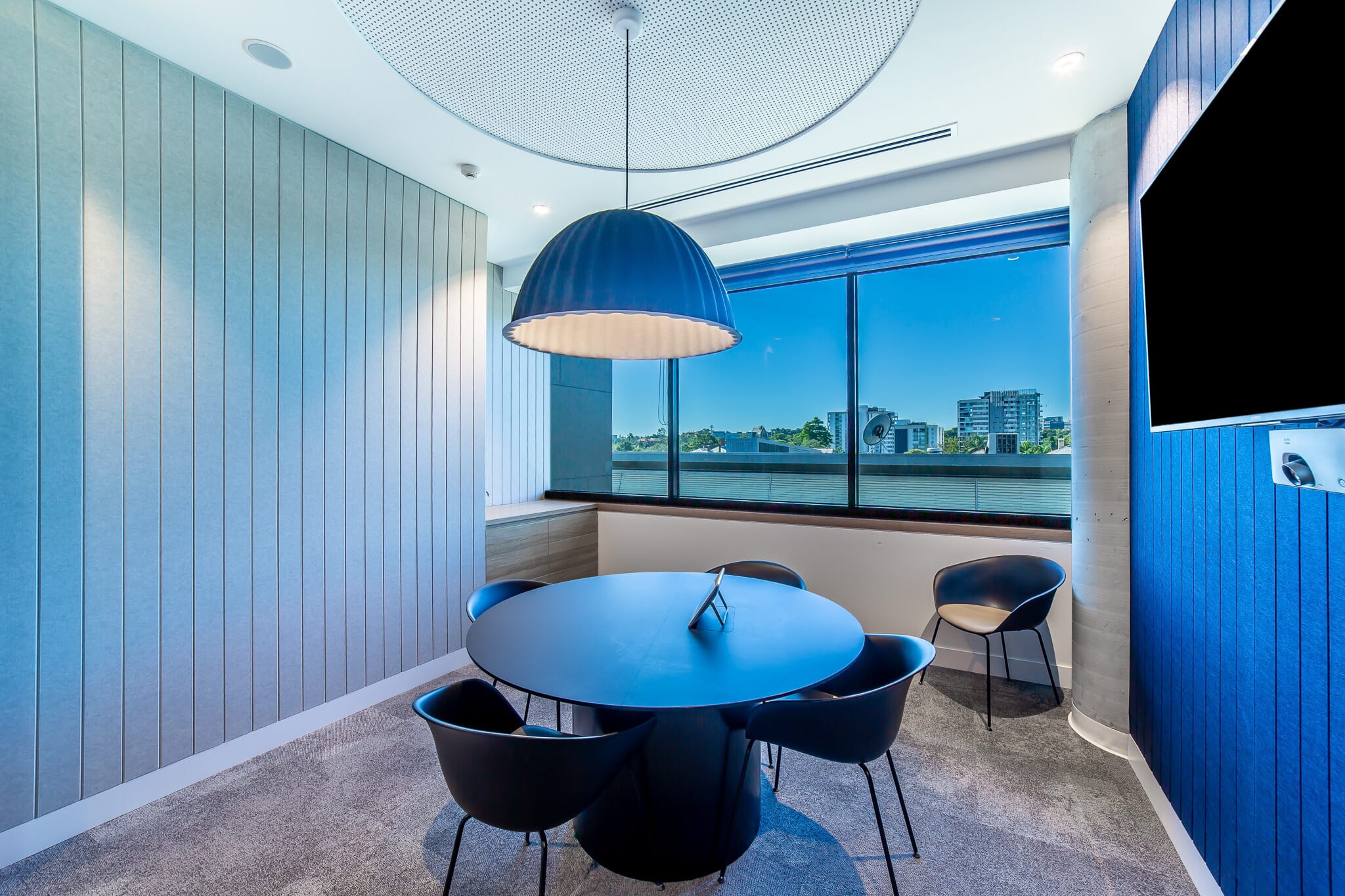
When a meeting includes people in the room and participants dialling in remotely, the acoustic environment affects both groups. Excessive reverberation makes speech harder for remote participants to understand. Background noise from the open plan office bleeds into calls. Poor absorption creates echo that interferes with microphone pickup.
Hybrid meetings require a different level of acoustic precision than traditional boardroom design. The room needs to be quiet enough for remote participants to hear clearly, controlled enough for in-room participants to follow the conversation, and designed around the position of microphones and speakers, not just human listeners.
Key considerations for hybrid meeting rooms include:
- Reverberation control. Meeting rooms with hard walls, glazed partitions and minimal soft furnishing are particularly prone to echo.
- Wall panels, ceiling treatment, and flooring all help with absorption but the ratio of absorptive surface to room volume needs to be calculated, not guessed.
- Speech privacy. What happens in a meeting room should stay there. Transmission through partitions, gaps above suspended ceilings and shared HVAC routes are common failure points. Acoustic consultancy identifies these before installation.
- AV integration. Microphone placement, speaker positioning and room geometry all interact with acoustics.
For conference rooms and formal presentation spaces, the acoustic requirements become more stringent, with additional attention to low background noise levels, controlled early reflections and consistent coverage across the listening area.
Acoustic Solutions for Offices
The right acoustic treatment depends on the space, the activity and the aesthetic brief. These are the main product categories Resonics specifies across office projects.
Acoustic ceiling rafts and baffles
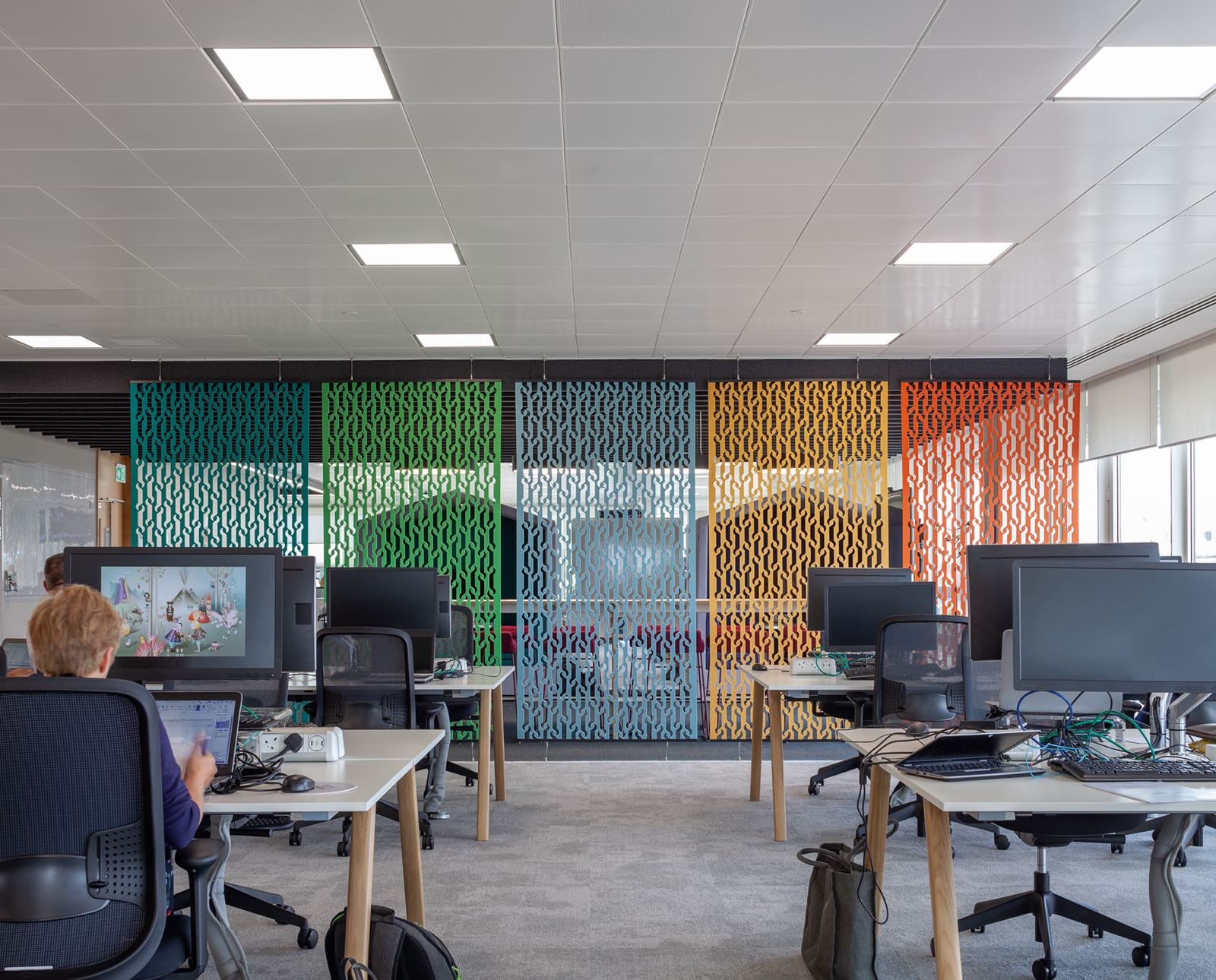
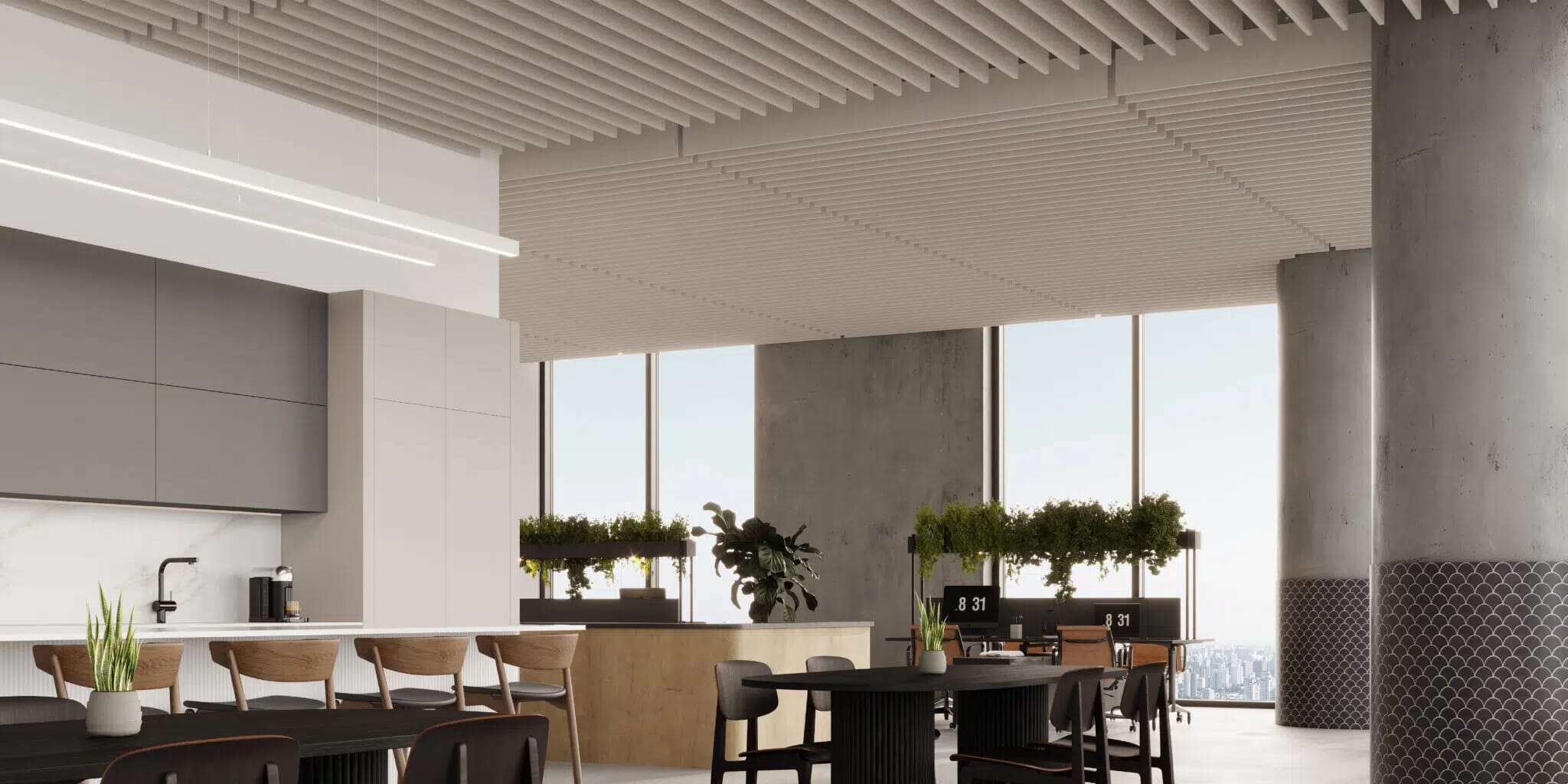
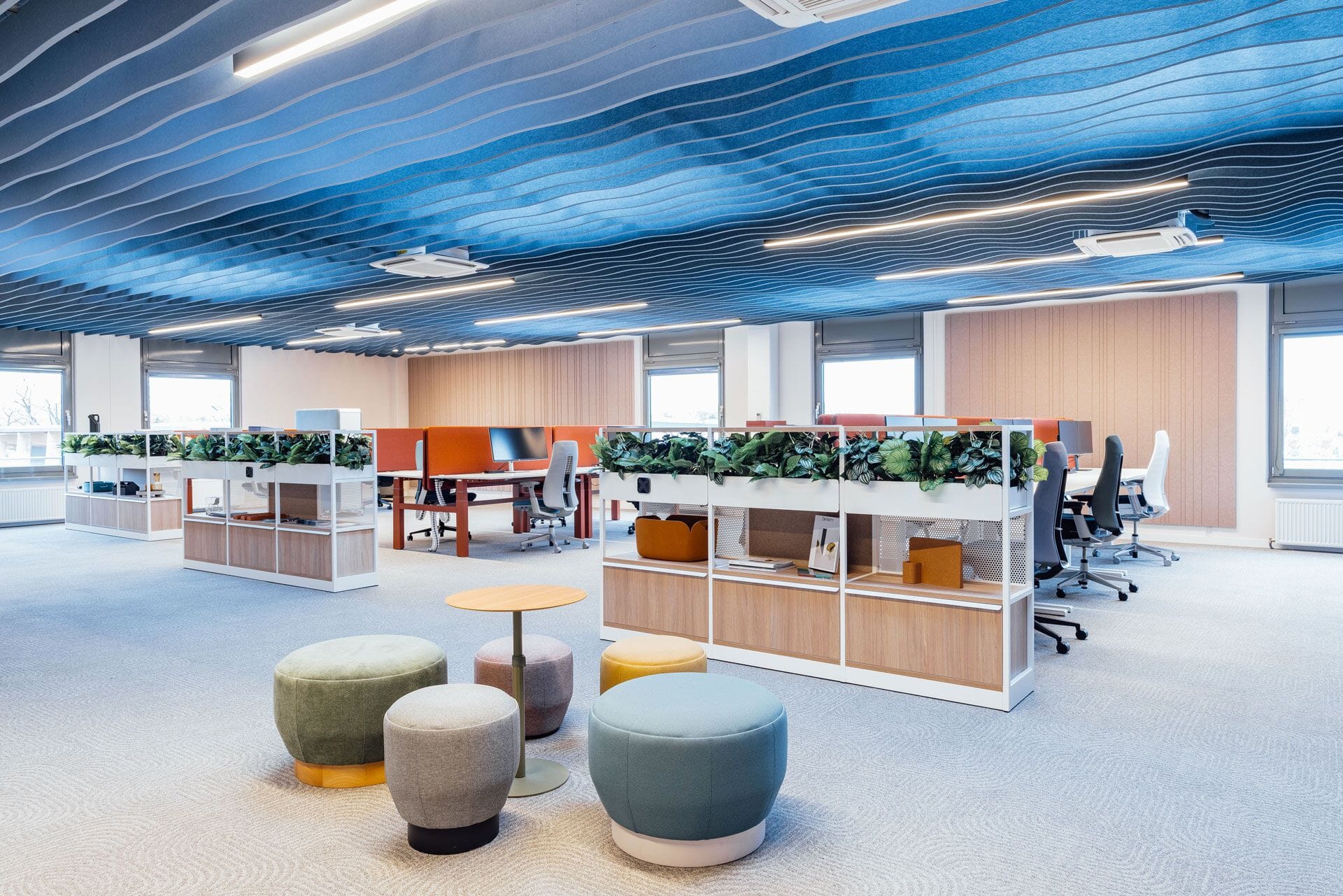
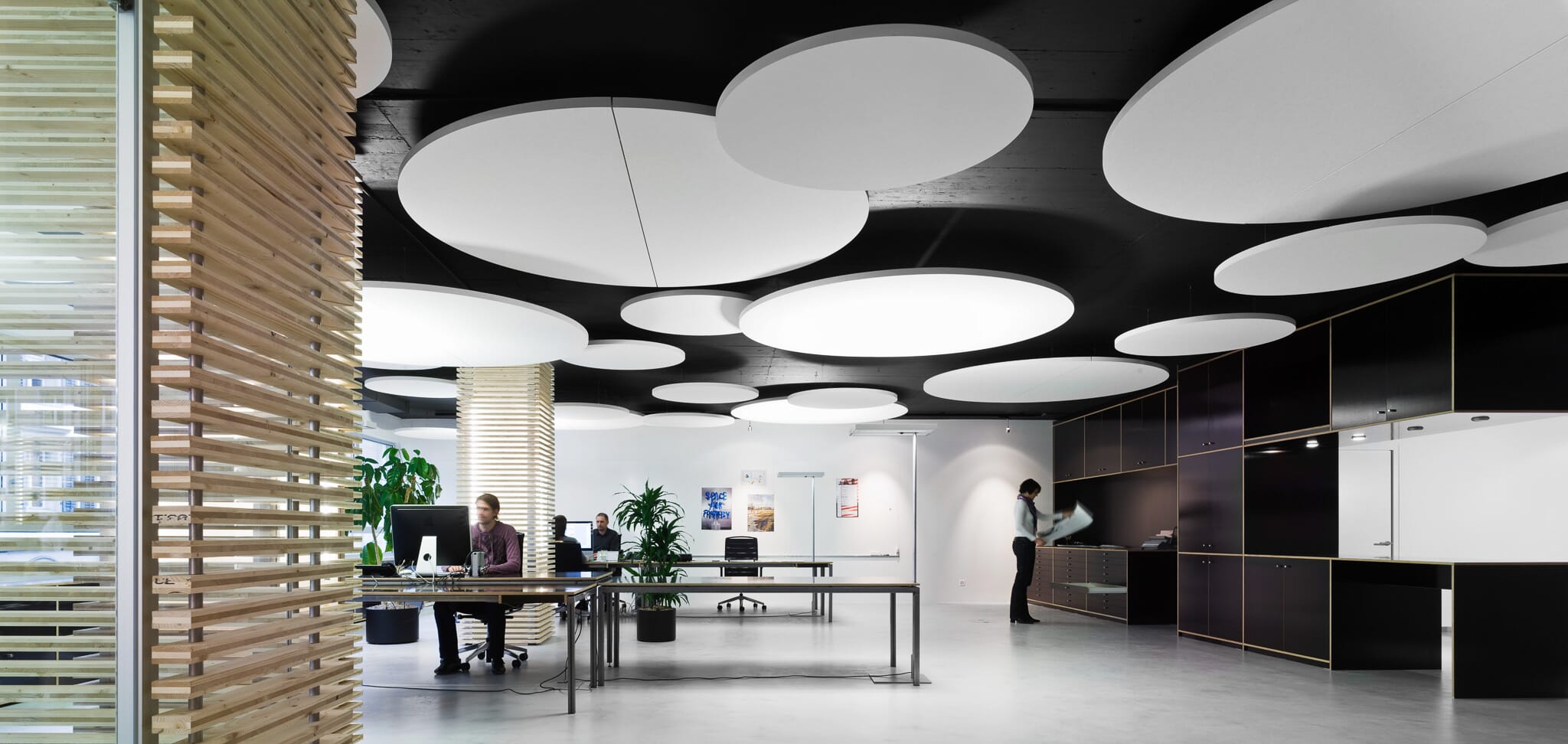
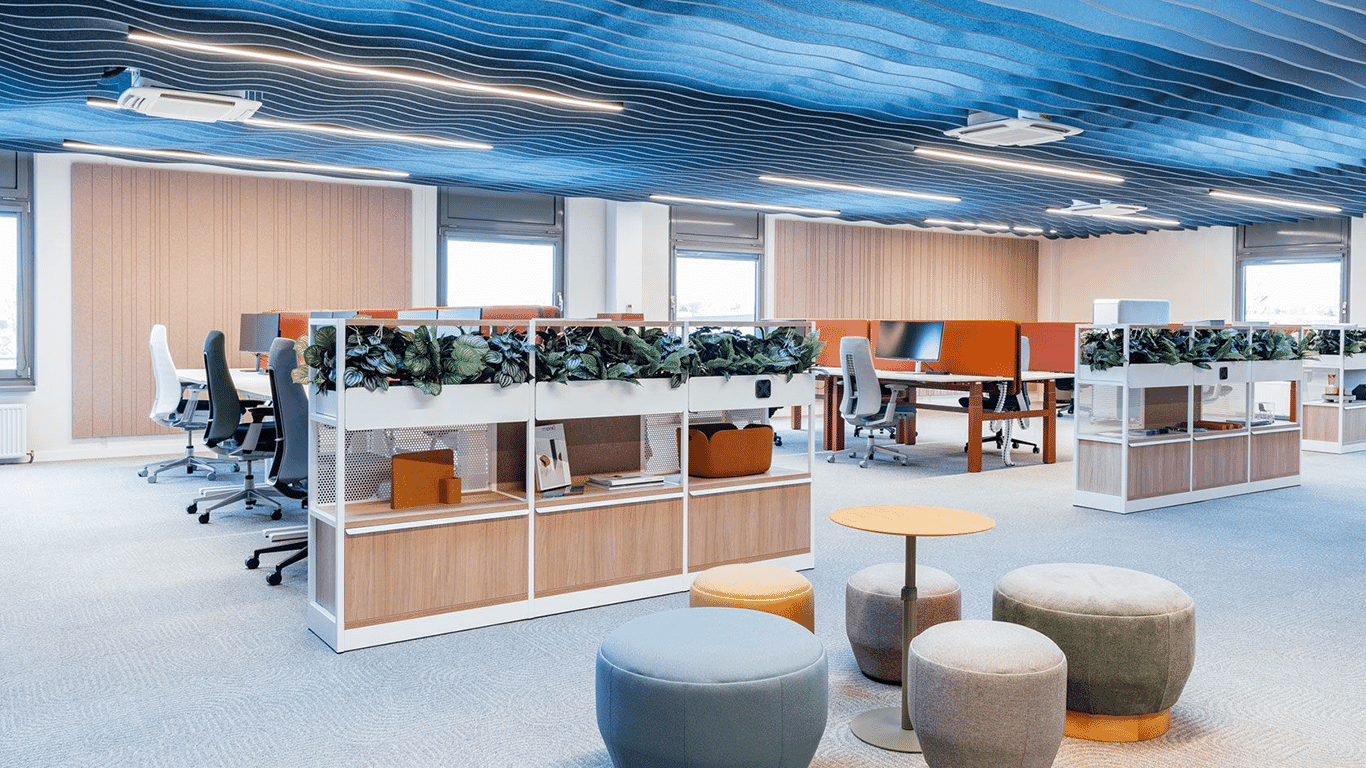
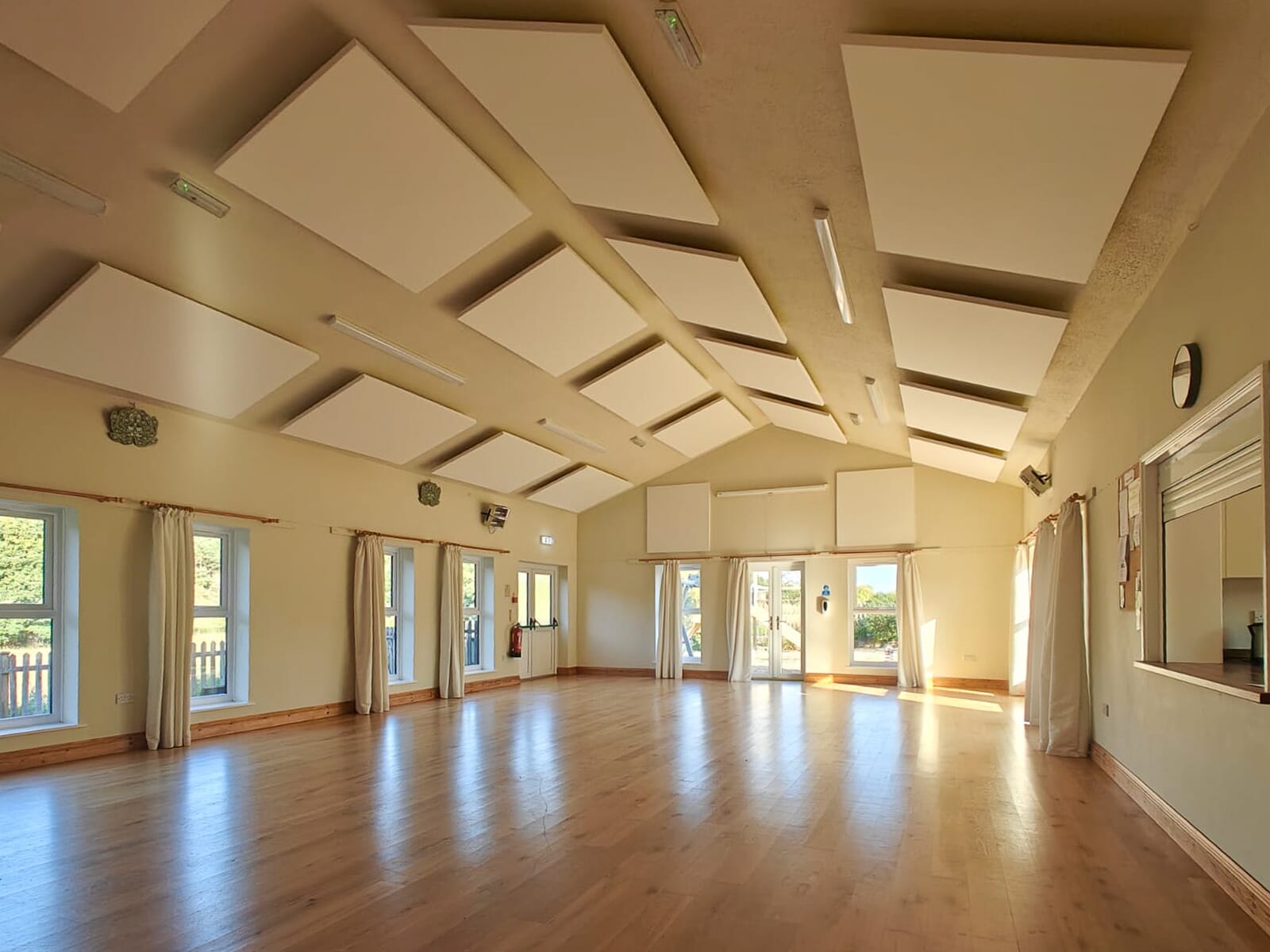
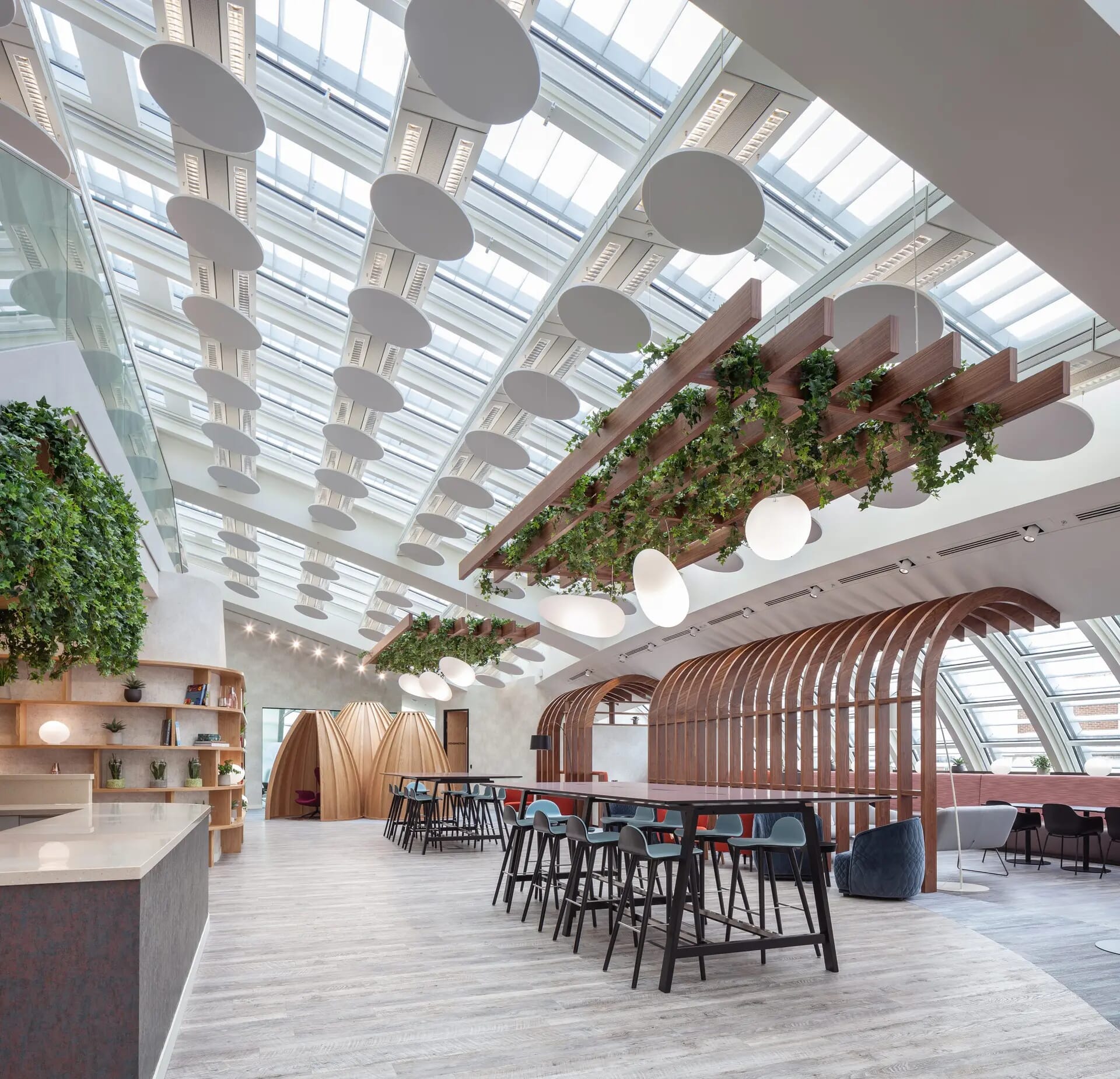
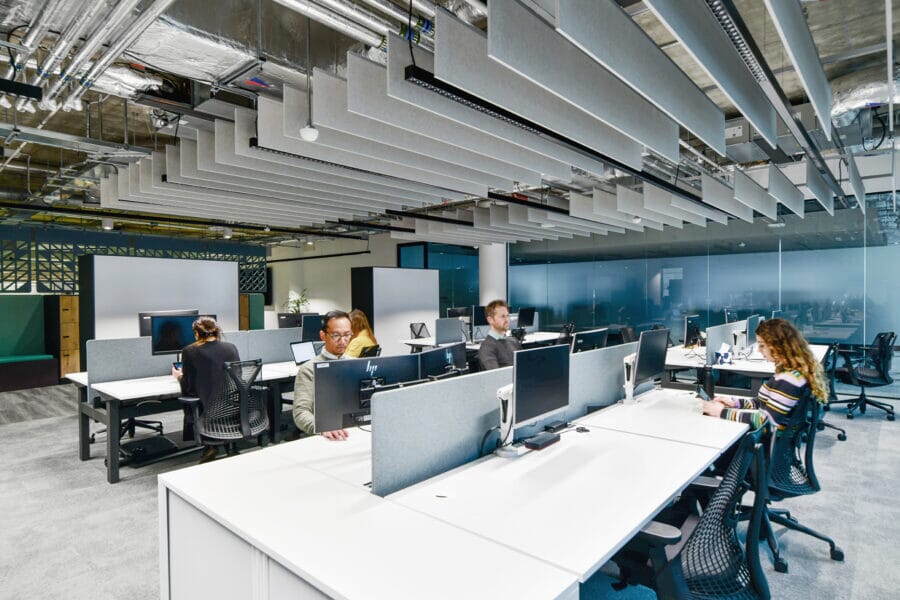
Suspended horizontally from the ceiling, acoustic rafts are the most effective way to achieve the coverage required by BS ISO 22955:2021. They integrate around services, lighting and sprinklers, and are available in a wide range of colours and finishes. Baffles are well-suited to exposed ceiling environments where horizontal fixings aren’t possible.
Key products: Ecophon Solo, Silent Space SilentRaft, Autex Frontier
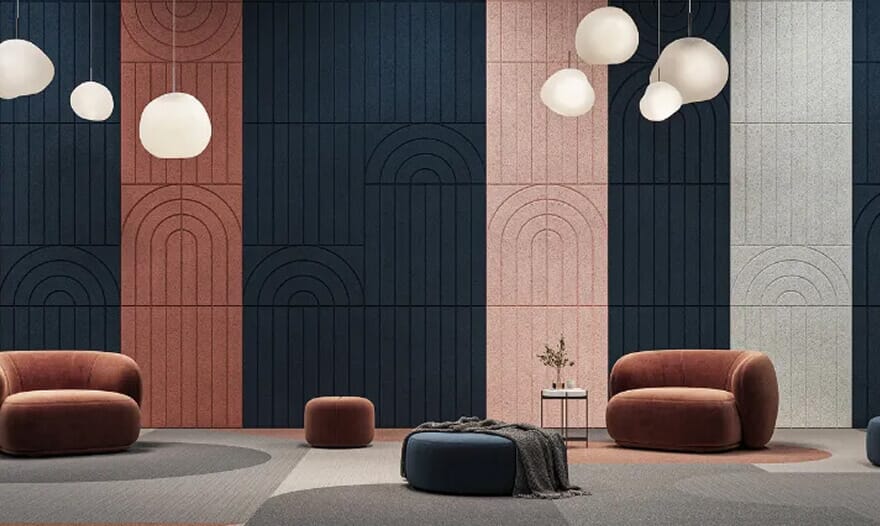
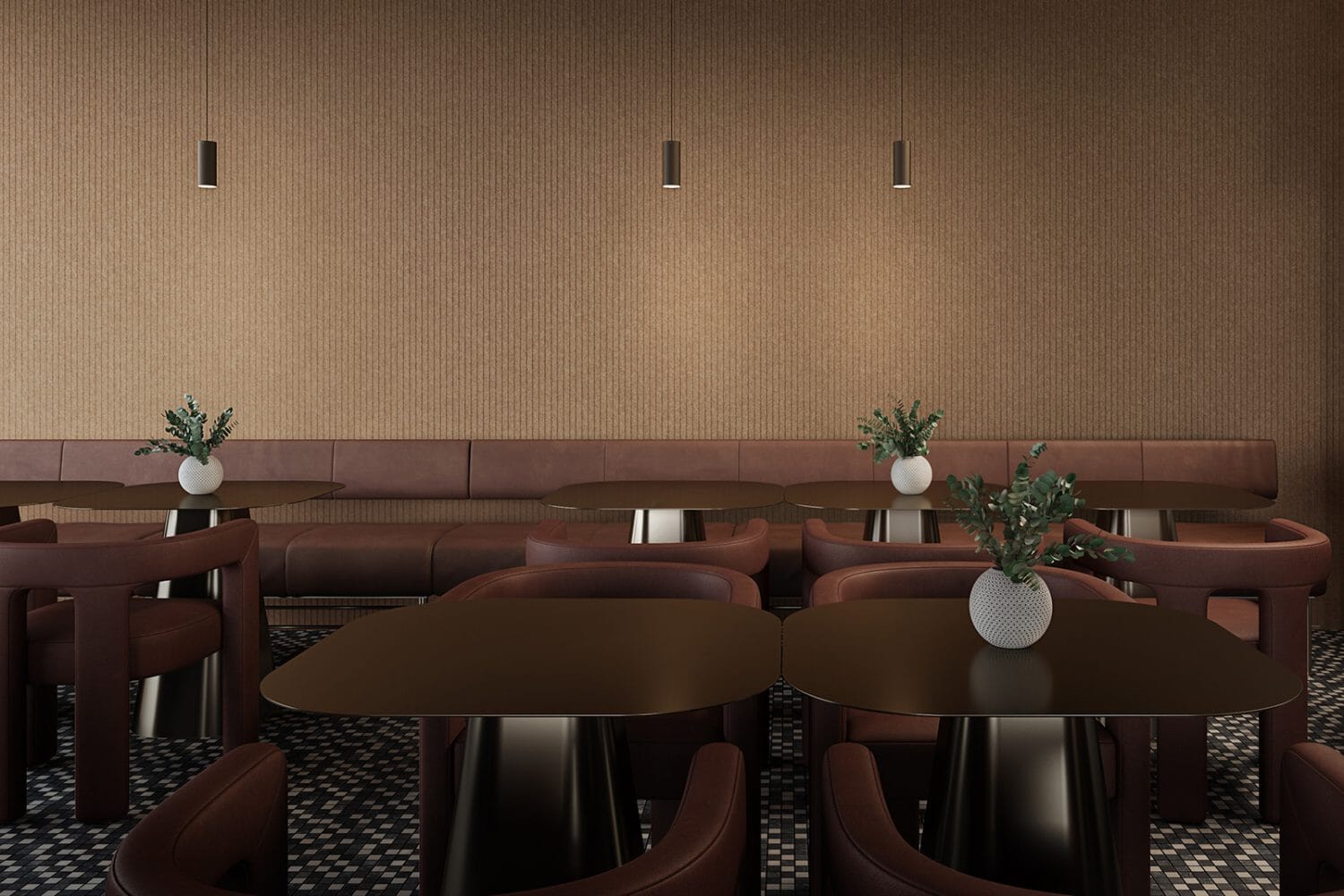
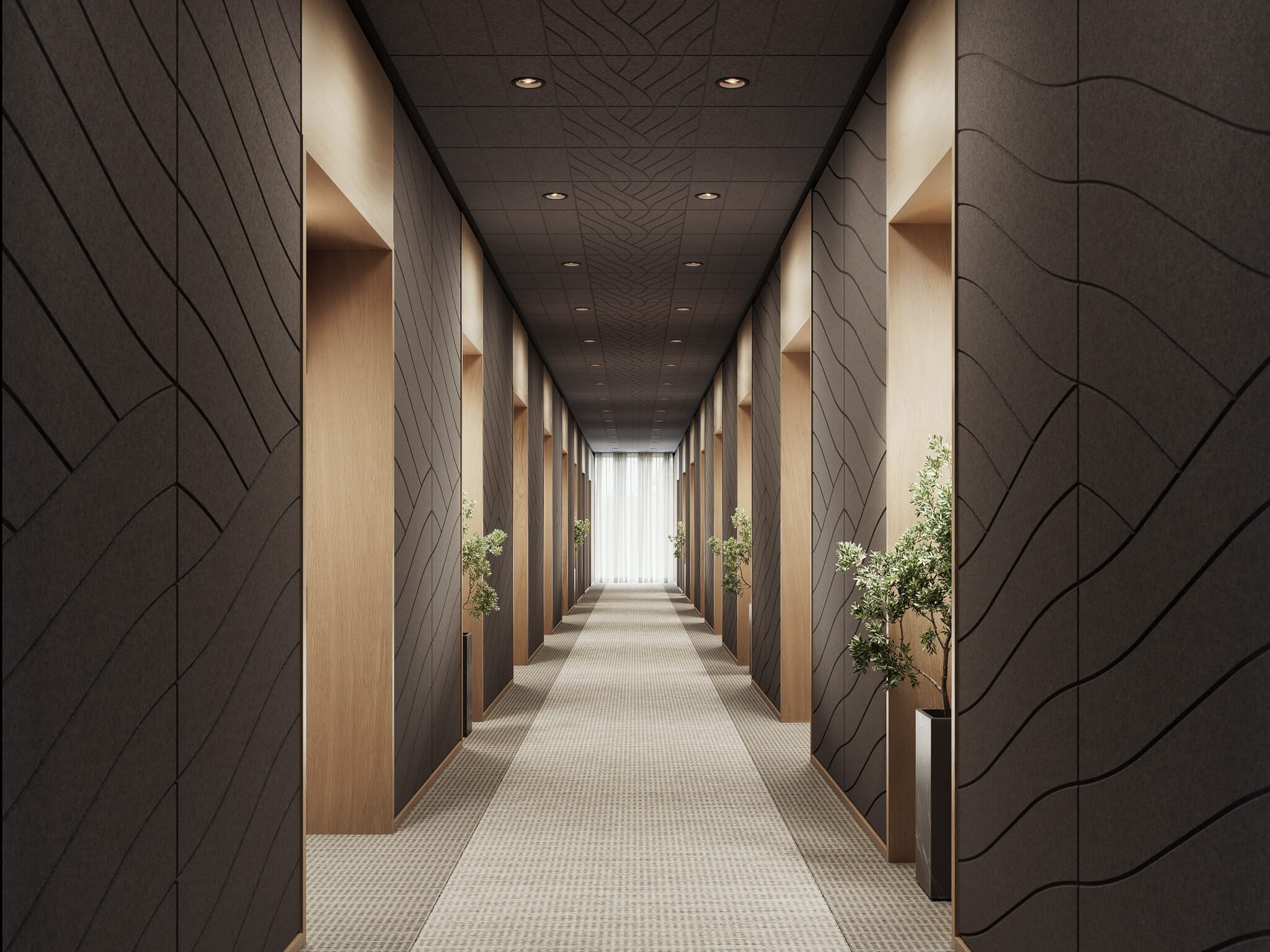
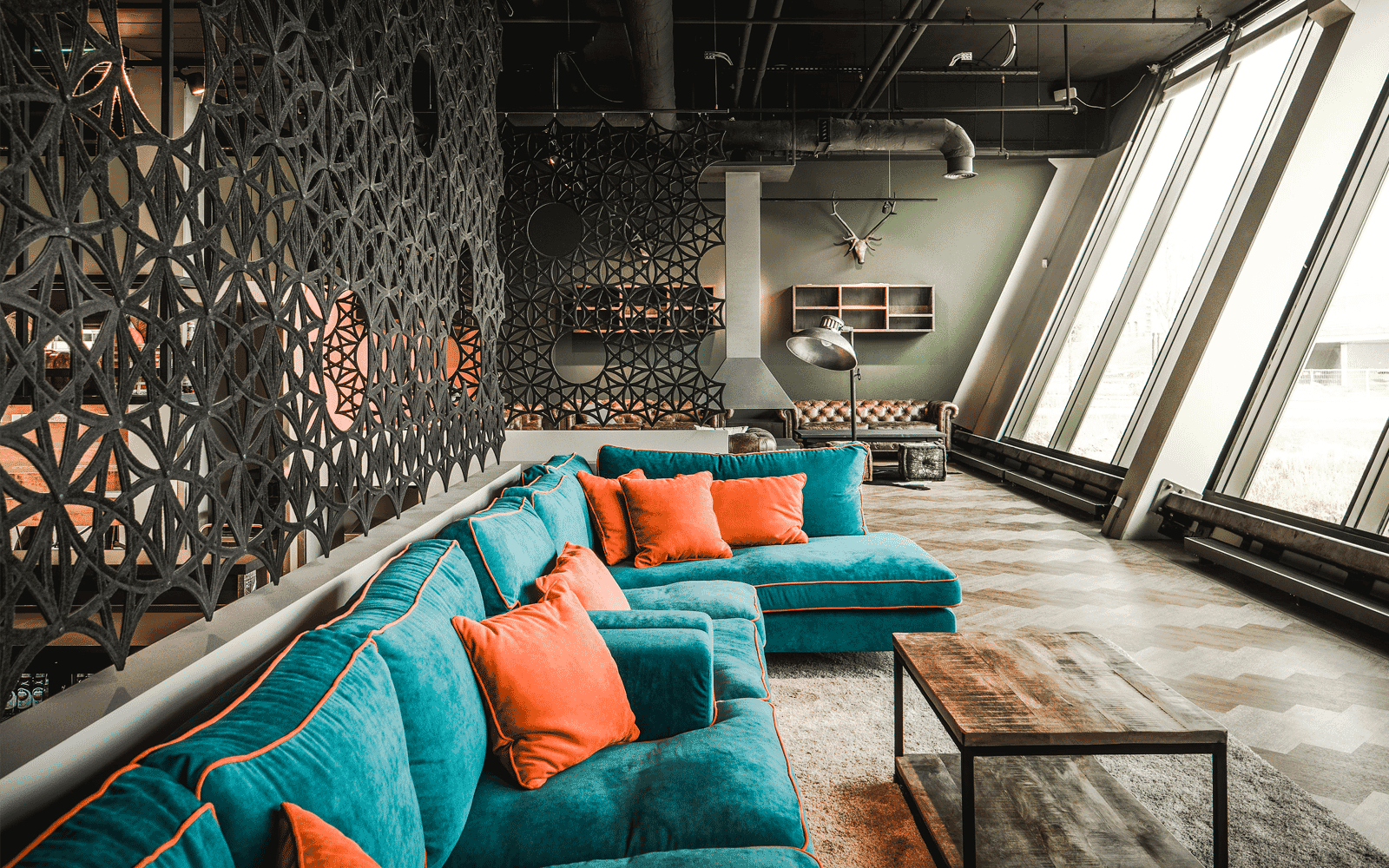
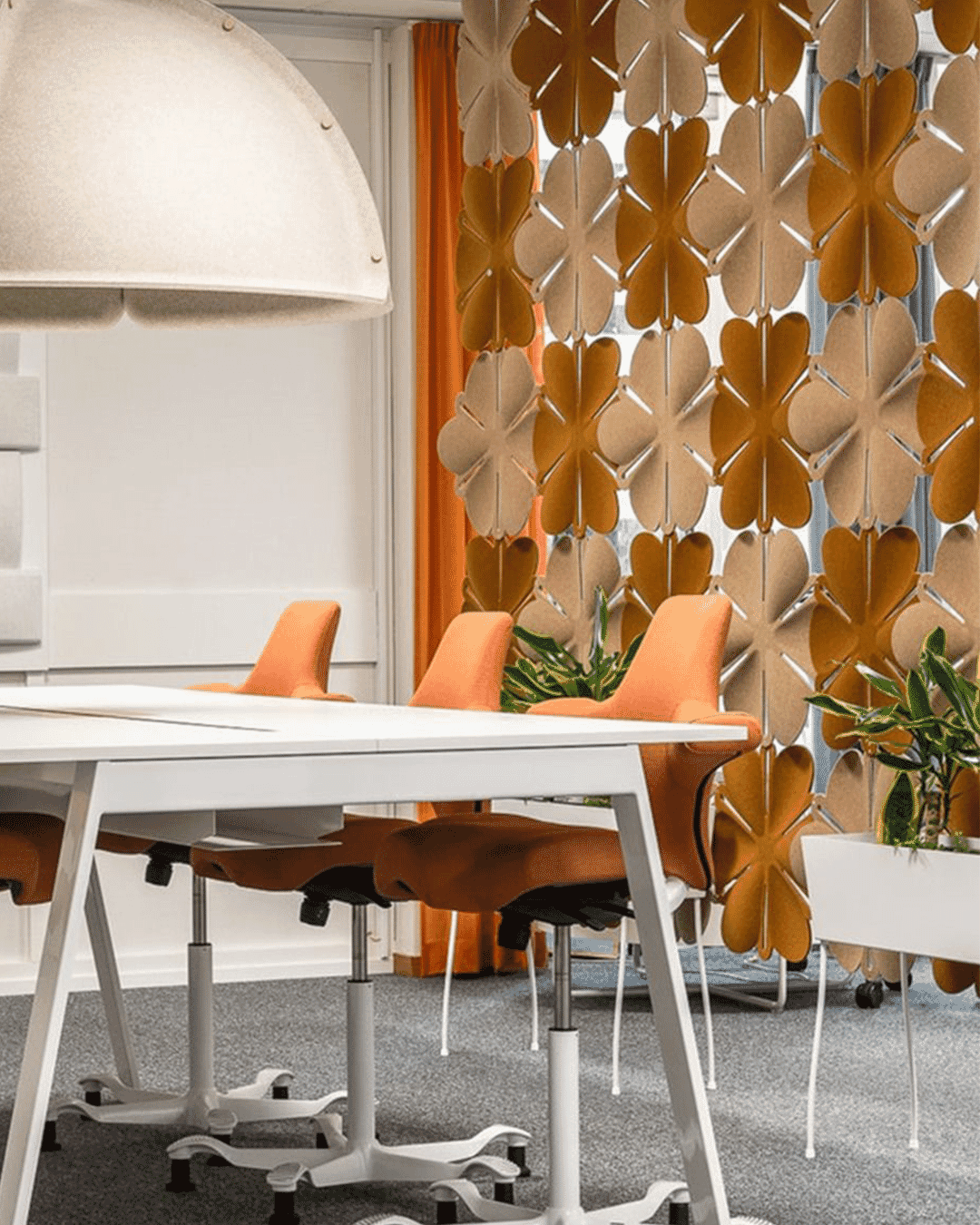
Wall panels reduce flutter echo, support workstations near walls, and in most offices carry significant visual weight. They’re often as much a design decision as an acoustic one. Products range from fabric-wrapped panels to three-dimensional PET designs and fully bespoke systems.
Key products: Autex Groove, Impact Acoustic wall panels, Tenso Wall, Acoufelt QuietForm
Sound masking adds a carefully calibrated layer of ambient background sound, typically a soft, broadband signal, that raises the auditory threshold for speech intelligibility. The effect is that nearby conversations become harder to overhear without feeling louder. It’s particularly effective in open-plan environments where speech privacy is a concern and as a complement to physical treatment in large floor plates.
Acoustic screens and desk dividers
Acoustic screens interrupt the direct path of sound between workstations. They don’t significantly affect reverberation, but in a well-treated space they help create acoustic separation between adjacent desks and zones. They’re most effective when used as part of a wider acoustic strategy.
Phone booths and enclosed acoustic pods provide private spaces for calls and focused work. It’s increasingly common in hybrid offices where the floor plan no longer supports a dedicated private office. They’re a practical addition to any activity-based working environment.
How to Specify Office Acoustics
Most acoustic specifications fail in one of a small number of predictable ways. If you’re writing or reviewing one, these are the things to get right.
Specify absorption class, not product name. Class A absorption under BS EN ISO 11654 is a performance requirement any compliant product can meet. Naming a single product creates a single-source specification and removes your ability to value-engineer without losing performance.
State coverage as a percentage of ceiling area. “Acoustic ceiling treatment” is not a specification. “Class A absorbers to 55% of ceiling area” is. Coverage is what determines the outcome, and it’s the thing most often cut on site.
Keep absorption and fire ratings separate. Class A refers to sound absorption under BS EN ISO 11654. Fire performance is a separate rating under BS EN 13501-1 — a Euroclass, such as B-s1,d0. The two are unrelated and are regularly conflated in specifications, sometimes by suppliers. State both, independently.
Specify by activity, not by floor. BS ISO 22955 classifies space by what happens in it. A floor containing both a support desk and a development team has two sets of requirements, and treating it as one will satisfy neither.
Ask for the sustainability evidence, not the claim. Recycled content percentage, an Environmental Product Declaration, and a stated end-of-life route are verifiable. “Sustainable” and “eco” are not. Most PET-based acoustic products carry genuine recycled content and several manufacturers hold current EPDs — but the document is what a BREEAM or WELL assessor will ask for, so require it at specification stage rather than at handover.
Decide who owns coordination. Acoustic rafts share ceiling space with lighting, sprinklers, services and AV. Where that coordination isn’t assigned, coverage gets reduced on site to resolve clashes, and the specification quietly stops being met.
Resonics works across more than fifteen manufacturers and is not tied to any of them, which means specification decisions are made on performance and coverage rather than on what a single supplier happens to stock.

FAQ’s
How much does office acoustic treatment cost?
Costs vary depending on the size of the space and the level of treatment required, from a few thousand pounds for a single meeting room to significantly more for full-floor ceiling coverage. The only reliable way to get an accurate figure is a free acoustic survey, which gives you a tailored recommendation and quote based on your actual space.
What is BS ISO 22955:2021?
It’s the British and International Standard for acoustic quality in open-plan offices, published in 2021. It sets out testable targets for reverberation and speech intelligibility, and recommends Class A absorption products covering roughly 50–60% of the ceiling area as the primary intervention.
Do acoustic panels actually work?
Yes, when specified and positioned correctly. Panels reduce reverberation and flutter echo, but effectiveness depends on coverage, placement and the acoustic class of the material — a small number of decorative panels won’t meaningfully change how a room sounds. This is why a survey and calculation, rather than guesswork, matters.
What’s the difference between noise and reverberation?
Noise is unwanted sound reaching you directly, such as conversations, calls or HVAC hum. Reverberation is what happens when that sound reflects off hard surfaces like ceilings, glass and desks and lingers in the room. They’re different problems and usually need different treatment, though most offices need to address both.
Can I improve office acoustics without major building work?
Yes. Ceiling rafts, wall panels, acoustic screens and sound masking can all be retrofitted into an existing office without structural changes. The most effective single intervention in most open-plan offices is treating the ceiling, since it’s the largest reflective surface.
Do I need acoustic treatment if my office isn’t that noisy?
Reverberation problems aren’t always obvious until they’re pointed out — a space can feel “fine” day to day but still be undermining concentration and increasing fatigue over a working day. If meeting rooms echo, video calls sound poor, or people mention needing headphones to focus, it’s worth a survey.
How long does installation take?
This depends on scope, but most office acoustic treatment projects are installed with minimal disruption to daily operations, often outside core working hours. Your consultant will confirm timescales and phasing as part of the survey recommendation.
Who should I speak to about office acoustics?
An acoustic specialist who can survey the space, not just a supplier of panels. Resonics provides a free acoustic survey covering treatment type, coverage, product selection and phasing, with no obligation.
Resonics Process
Resonics is the UK’s leading acoustic treatment specialist, with over 7,000 completed projects and more than a decade of experience across offices, schools, hospitality, healthcare and public buildings.
Every project begins with a free acoustic survey. One of our consultants visits the space, assesses the existing acoustic environment, and produces a tailored recommendation, covering treatment type, coverage, product selection and phasing if required. There’s no obligation and no off-the-shelf package: every recommendation is specific to the space and the people using it.
From there, Resonics handles design, supply and installation. Our team manages the full process, coordinating with contractors, FMs and fit-out teams to deliver on time and within specification.
Where to Start
If you’re managing a noisy office, planning a refurbishment, or designing a new workplace fit-out, acoustics should be part of the brief from the start, not a problem to fix once the walls are up.
The most common mistake is treating acoustics as a finishing touch rather than a design variable. By the time furniture is in and people are working, the room geometry, surface finishes and partition layout are fixed.
Book a free acoustic survey and one of our consultants will assess your space, identify the issues, and recommend a solution that works.
Article Author
Mark Irwin
Head of Marketing
14th Nov 2025