























4 Minute Read
A Guide to Auditorium Acoustics
Large areas, hard surfaces and tiered seating make auditoriums prone to echo. This guide explains what causes poor auditorium acoustics, what good acoustics looks like and how to treat the space with acoustic panels.

Mark Irwin
6th Aug 2025
Categories
Advice
In an auditorium, everyone in the audience needs to hear what’s happening on stage. Whether it’s a school assembly, a lecture, a conference or a show, people in the back should hear as clearly as those in the front.
Many auditoriums struggle with this. Speech sounds muddy, music loses its detail and the audience has to strain to follow along. The good news is that most of these problems can be fixed with the right acoustic treatment.

Why do auditoriums have poor acoustics?
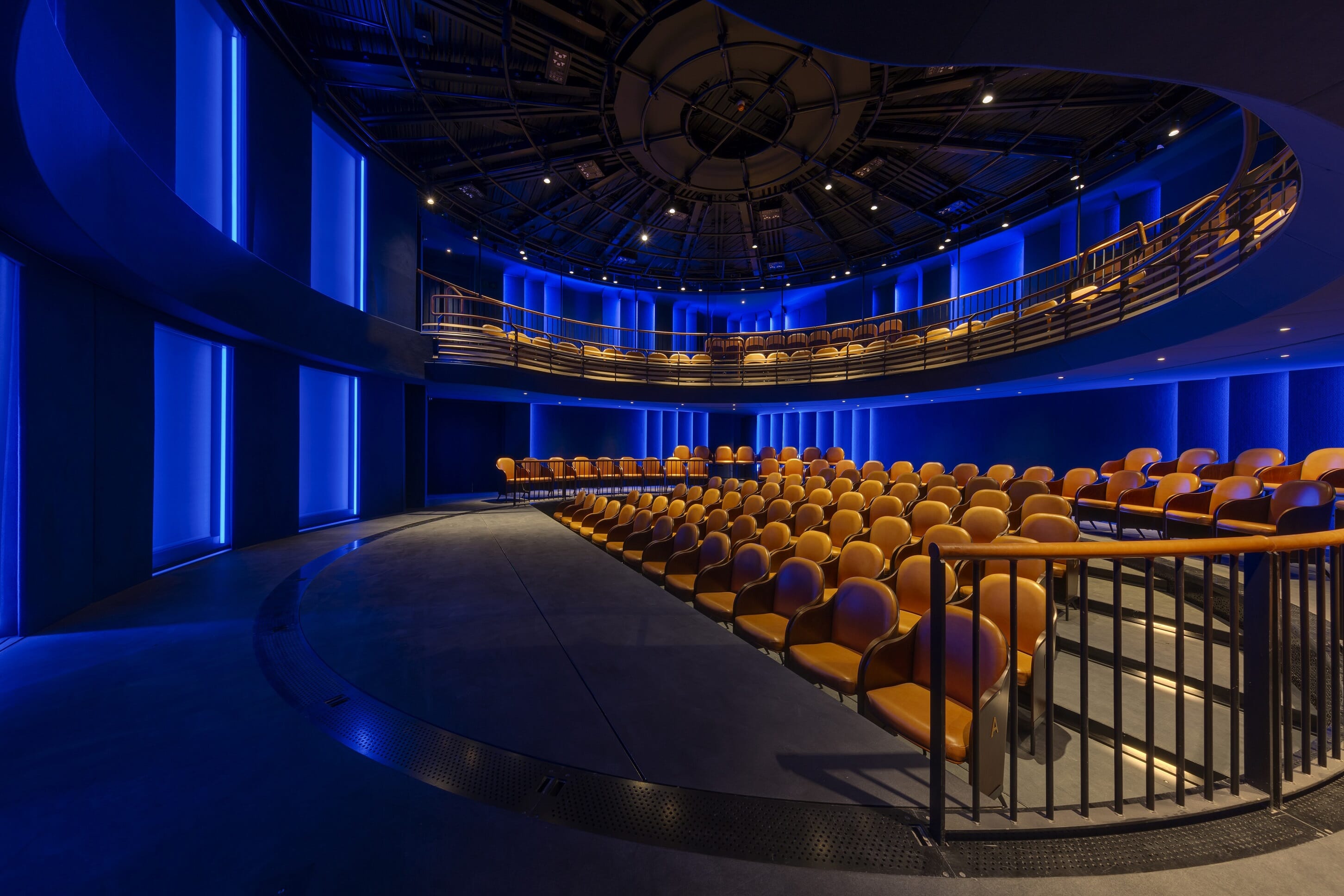
Auditoriums are big rooms with lots of hard surfaces. Concrete, plaster, glass, timber and hard seating all reflect sound. If there’s not enough absorption, sound keeps bouncing around the room.
The most common problems are:
- Long reverberation times that blur words and music together
- Sound reflecting off the back wall and back towards the stage
- Flutter echo between parallel side walls
- Uneven sound, with some seats sounding clear and others sounding boomy
- Noise build-up when the audience is talking before and after events
What does good auditorium acoustics look like?
Good acoustics means sound is clear and even across every seat. Some reflection is helpful because it carries sound to the back of the room and gives music warmth. The aim is to control it, not remove it.
The key measure is reverberation time (RT60), which is how long it takes sound to fade away. The right target depends on how the space is used:
- Speech-focused spaces (lecture theatres, conference venues, school halls) need a shorter reverberation time so words stay clear.
- Music-focused spaces benefit from a slightly longer reverberation time, which gives sound richness.
- Multi-use spaces need a balance that works for both.
Our guide to reverberation time explains how RT60 is measured and what the numbers mean.
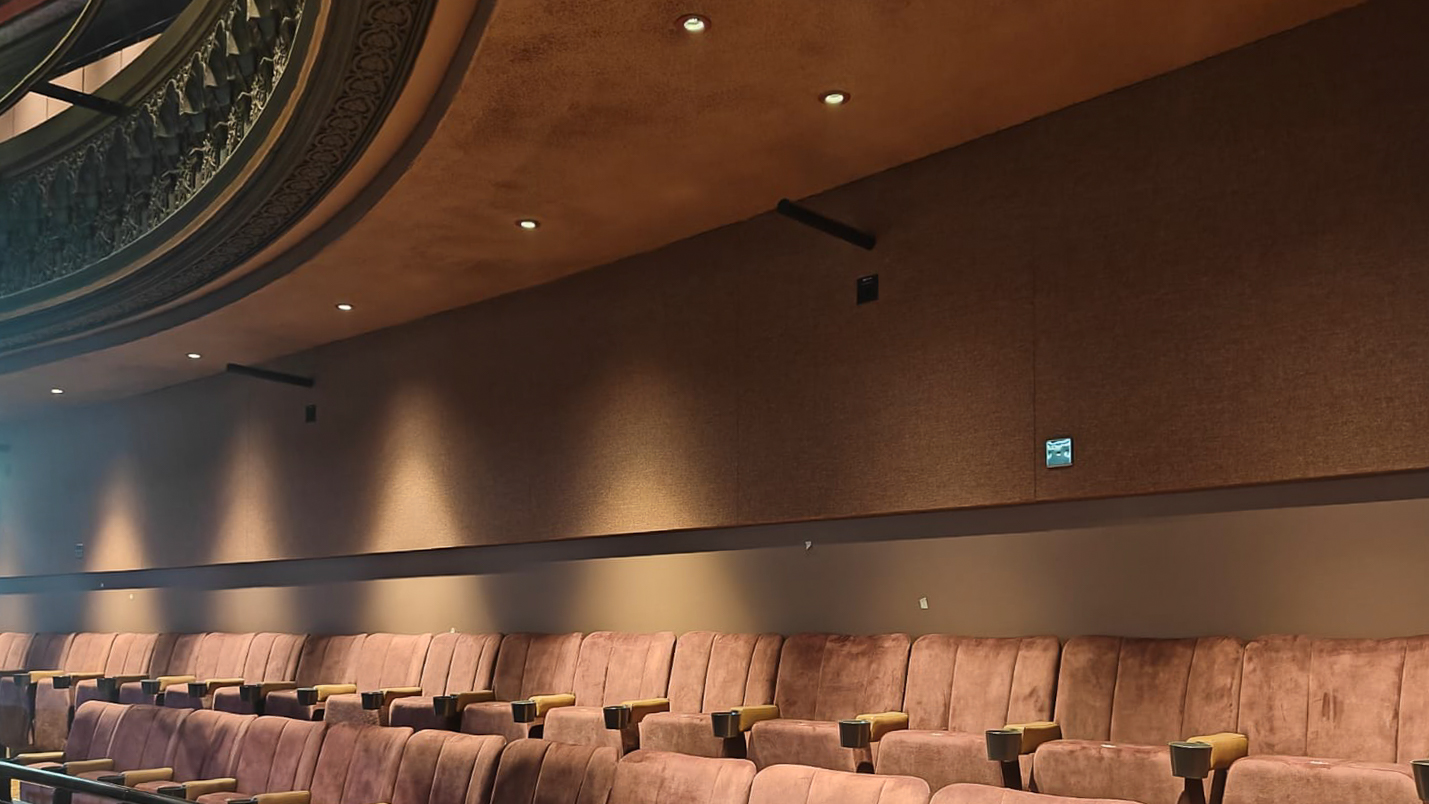
Soho Theatre
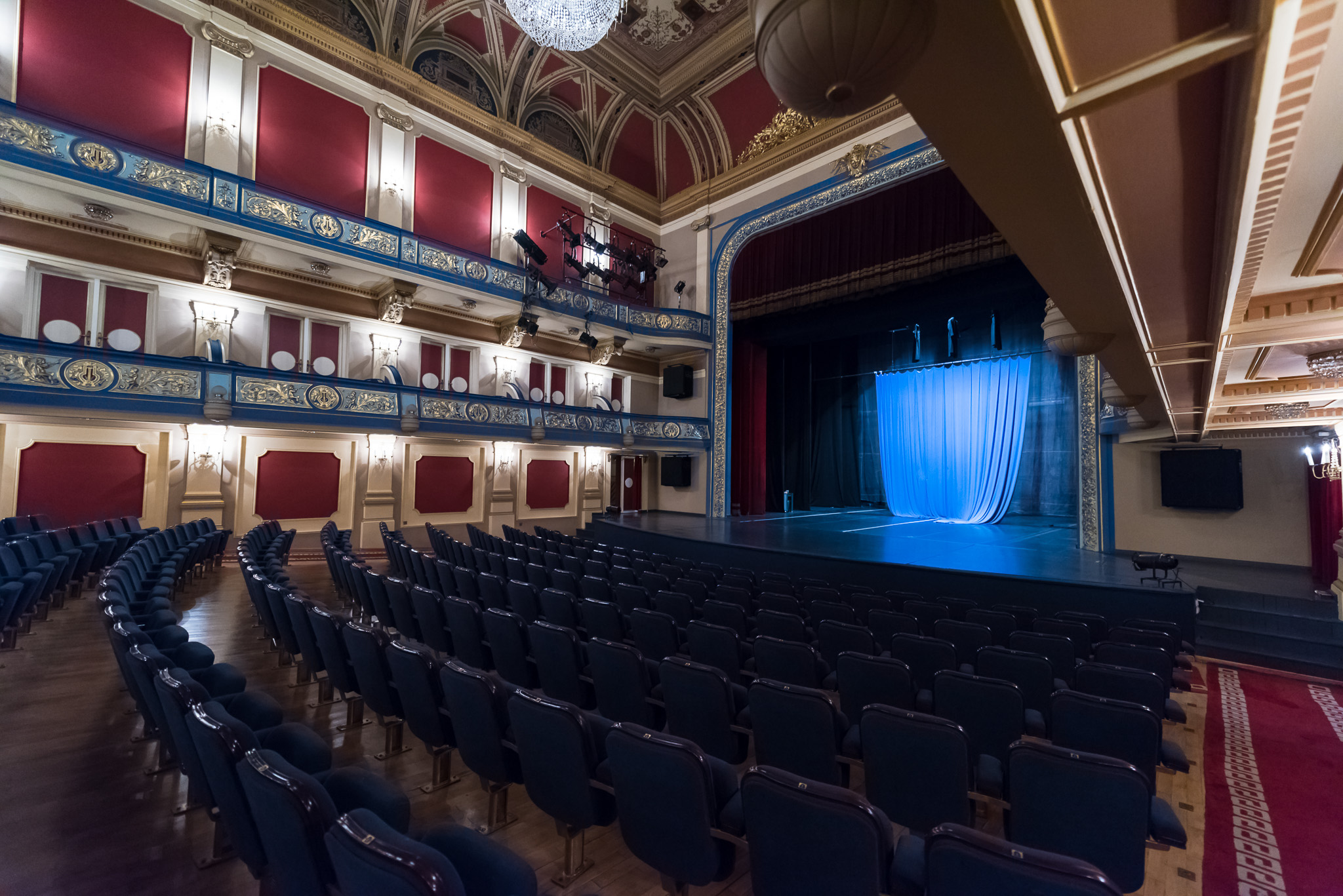
Soho Theatre Walthamstow, a Grade II-listed Art Deco landmark, faced acoustic challenges common to performance venues, including distracting echoes and muffled sound. Learn how we improved the acoustics in the space.
Read case study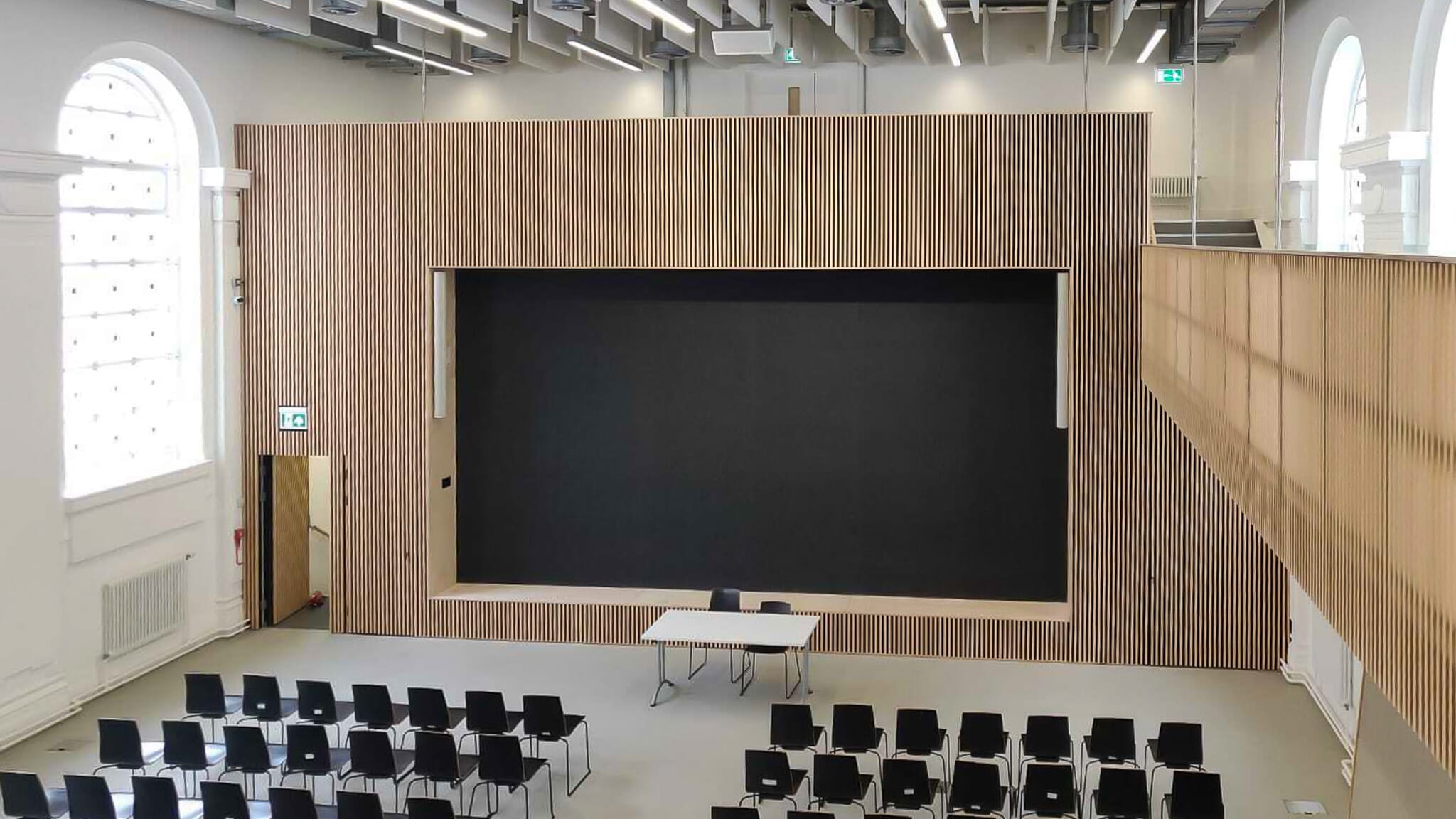
Cardiff University
Cardiff University’s Exhibition Hall required a complete acoustic overhaul. Used for lectures and events, the space needed a combination of high-performance acoustic treatment to ensure it was comfortable regardless of how it was used.
View case studyWhere should acoustic treatment go in an auditorium?
Placement matters as much as the product you use. The areas that usually make the biggest difference are:
- The rear wall. This is the surface most likely to send an echo back to the stage.
- The ceiling. In large or high spaces, the ceiling is usually the largest reflective surface.
- Side walls. Treating parallel walls stops flutter echo and evens out sound across the seating.
Every space is different, so an acoustic survey is the best way to know which areas need treatment.
Which acoustic products work best in auditoriums?
Fabric Panels
Fabric panels such as Silent Space absorb sound across a wide range of frequencies and come in a wide choice of colours and fabrics. They work well on rear and side walls, and can be arranged to suit the rooms design.
Ceiling Rafts and Baffles
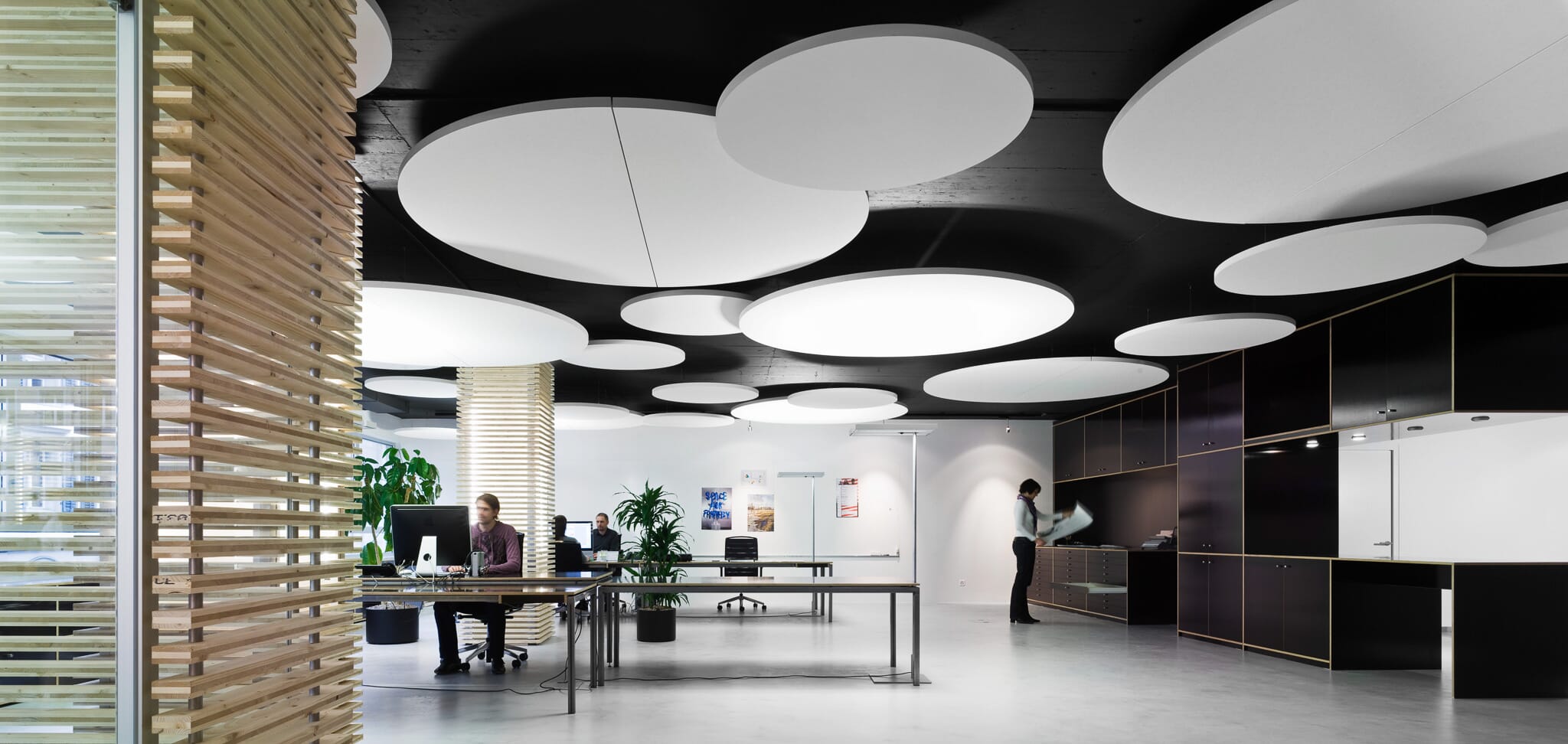
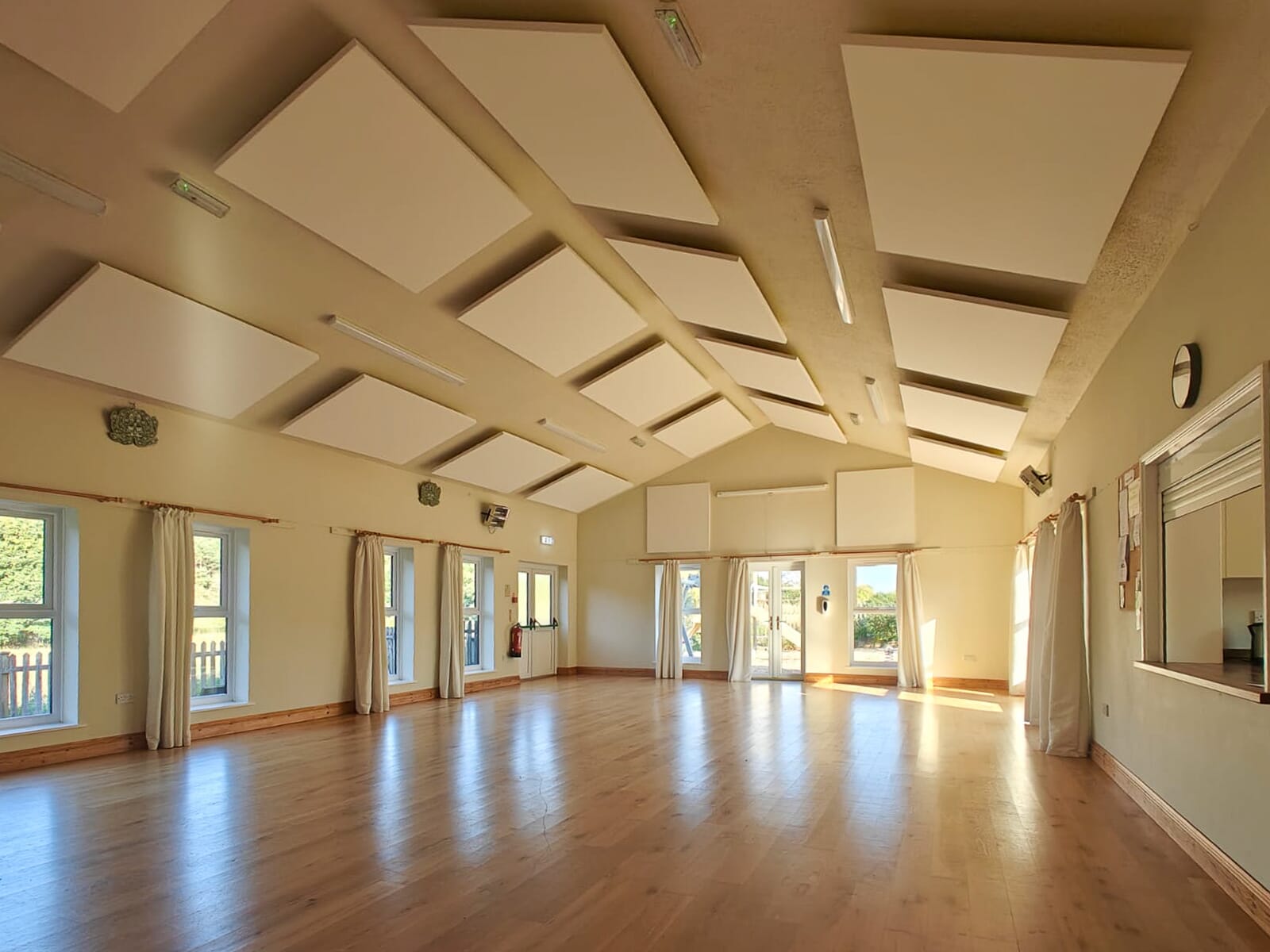
Acoustic rafts absorb sound from above, treating the biggest reflective surface. Controlling sound reflections from the ceiling is crucial for maintaining speech clarity. They can be suspended at different heights to work around services and are available in a range of shapes, colours and sizes. Baffles can also be used; they are ideal for spaces with very high ceilings or where services need to stay accessible.


Is acoustic treatment the same as soundproofing?
No. Acoustic panels reduce echo and improve clarity inside the auditorium. Stopping sound from getting in or out is soundproofing, which is a different job that involves the building’s structure. Our post on soundproofing vs acoustic treatment explains the difference.
Common mistakes to avoid
Treating the wrong surfaces. Panels placed at random won’t fix the problem and may miss key areas that need treatment.
Over-treating the space. Too much absorption makes a room feel flat and lifeless. It can also make it harder for sound to reach the back rows.
Relying on the sound system. Turning the sound system up doesn’t fix reverberation and often makes it worse.
Forgetting the ceiling. In large rooms, walls alone rarely provide enough absorption.
How can Resonics help
We’ve treated auditoriums, lecture theatres, school halls and performance spaces across the UK. We’ll measure your space, recommend a scheme that suits how it’s used and supply and install everything.
Article Author
Mark Irwin
Head of Marketing
6th Aug 2025