
























8 Minute Read
Soundproofing vs Acoustic Treatment: What's the Difference?
It's one of the most common questions we hear: "Can you soundproof my office?" or "I need my restaurant soundproofed - it's too loud!" We understand the instinct. But in most cases, what people actually need isn't soundproofing at all, it's acoustic treatment. The difference between the two is significant, and getting it right is the most important step before investing in any noise solution.

Mark Irwin
18th May 2026
Categories
Advice
TL;DR
Soundproofing and acoustic treatment are not the same thing, and mixing them up is one of the most common (and costly) mistakes people make.
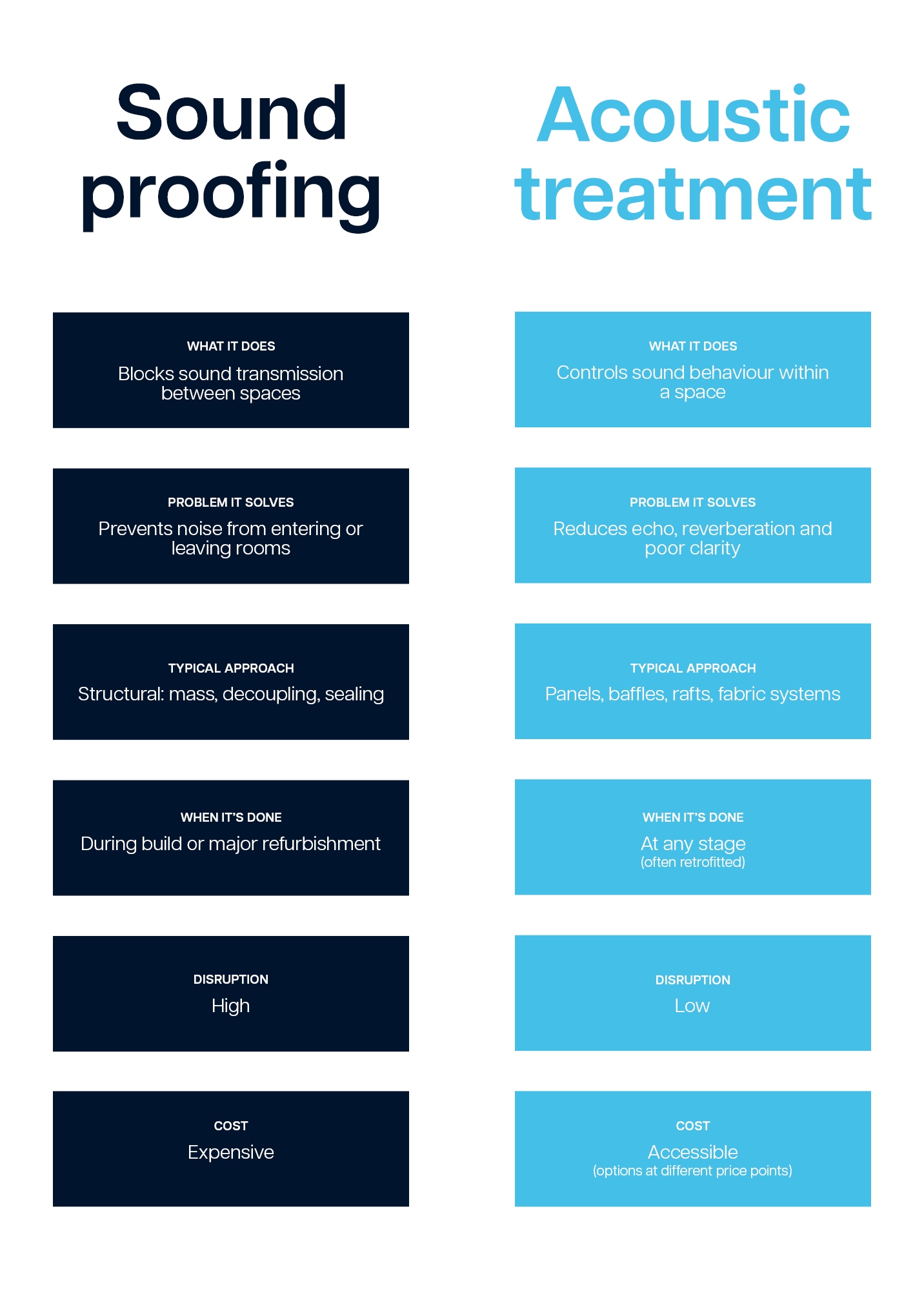
Soundproofing blocks sound from travelling between spaces. It’s a structural solution, built into walls, floors and ceilings, and it’s rarely practical to retrofit without significant disruption and expense.
Acoustic treatment controls how sound behaves within a space, absorbing echo and reverberation so rooms feel clearer, calmer and more comfortable. It’s what most offices, restaurants, classrooms and meeting rooms actually need.
The quick diagnostic: if noise is coming in from outside, you have a transmission problem. If your own space feels loud, echoey or hard to work in, you have a reverberation problem, and that’s where Resonics comes in.
Not sure which applies to you? That’s what a free acoustic survey is for.
| Feature | Soundproofing | Acoustic Treatment |
|---|---|---|
| Goal | Blocks noise transfer | Improves internal sound quality |
| Materials | Mass-loaded barriers, insulation, isolation systems | Acoustic panels, baffles, fabrics, carpets |
| Use Cases | Neighbour noise, traffic, studios, offices needing privacy | Offices, schools, restaurants, halls, studios |
| Also Called | Sound insulation, sound isolation | Sound absorption, reverberation control |
Quick Guide to Soundproofing vs Acoustic Treatment
What is soundproofing?
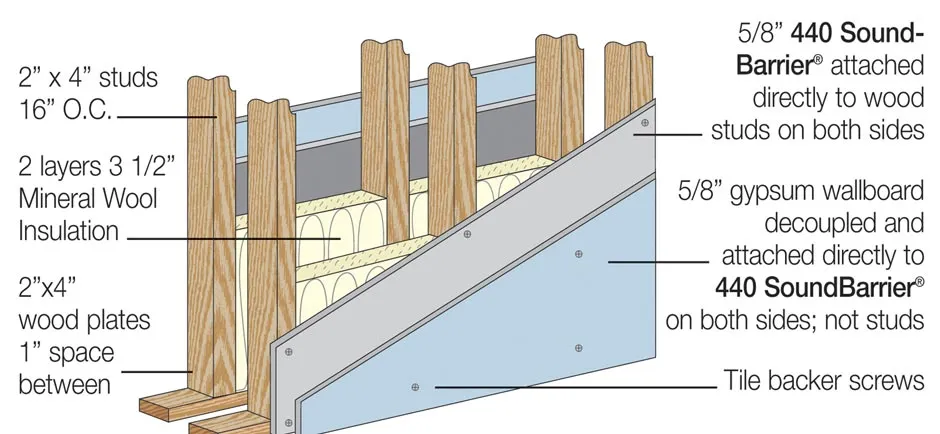
Soundproofing, also known as sound insulation, works by adding mass and decoupling to walls, floors and ceilings so that sound vibrations cannot pass through them. It involves materials like dense acoustic plasterboard, resilient bars, acoustic floor underlays and specialist insulation packed into cavities.
True soundproofing is typically built into a structure during construction or as part of a major renovation. Retrofitting it into an existing building is costly, disruptive and rarely achieves complete isolation. Even small gaps, such as a gap under a door, a light fitting, or an HVAC duct, can significantly undermine the result.
When you need soundproofing:
- You’re being disturbed by noise from an adjacent room, neighbouring property, or the street outside
- You need to prevent sound from leaving a space (a music rehearsal room, a private meeting room, a recording studio)
- You’re building or refurbishing and want noise isolation built in from the start
What is acoustic treatment?
Acoustic treatment addresses what happens to sound once it’s in the room. When sound waves are produced in a space, such as a conversation or a band rehearsing, they don’t just travel directly from source to ear. They bounce off hard surfaces: walls, ceilings, floors, windows. Each reflection adds a slightly delayed version of the original sound on top of itself.
The result? Echo, reverberation, poor speech clarity, and the sensation that a room is loud even when no individual sound source is particularly high in volume. This is an acoustic problem, not a soundproofing problem.
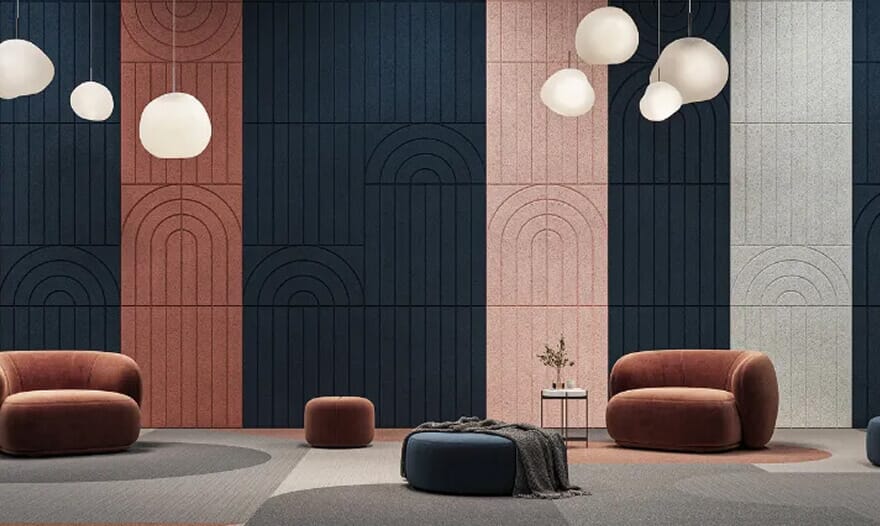
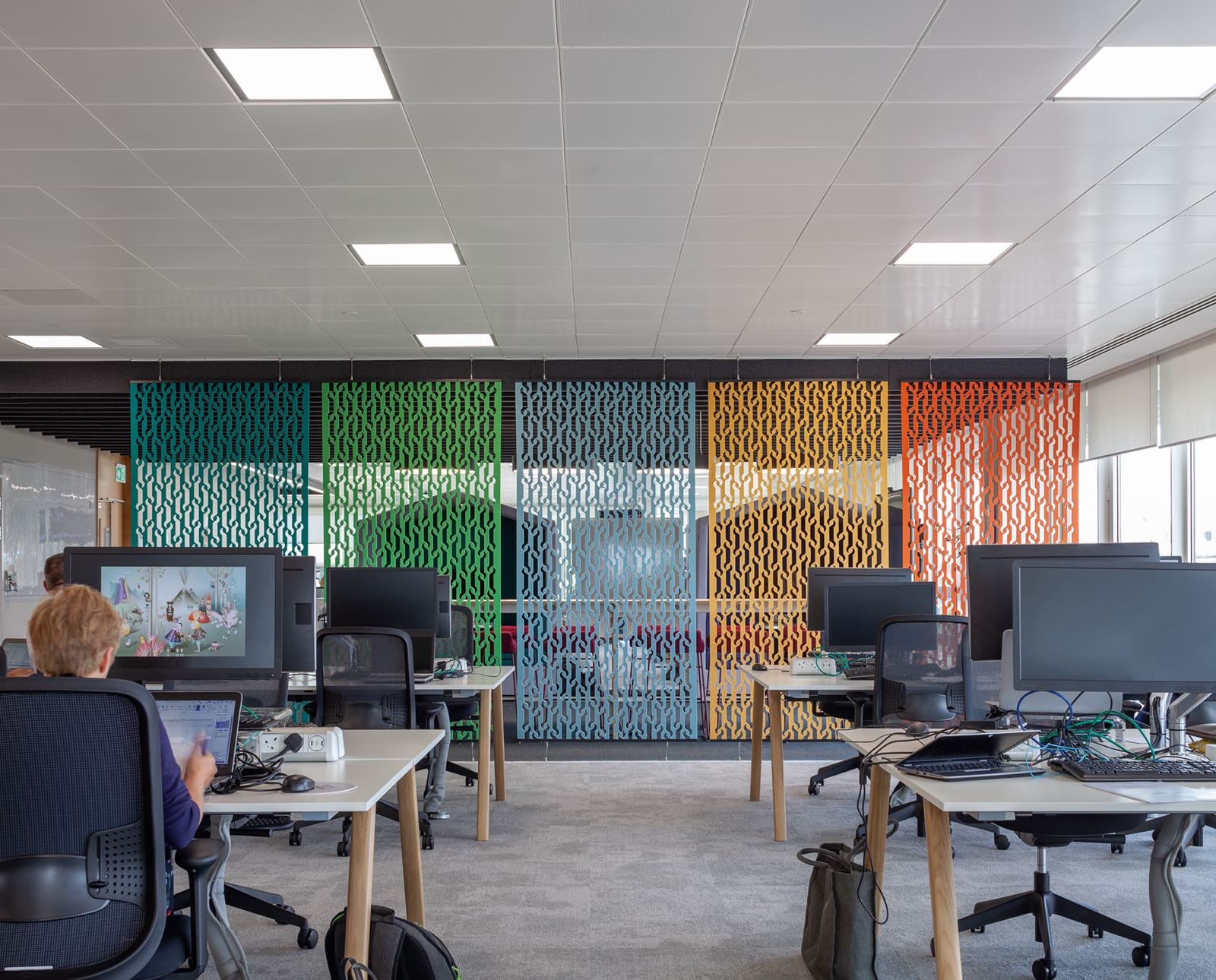
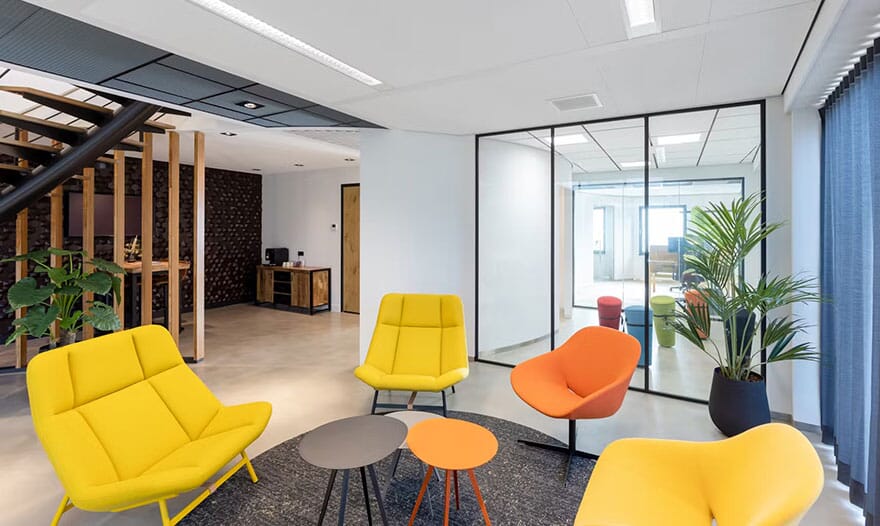
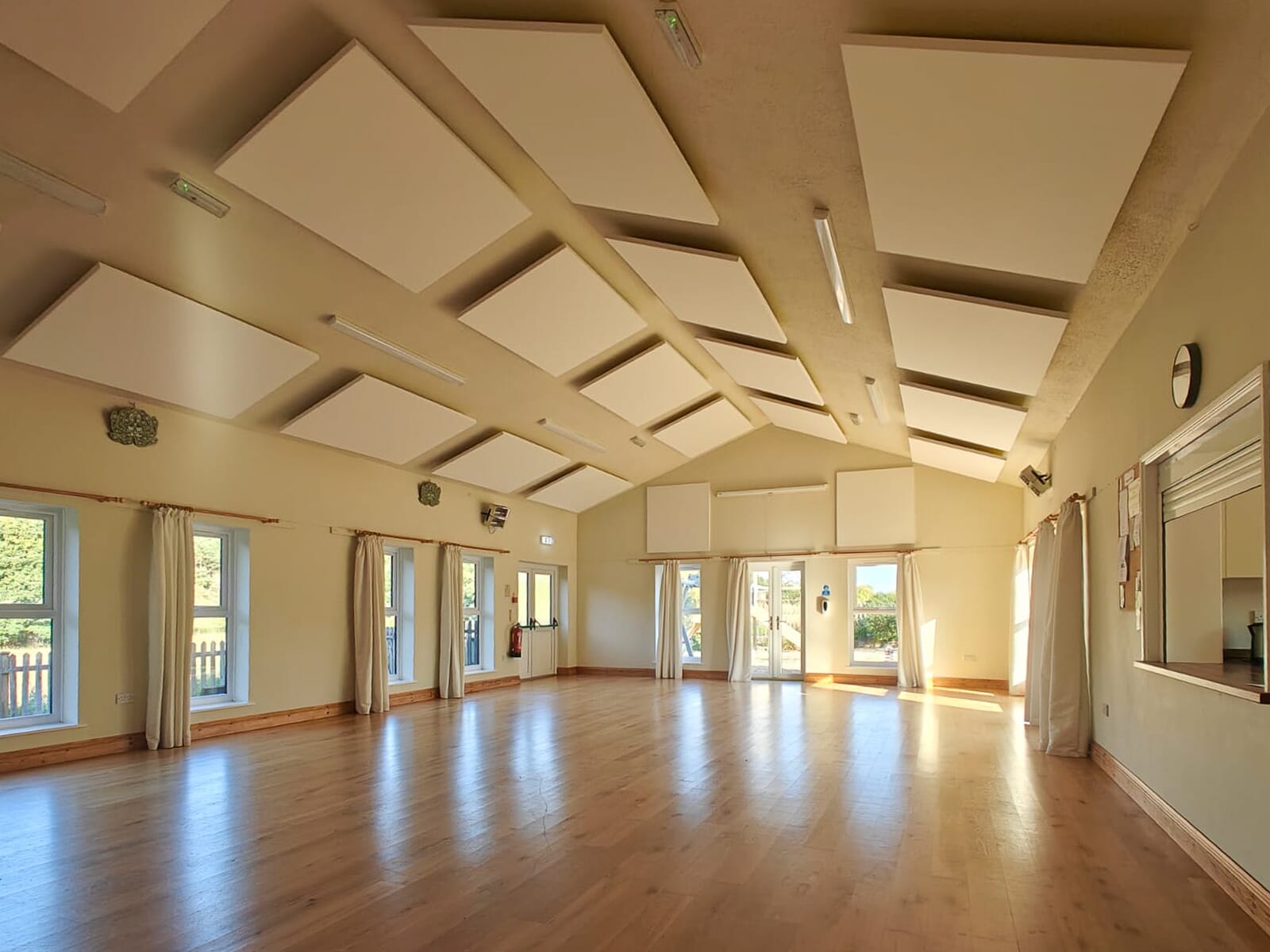
Acoustic treatment solves it by introducing sound-absorbing materials such as acoustic panels, ceiling baffles, ceiling rafts, stretched fabric systems, that convert sound energy into small amounts of heat rather than reflecting it back into the room. The result is a clearer, more comfortable acoustic environment.
When you need acoustic treatment:
- Voices sound echoey or difficult to understand in your space
- Your meeting room, classroom, or restaurant feels loud even at normal volumes
- Video calls are plagued by reverb and poor audio quality
- Staff are fatigued or finding it hard to concentrate due to background noise
- Your open-plan office feels acoustically chaotic
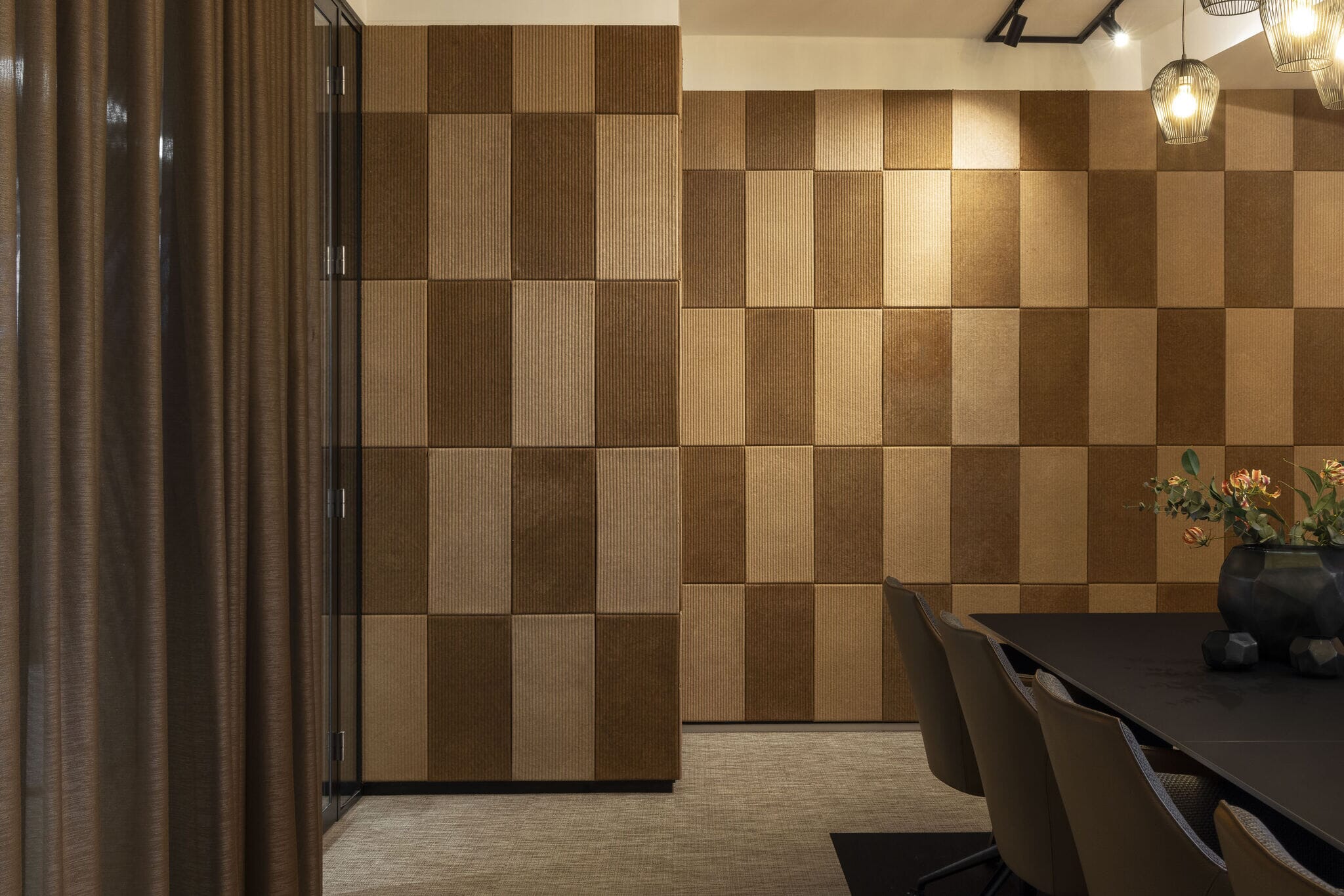
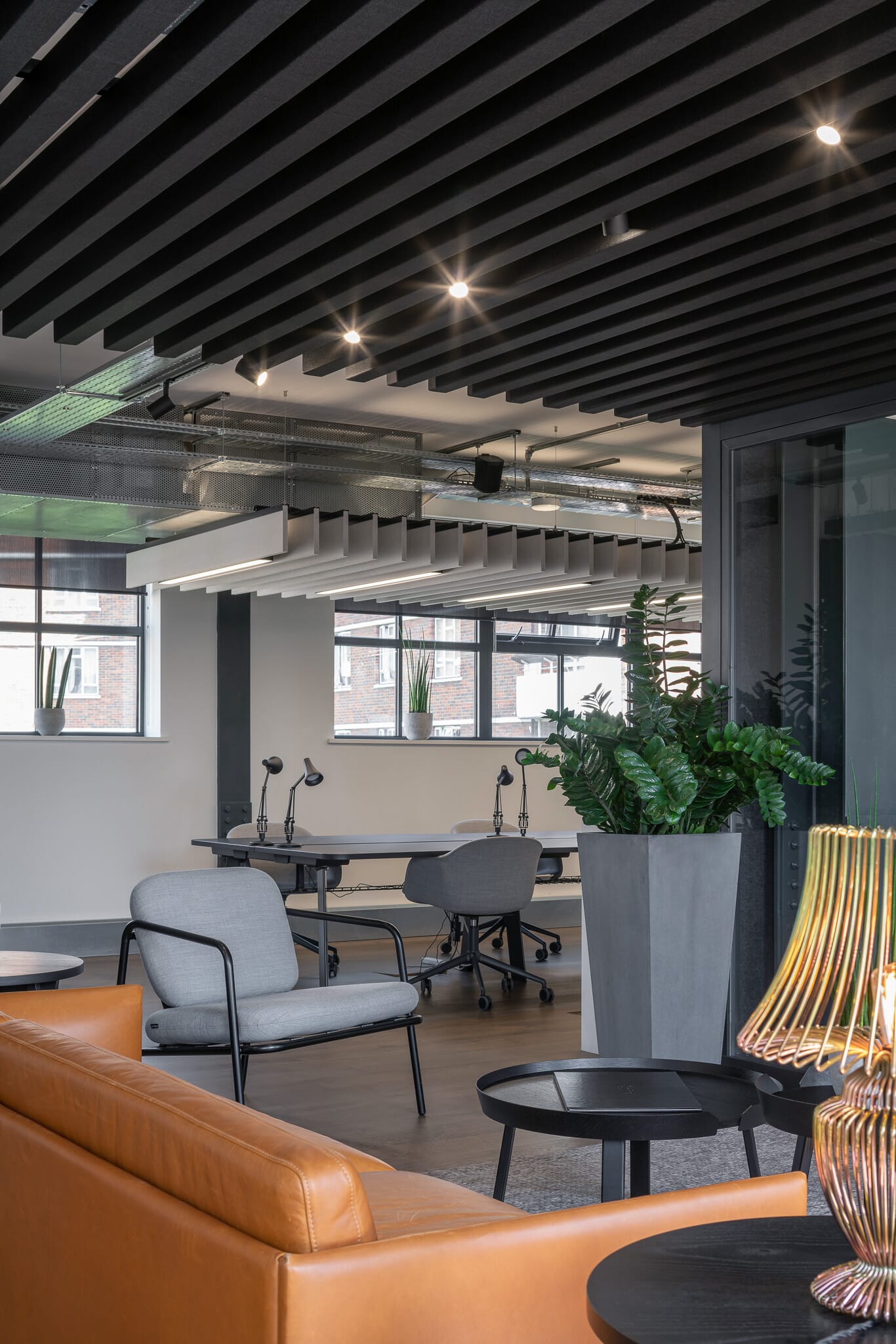
Why does this confusion happen?
The terms are often used interchangeably in everyday language, and some products blur the line further. You’ll see acoustic foam tiles marketed as ‘soundproofing foam’ in DIY stores. These products absorb some sound energy and can reduce reverberation in a room, but they do virtually nothing to prevent sound from passing through walls. They’re acoustic treatment, not soundproofing, regardless of how they’re labelled.
This matters because people invest in the wrong solution, feel disappointed, and conclude that acoustic products don’t work, when in reality, they were solving the wrong problem.


A Practical Example – Soundproofing vs Acoustic Treatment
Imagine a busy restaurant. Diners complain it’s too loud. The owner investigates soundproofing, thinking they need to somehow contain the noise. But the noise isn’t escaping to the street, it’s bouncing around inside the restaurant. Hard floors, exposed brick, high ceilings, and glass all reflect sound relentlessly. Every conversation multiplies. It’s an acoustic treatment problem, not a soundproofing problem.
The solution? Acoustic ceiling panels or baffles to absorb sound energy before it has a chance to bounce around the room. No structural work required. Transformation is often noticeable within days of installation.
Now consider a different scenario: a music teacher who has set up a studio in a terraced house. Neighbours are complaining about noise. The sound is travelling through the walls into adjacent properties. This is a soundproofing problem, the walls need to be decoupled and mass-loaded to prevent transmission. Acoustic panels inside the studio will improve the sound quality within the room, but they won’t stop sound reaching the neighbours.
How do you know which one you need?
Ask yourself one question: Is the noise coming from outside the space or is it being created inside it?
If noise is travelling into your space from elsewhere, such as traffic, neighbouring offices, or adjacent rooms, you have a transmission problem, and soundproofing is what you need.
If the noise is generated within your own space and the room simply feels loud, echoey or uncomfortable, you have a reverberation problem and acoustic treatment is the answer.
What Resonics does — and what we don’t
We’re specialists in acoustic treatment for all spaces: offices, schools, sports halls, restaurants, village halls, healthcare, homes and studios. We survey the space, measure it, design the solution, supply the products and install them with our own teams.
We don’t carry out structural soundproofing work — party wall build-ups, floating floors, isolated ceilings. If that’s genuinely what your space needs, we’ll tell you so, and you’ll be better served by a sound insulation contractor.
Being straight about that saves everybody time. It also means that when we do recommend treatment, it’s because it will actually solve your problem.
If you’re not sure which camp you’re in, that’s exactly what an acoustic survey is for. Our specialists visit your space, measure the acoustics, listen to what you’re experiencing, and recommend the right solution — not the most expensive one.
Frequently Asked Questions
Do acoustic panels stop noise from neighbours?
No. Acoustic panels absorb sound within a room, reducing echo and reverberation. They don’t add meaningful mass to a wall, so they won’t stop sound transmitting between properties. That requires sound insulation work.
Is acoustic treatment cheaper than soundproofing?
Almost always, yes. Acoustic treatment is surface-mounted and typically installed in days without structural work. Soundproofing involves building work, loss of floor area or ceiling height, and considerably more disruption.
Can you do both in the same space?
Yes, and some spaces genuinely need both — a recording studio needs isolation from the outside world and controlled acoustics inside it. But they’re separate pieces of work with separate budgets, and it’s worth being clear about which problem you’re solving first.
What’s the difference between acoustic treatment and sound absorption?
In practice they describe the same thing. “Sound absorption” refers to the physical mechanism — materials absorbing sound energy. “Acoustic treatment” is the broader term for the work of improving how a room sounds, which is mostly achieved through absorption.
How do I know how much treatment my space needs?
It depends on the room’s volume, its surfaces and what it’s used for. A lively school hall needs a very different approach from a small meeting room. Reverberation time testing gives a measured answer rather than a guess, which is why we include it in our survey.
Will acoustic treatment make my office completely quiet?
No, and it shouldn’t. The aim isn’t silence — it’s clarity. Treatment reduces the build-up of reflected sound so that speech is easier to follow and the space feels calmer, without the dead, muffled quality of an over-treated room.
Article Author
Mark Irwin
Head of Marketing
18th May 2026