









8 Minute Read
Resonics Guide to Acoustic Panel Fire Ratings
When specifying acoustic panels, it’s not just about acoustic performance. Fire safety is equally important. Learn what fire rating classifications mean, where they apply and how to specify with confidence.
Categories
Guide
TL;DR – Understanding acoustic panel fire ratings
When specifying acoustic panels, it’s not just about acoustic performance. Fire safety is equally important.
In the UK, acoustic panels fixed to walls or ceilings are classed as internal linings under Requirement B2 of Approved Document B (Volume 2).
This means they must:
- Resist the spread of flame across their surface
- Not contribute excessively to heat release if ignited
Fire classifications tell you how a product performs in a fire — including combustibility, smoke production and flaming droplets.
Minimum ratings depend on room type under Approved Document B. While many offices and meeting rooms are typically required to achieve C-s3,d2, many commercial projects specify B-s1,d0 as a best-practice standard
With over 7,000 projects completed across commercial, educational, and public sector spaces, Resonics helps clients specify and install systems that balance acoustic performance with compliant fire performance.
Resonics Guide to Acoustic Panel Fire Ratings
When specifying acoustic panels, performance isn’t just about sound absorption and reverberation times. Fire performance is equally important.
Under UK Building Regulations, wall and ceiling acoustic panels are classified as internal linings under Requirement B2 of Approved Document B Volume 2.
This document provides fire safety guidance for buildings other than dwellings, including:
- Offices
- Retail stores
- Assembly halls
- Libraries
- Industrial buildings
Requirement B2 states that internal linings must:
- Adequately resist the spread of flame across their surface
- Have a rate of heat release that is reasonable in the circumstances
This means acoustic panels must not significantly contribute to fire growth or compromise safe escape.
This guide explains what fire classifications mean, where they apply, and how common acoustic materials behave in fire conditions.

What Are Internal Linings?
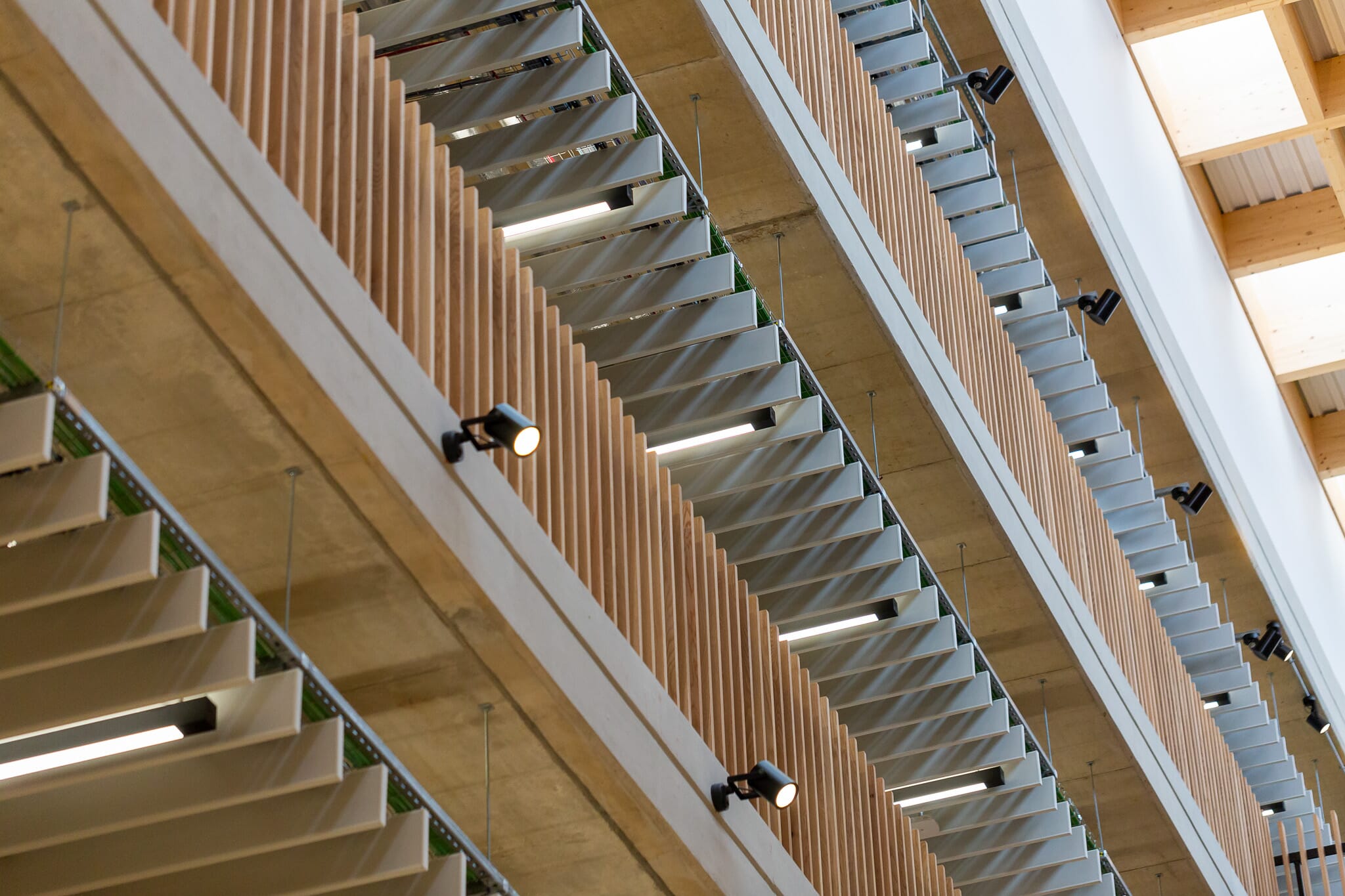
If a product is fixed to a wall or ceiling surface, it is likely considered an internal lining under Requirement B2.
This typically includes:
- Wall-mounted acoustic panels
- Suspended acoustic ceiling systems
- Timber slatted wall systems
- Fabric-wrapped panels
- PET acoustic panels
Internal linings are regulated because rapid flame spread across surfaces can:
- Accelerate fire development
- Reduce available escape time
- Increase smoke production in corridors and stairways
Understanding BS EN 13501-1
BS EN 13501-1 is the British and European standard for assessing a construction product’s reaction to fire.
When specifying acoustic panels in the UK, always look for a classification that has been tested to BS EN 13501-1. International products may carry other ratings, but compliance to this standard confirms UK-recognised testing.
A typical classification looks like this:
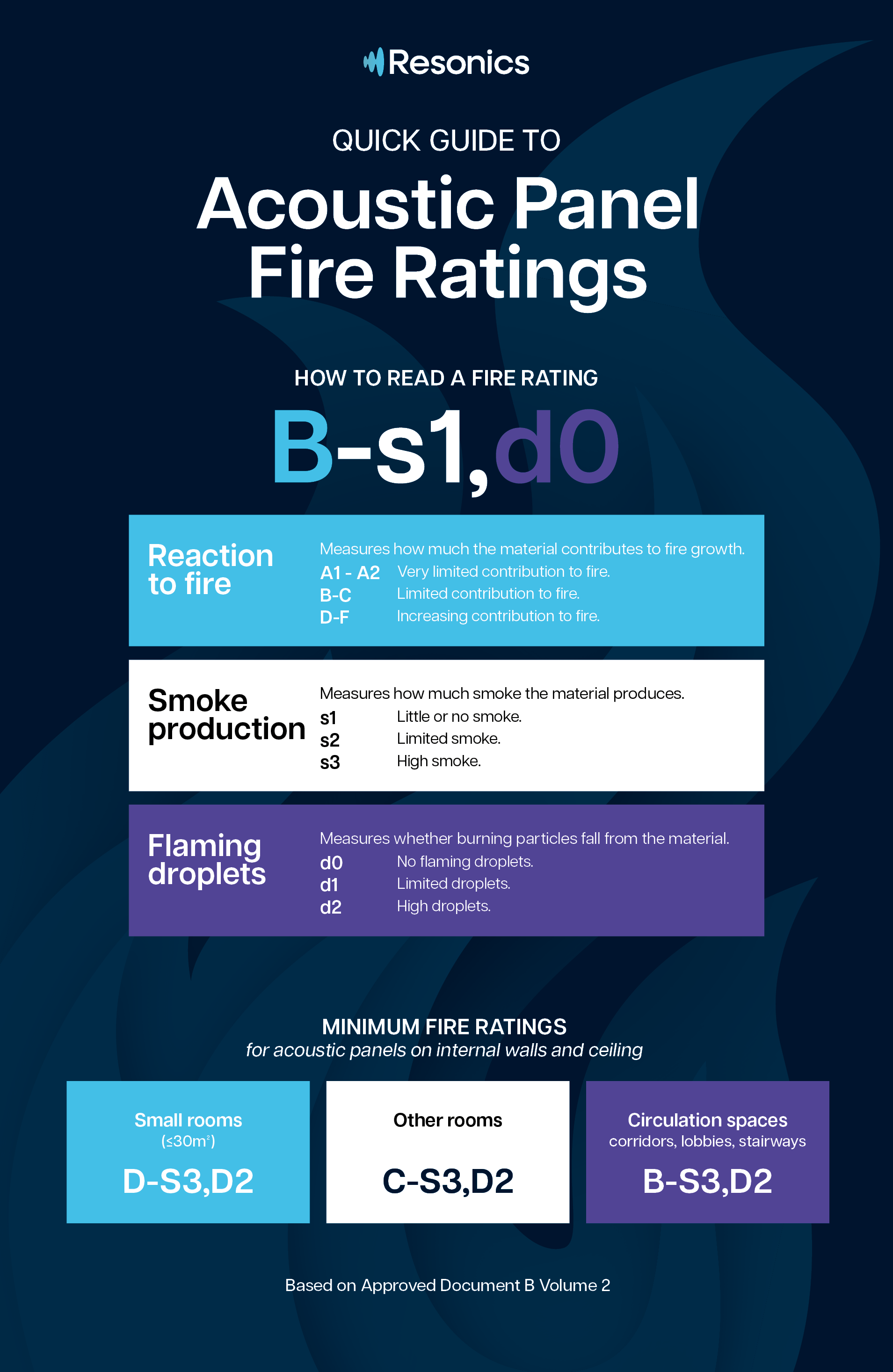
B-s1,d0
Each part communicates a different aspect of fire behaviour.
Reaction to Fire (A1–F)
This measures combustibility — how much the product contributes to fire.
| Class | Meaning | Definition |
| A1 | Non-combustible | Will not contribute to fire at any stage |
| A2 | Limited combustibility | Very limited contribution to fire |
| B | Combustible | Very limited contribution to fire |
| C | Combustible | Limited contribution to fire |
| D–F | Combustible | Increasing contribution to fire |
Smoke Production (s1–s3)
Smoke reduces visibility and increases risk during evacuation.
- s1 – Little to no smoke
- s2 – Limited smoke production
- s3 – High smoke production
Flaming Droplets (d0–d2)
This measures whether burning material drips and spreads fire.
- d0 – No flaming droplets
- d1 – Limited droplets
- d2 – High droplets
If a classification includes s3 or d2, it means there is no strict limit on smoke or droplets.
How are acoustic panels fire tested?
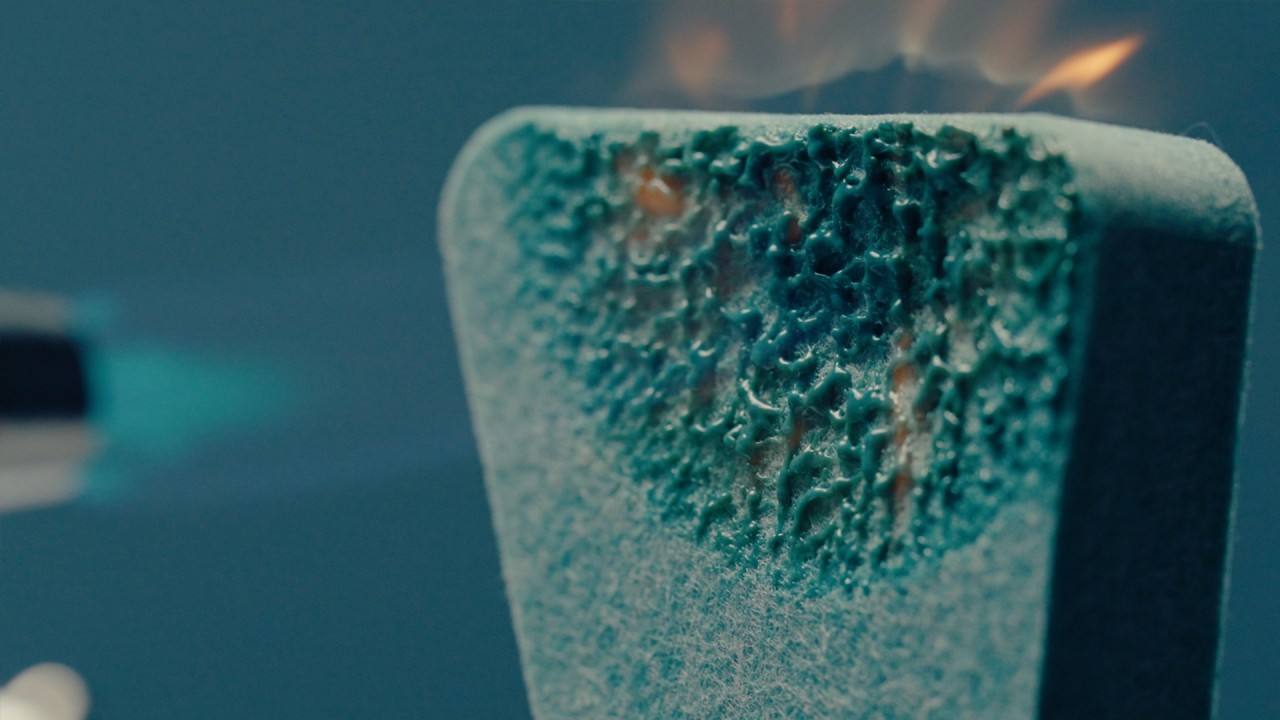
Under BS EN 13501-1, classification is typically based on the:
Single Burning Item (SBI) Test
In this test, the product is exposed to a controlled thermal attack from a single burning source.
The test measures:
- Heat release rate
- Flame spread
- Smoke production
This data determines the final fire classification.
Material Types & Typical Performance
Different acoustic materials behave differently in fire conditions. Understanding this helps when choosing a panel to meet fire safety requirements.
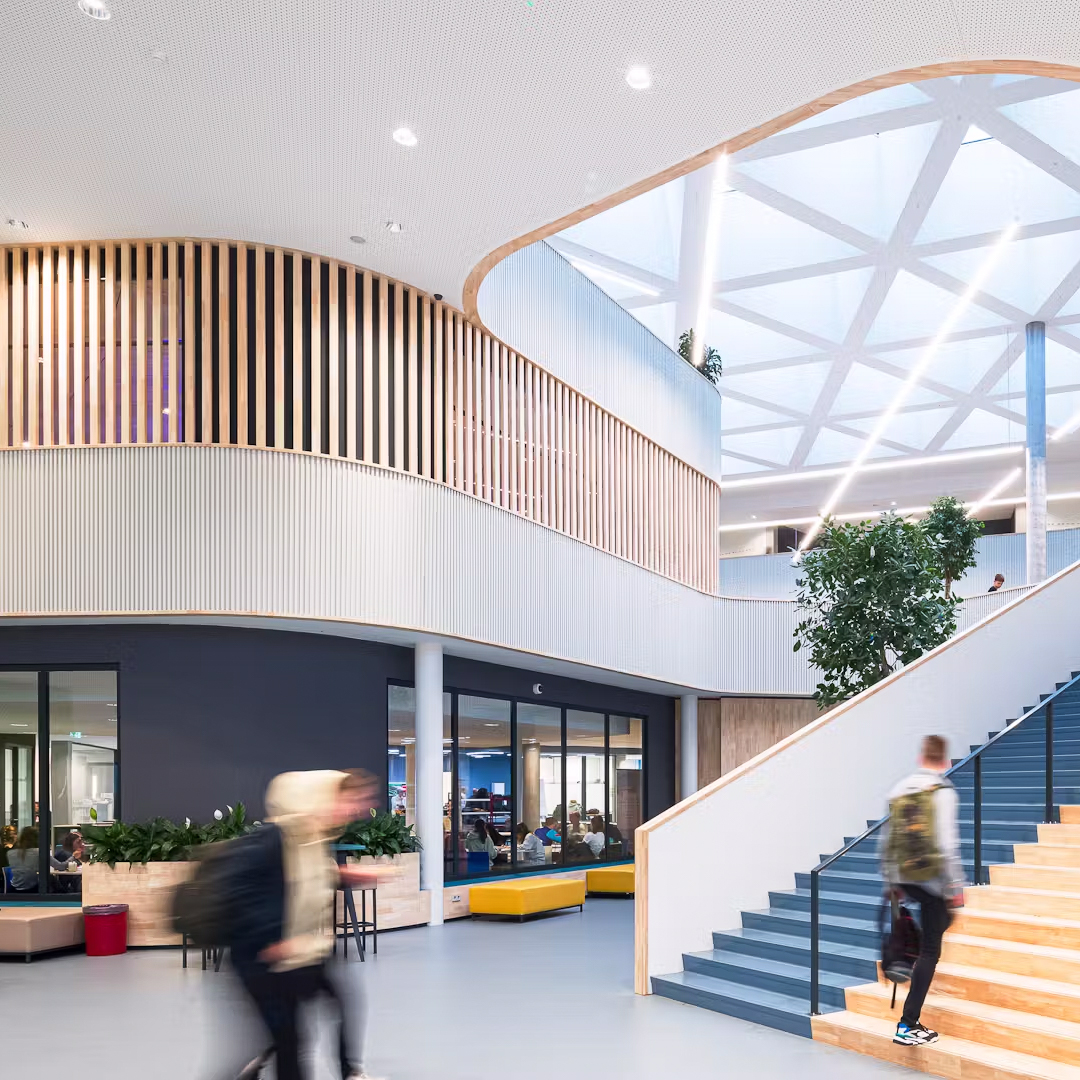
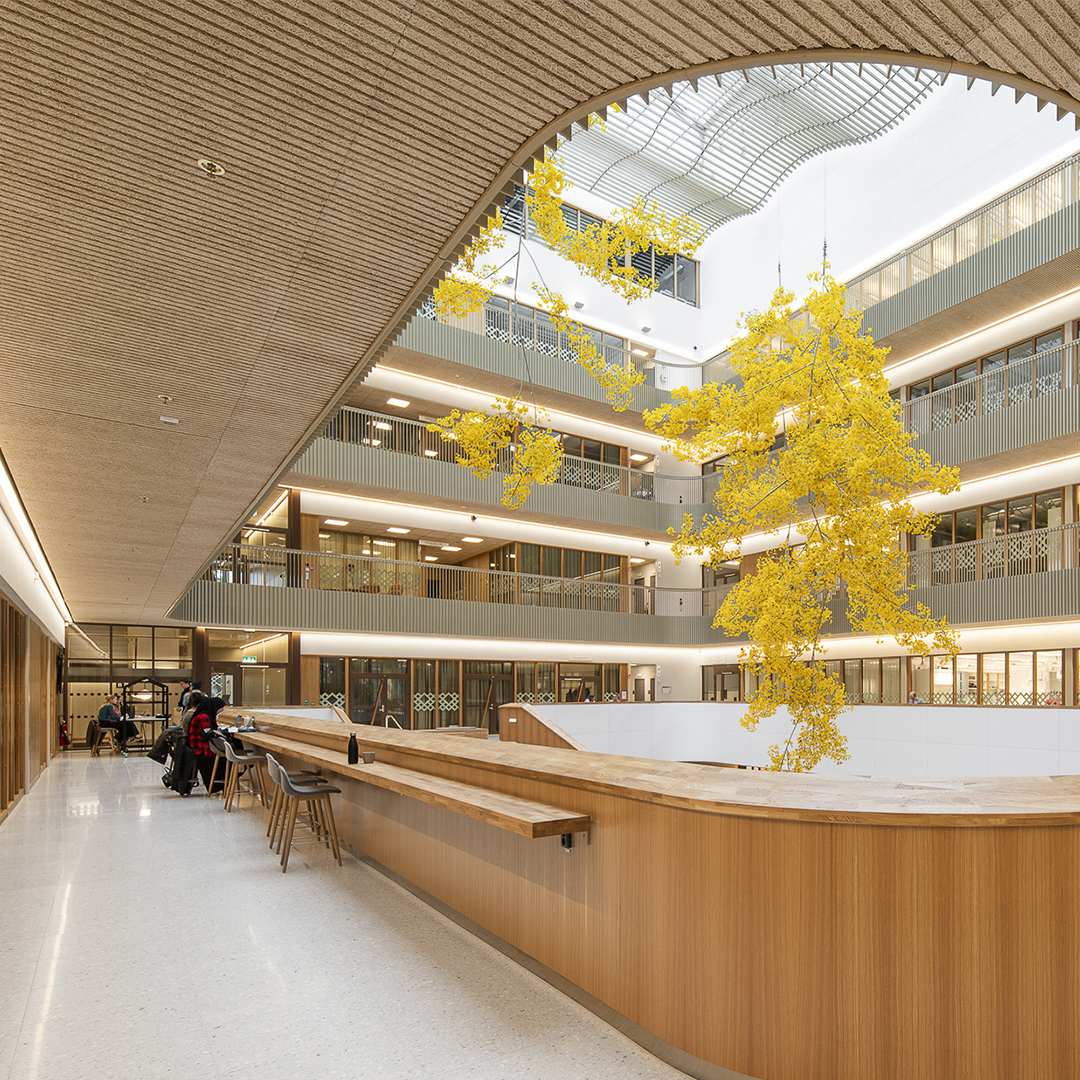
Mineral Fibre
Mineral fibre acoustic panels are typically made from cement-based materials combined with natural fibres such as wood and wool. Cement is non-combustible, which significantly improves fire performance.
Typical performance:
- Often A1 or A2-s1,d0
- Non-combustible or limited combustibility
Best suited for: Circulation spaces, stairways, high-risk or high-occupancy environments
Glass Wool
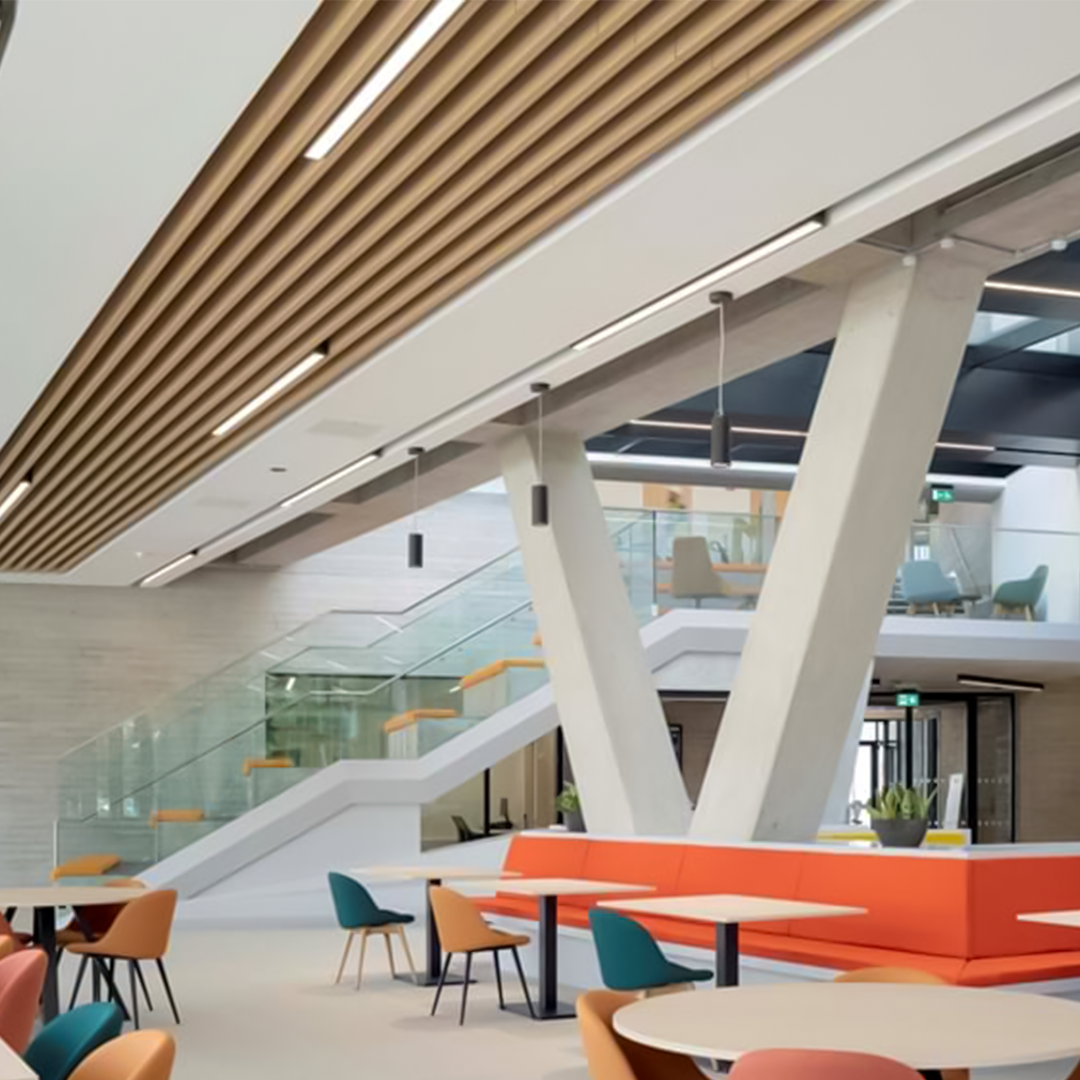
Glass wool is made from recycled glass that is melted and spun into fine fibres. It is commonly used as an acoustic core in ceiling systems.
Typical performance:
- Often A2-s1,d0
- Limited combustibility
Best suited for: Offices, schools, public buildings, suspended ceiling systems

PET (Recycled Polyester)
PET acoustic panels are manufactured from polyester fibres, often using a high percentage of recycled plastic bottles.
They are one of the most widely specified acoustic solutions due to flexibility and design versatility.
Typical performance:
- Often B-s1,d0 or C-s1,d0
- Combustible, but controlled fire performance
Best suited for: Offices, meeting rooms, education spaces, general commercial interiors


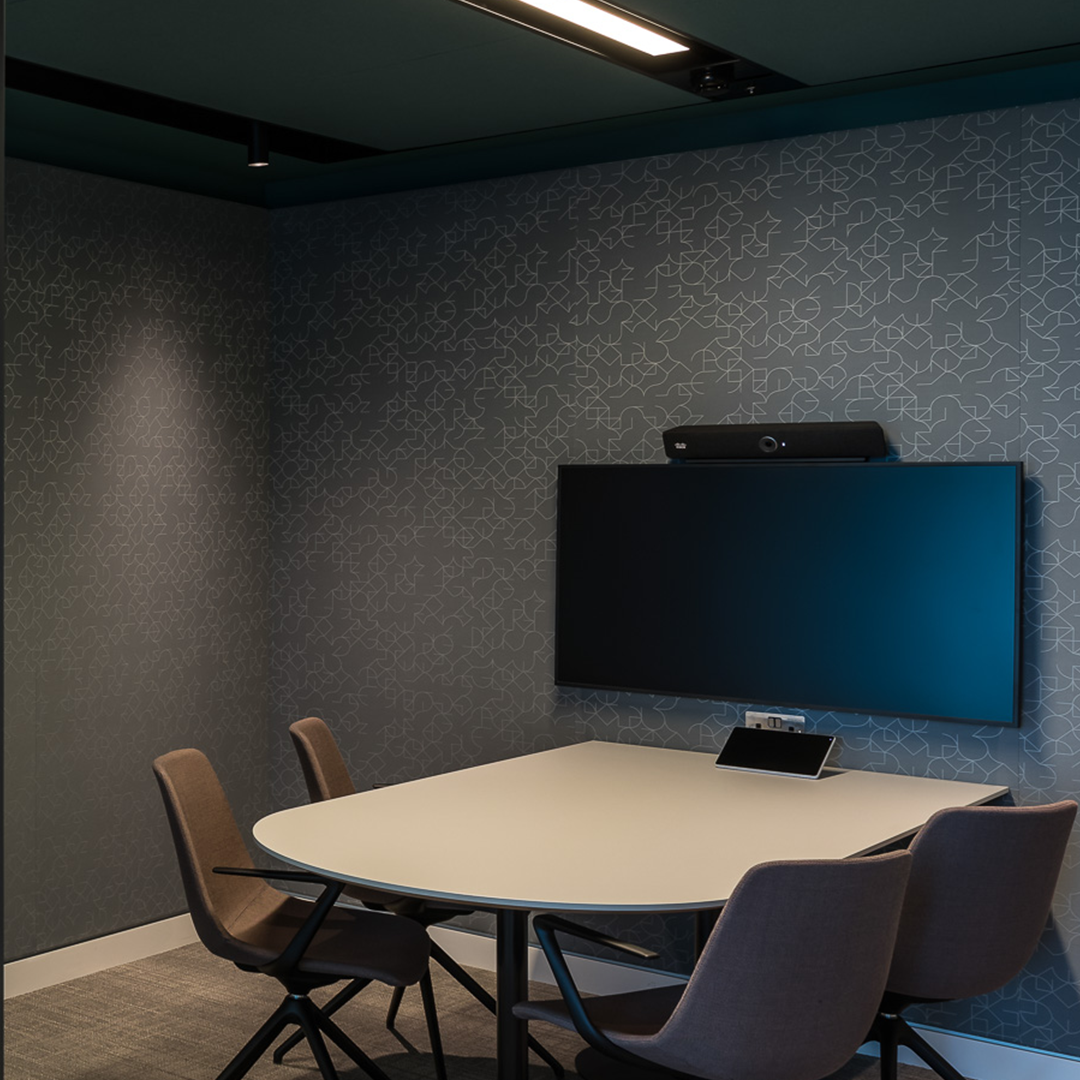
Fabric Wrapped Panels
Fabric wrapped systems typically consist of:
- A track or frame
- An acoustic core (PET, mineral wool or glass wool)
- A decorative fabric finish
Fire performance depends on the complete system, not just the core.
Key considerations:
- Can achieve B-s1,d0 with correct specification
- Fabric choice significantly affects smoke rating
- Always specify fire-rated fabrics if smoke control is critical
Best suited for: Feature walls, meeting rooms, educational spaces, hospitality environments
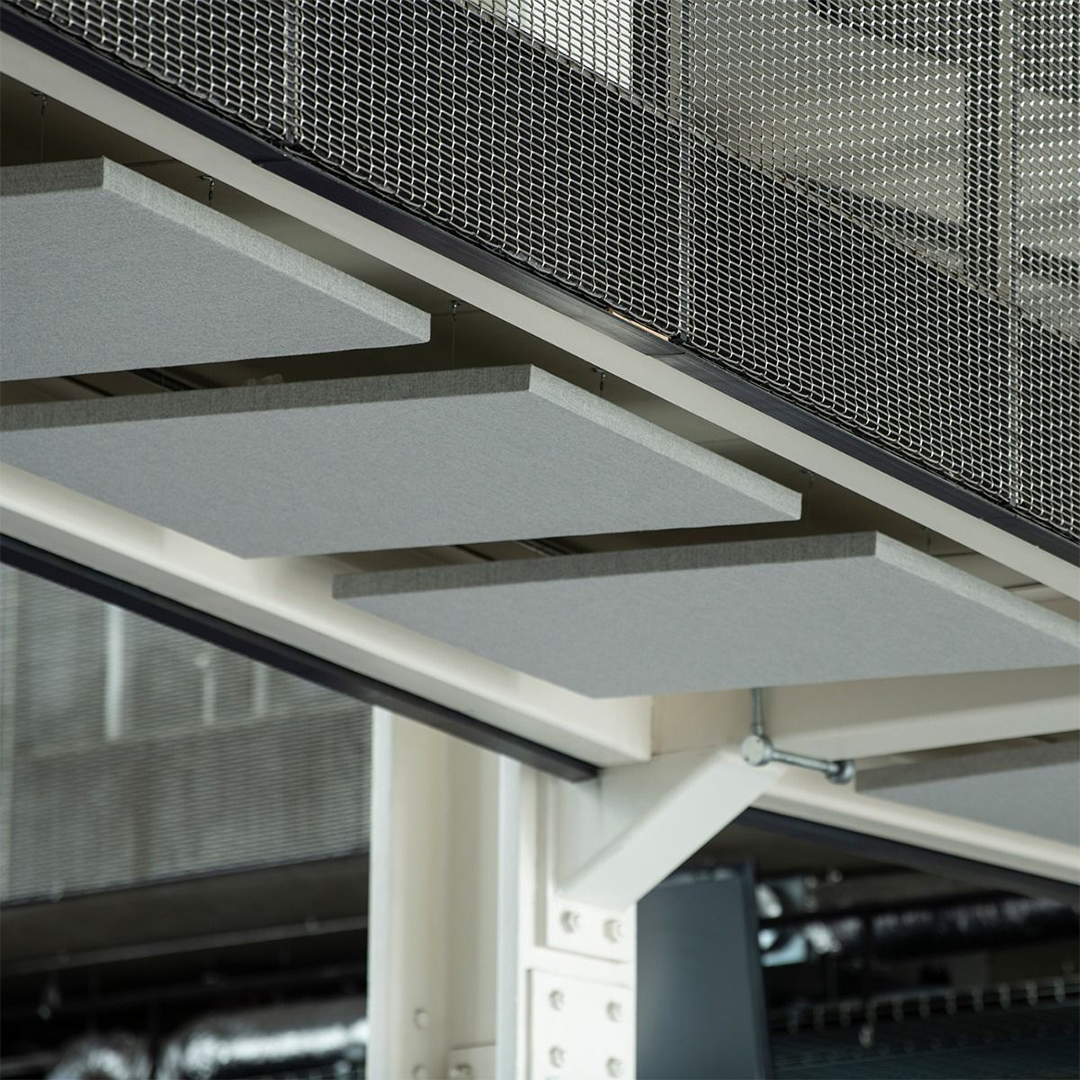
Timber Systems
Untreated timber is combustible and typically achieves:
- D or C classification
With fire-retardant treatment, timber systems can achieve:
- Up to B-s1,d0
Best suited for: Low-risk rooms (untreated), offices and meeting rooms (treated)


Acoustic Foam
Acoustic foam is a lightweight, polyurethane foam designed to absorb mid-to-high frequency sound. It is commonly used in studios where sound control is crucial.
Typical performance:
- Frequently C or D rated
- Rarely suitable for escape routes without specialist treatment
Fire Retardant Treatments
Timber and fabric systems are often treated with fire retardant coatings to improve classification.
These treatments work by forming a protective layer that slows ignition and reduces flame spread.
However:
- Fire-retardant sprays typically last 1–5 years
- Reapplication may be required
- Performance depends on correct application and maintenance
Always request:
- A BS EN 13501-1 classification report
- Confirmation of maintenance requirements

Minimum fire ratings under requirement B2
Approved Document B Volume 2 sets minimum classifications depending on room type:
| Location | Minimum Classification |
| Small room (≤30m²) | D-s3,d2 |
| Other rooms | C-s3,d2 |
| Circulation spaces (corridors, lobbies, stairways) | B-s3,d2 |
Why the difference?
- Small rooms present a lower risk of large-scale fire spread
- Larger rooms require improved surface flame control
- Circulation spaces are escape routes and require higher protection
Importantly, classification is based on room function, not building type.
Approved Document B provides general guidance. Certain projects may fall under additional or alternative regulations. Always consult a qualified fire engineer for project-specific advice.
Designing above minimum compliance
Minimum compliance does not always represent best practice.
Many commercial projects now adopt:
- B-s1,d0 as a baseline standard
- A2-s1,d0 for high occupancy or higher risk environments
Reasons include:
- Insurer requirements
- Corporate risk policy
- ESG commitments
- Fire engineer recommendations
Specifying above the minimum can reduce long-term liability and provide added assurance.
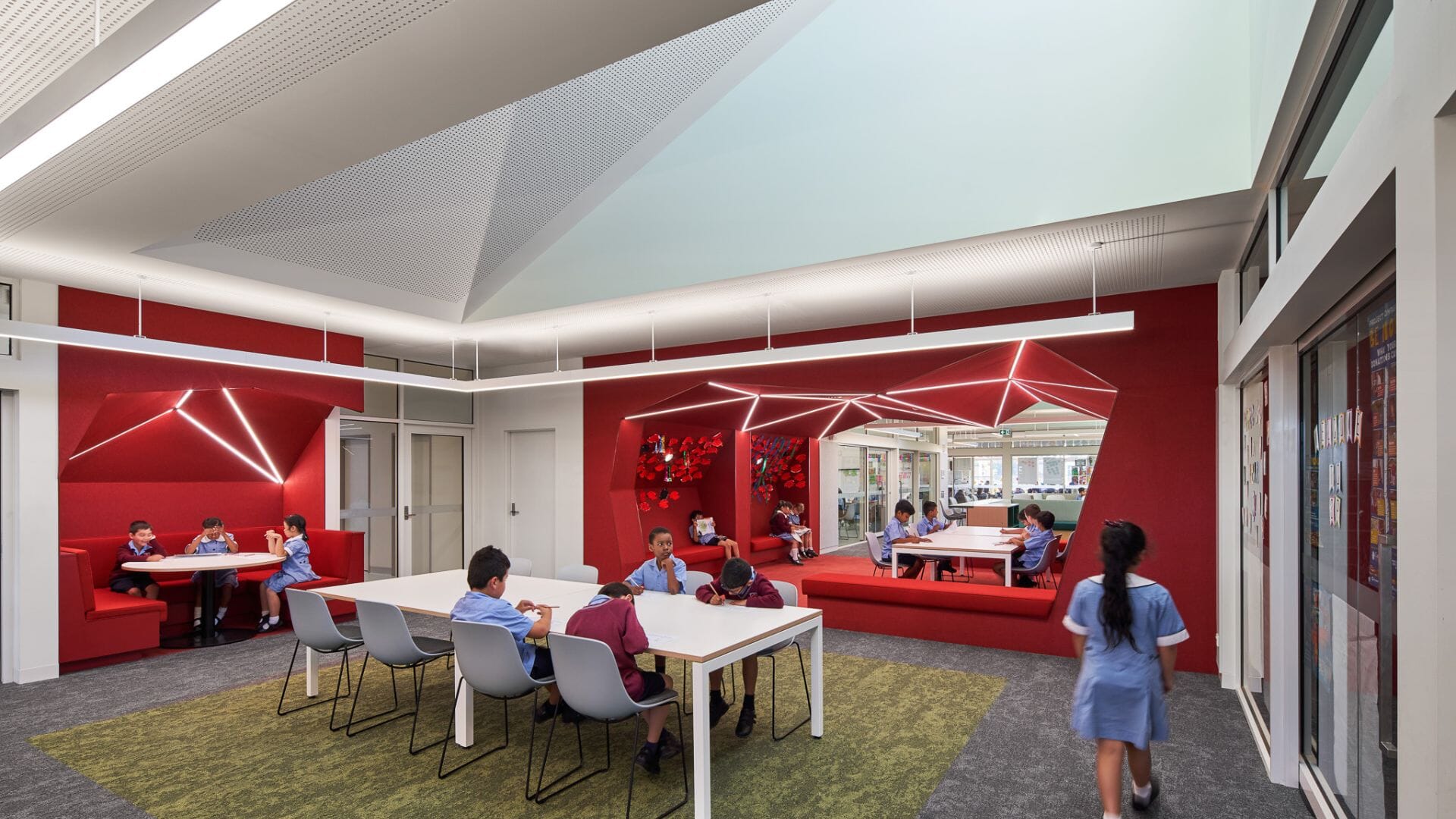
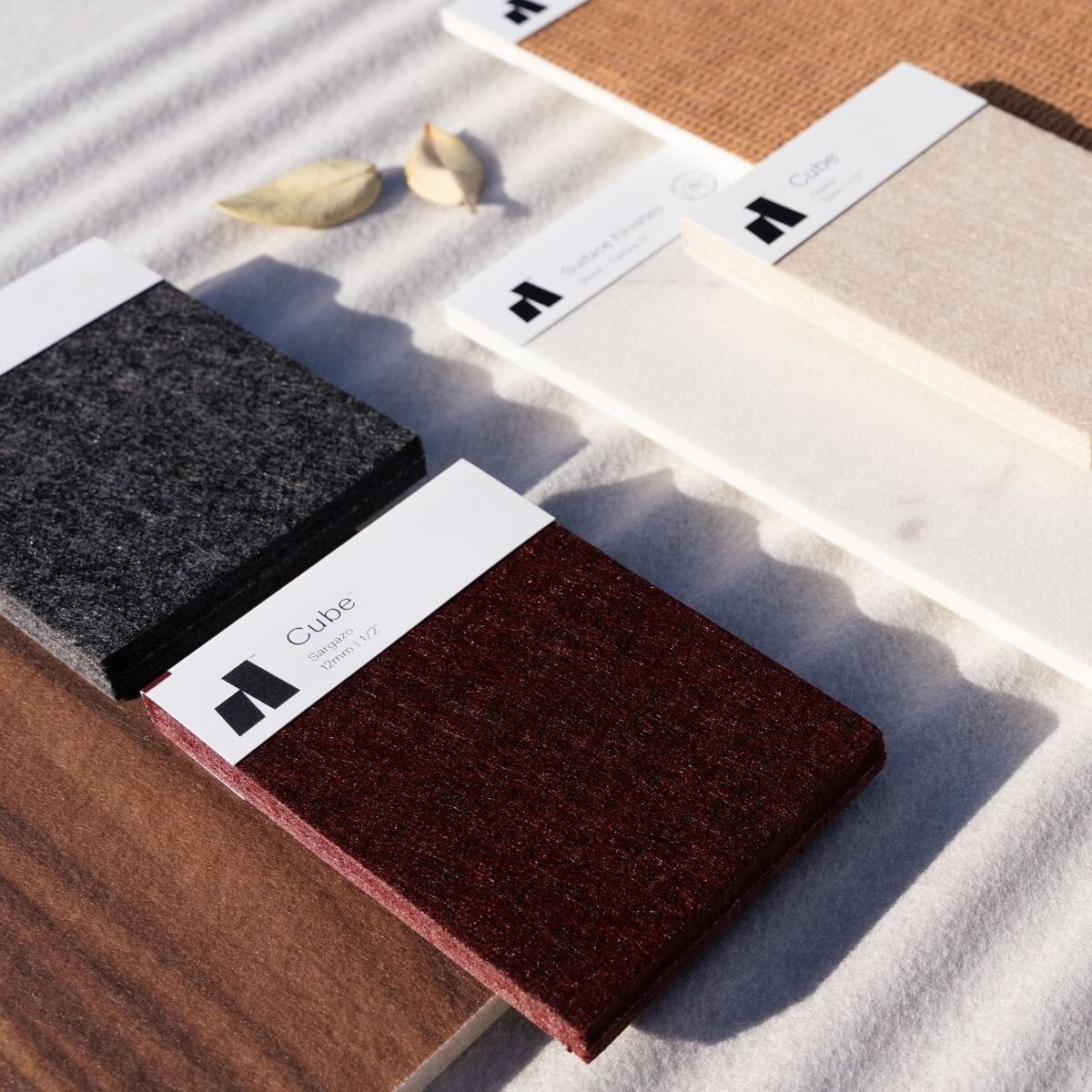
Choosing the right solution
At Resonics, we understand that acoustic performance and fire safety must work together.
With over 7,000 projects delivered across commercial, education and public sector environments, we help clients specify and install acoustic systems that are:
- Acoustically effective
- Fully tested
- Regulation compliant
- Aligned with the project fire strategy
Whether your scheme requires A2 systems, B-rated panels or treated timber feature installations, we ensure specification clarity from the outset.

Resources
Fire safety: Approved Document B (Volume 2): Buildings other than dwellings
https://www.gov.uk/government/publications/fire-safety-approved-document-b
Design for fire safety in schools: BB 100
https://www.gov.uk/government/publications/building-bulletin-100-design-for-fire-safety-in-schools