
























6 Minute Read
School Acoustics: Why It Matters and How to Get It Right
Poor acoustic conditions in schools affect more than comfort, they impact learning outcomes, speech intelligibility and teacher health. Here's what you can do about it.

Mark Irwin
4th Jun 2026
Categories
Advice
TL;DR
Poor school acoustics affect children’s learning, behaviour, wellbeing and teacher vocal health. UK schools must meet BB93 reverberation and noise targets, but many fall short.
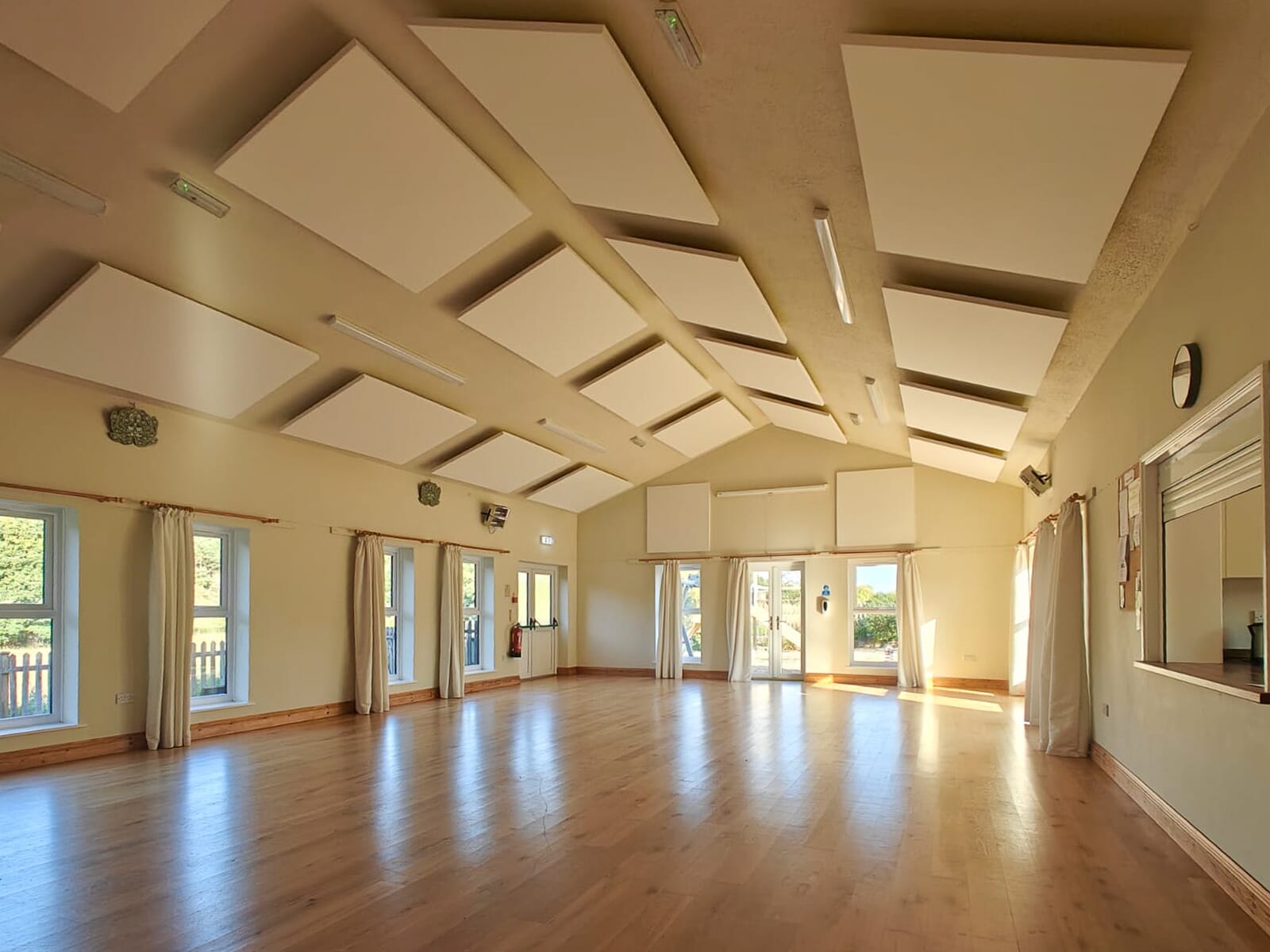
The fix is straightforward: Class A acoustic absorption at ceiling and wall level, specified to hit target RT values. Spaces beyond the classroom, such as sports halls, dining halls, corridors and music rooms, are just as important and often more neglected. Resonics offers a free acoustic survey as the starting point for any school project.
Main Points:
- Poor acoustic conditions reduce reading comprehension, listening attainment and speech intelligibility — with disproportionate impact on children with hearing impairments or additional learning needs.
- Vocal strain and voice disorders are among the most common occupational health complaints in teaching, directly linked to noisy, reverberant classrooms.
- BB93 sets mandatory reverberation time and background noise targets for all new school builds and major refurbishments in England and Wales.
Why classroom acoustics matter more than most people realise
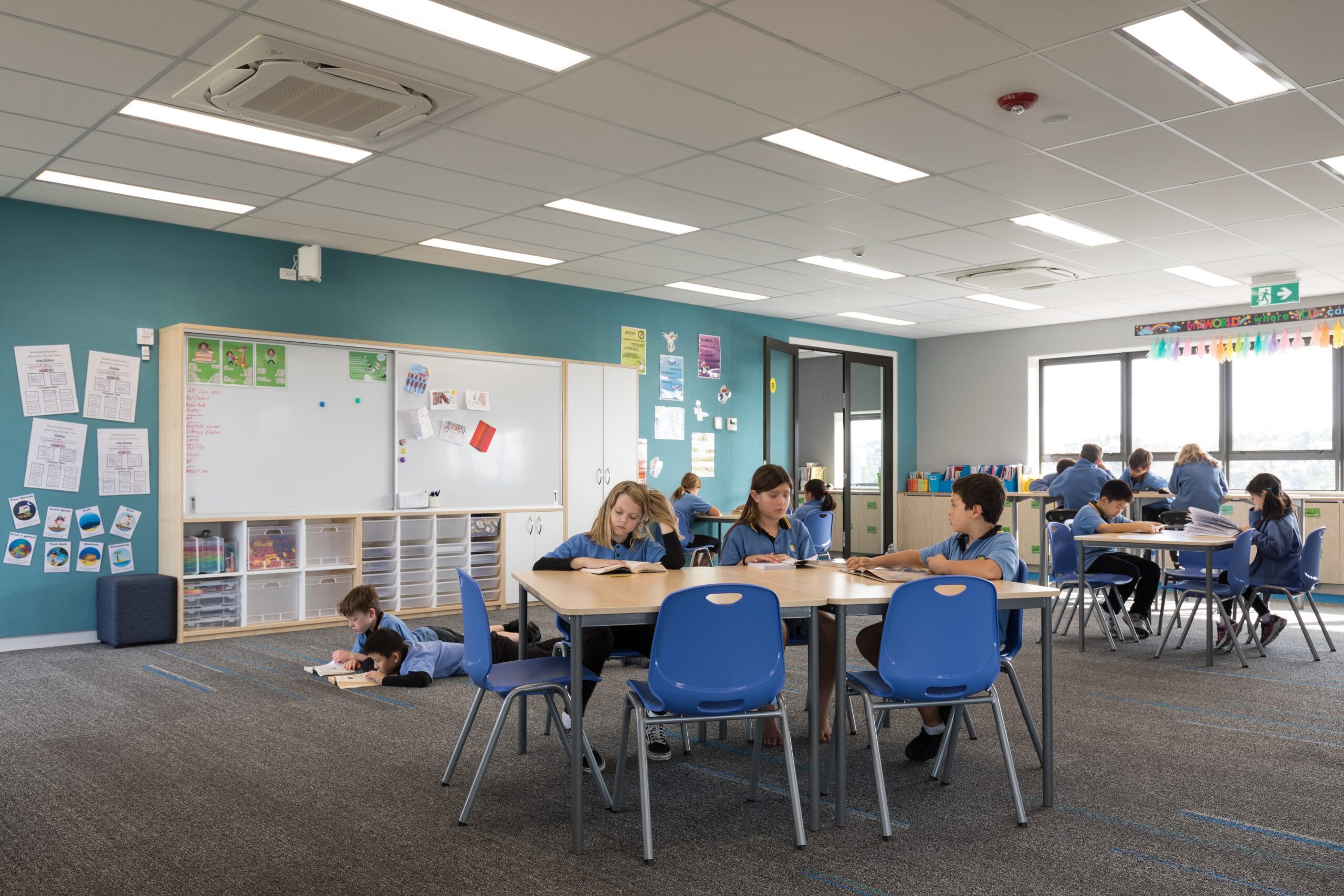
Picture a classroom on a Tuesday afternoon. Thirty children, hard floors, plaster walls, a flat ceiling. The teacher is halfway through explaining a concept, raising their voice to be heard over the ambient hum of chatter. At the back of the room, a child is watching the teacher’s face intently, trying to fill the gaps between what they can hear and need to understand. They catch about two-thirds of it.
This is not an unusual scenario. It plays out in classrooms across the UK every day. And yet acoustic treatment, one of the most evidence-backed, cost-effective interventions available to schools, remains one of the most overlooked aspects of educational design.
What does the research say?
The research is clear. Poor acoustic conditions negatively impact learning outcomes.
Studies consistently show that children in reverberant, noisy classrooms show reduced reading comprehension, lower attainment on listening tasks and higher rates of teacher-reported behavioural difficulty, not because anything is wrong with the children, but because the listening environment is simply too demanding.
For most children, the brain works hard to decode speech in a noisy space and that cognitive effort comes at the cost of actually processing and retaining what’s being said. For children with hearing impairments, additional learning needs, English as an additional language or auditory processing difficulties, the impact is disproportionately severe. A classroom that is merely ‘a bit echoey’ can be inaccessible for a child with even mild hearing loss.
Teachers bear the cost too. Vocal strain and voice disorders are among the most common occupational health complaints in the teaching profession. Many teachers spend significant parts of their career raising their voice in spaces that force them to compete acoustically with their own reverberation.
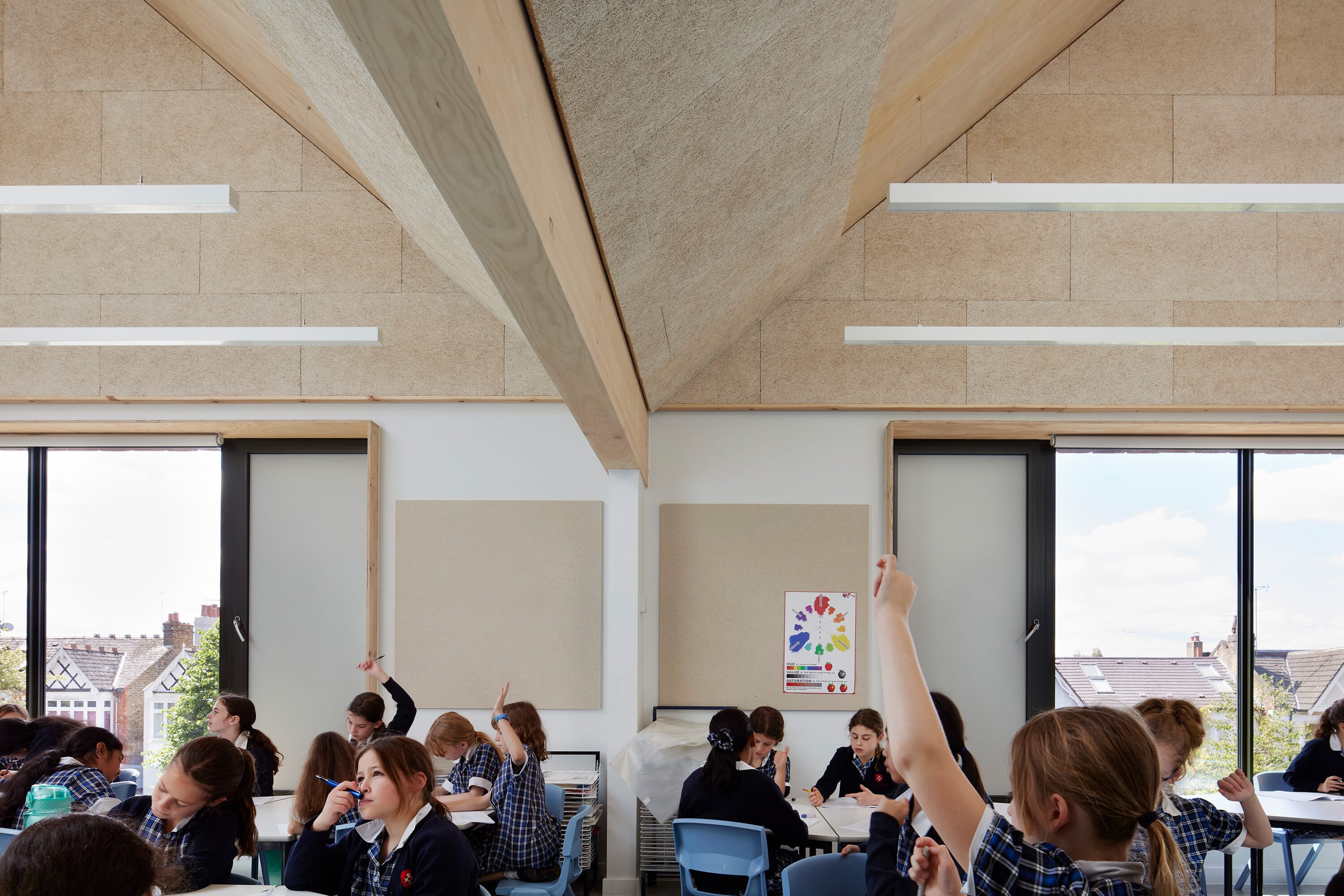
Reducing reverberation time improves speech intelligibility, meaning a teacher can speak at a normal conversational level and be heard clearly across the room.

BB93: the standard schools need to know about
Building Bulletin 93 is the UK government’s acoustic design guide for educational buildings. It sets out performance targets for reverberation time, background noise levels and sound insulation by room type, and it applies to all new school builds and major refurbishments in England and Wales.
For most teaching spaces, BB93 recommends a reverberation time of no more than 0.6 seconds (for smaller rooms) to 0.8 seconds (for larger spaces). For rooms used by children with hearing impairments or special educational needs, the targets are tighter.
Resonics can work with architects and contractors during the design phase to ensure the finished building meets its targets.
The spaces most often overlooked in schools
Most people, when they think about school acoustics, think about classrooms. And classrooms do matter. But several other spaces in a school could benefit from acoustic treatments.
Sports Halls
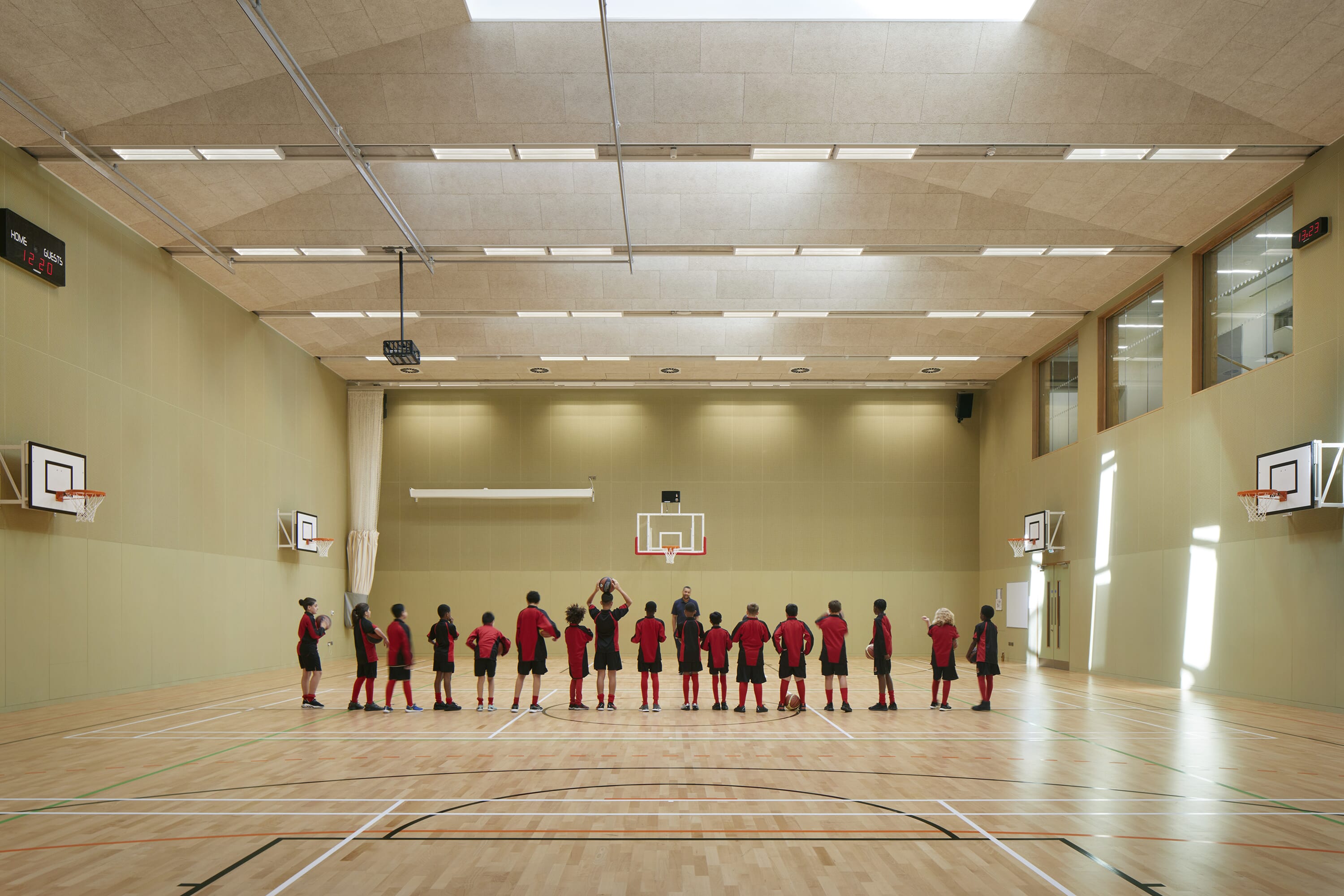
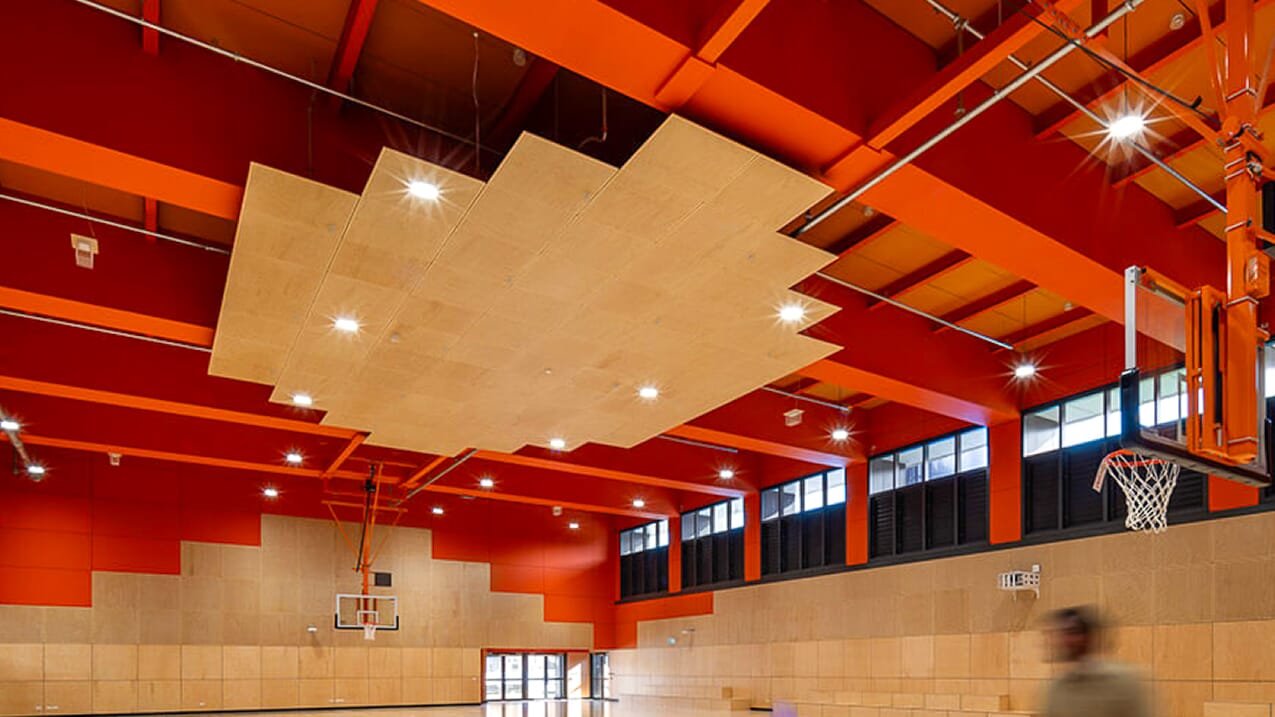
Sports halls are among the worst offenders. Large, hard, parallel surfaces with high ceilings create reverberation times that can exceed 4 or 5 seconds. This makes PE lessons physically tiring for teachers, renders verbal instruction at volume almost impossible, and makes the space unpleasant for children with any level of hearing sensitivity.
Corridors and Circulation
Corridors and circulation areas are rarely thought of as acoustic environments, but children spend a significant part of their school day in them. Highly reverberant corridors amplify the general noise level of a building considerably, and that noise bleeds into adjacent classrooms through doors and walls. Treating corridor ceilings is a cost-effective way to reduce the overall noise environment of a school.
Dining Halls
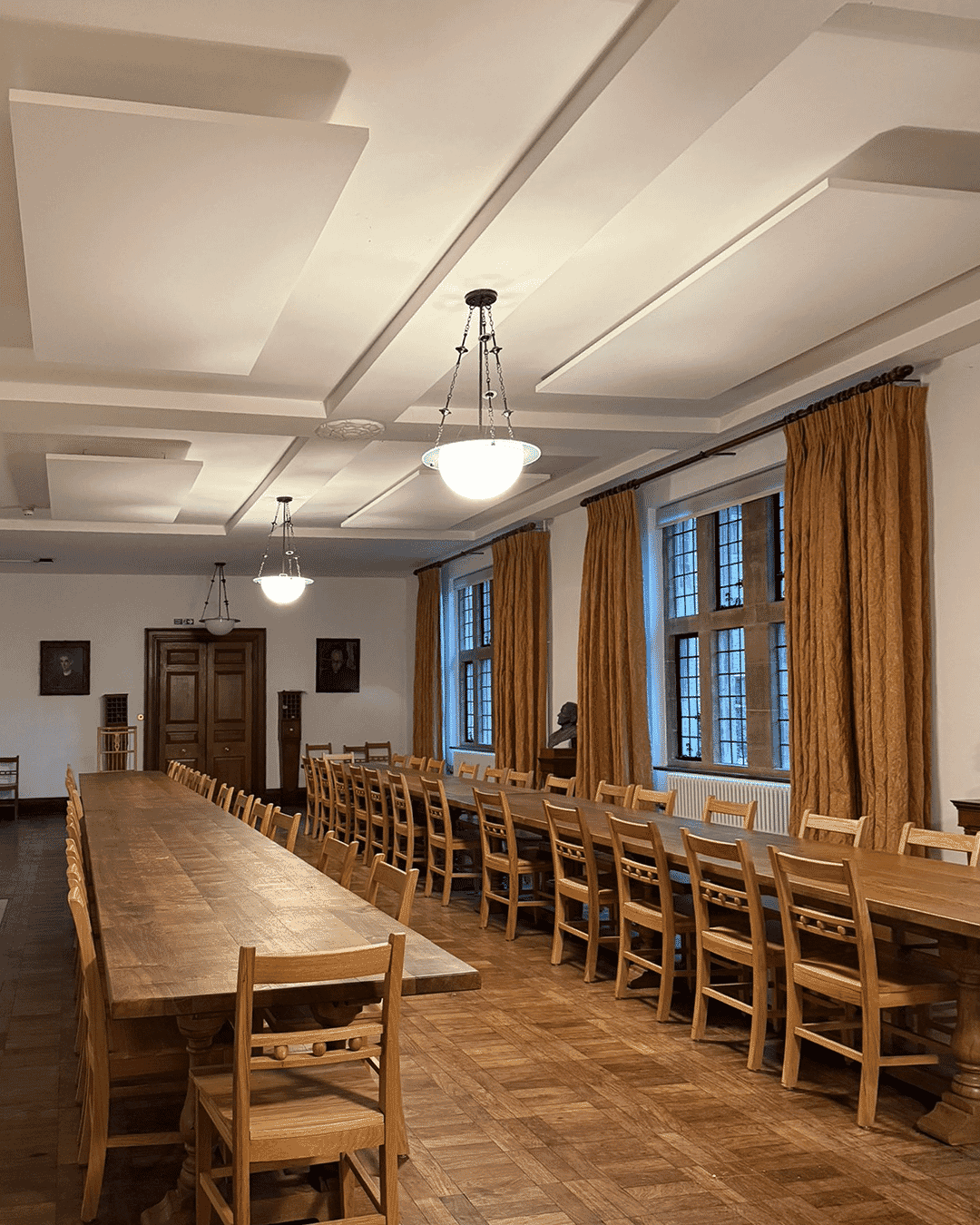
Dining halls and canteens are notoriously loud spaces; the combination of hard floors, high ceilings and 200 children eating and talking simultaneously creates noise levels that can exceed 85 decibels, well above the threshold at which prolonged exposure is considered harmful. Acoustic treatment in dining halls has a direct impact on wellbeing, stress levels and even eating behaviour.
Music Rooms
Music rooms require a different acoustic approach from classrooms. Rather than targeting a short RT, a music room needs to be treated to achieve good acoustic control without becoming so dry that it sounds unnatural for the instruments being played. This typically involves a combination of absorption treatments, carefully balanced and it should always be designed by someone who understands both the acoustic targets and the musical use of the space.
Standards and guidance
- Building Bulletin 93: Acoustic Design of Schools — Performance Standards (Department for Education, 2014)
- Acoustics of Schools: A Design Guide (Institute of Acoustics)
Research: classroom acoustics and learning
- Mealings, K. et al. (2023). The Effect of Classroom Acoustic Treatment on Listening, Learning, and Well-being: A Scoping Review. Acoustics Australia
- Astolfi, A. et al. (2021). Acoustical parameters for learning in classrooms: A review. Building and Environment
- Impact of Noise in Education – Ecophon
- Klatte, Maria & Hellbrück, Jürgen & Seidel, Jochen & Leistner, Philip. (2010). Effects of Classroom Acoustics on Performance and Well-Being in Elementary School Children
Article Author
Mark Irwin
Head of Marketing
4th Jun 2026