

























5 Minute Read
Acoustic treatment in listed buildings: what you need to know
High ceilings, stonework and tall windows give historic buildings their character, but they also make them echoey. This guide explains when acoustic treatment in a listed building needs consent, what helps a scheme get approved and which reversible options work best.

Mark Irwin
3rd Nov 2026
Categories
Guide
Most historic buildings were never designed for how we use them today. The features that give them character, like high ceilings, stonework and tall windows, are hard, reflective surfaces that make a space echoey and acoustically uncomfortable.
Acoustic treatment can transform these spaces. But in a listed building, it matters which panels you use and how you install them, so you preserve the space’s character. This guide covers the consent rules in England, what permissions you may need and the options that work best for listed buildings.
Why are listed buildings so echoey?
Stone, plaster, glass and wood all reflect sound, so in a large room with nothing to absorb it, sound keeps travelling around the space. Many historic buildings have been converted into offices, schools or restaurants and, in the process, have lost the soft furnishings (heavy curtains and rugs) that helped absorb sound, in favour of sleek modern interiors.
The most common problems are:
- Long reverberation times that blur voices together
- Flutter echo between parallel walls
- Speech that’s hard to follow, especially in village halls and churches
- Noise buildup in spaces with high ceilings


Do you need permission?
Often yes. You’ll usually need listed building consent if the work affects the building’s character. Things fixed to a listed building are often covered by its listing, while free-standing items inside, like unfixed furniture, aren’t. But in many cases, whether you need consent depends on how the work is carried out.
In the first instance, it’s worth speaking to your local council’s conservation officer. They are generally supportive of changes that keep historic buildings comfortable and in use. Historic England’s guidance says the best way to conserve a building is to keep it in use.
What makes a scheme more likely to be approved
We’ve installed acoustic treatment in plenty of listed buildings, from churches and village halls to restaurants and schools, and the same things help every time:
Reversibility: Can it be removed without damage? This is usually the deciding factor. Historic England says new work should be reversible where possible, so it can be undone without harming historic fabric.
Minimal intervention: Use fewer fixings, ideally placed in newer parts of the building rather than original stone or brick, as newer material is much easier to repair than masonry.
No impact on significant features: Treatment shouldn’t cover features that contribute strongly to a building’s significance.
Proportionality: Treat only what’s needed. An acoustic survey shows how much absorption a room needs, so you only install what’s necessary.
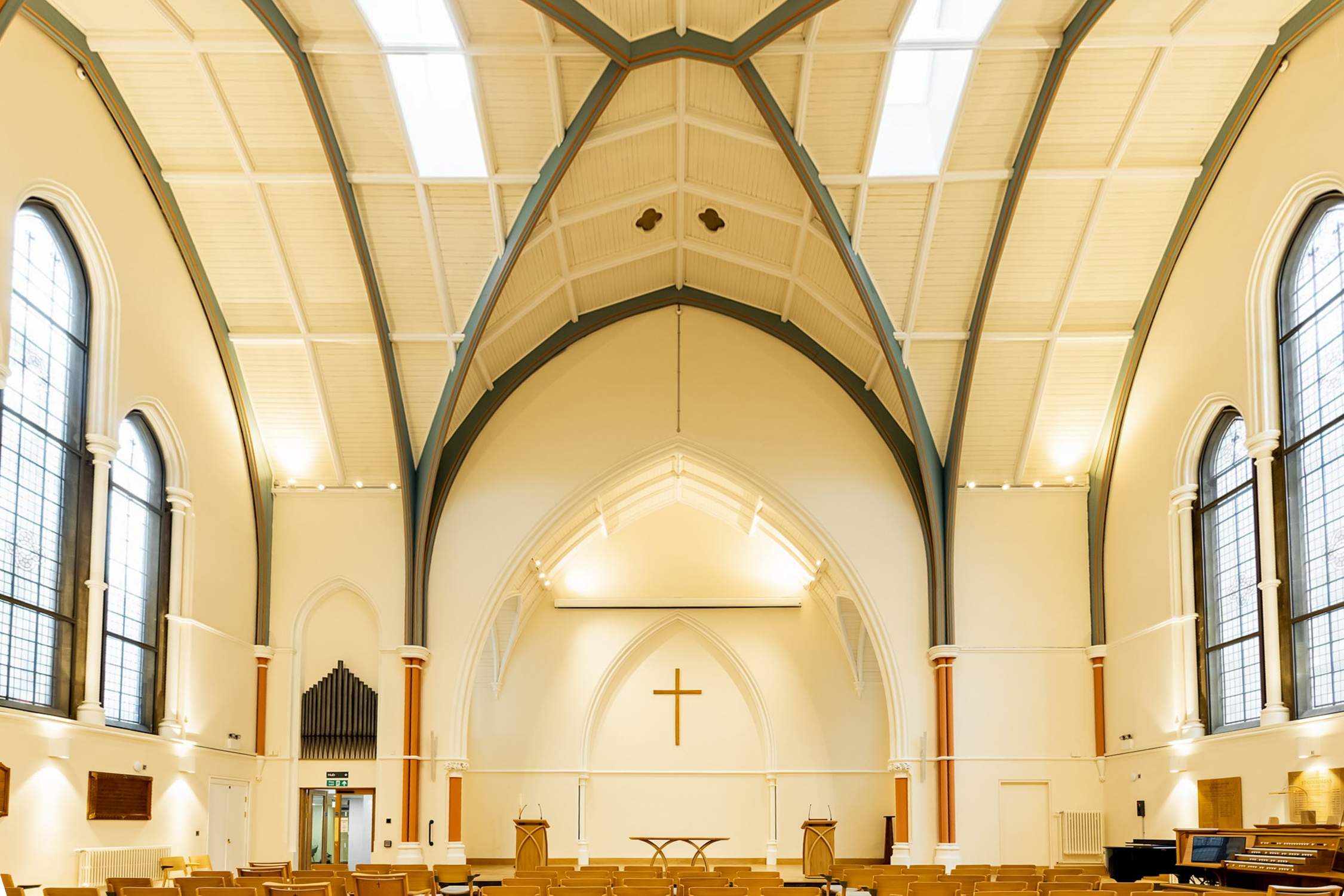

Acoustic treatment for listed buildings
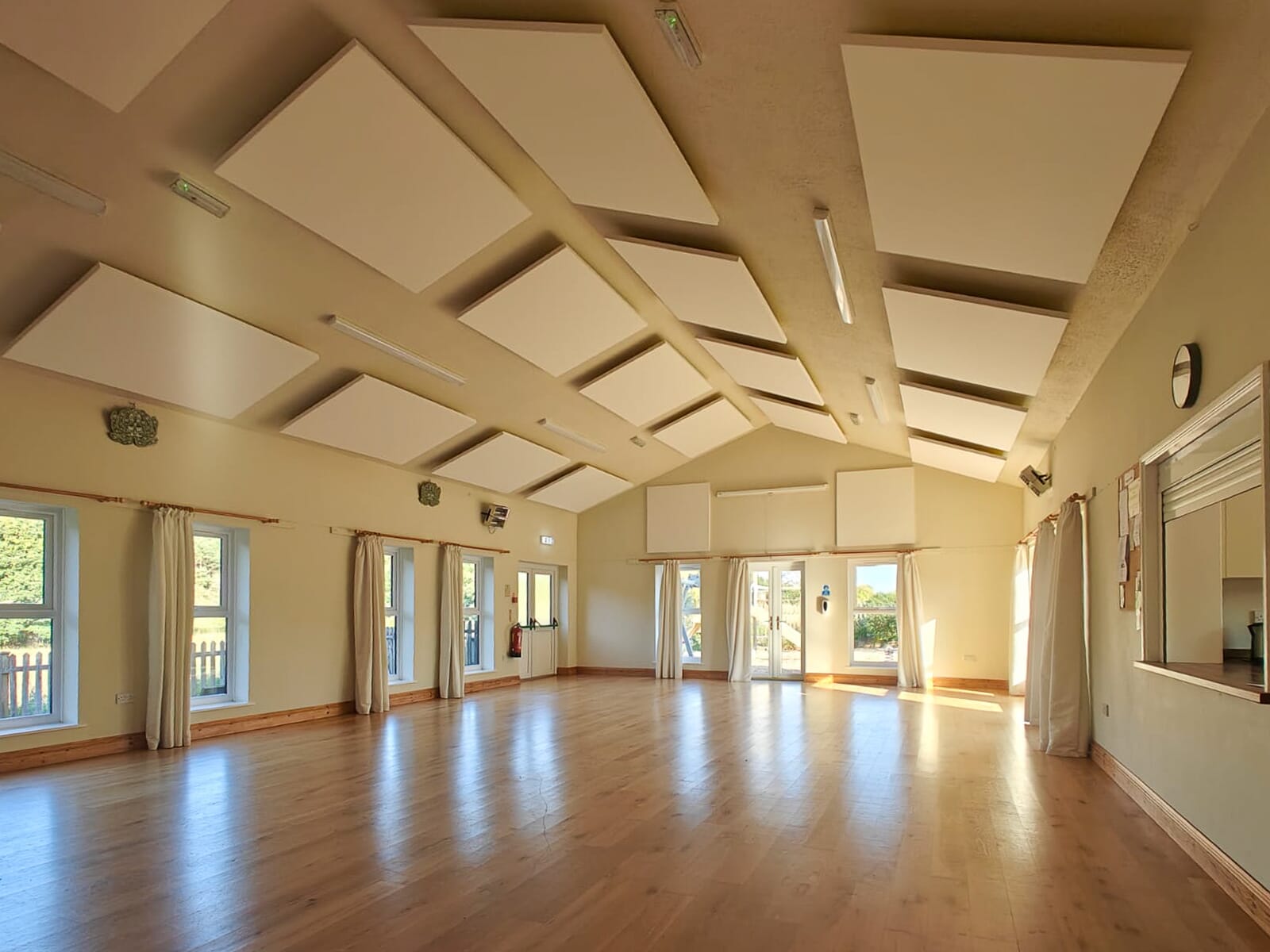
Suspended rafts are usually the best option for listed buildings. Available with Class A absorption, they make the biggest impact on a space using fewer panels. They can hang from existing structural points with a discreet wire system that leaves no damage if it’s removed. If you have a vaulted ceiling, they can be positioned between beams, keeping features visible.
If wall treatment is required, stretched fabric wall systems work well, as the fixings are limited to the track and the system can be shaped around existing features.
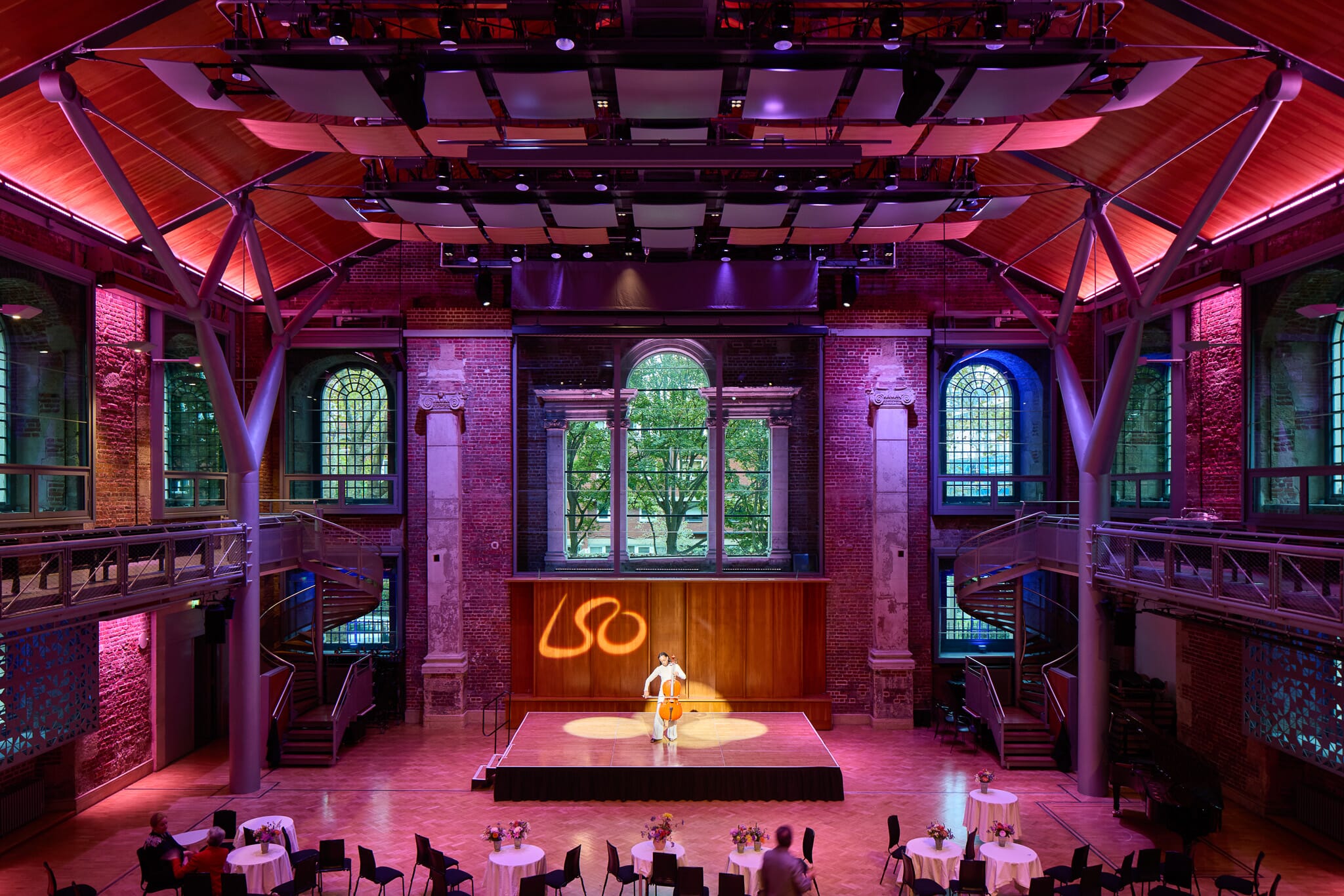
LSO St Luke’s Church
Working within a Grade I listed building, where no permanent fixtures were allowed, Resonics installed a non-invasive acoustic scheme that respected the architecture and conservation requirements of the building.
View case study
St Lawrence Church
Poor acoustics had frustrated users at St Lawrence Church for years. Because it’s attached to a listed building, Resonics installed acoustic rafts with minimal intervention to the existing structure, restoring clear, comfortable sound.
View case studyWhat the process looks like
- Acoustic Survey – we measure the reverberation time of your space and identify where the problem is the worst.
- Recommendations – we suggest the least invasive options that will make a real difference, including placement and quantity of panels.
- Permissions – we provide product details, fixing methods and drawings to support your application to the council.
- Installation – we install the panels with care, working around historic features.
Common mistakes to avoid
- Fixing panels straight onto old plaster. It can damage the building and trap moisture.
- Assuming Grade II means no permission is required. Inside work can still require consent and the same rules apply for every grade.
- Expecting panels to block noise between rooms. Acoustic panels reduce echo inside a room. Stopping sound travelling through walls is a different job. Our post on soundproofing vs acoustic treatment explains the difference.
- Starting work and asking later. You can’t get a Certificate of Lawfulness for work that’s already been done and unauthorised work can mean enforcement action.
How can Resonics help
We’ve installed acoustic panels in listed churches, village halls, schools and restaurants, and have experience navigating listed building restrictions.
We’ll measure your space, recommend options that respect the building and give you the information you need for your consent application. Majority of consent applications are successful when the need for work is properly justified. A clear acoustic survey and a sensitive scheme go a long way.