



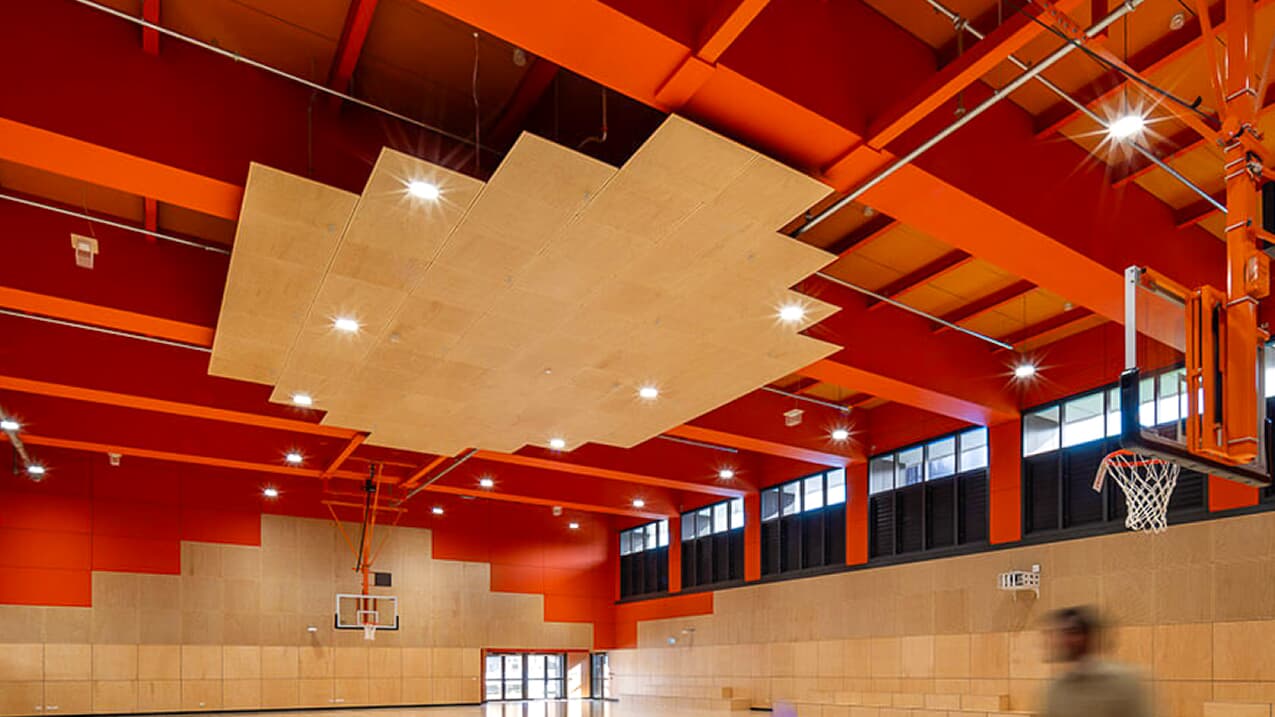
5 Minute Read
What are the 5 Best Acoustic Solutions For Sports Halls?
Sports halls need acoustic treatment that absorbs a lot of sound and can take repeated hits from balls. This guide covers the standards school sports halls have to meet and compares five tested wall and ceiling solutions.

Mark Irwin
23rd Sep 2025
Categories
Advice
Updated 2026.
TL;DR – The best acoustic panels for sports halls
- Ecophon Super G: Class A wall panel that is impact resistant
- Tenso Wall: site built fabric system
- Rockfon VertiQ: Class A wall panel for moderate ball impact
- Autex Quietspace: PET panel for walls or ceilings
- Silent Space Baffles: Ideal for halls with services overhead
Why are sports halls so echoey?
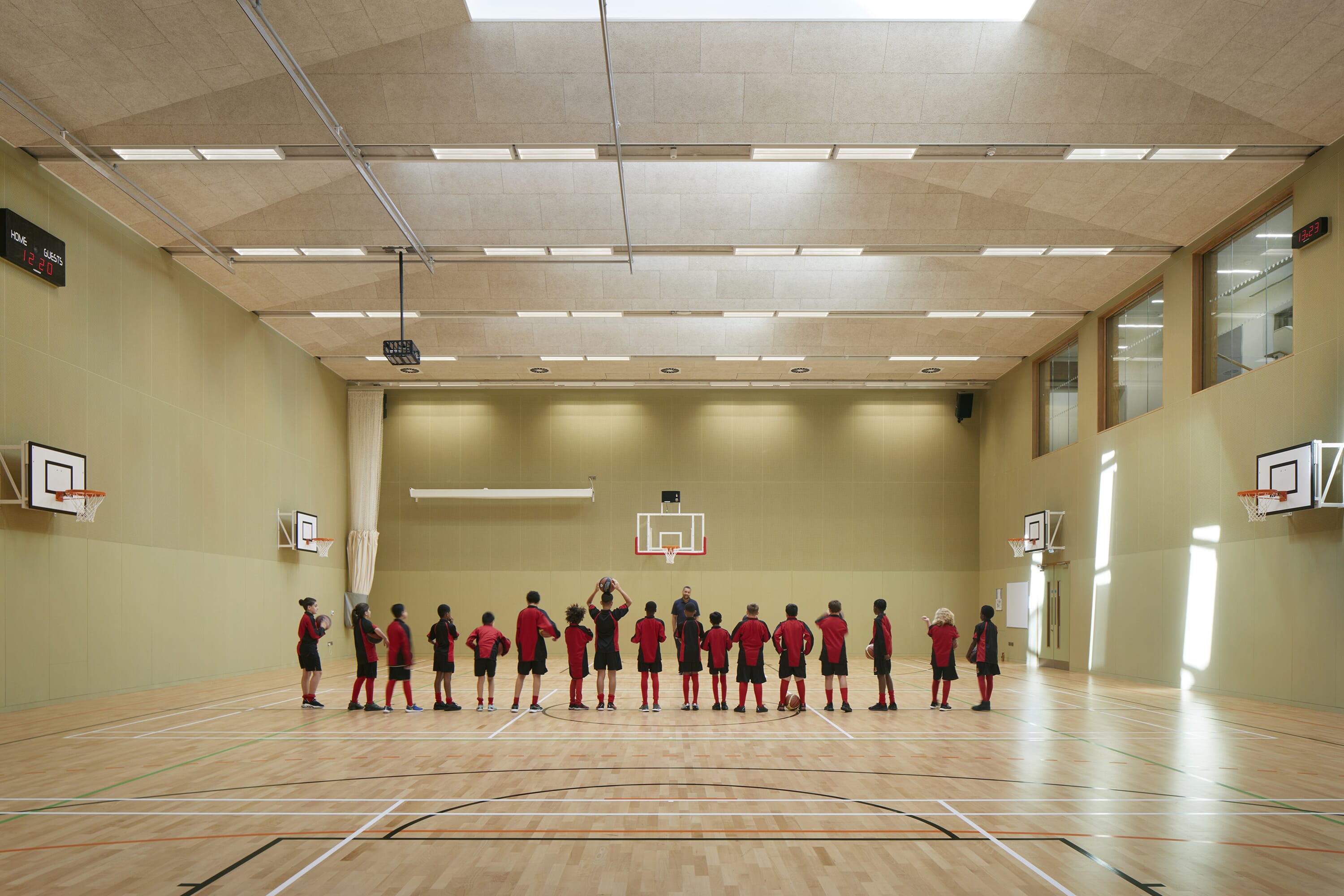
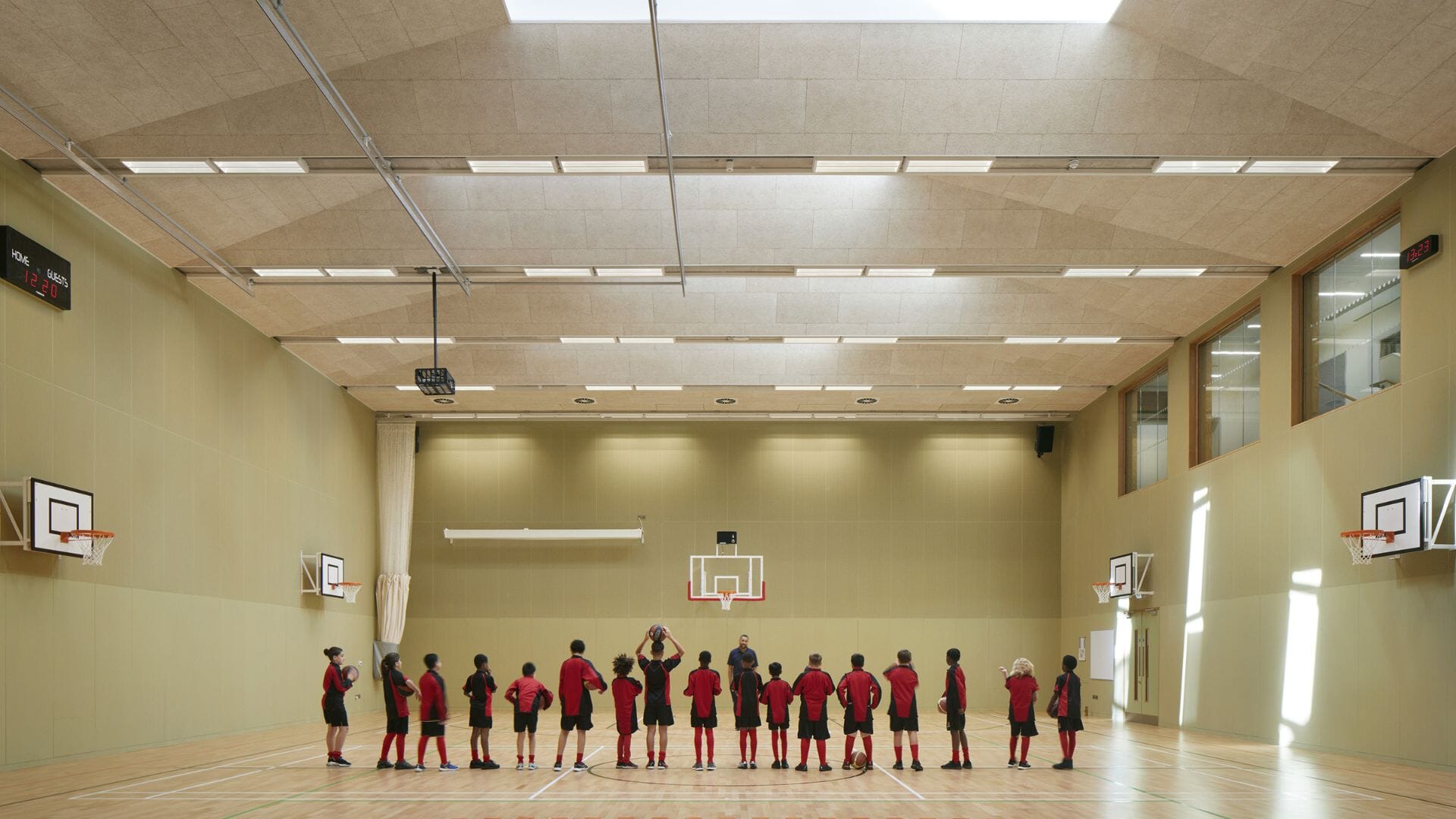
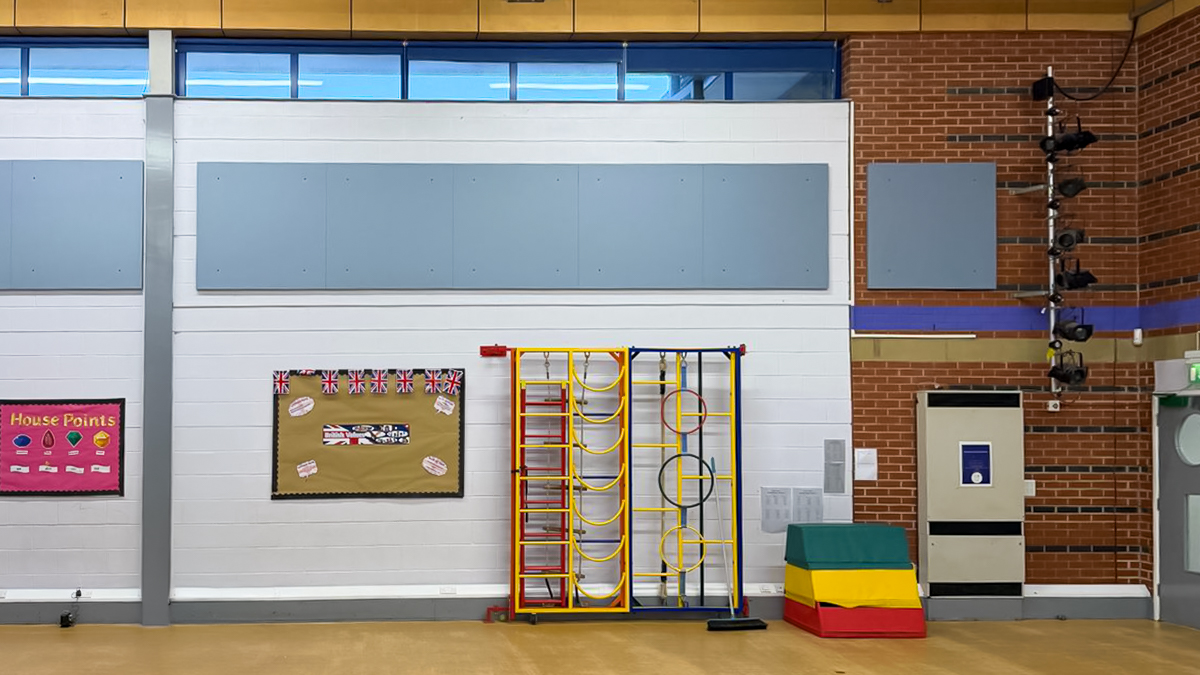
Sports halls are built from hard, reflective materials: concrete, brink, timber floor and glazing. They are usually large boxes with parallel wall that are far apart, so sound travels between the surfaces before it dies away. Untreated halls often have reverberation times far above the limits set for schools.
That matters because school sports halls are rarely used only for sport. They also host exams, assemblies and concerts. When reverberation is long, speech becomes hard to follow, background noise builds and staff have to raise their voices to be heard.
What does BB93 require for sports halls?
Building Bulletin 93 (BB93) sets the acoustic performance standards for schools in England.
| Space | New Build | Refurbishment |
| Sports hall under 280m² | <1.5s | <2.0s |
| Sports hall 280 – 530m² | 1.5 – 2.0s | <2.0s |
| Sports hall over 530m² | <1.5s | <2.0s |
| Gymnasium / activity studio | <1.5s | <2.0s |
| Dance studio | <1.2s | <1.5s |
BB93 also sets an indoor ambient noise limit for sports halls of 40 dB LAeq, 30 mins in new builds and 45 dB in refurbishments.
Halls used for music or performance often need more absorption than the minimum. Specifying extra gives you headroom across a wider range of uses.
What makes an acoustic panel suitable for a sports hall?
Check three things on any products data sheet:
- Sound absorption class. Class A (NRC 0.90 – 1.00) is the highest rating and is what most sports halls need. Our guide to sound absorption classes explain the ratings in more detail.
- Ball impact resistance. Check panels have been tested for impact.
- Fire classification. Non-combustible or limited-combustibility ratings matter in education buildings. Check what rating your sports hall needs to meet.
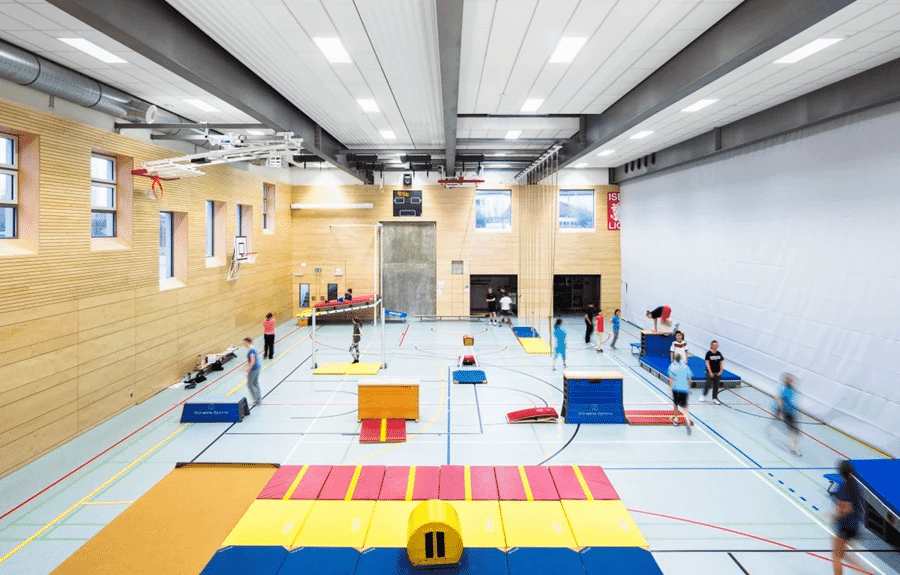
The best acoustic panels for sports halls
Ecophon Akusto Super G is a 40mm glass wool panel with a fabric face, designed specifically for ball impact.
Absorption: Class A (αw 1.00)
Impact: Tested to DIN 18032-3, which Ecophon states is equivalent to Class 1A under EN 13964.
Fire rating: A2-s1,d0
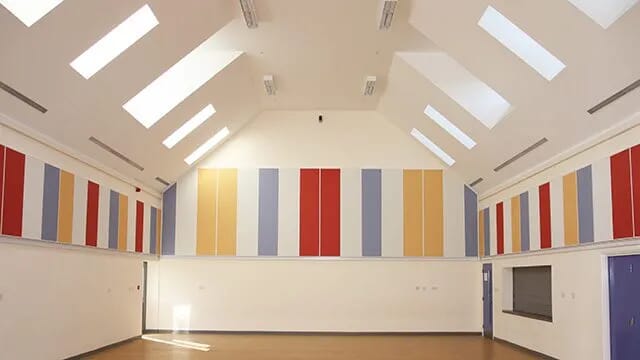
Tenso is a stretched fabric system built on site. Because it’s made to measure, it can fit irregular walls and wrap around obstacles that off-the-shelf panels can’t.
Absorption: 25mm core up to Class B (round 80%), 50mm core up to 90%
Impact: The absorptive core sits flush against the wall, so they are full impact-resistant.
Finish: You can choose almost any fabric, including printed designs for school colours, logos or murals.
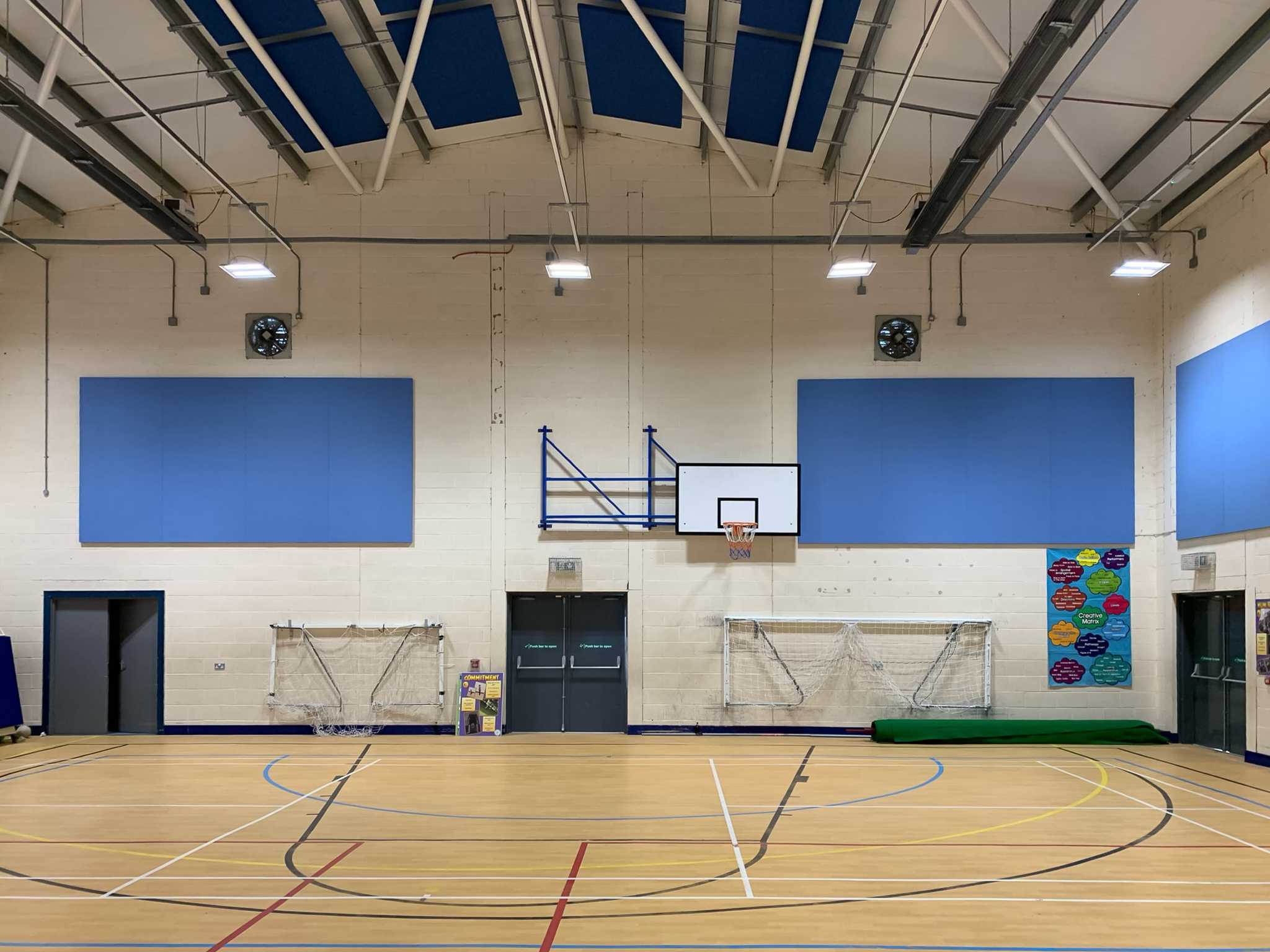
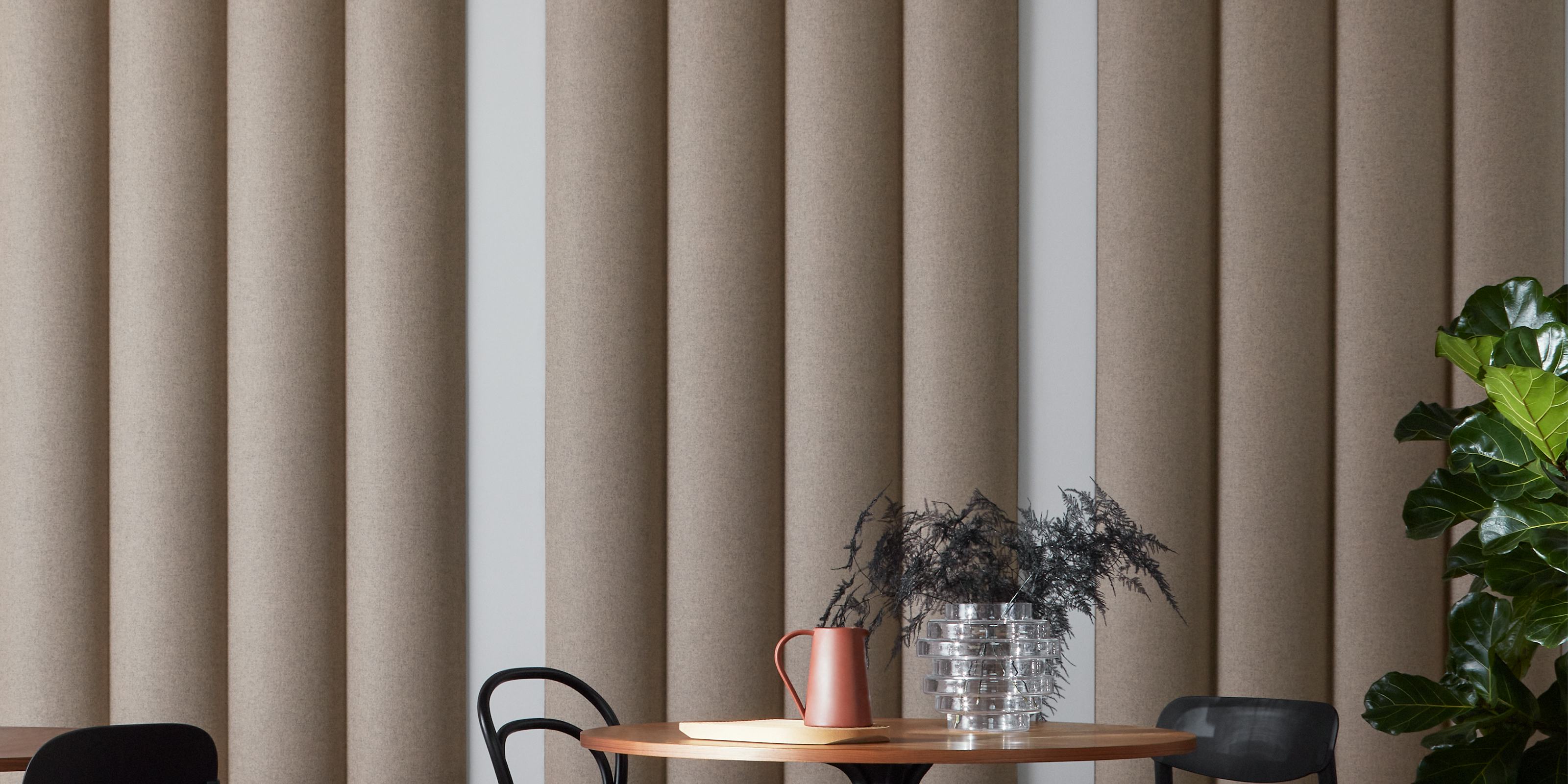
VertiQ is a 40mm stone wall panel designed for schools and sports venues. Unlike the other options mentioned in this list, VertiQ is easy and safe to demount. It suits activity studios or multi-use halls.
Absorption: Class A (αw 1.00)
Impact: Tested to DIN 18038-3 for handball. Rockfon rates it as restrictedly safe against ball throwing and advises against it in areas with continuous heavy impact.
Fire: A2-s1,d0
Autex Quietspace is a 100% polyester (PET) panel with a hard, compressed face and a softer backing. Direct fixing keeps installation simple where there is no ceiling void.
Absorption: Class A (NRC 0.85 – 1.00), depending on thickness.
Installation: Can be fixed directly to walls and ceilings with adhesive.
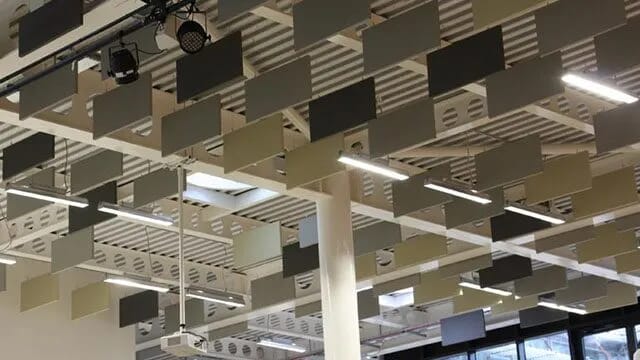
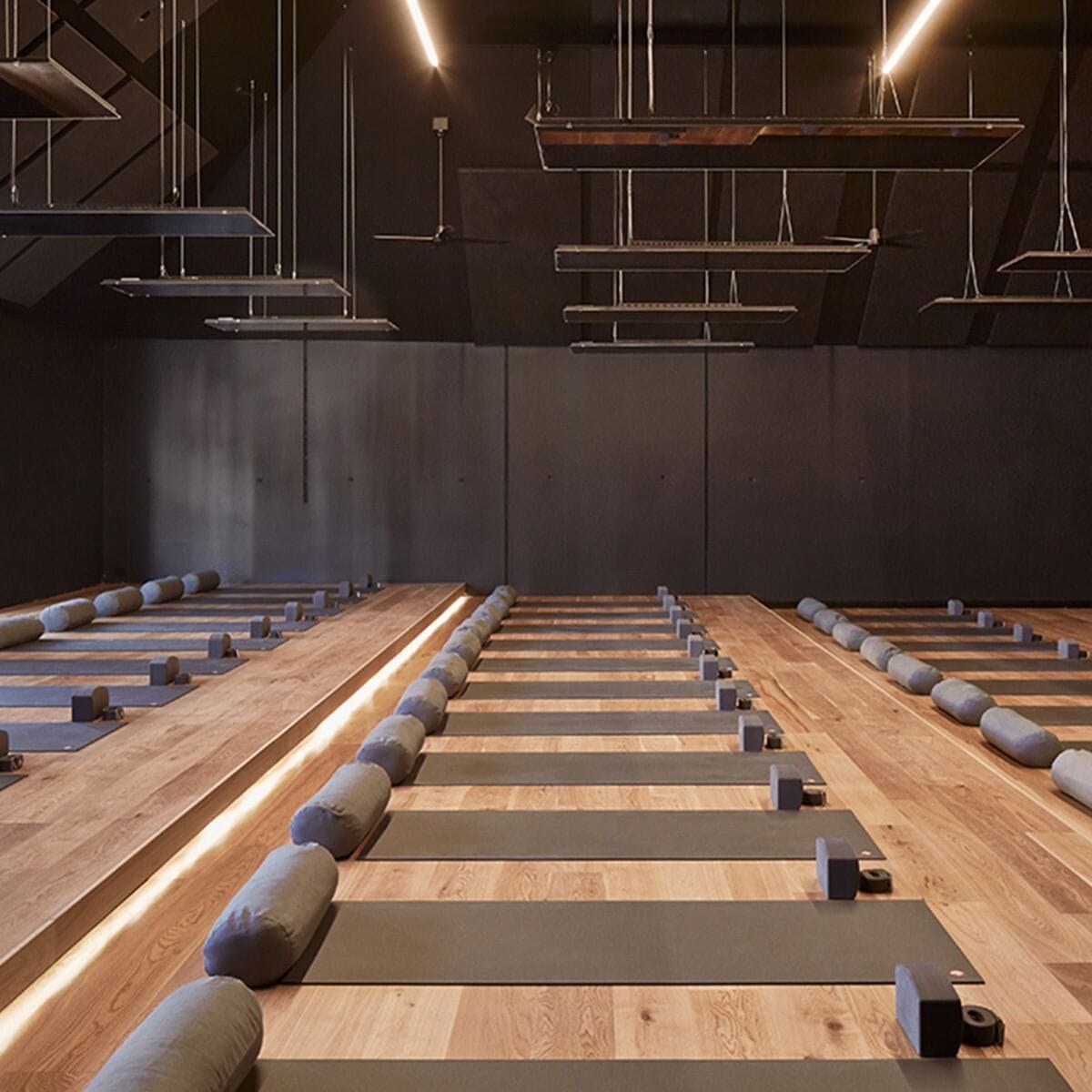
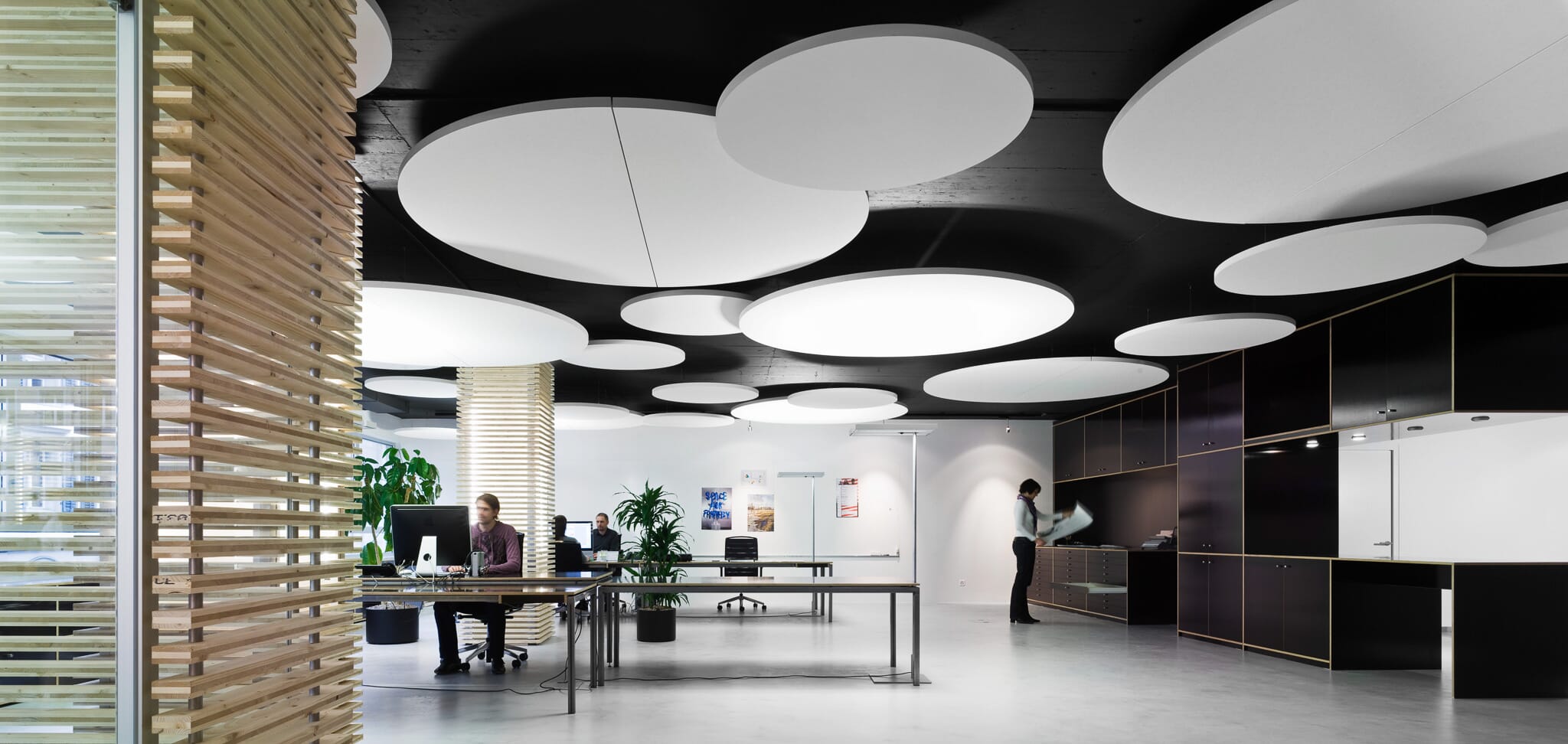
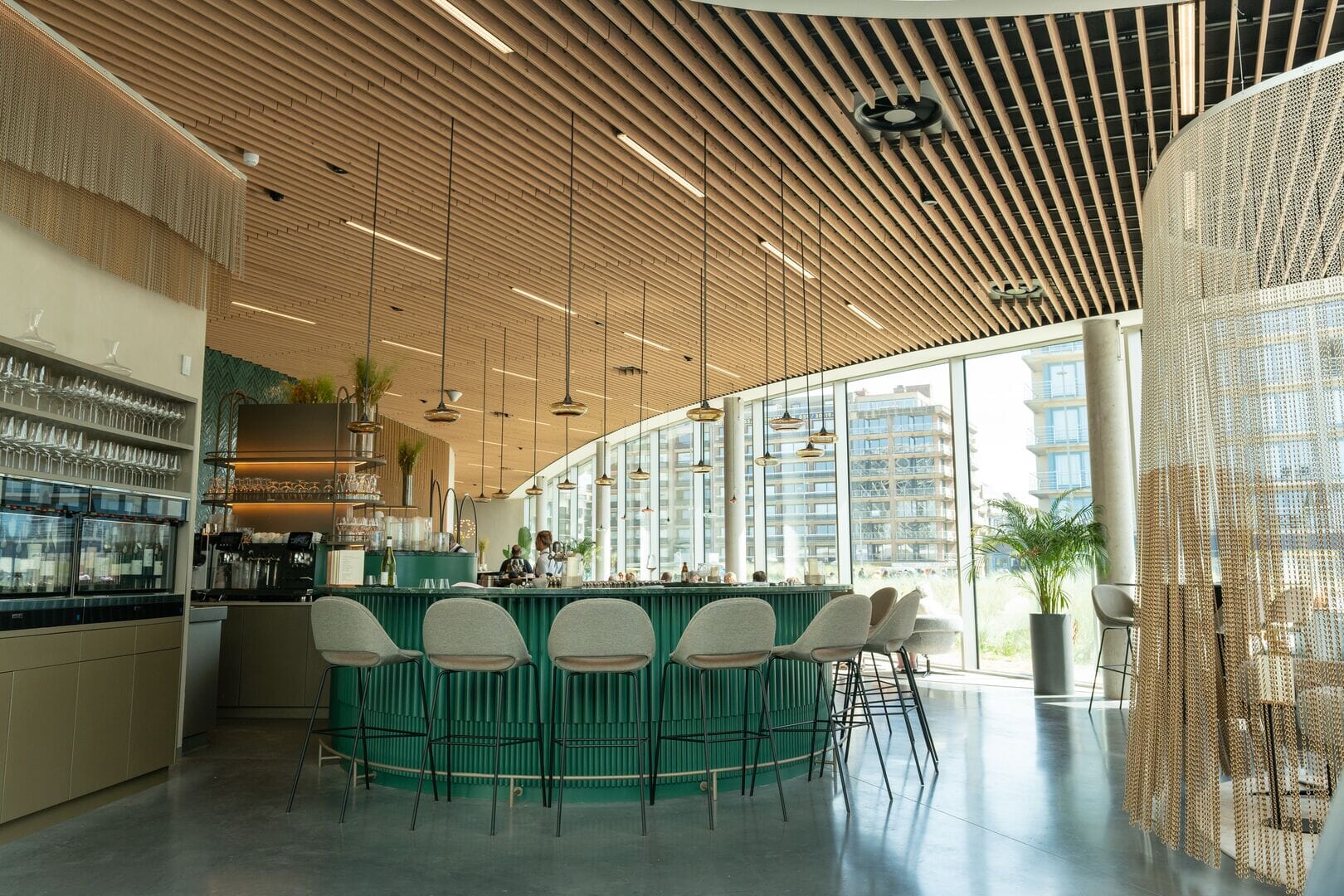
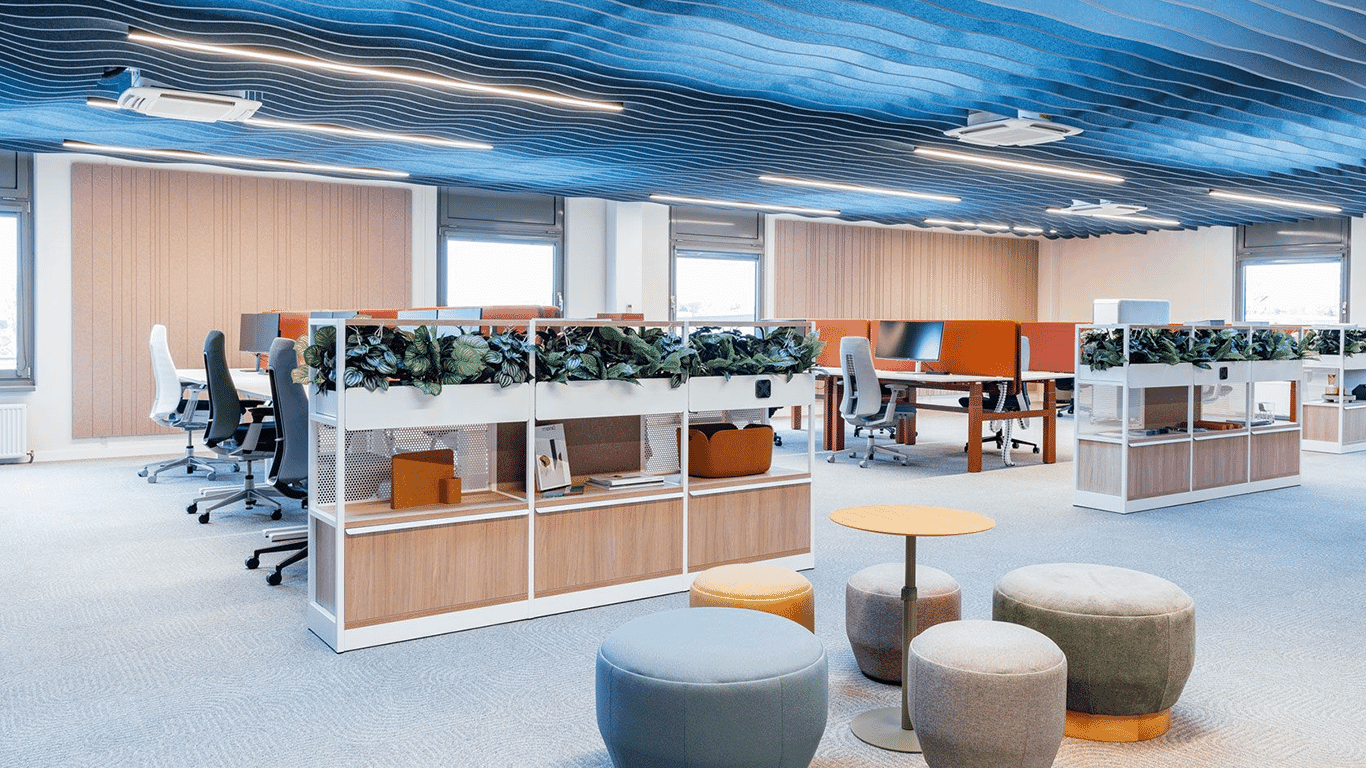
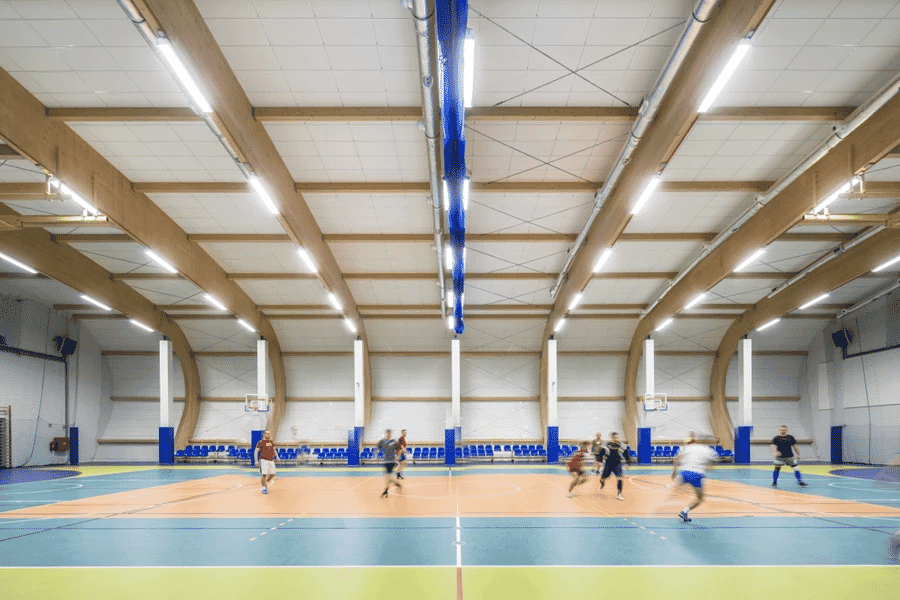
Baffles hang vertically from the ceiling or roof structure. They can be installed between services without disturbing them. Most baffles are not impact-rated, so use them only where the ceiling is high enough to be out of play or where ball sports aren’t played.
| Solution | Location | Absorption | Ball impact |
|---|---|---|---|
| Ecophon Akusto Wall C Super G | Wall | Class A | HighTested |
| Tenso Fabric Wall | Wall | Class A | HighFlush core |
| Rockfon VertiQ | Wall | Class A | Moderate |
| Autex Quietspace | Wall / ceiling | Class A | Not rated |
| Acoustic baffles | Ceiling | Varies | Not rated |
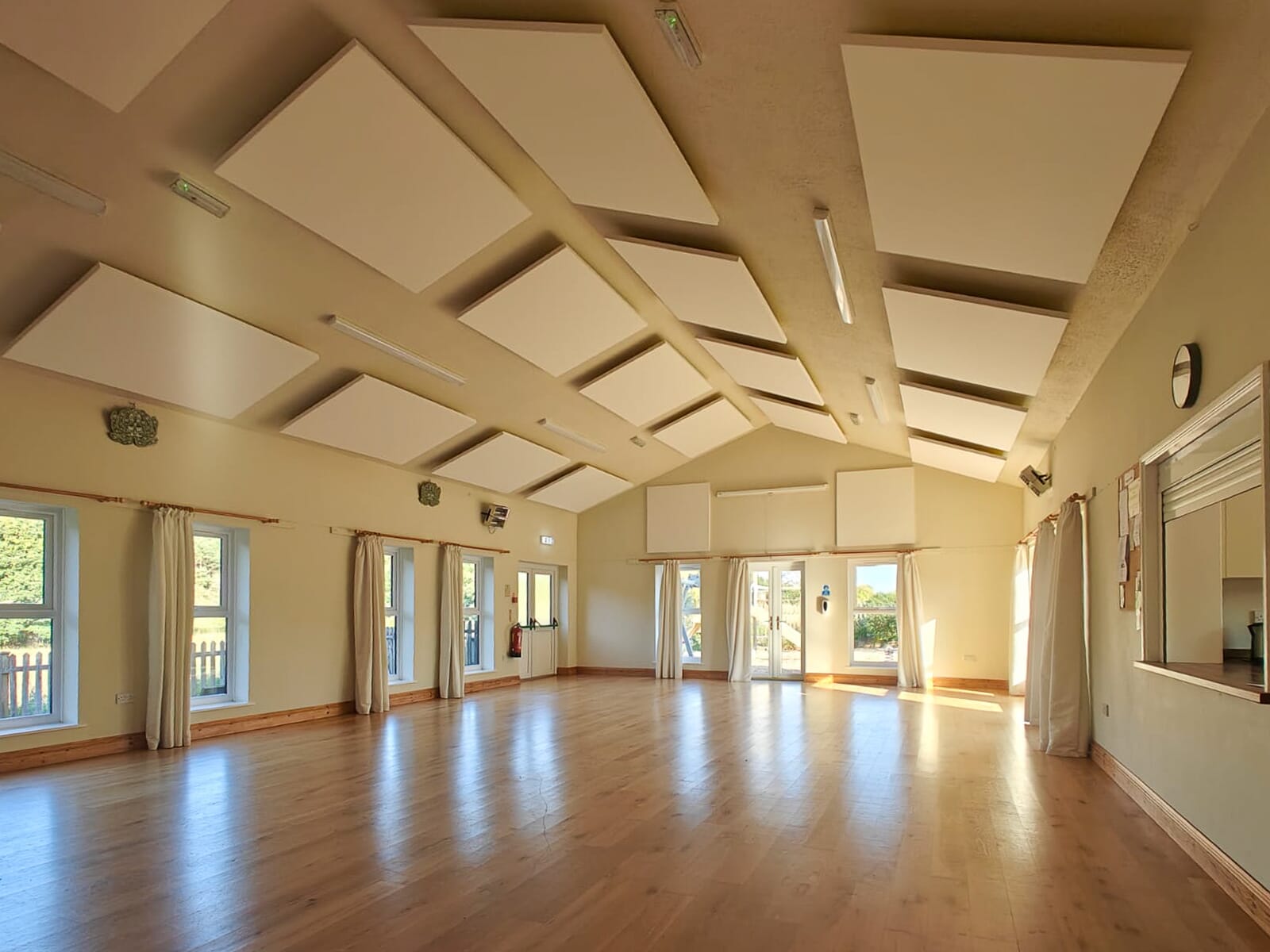
Most sports halls meet BB93 with wall treatment on two or more walls, placed above the likely impact zone or using impact-rated systems lower down. An acoustic survey will tell you how much area you need.
FAQs
Can acoustic panels be damaged by balls?
Standard panels can. Choose panels tested to DIN 18032-3 or a flush-mounted fabric system for any wall within reach of play.
Do refurbished sports halls have to meet BB93?
Yes. Refurbishments must achieve a reverberation time of under 2 seconds.
How much acoustic treatment does a sports hall need?
It depends on the hall’s volume, existing finishes and the target reverberation time. A survey measures the current reverberation time and provides a guide for how much treatment you need.
References
Department for Education (2015). Building Bulletin 93: Acoustic design of schools – performance standards.
Article Author
Mark Irwin
Head of Marketing
23rd Sep 2025