










6 Minute Read
Types of Acoustic Panel Materials: Which Is Right for Your Space?
Not all acoustic panel materials perform the same and the one you choose affects everything from how well a room absorbs sound to how the finished space looks and feels. This guide breaks down the most common options so you can make the right call for your project.

Mark Irwin
19th Jun 2026
Categories
Advice
Not all acoustic panels are made the same. The material used affects how well a panel absorbs sound, where it works best, and how it looks in a finished space. Here’s a straightforward breakdown of the most common acoustic materials to help you choose the right one for your project.

PET Recycled Panels
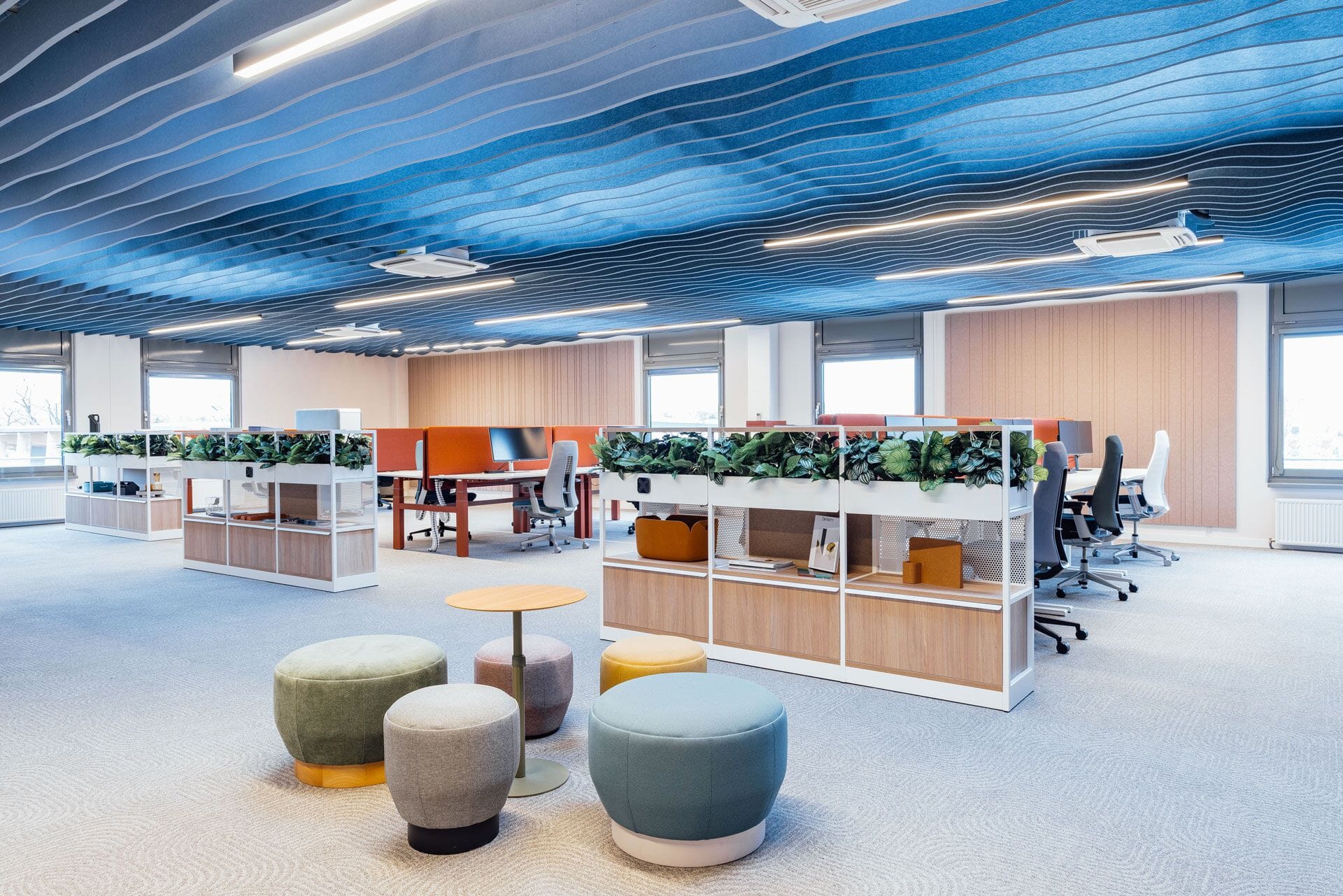
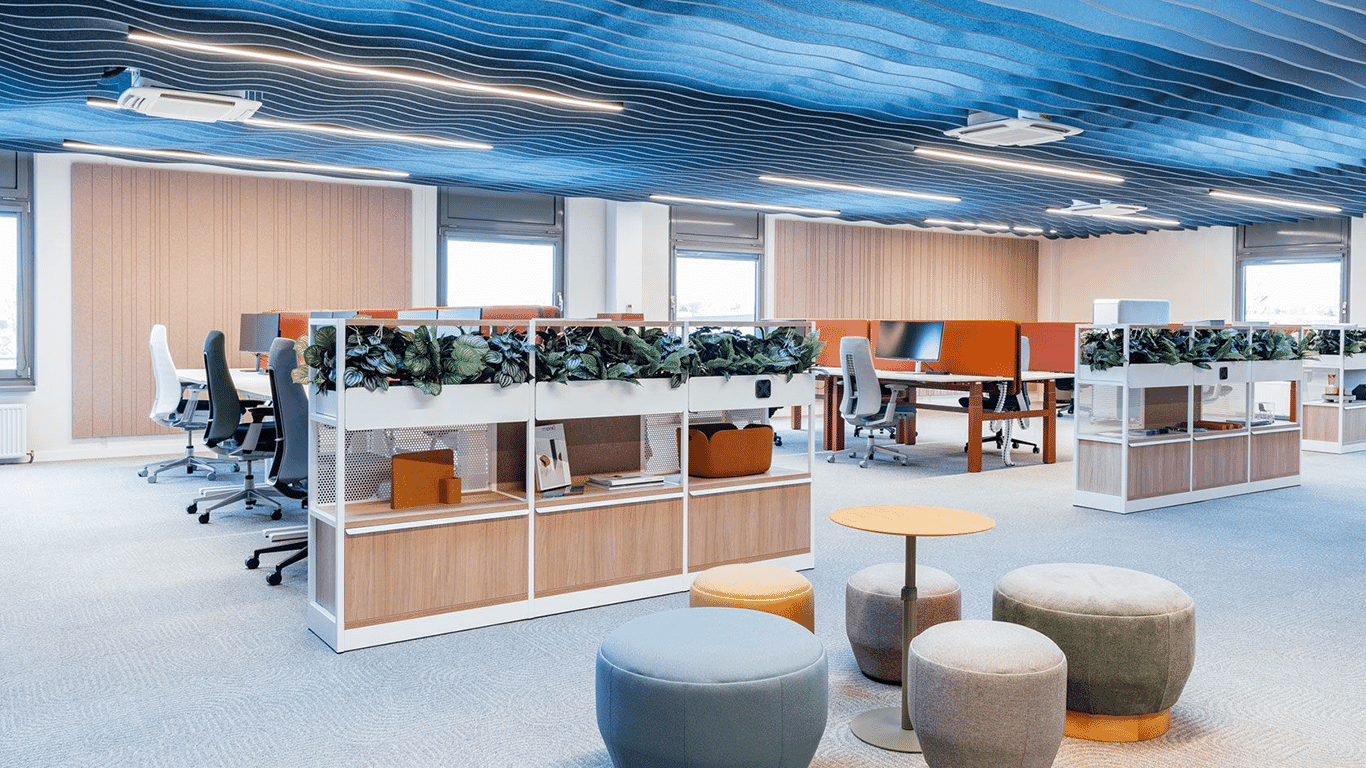
PET stands for polyethylene terephthalate, the same material used to make plastic bottles. In acoustic panels, post-consumer plastic waste is broken down and made into panels that absorb sound effectively across mid-to-high frequencies.
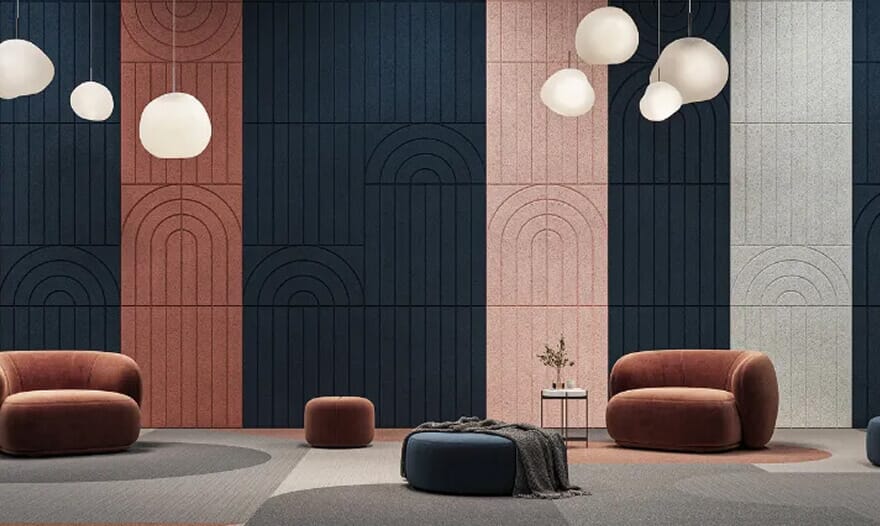
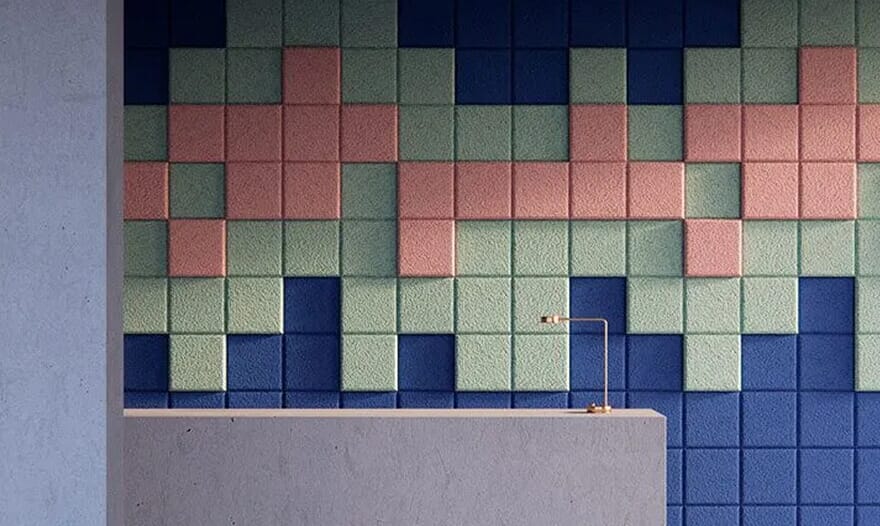
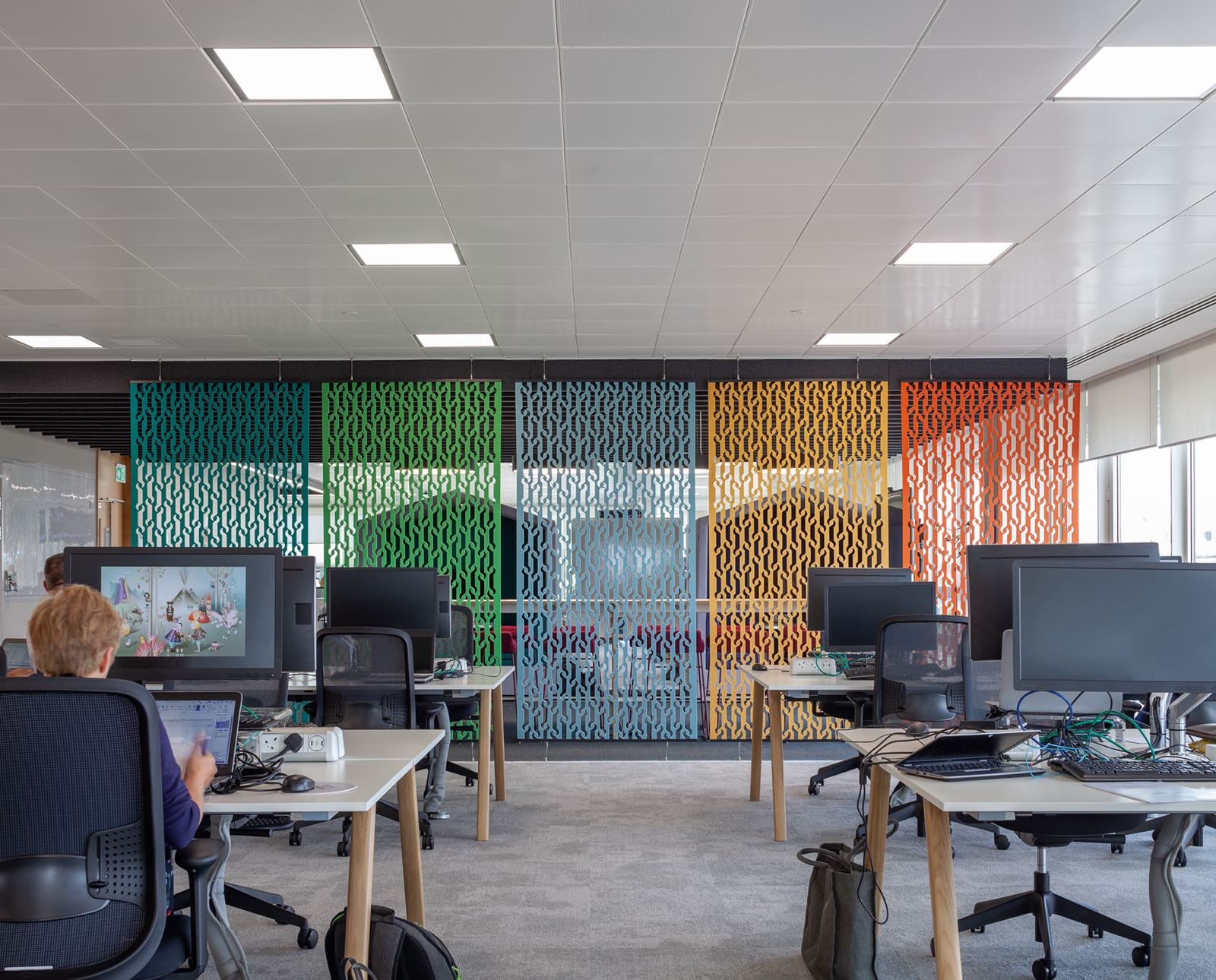
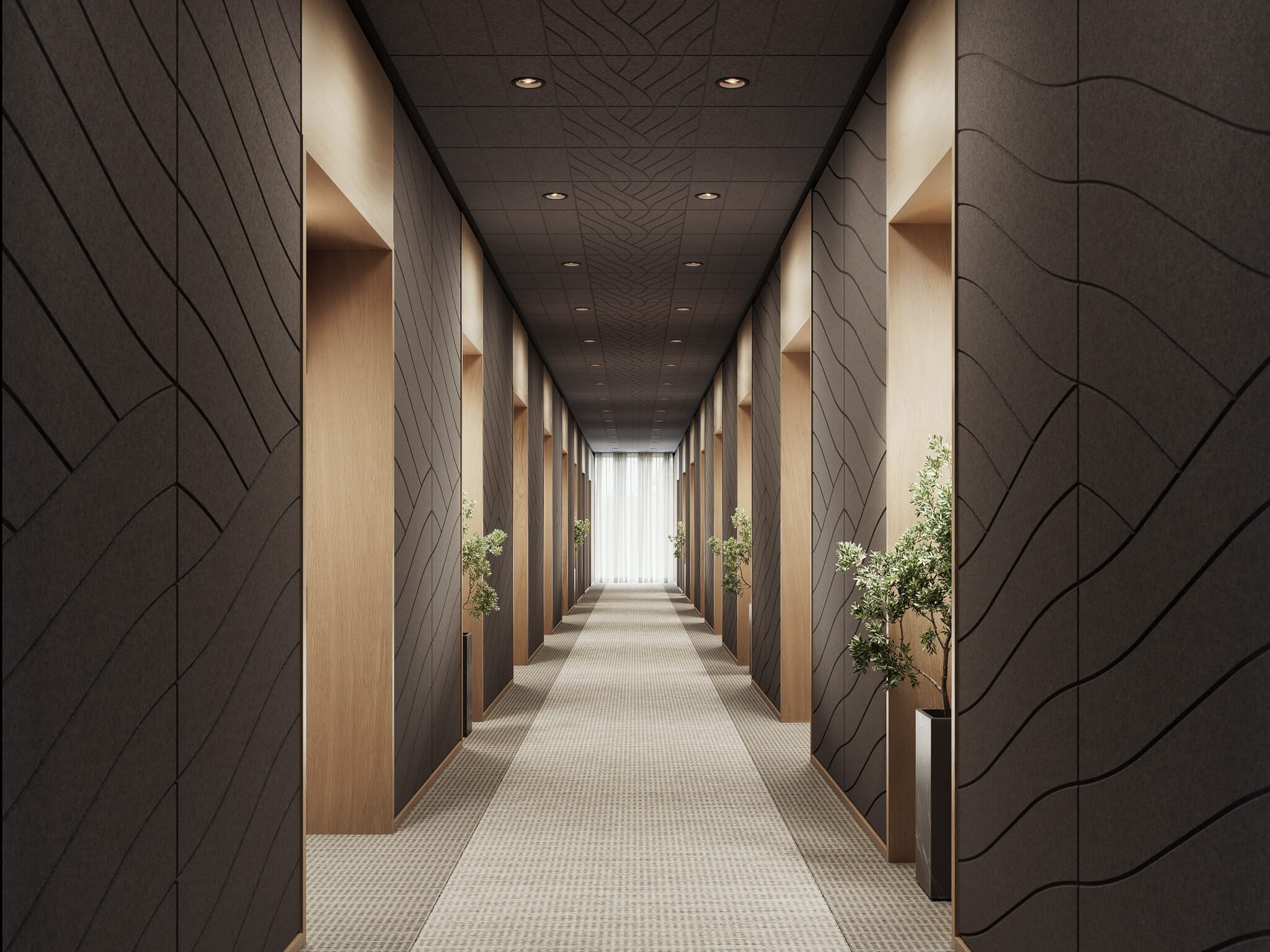
The material is lightweight, easy to work with, and exceptionally versatile from a design perspective. PET panels are available in a wide range of colours, and because the material can be cut into almost any form, it’s possible to have geometric patterns, bespoke shapes, or custom designs. The colour runs through the full depth of the material, so cut edges are clean and finished without any additional treatment needed.
PET performs consistently well in most interior environments. It strikes a strong balance between acoustic function, design flexibility and sustainability credentials. Most PET acoustic panels contain a significant proportion of recycled content, and many are recyclable at end of life.
It’s one of the most commonly used acoustic panels in offices, schools, libraries, and creative studios. Anywhere that benefits from improved acoustics without compromising on aesthetics or environmental goals, PET is an ideal choice.

Timber Acoustic Panels
Timber is one of the most popular materials in commercial acoustic design, but it works differently from most other acoustic panel types. Wood itself isn’t particularly absorbent but how the panels are constructed is what makes timber effective.
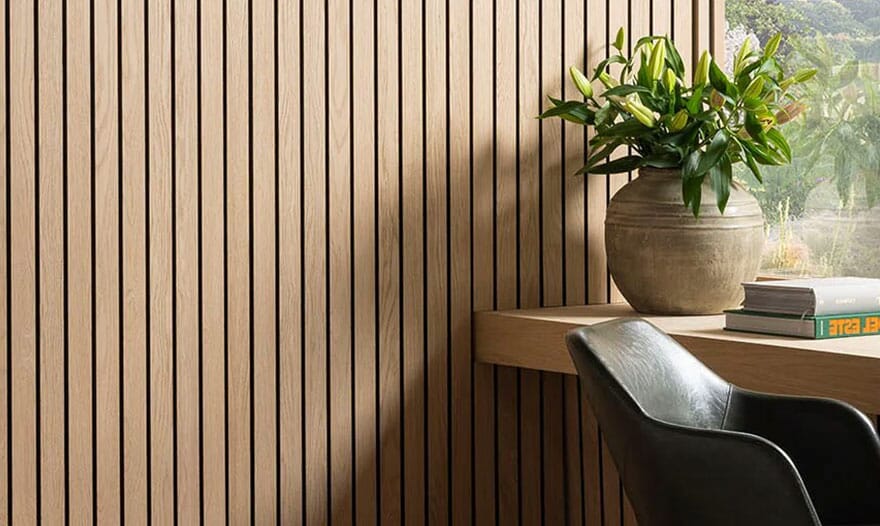
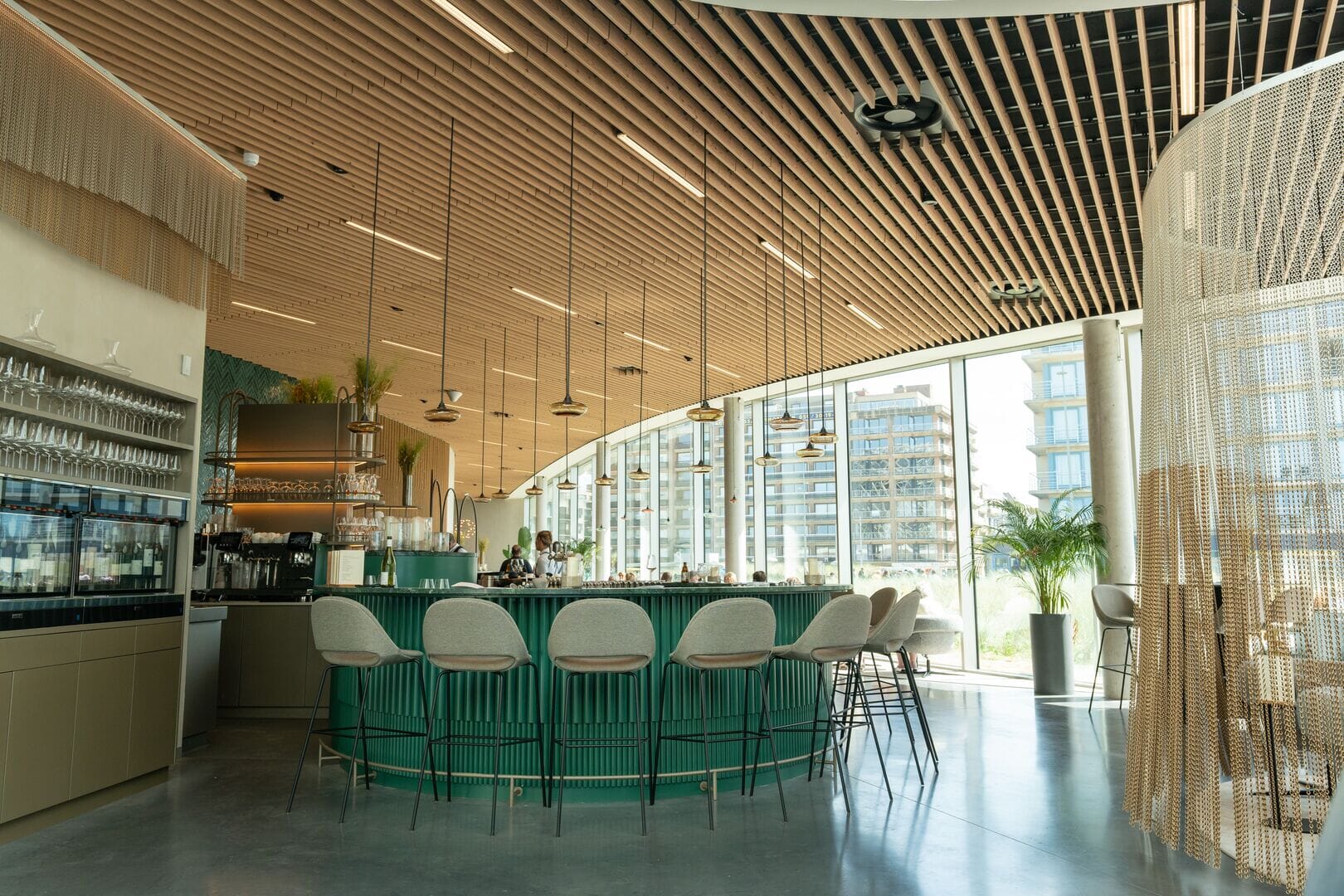
Timber panels work by placing the wood surface in front of an absorbing surface, usually mineral wool or PET felt. Sound passes through the gaps, hits the absorbing layer behind, and is converted into heat energy. The timber surface also helps to diffuse sound waves, scattering them rather than reflecting them directly back into the room.
This combination of absorption and diffusion makes timber panels effective in spaces such as meeting rooms and hospitality venues where both speech clarity and ambient noise control matter.
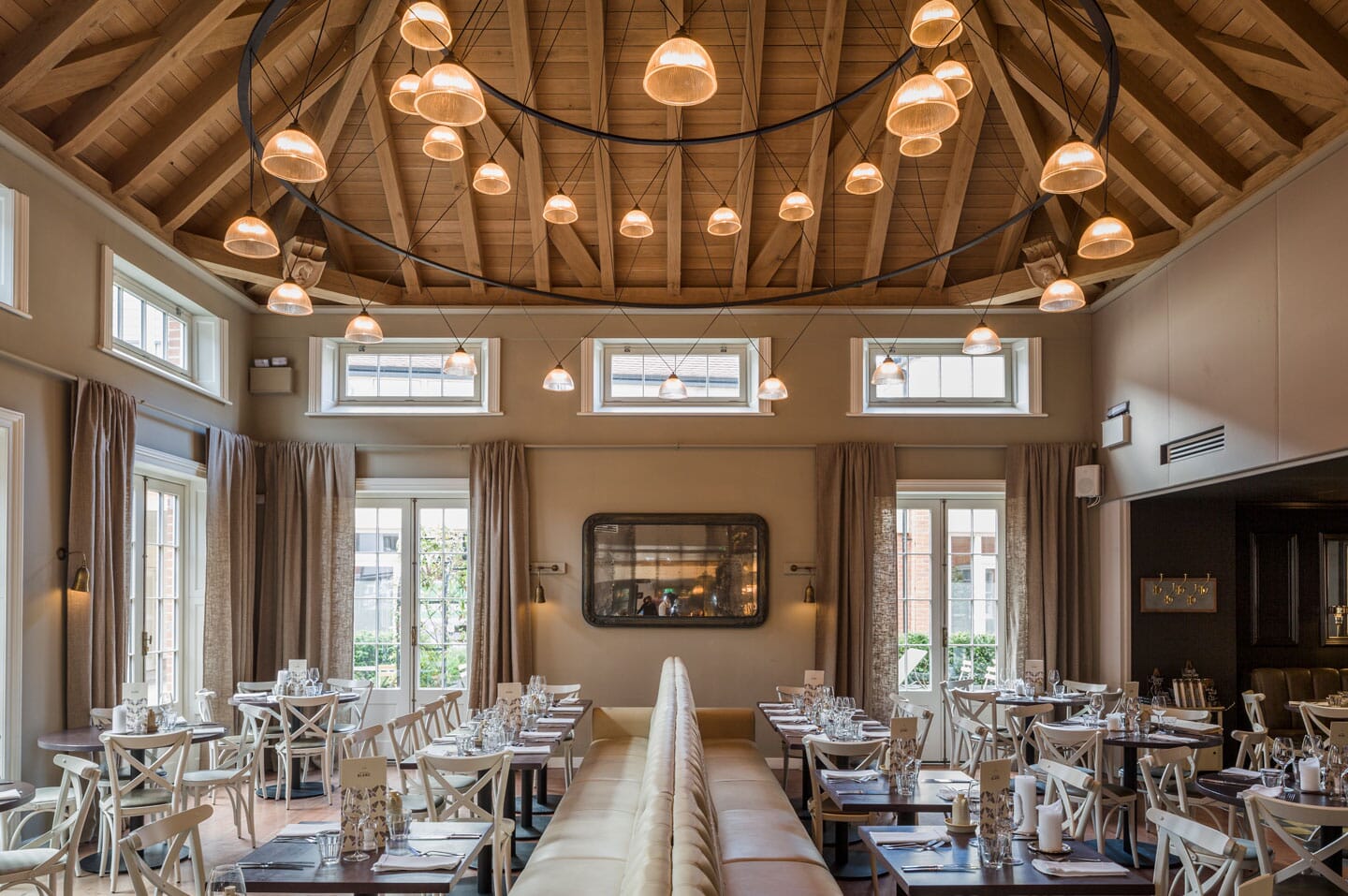
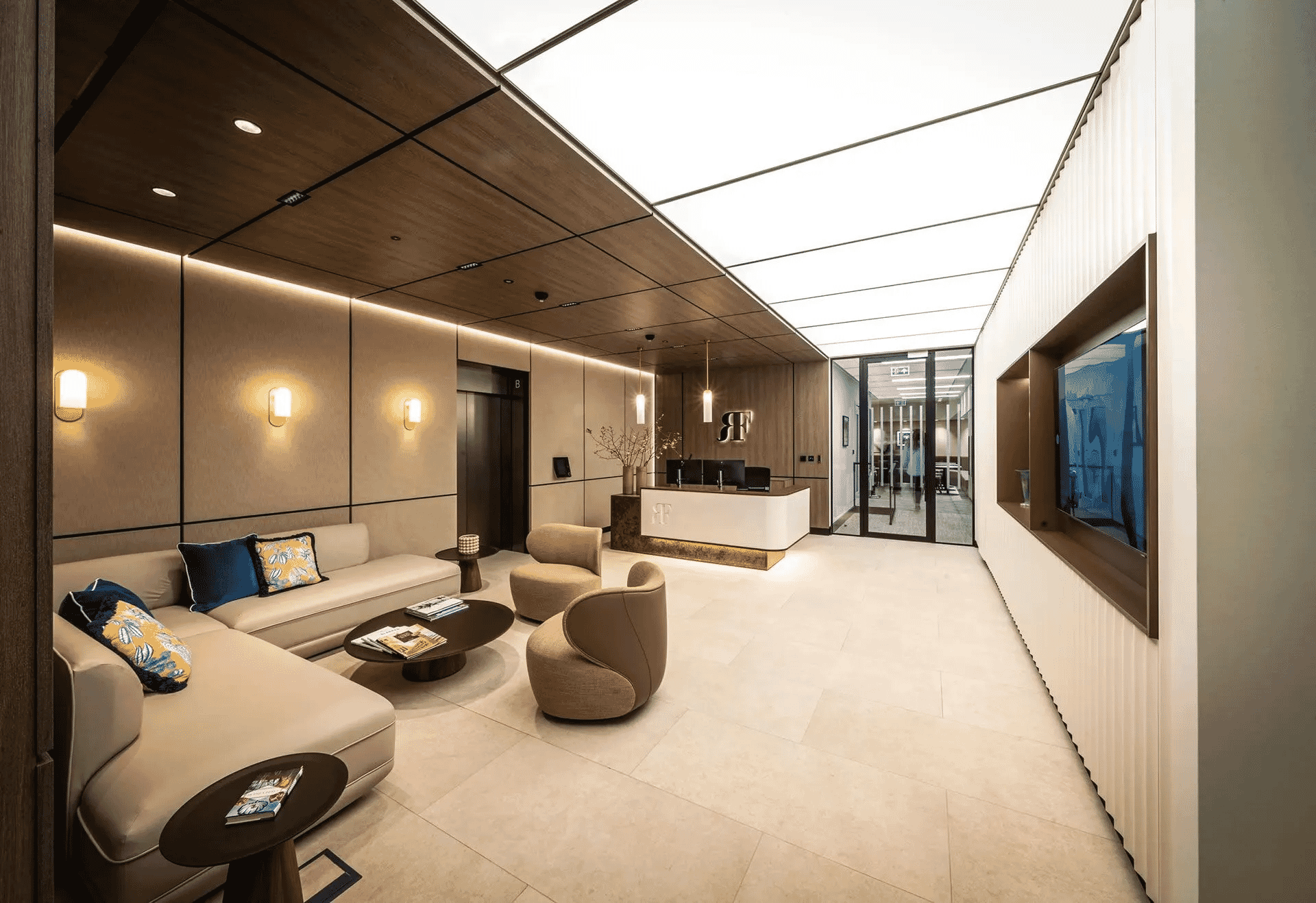
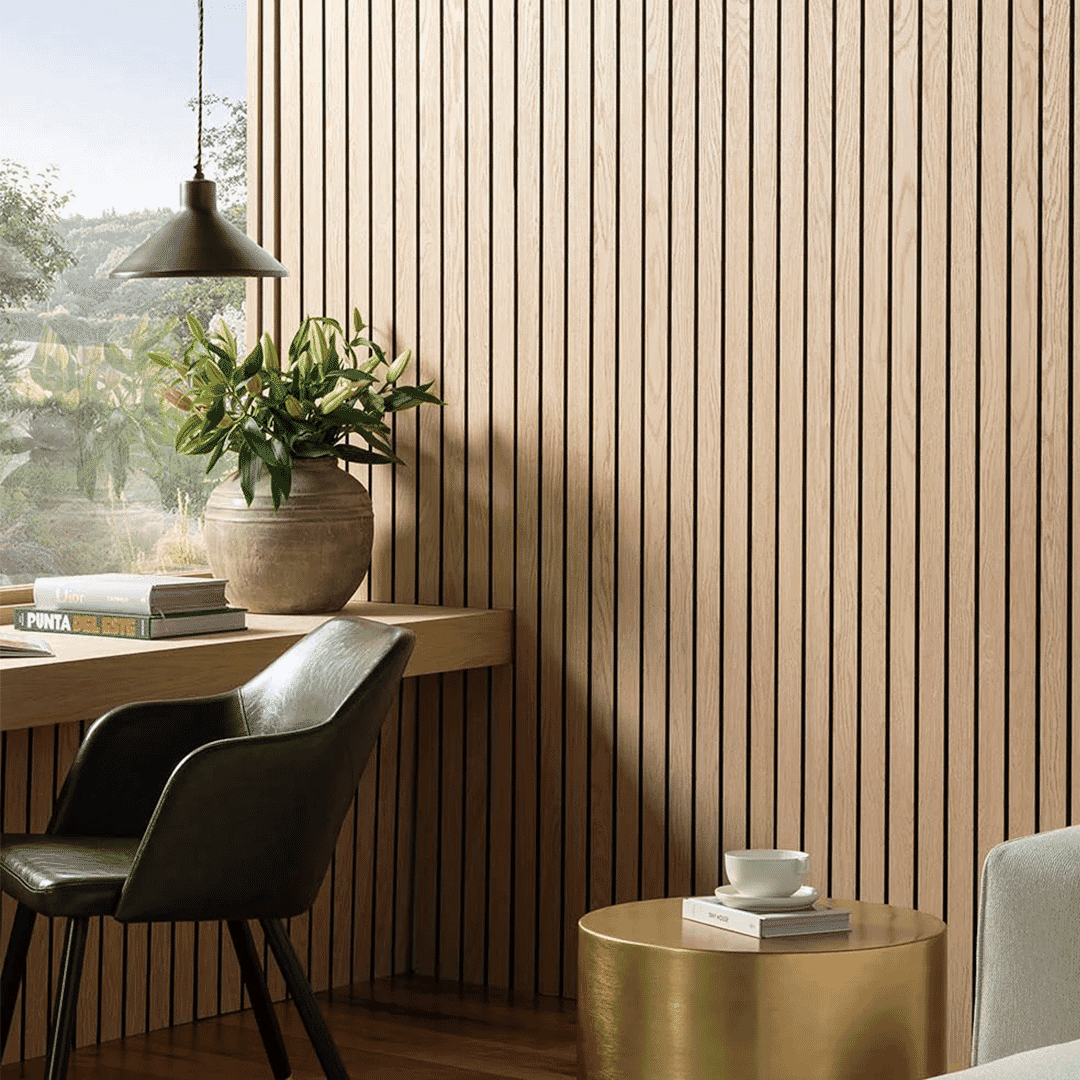
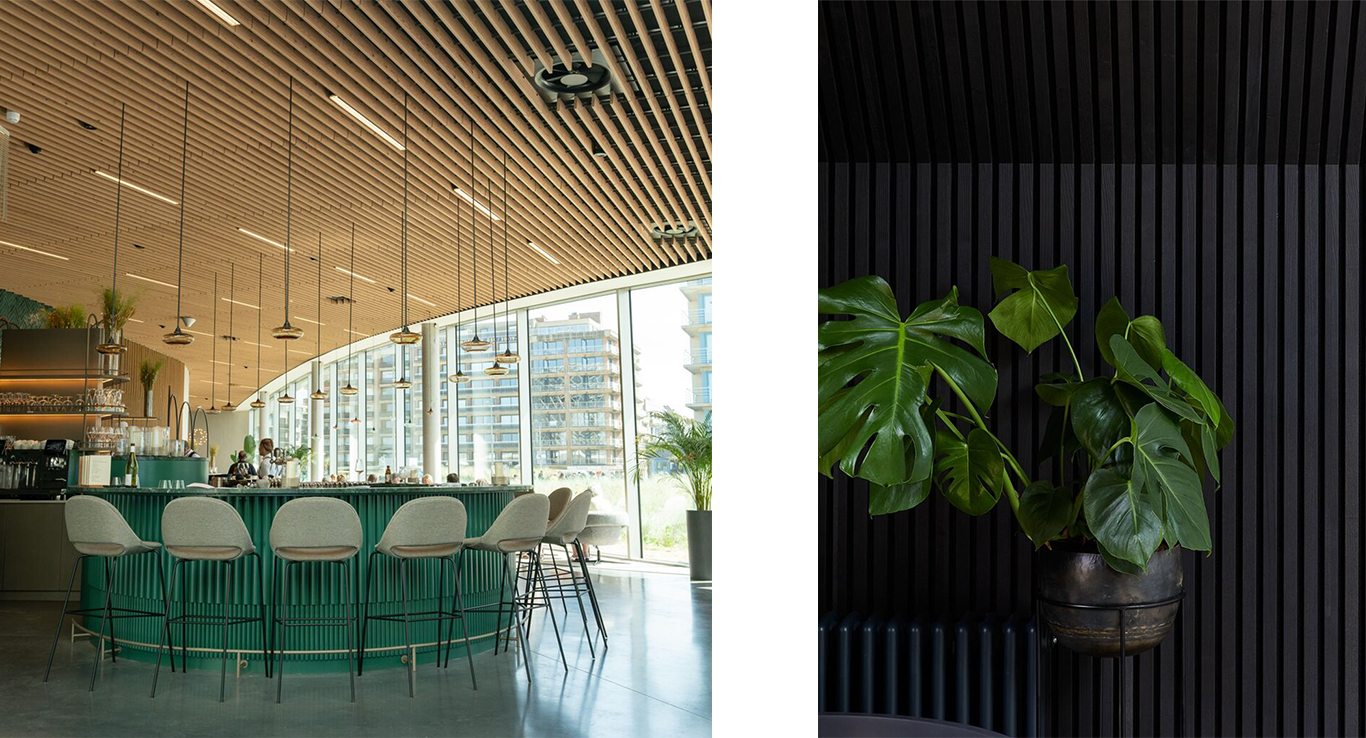
From a design perspective, timber brings warmth, texture and a sense of craftsmanship that few materials can replicate. It works well in high-end office fit-outs, hotel lobbies, restaurants and wellness spaces. Finishes range from natural oak and walnut to painted and stained options, and slat widths and spacings can be varied to achieve different aesthetics and acoustic effects.
Wood and Paper Pulp Acoustic Panels
Pulp acoustic panels are made from recycled wood and paper fibres, sometimes combined with natural binders that are compressed into rigid boards. The result is a surface that has an organic, slightly rough texture that is visually distinctive and adds depth to interior walls.
The structure of pulp material makes it naturally porous, which is what gives it its acoustic properties, reducing reflections and reverberation in the room. Performance is generally strongest in the mid-to-high frequency range.
One of the main draws of pulp panels is its sustainability. It typically uses recycled raw materials that require minimal processing compared to synthetic alternatives and have a low embodied carbon footprint. For projects pursuing BREEAM credits or other environmental certifications, this can be a meaningful consideration.
They suit spaces where a natural, tactile finish is part of the design intent. They’re not always the first choice for high-specification acoustic environments, but for the right project, they offer a combination of performance, aesthetics and environmental credentials that’s hard to match.
Glass Wool Acoustic Panels
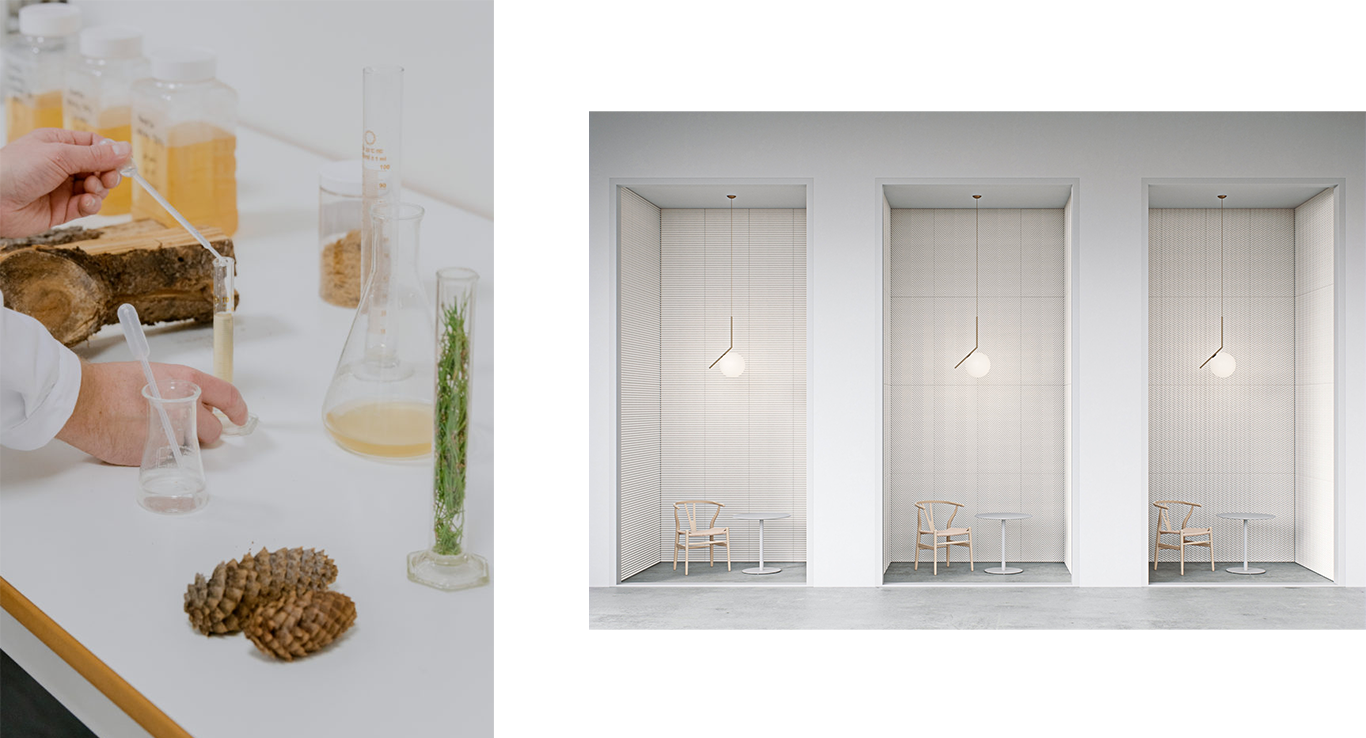
Glass wool is made by melting glass and spinning it into fine fibres, which are then bonded together to form a dense, semi-rigid material. It’s one of the most effective absorption materials available, and has been a trusted core component in acoustic panels for decades.
The denser the glass wool and the thicker the panel, the more effective it is, particularly at lower frequencies, which are generally harder to treat.
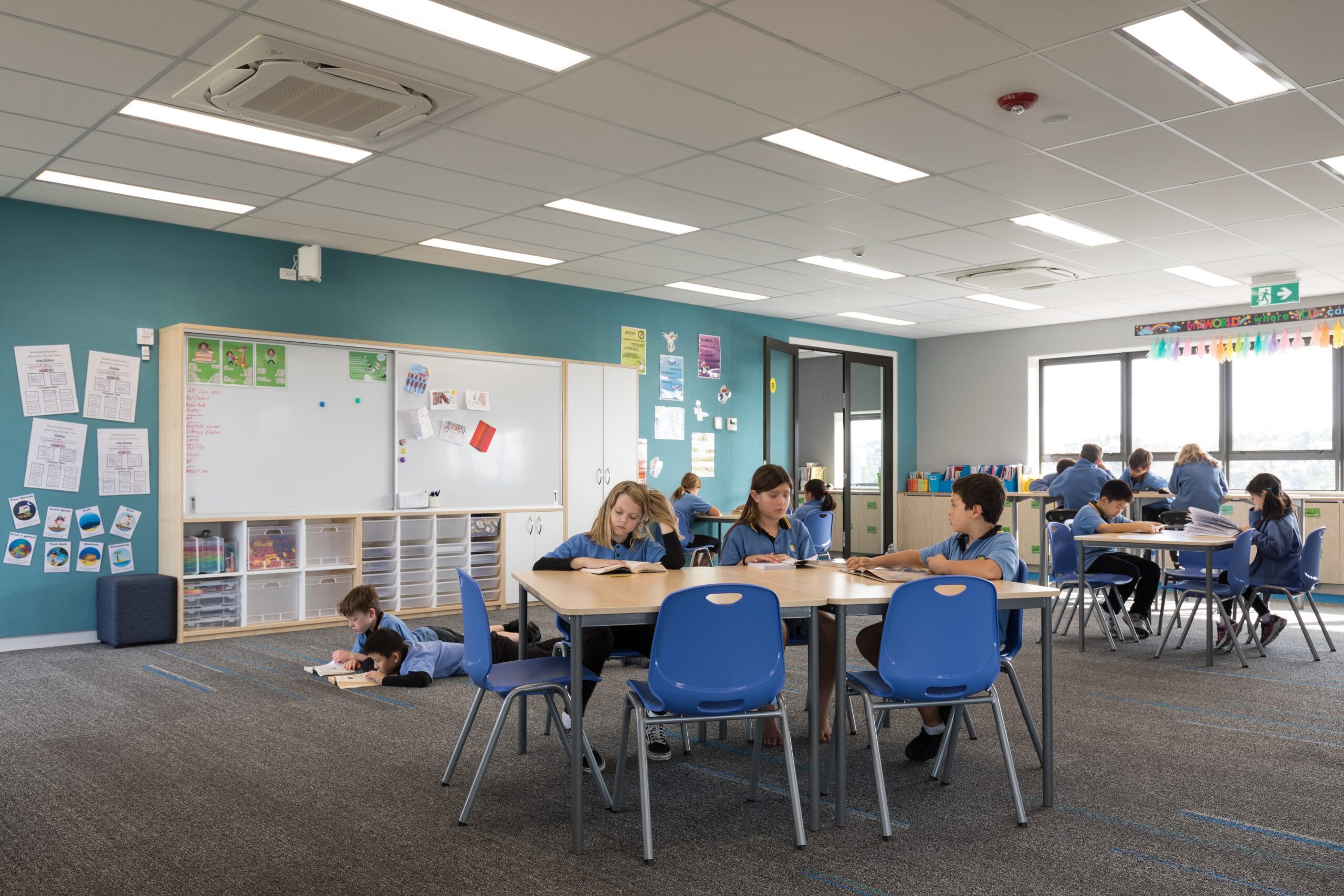
Glass wool achieves Class A sound absorption ratings, making it the material of choice for environments with high acoustic demands, such as large open-plan offices, conference centres, theatres, education spaces and healthcare facilities.
On its own, glass wool is not a finished product. It needs to be encased in something, usually fabric, timber, or a perforated facing, which is why it appears in so many different panel types.
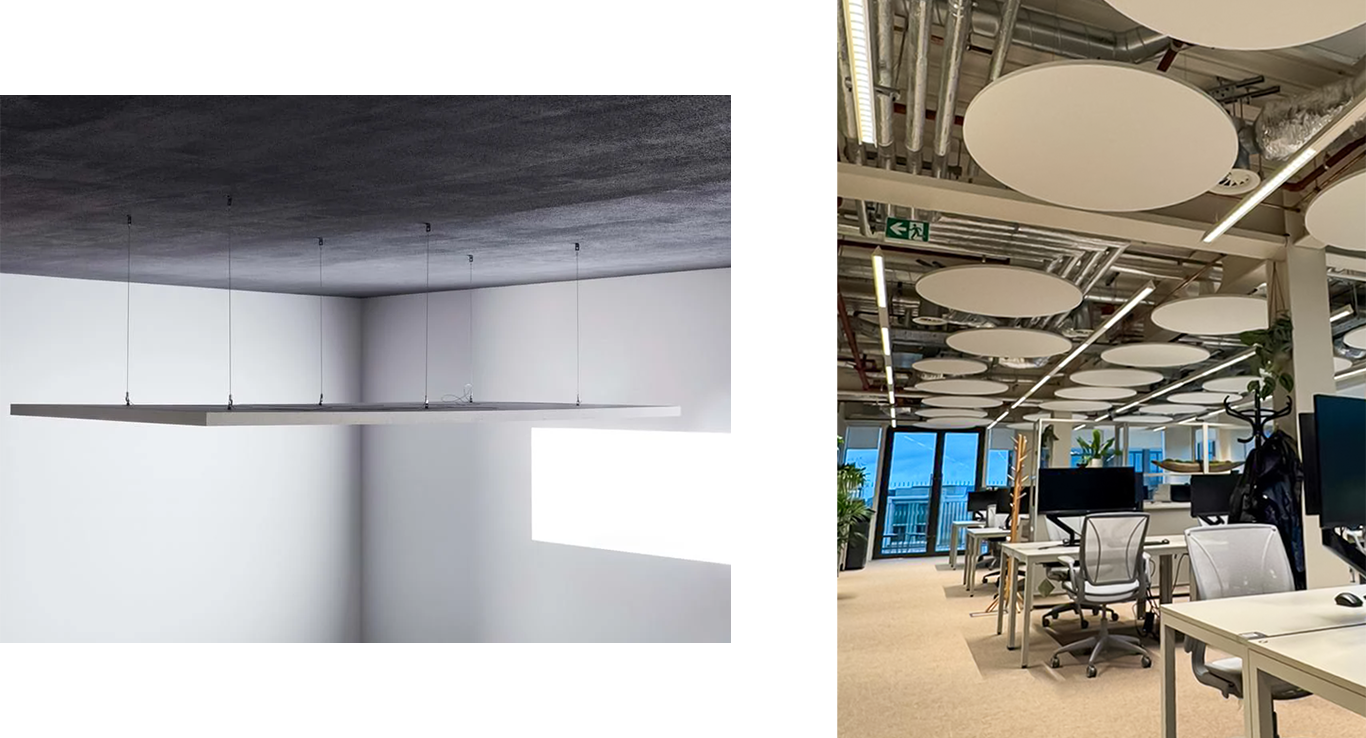
Fabric Acoustic Panels
Fabric panels are one of the most widely specified acoustic solutions in commercial interiors.
The fabric itself doesn’t do the acoustic work; it’s the core that absorbs the sound, usually glass wool or mineral wool. The fabric simply provides the finish, and because it’s acoustically transparent, it doesn’t interfere with the panel’s performance.
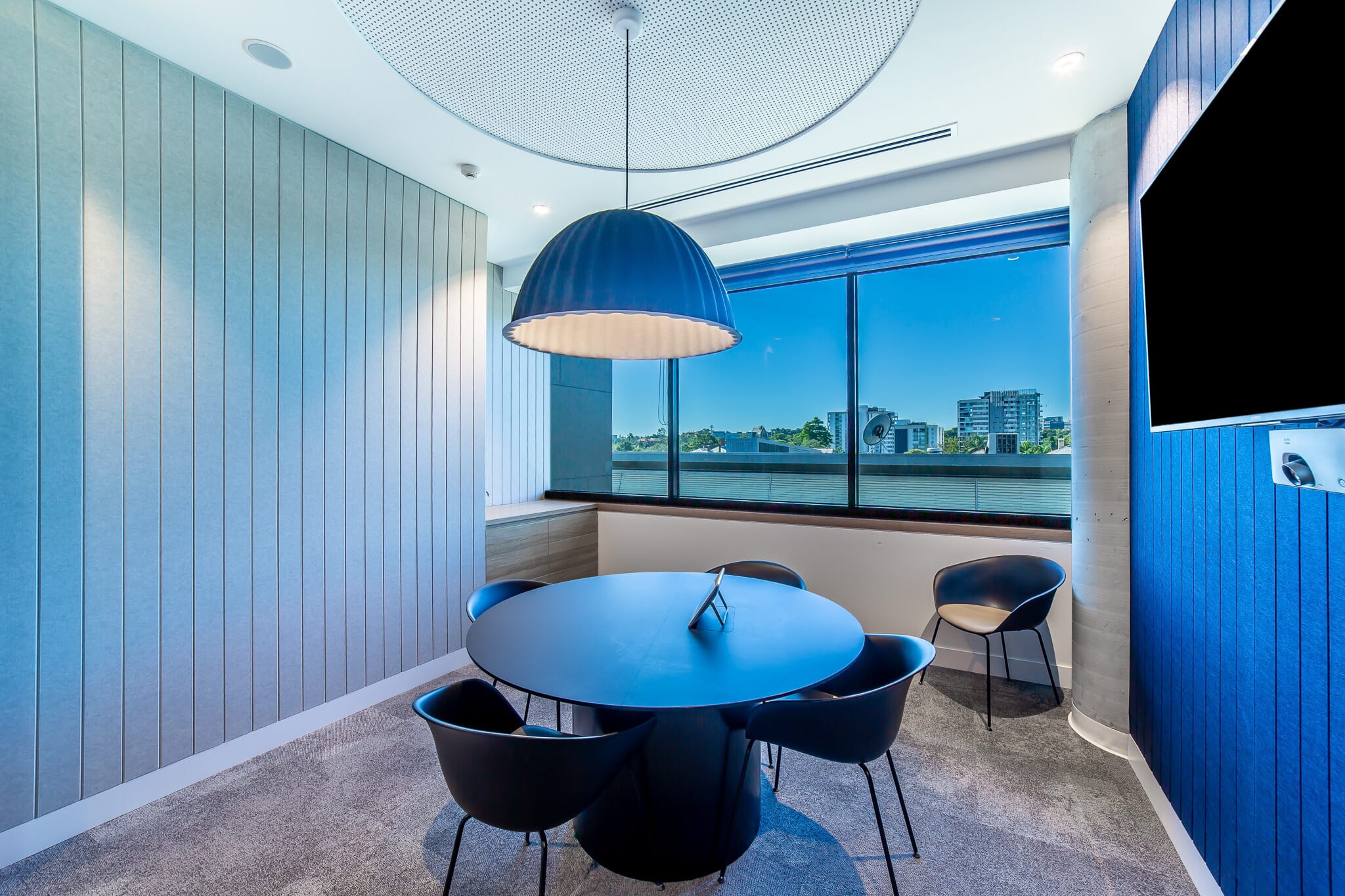
What this system offers is a high degree of customisation with no visible joins or fixings. The fabric can be specified in almost any colour or texture and the panels can be cut to any size or shape. This flexibility makes fabric-wrapped panels suitable for a wide range of environments, including offices, boardrooms, schools, healthcare facilities and hospitality spaces.
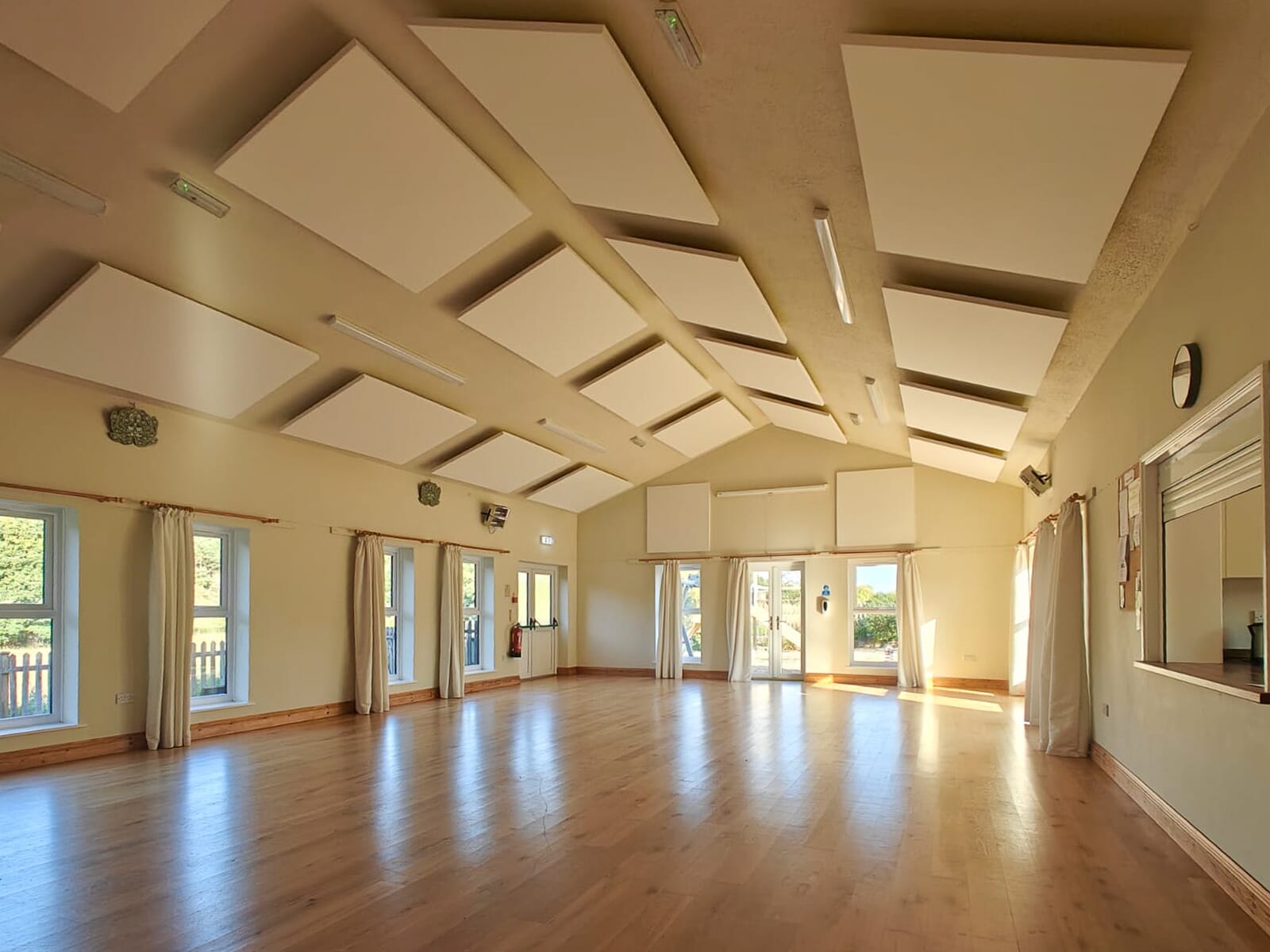
Fabric panels can achieve up to Class A acoustic performance and offer a level of finish that makes acoustic treatment feel like a considered design decision rather than an afterthought.
Acoustic panels by material