













4 Minute Read
7 Signs Your Office Acoustics Are Affecting Productivity (And What To Do About It)
Poor acoustics rarely announce themselves. They show up as distracted teams, meetings that drag, and a persistent afternoon slump nobody can explain. Here are the signs your office has an acoustic problem — and what you can do about it.

Mark Irwin
5th May 2026
Categories
Advice
Most office noise problems don’t announce themselves. There’s no alarm, no warning light. Instead, they show up as something else, a team that seems distracted, meetings that drag, a persistent mid-afternoon slump that nobody can quite explain.
The truth is, poor acoustics are one of the most common and least recognised barriers to productivity in modern workplaces. And because the effects are gradual, they often go unaddressed for years.
Here’s how to tell if your office has an acoustic problem, and what you can actually do about it.
7 Signs Your Office Acoustics Are Affecting Productivity
People gravitate to meeting rooms to make phone calls
If your team consistently books a meeting room just to take a call, the open-plan floor isn’t working acoustically. They’ve decided that the ambient noise makes focused conversation impossible. That’s not a behaviour problem, it’s a design problem.
Conversations carry across the entire floor
In a well-treated space, sound dissipates within a few metres. If you can clearly hear a conversation happening on the other side of the office, your reverberation time is too high. Hard surfaces, glass partitions, concrete floors, and exposed ceilings are almost certainly to blame.
Video calls require people to find quiet corners
Hybrid working has raised the acoustic bar considerably. If your team regularly hunts for somewhere quiet before joining a call, or if colleagues consistently sound muffled or echoey to remote participants, the office is failing to meet the demands of modern work.
People are wearing headphones all day
Noise-cancelling headphones have become standard kit in many offices and that’s partly due to a cultural shift. But if a significant portion of your team has them on for most of the working day, it’s worth asking whether they’re compensating for an environment that’s simply too loud to think in.
Focus work gets done first thing or last thing
If your high-concentration work happens before 9am or after 5pm, when the office is quiet, the acoustic environment during core hours is likely preventing deep work. This is a significant productivity cost that rarely shows up in any formal assessment.
Meeting fatigue sets in quickly
Cognitive load increases substantially in reverberant spaces. The brain works harder to filter, process and interpret speech when there’s too much ambient noise or echo. This is tiring in a way that’s difficult to articulate but easy to feel, especially after back-to-back calls or long meetings.
Complaints about echo or noise in meeting rooms
This one is direct. If people are flagging it, the problem is real and it’s probably been real for longer than the complaints have been coming in.
Why Open-Plan Offices Are Particularly Vulnerable
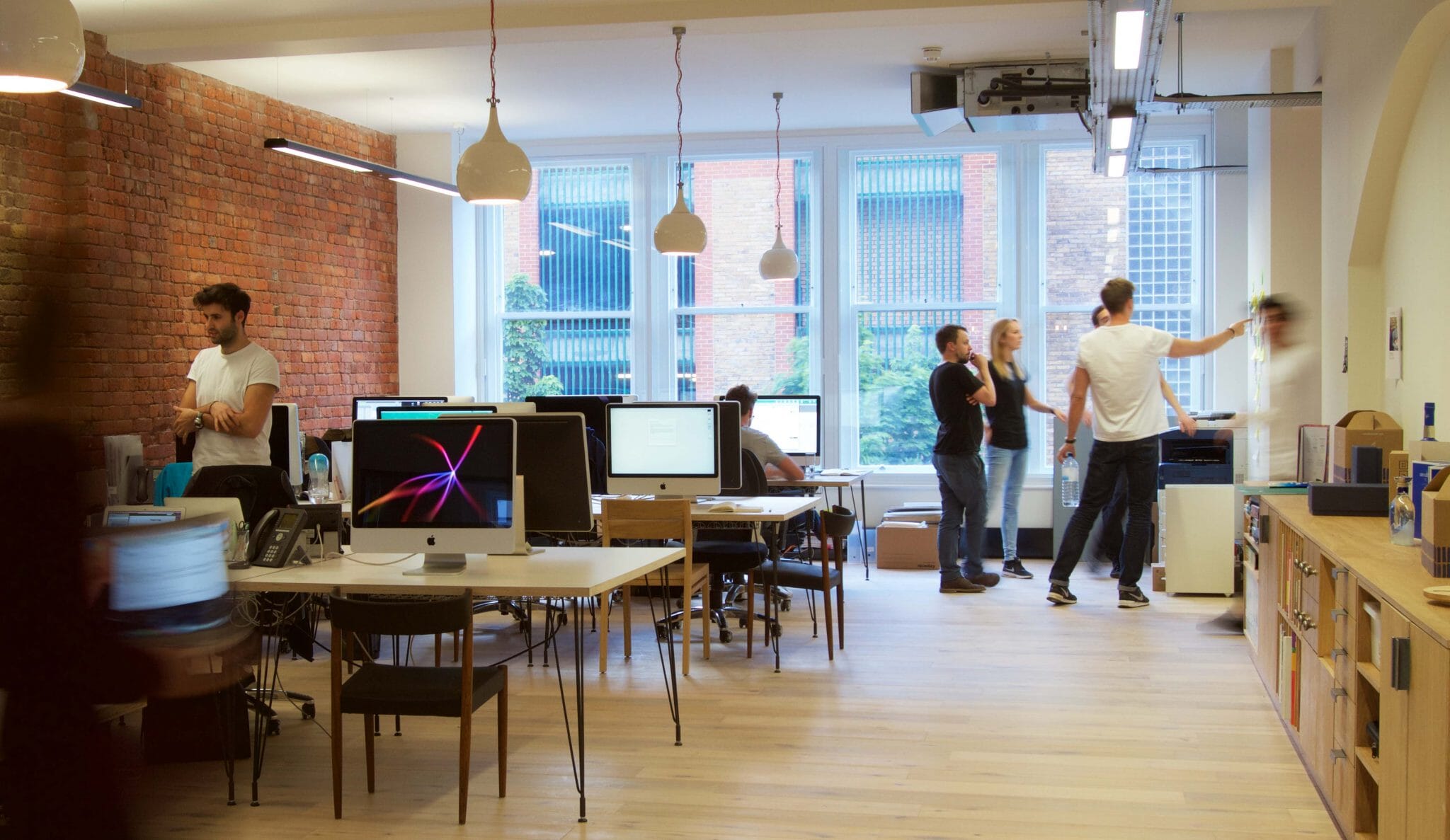
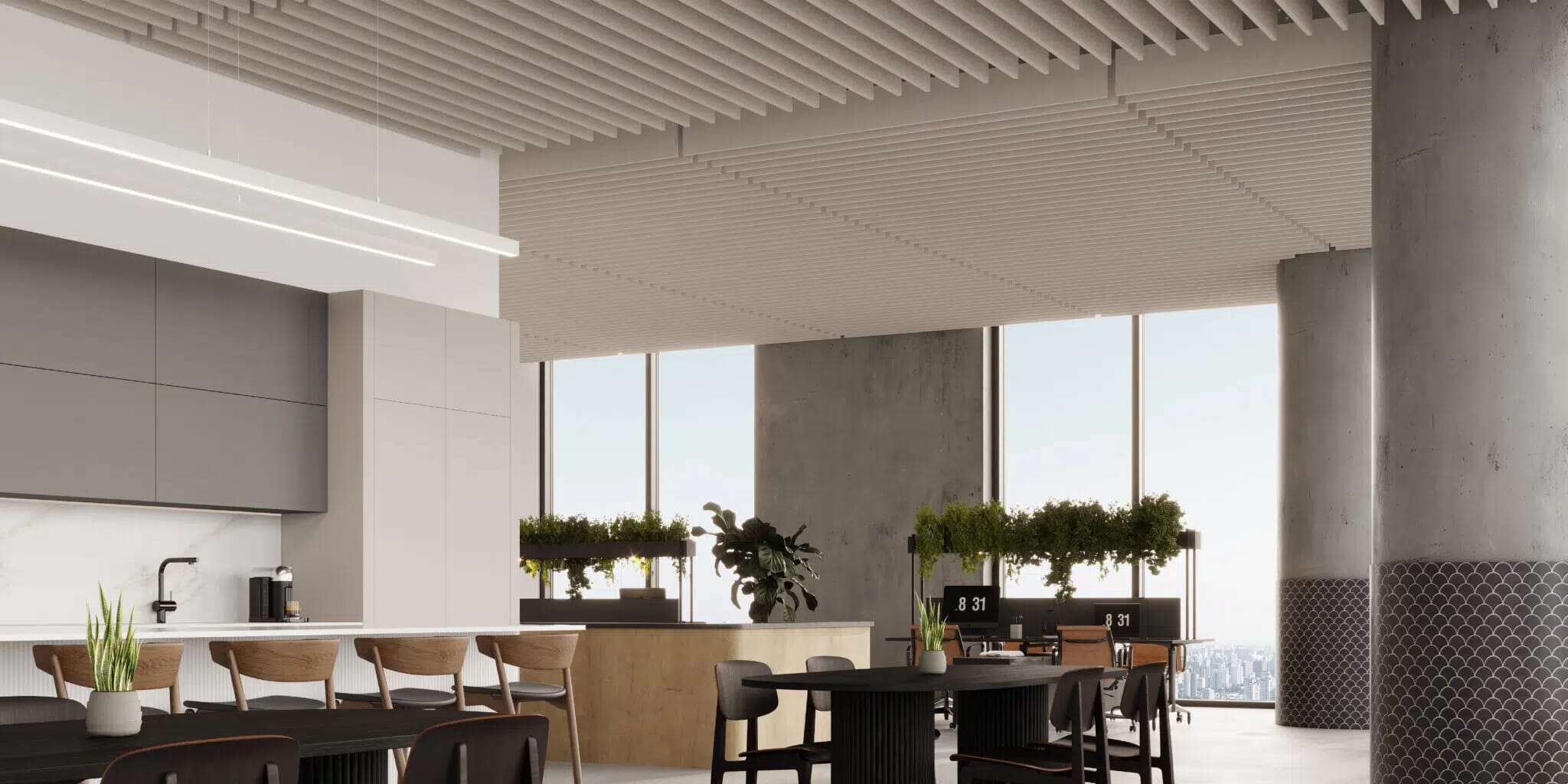
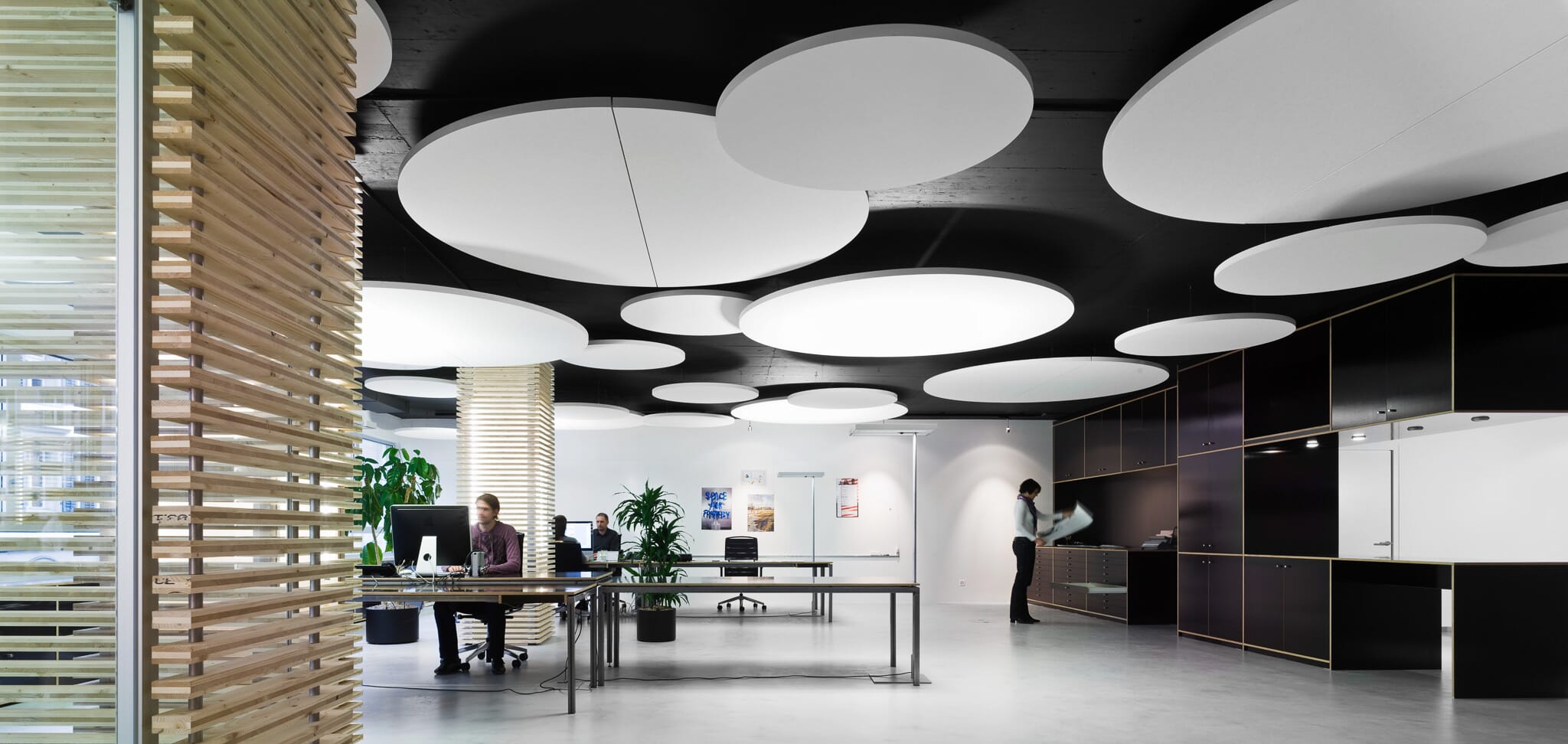
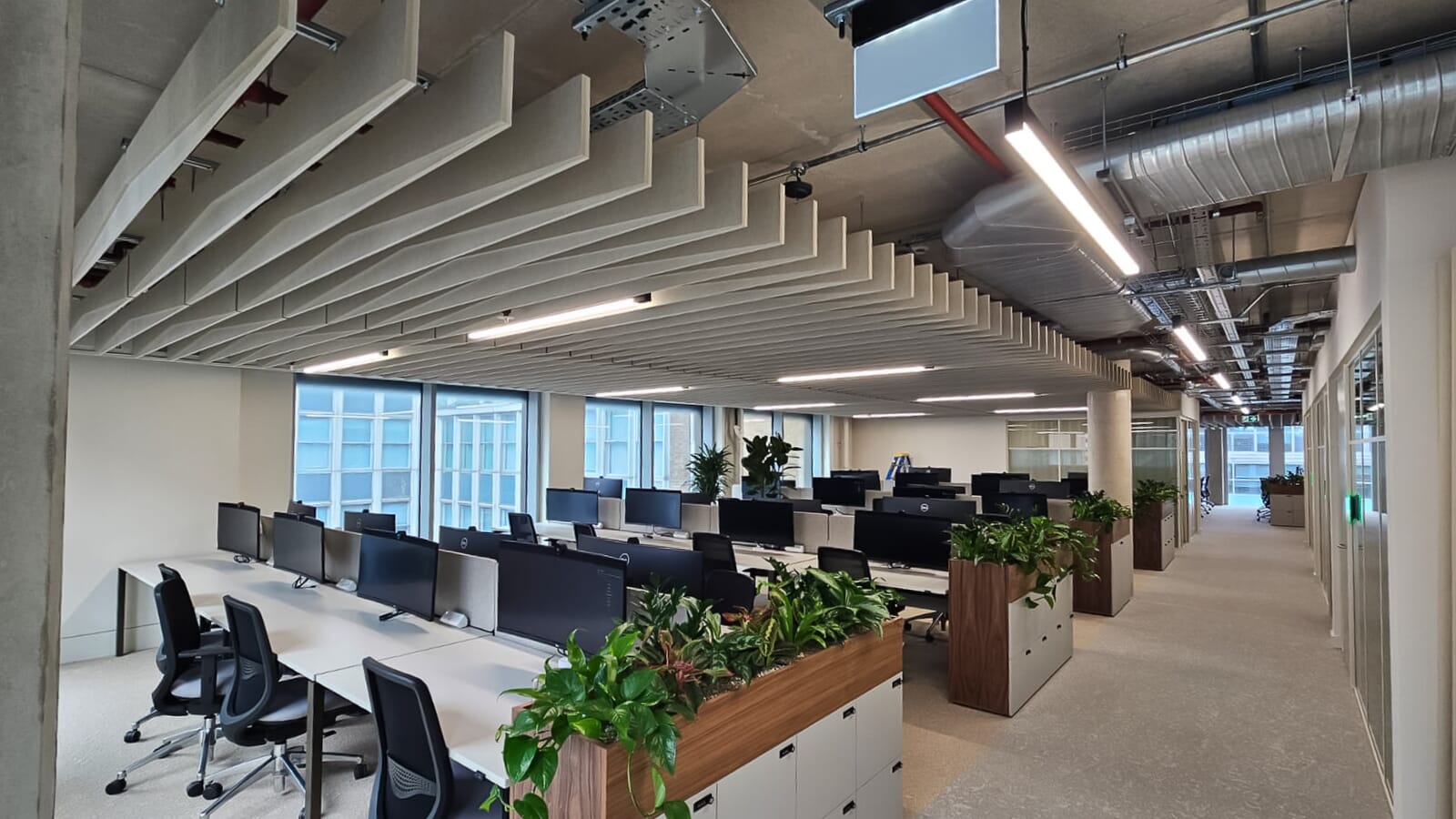
The contemporary office aesthetic, open ceilings, exposed concrete, glass walls, and polished floors, creates beautiful spaces that perform poorly acoustically. Every hard surface reflects sound rather than absorbing it, extending the time sound travels through a space (known as reverberation time, or RT60).
A typical open-plan office without acoustic treatment can have an RT60 of 1.5 seconds or more. For comfortable working, that figure should be closer to 0.6–0.8 seconds. The difference isn’t subtle, it fundamentally changes how easy it is to hold a conversation, concentrate or feel comfortable in a space.
What Does the Research Say?
The Leesman Index, one of the largest studies of workplace effectiveness, consistently identifies noise and acoustic privacy as the top reasons employees rate their workplace poorly. Separately, research from the University of California found that it takes an average of 23 minutes to regain full concentration after an interruption.
Acoustic treatment is not a luxury fit-out detail. For most modern offices, it’s the difference between a space that enables good work and one that quietly undermines it.
Article Author
Mark Irwin
Head of Marketing
5th May 2026