








6 Minute Read
The Resonics Guide to Call Centre Acoustics
Call centres get noisy fast, hurting call quality, privacy and staff focus. This guide to call centre acoustics explains how to reduce noise and create a calmer, more productive workspace.
Categories
Guide
TL;DR – Summary
Call centres are naturally busy, noisy environments and without the right acoustic setup, noise can quickly become overwhelming. High levels of chatter affect concentration, privacy and call quality, often triggering the Lombard effect, where everyone talks louder just to be heard.
How to fix Call Centre Acoustics?
With the right mix of acoustic treatments, including ceiling panels, wall panels and sound-masking, along with smart layout choices, call centres can become more comfortable, focused and customer-friendly.
Guide to Call Centre Acoustics
Anyone who’s tried to hold a phone call next to someone else doing the same knows how distracting it can be. It’s just as frustrating for the person on the other end of the line, struggling to hear over background chatter. Call centres are naturally busy environments, and without the right acoustic setup, noise can quickly get out of hand.
High levels of conversational noise not only affect concentration and privacy but can also compromise call quality and customer satisfaction. The good news is, with targeted acoustic treatments and a few layout adjustments, call centres can be transformed into more comfortable, productive spaces.
Why Acoustic Design Matters in Call Centres
The goal in any contact centre is to strike the right balance: enough ambient noise for privacy and comfort, but not so much that it disrupts conversations. Overly quiet spaces can feel sterile and unnatural, while excess noise leads to fatigue and distraction.
The four main elements that shape a call centres environment are: Surface finishes, phone operator density, office layout and mechanical services. Together, these influence whether a workspace feels calm and controlled or noisy and chaotic.
The Ideal Call Centre Environment
An effective acoustic environment typically includes:
- A comfortable reverberation time that doesn’t amplify background noise.
- A sensible operator density ensures phone conversations don’t clash or compete.
- Moderate ambient noise to help mask nearby conversations and support speech privacy.
- An overall noise level of 50–60 db, which supports concentration without being too quiet.
Identify the Problem
Before making changes, it’s important to get a clear picture of the current acoustic conditions.
Here are a few simple steps to help diagnose potential issues:
- Listen back to recorded calls. Check for any distracting background sounds, like nearby voices or equipment noise.
- Measure decibel levels. Use a sound meter app to get a rough reading. The ideal level is 50–60 db.
- Speak with staff. Ask operators if they feel distracted or struggle to maintain privacy during calls.
- Review customer feedback. Look out for mentions of call clarity or complaints about poor sound quality.
Reducing Noise in a Call Centre
Our brains can only process around 1.6 conversations at a time. In a noisy call centre, competing voices become overwhelming, making it harder for operators to manage their calls.
The natural response to noise is to speak louder, which then encourages others to do the same. This Lombard effect creates a loop of rising volume.
To break that cycle, focus on reducing sound reflections:
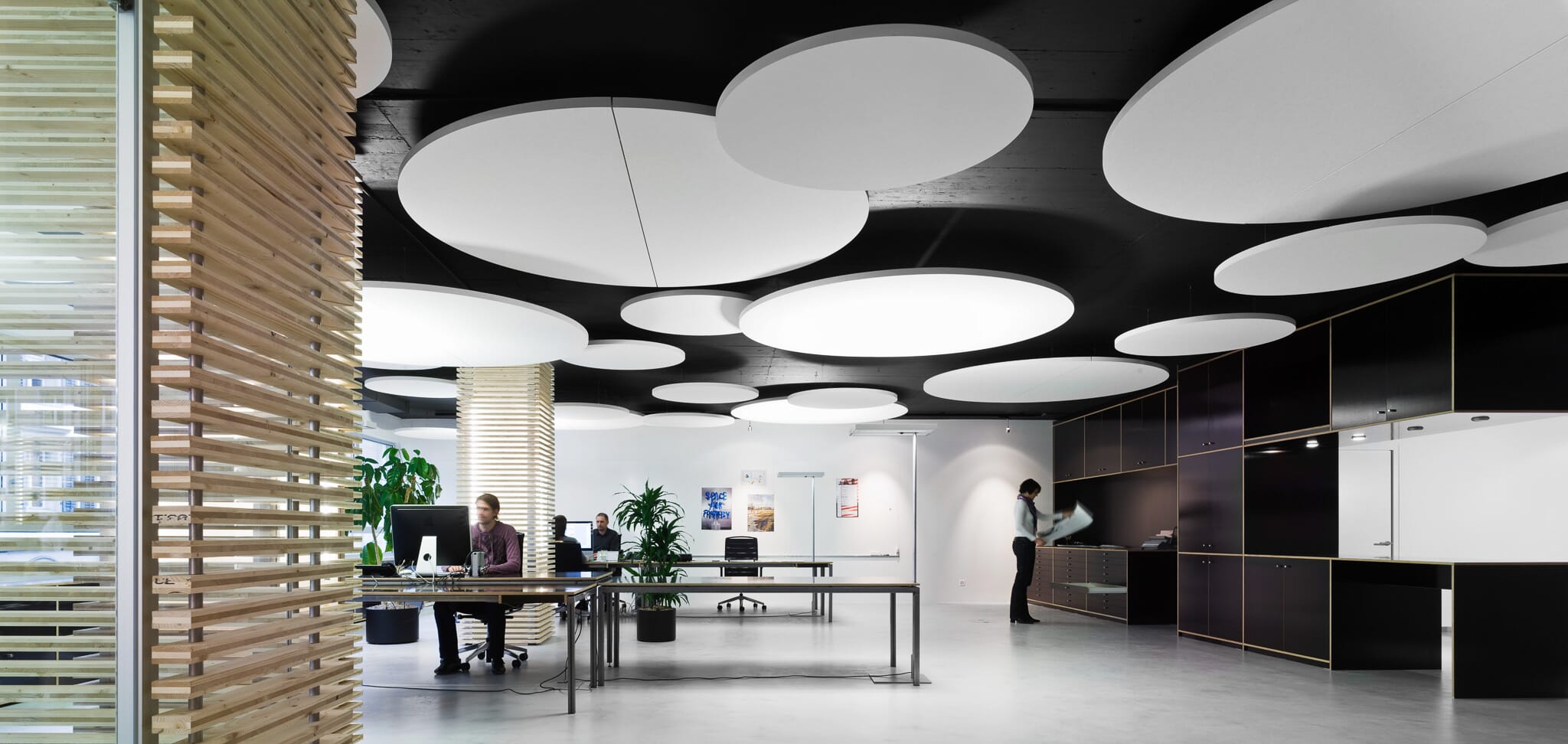
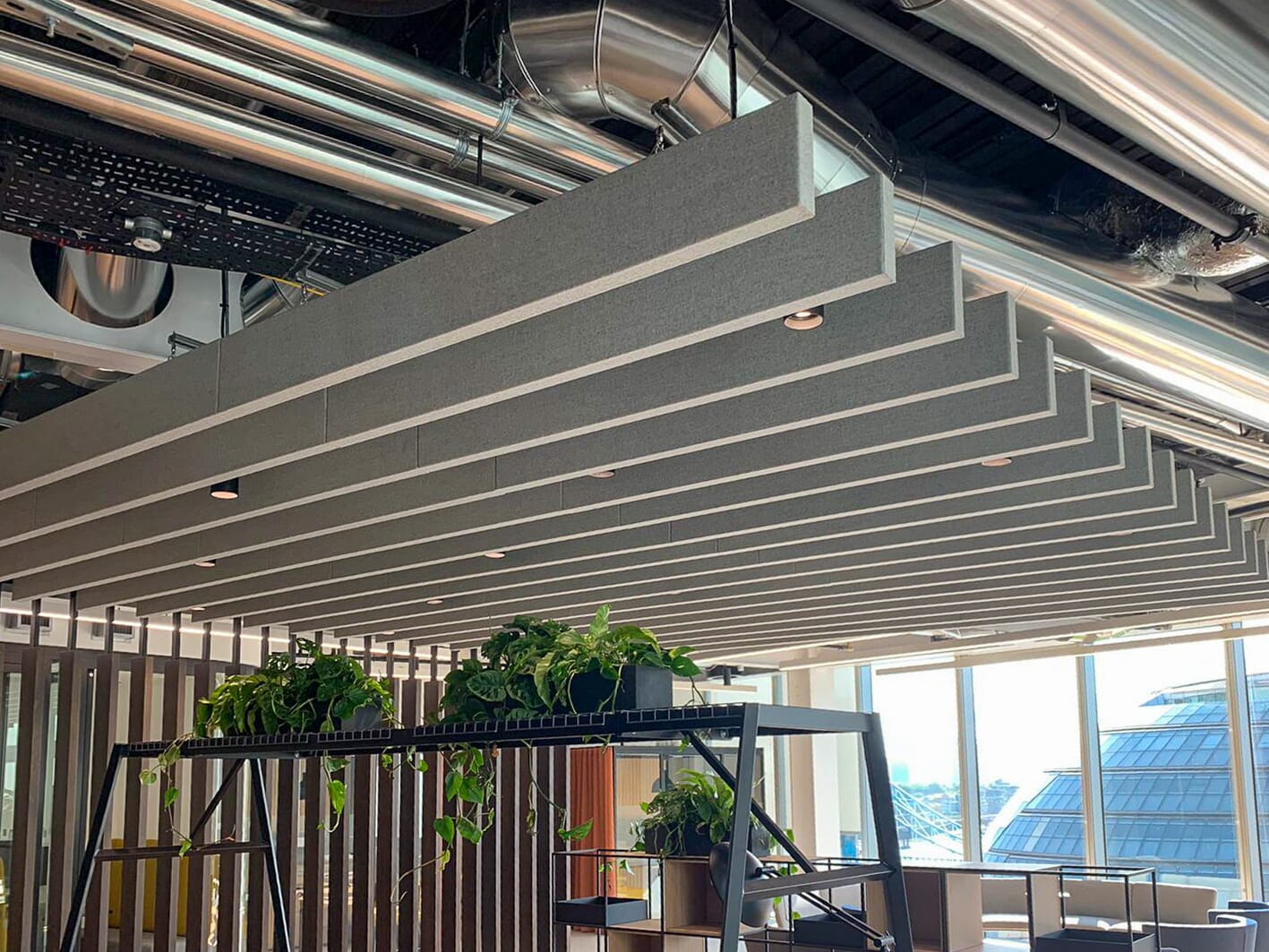
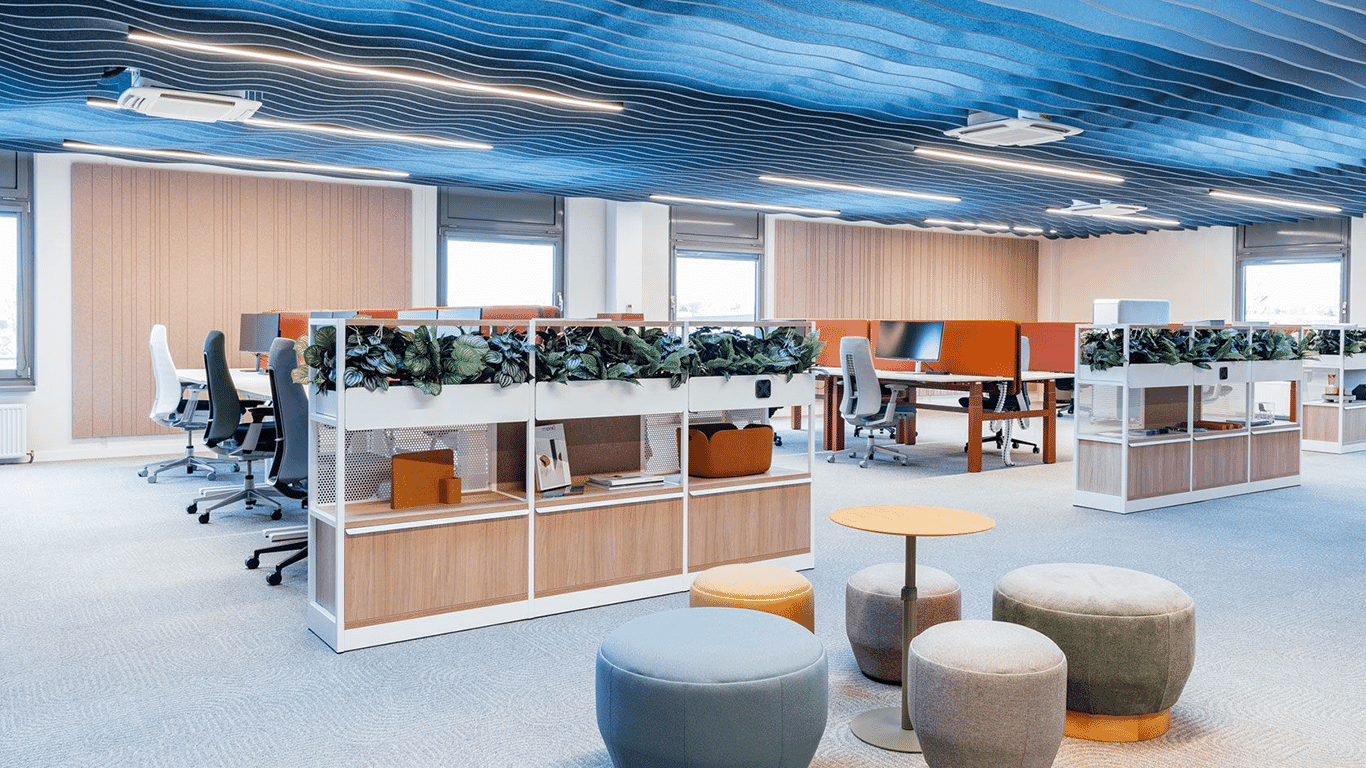
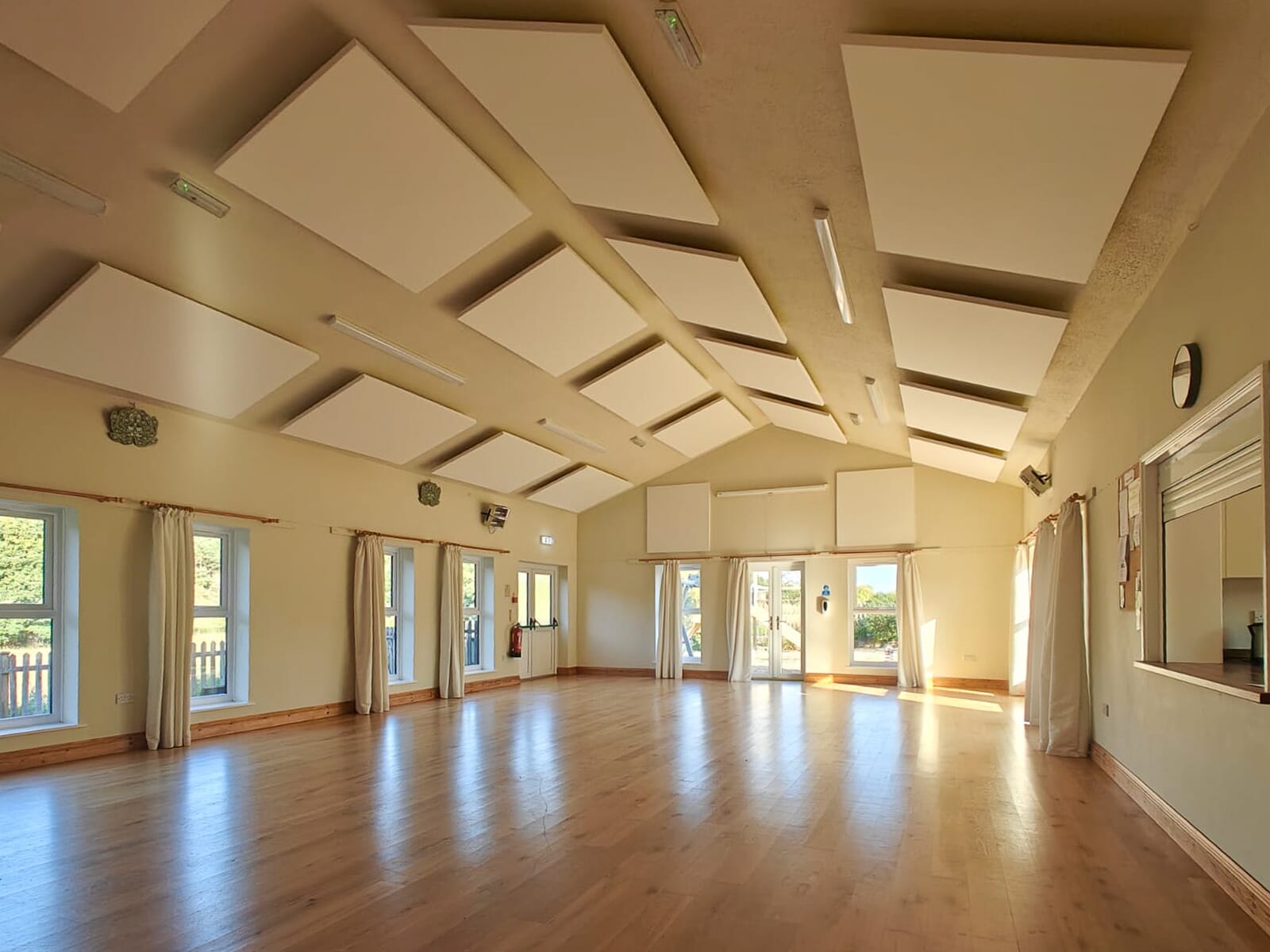
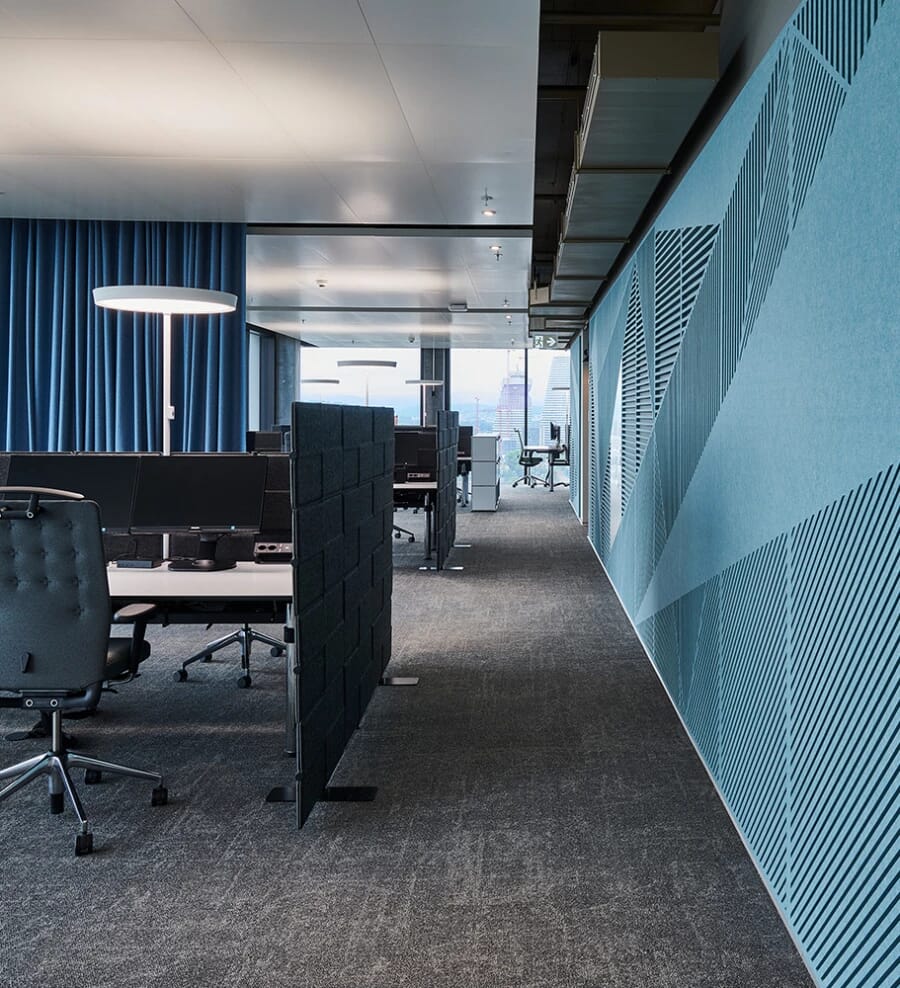
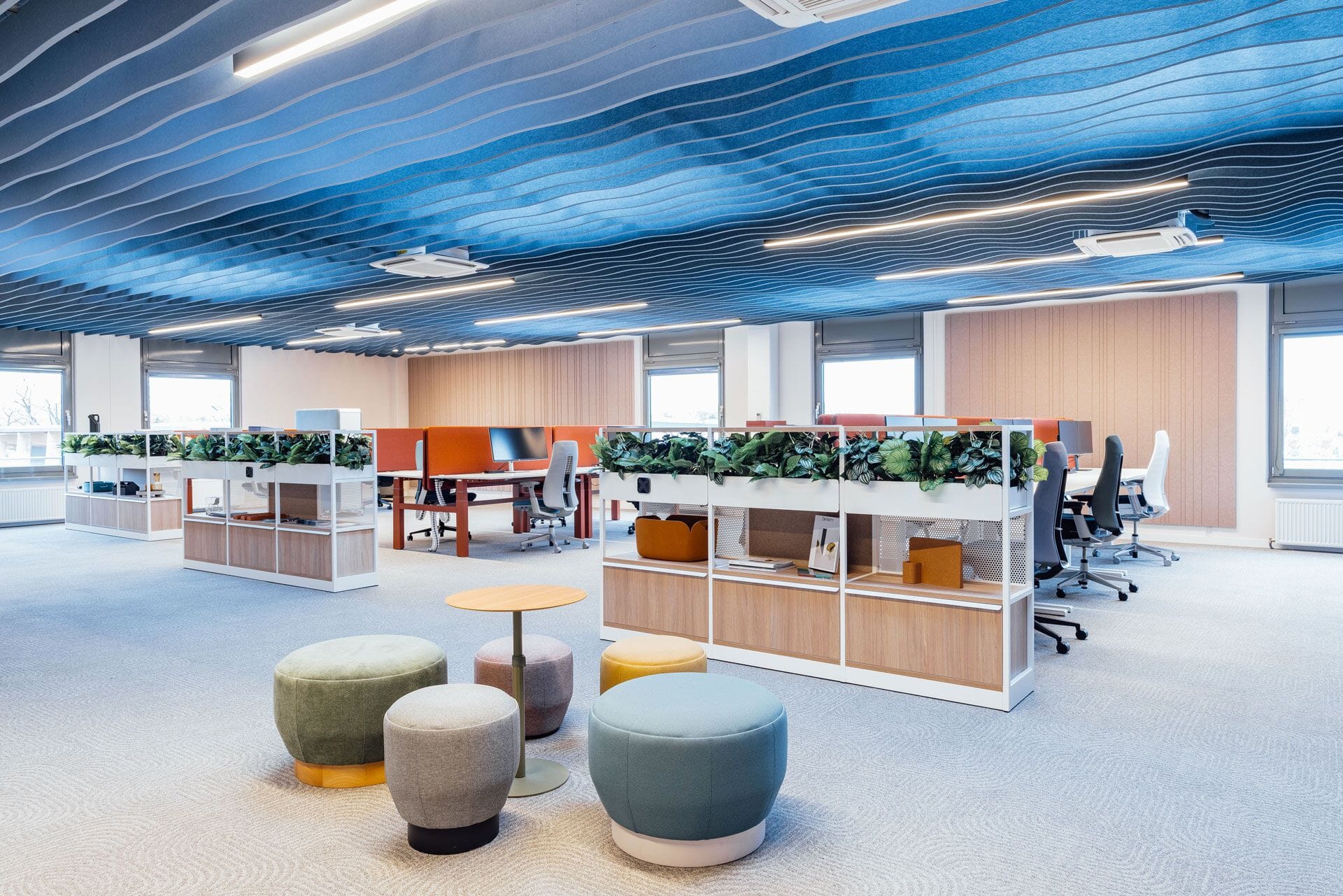
- Treat the ceiling. Ceilings are the largest surface area in most offices and the most effective place to start. Covering 50–60% with Class A absorbers can significantly reduce noise levels. For larger or noisier spaces, increase coverage accordingly.
- Add acoustic wall panels. Acoustic wall panels help control reflections and reduce echo. Corners are especially prone to reflection, so target those areas first. Use Class A or B absorbers, depending on the ceiling treatment.
- Soften glass surfaces. Glass reflects sound easily, adding acoustic curtains or thick fabric drapes help to reduce reverberation.
- Incorporate angled walls. If you’re designing or refurbishing the space, angled walls can disrupt direct sound reflections and help diffuse noise.
Controlling Environmental Noise
Reducing non-conversational noise sources can help keep the workspace focused and comfortable.
- Relocate meetings. Hold meetings in dedicated, soundproofed rooms, away from the calling floor.
- Add indoor plants. Plants help reduce noise, improve air quality and support well-being. See our guide to biophilic design for more.
- Remove unnecessary equipment. Relocate noisy appliances like printers or fridges away from operators.
- Lay carpet. Carpets won’t offer the same performance as acoustic panels, but it does help absorb some sound and reduce footfall noise.
- Use sound masking. Introducing a gentle background sound, similar to airflow, helps cover disruptive noises and maintain speech privacy.
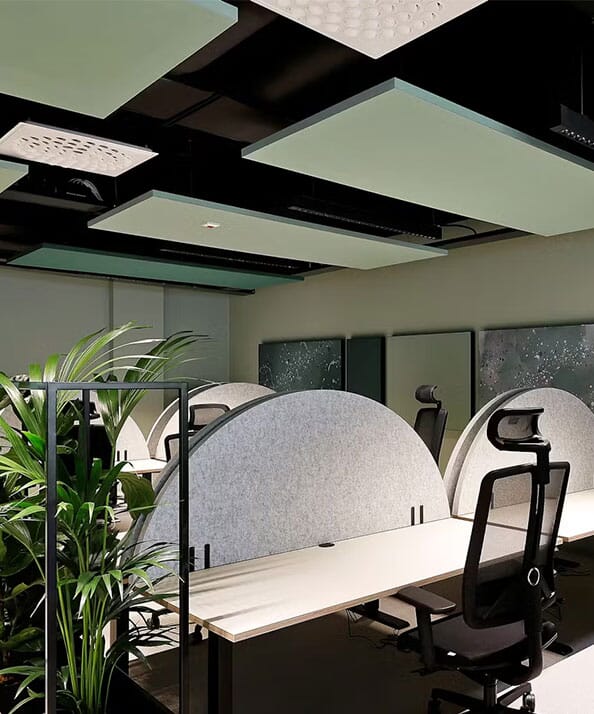
Case Study – Acoustic Treatment in a Busy Call Centre
We were contacted by a housing company experiencing significant noise issues in their call centre. The space housed up to 35 phone operators at once and the constant chatter made it difficult for employees to concentrate, maintain speech privacy and call quality.
Anyone who’s tried to have a phone conversation next to someone else doing the same knows how frustrating it can be. Now imagine that… multiplied by thirty.
To get a clear picture of the acoustic environment, we arranged a site visit. Measurements were taken while the centre was fully operational, capturing real-time reverberation times and sound levels.
| Position | Condition | Pre-treatment | |
| Decibels | Number of Calls | ||
| 1 | Operational | 65.5 | 35 |
| 2 | Operational | 65.6 | 31 |
| 3 | Operational | 64.7 | 35 |
| 4 | Operational | 58.3 | 32 |
| Average (Log) | 64.3 | 33 | |
The Solution
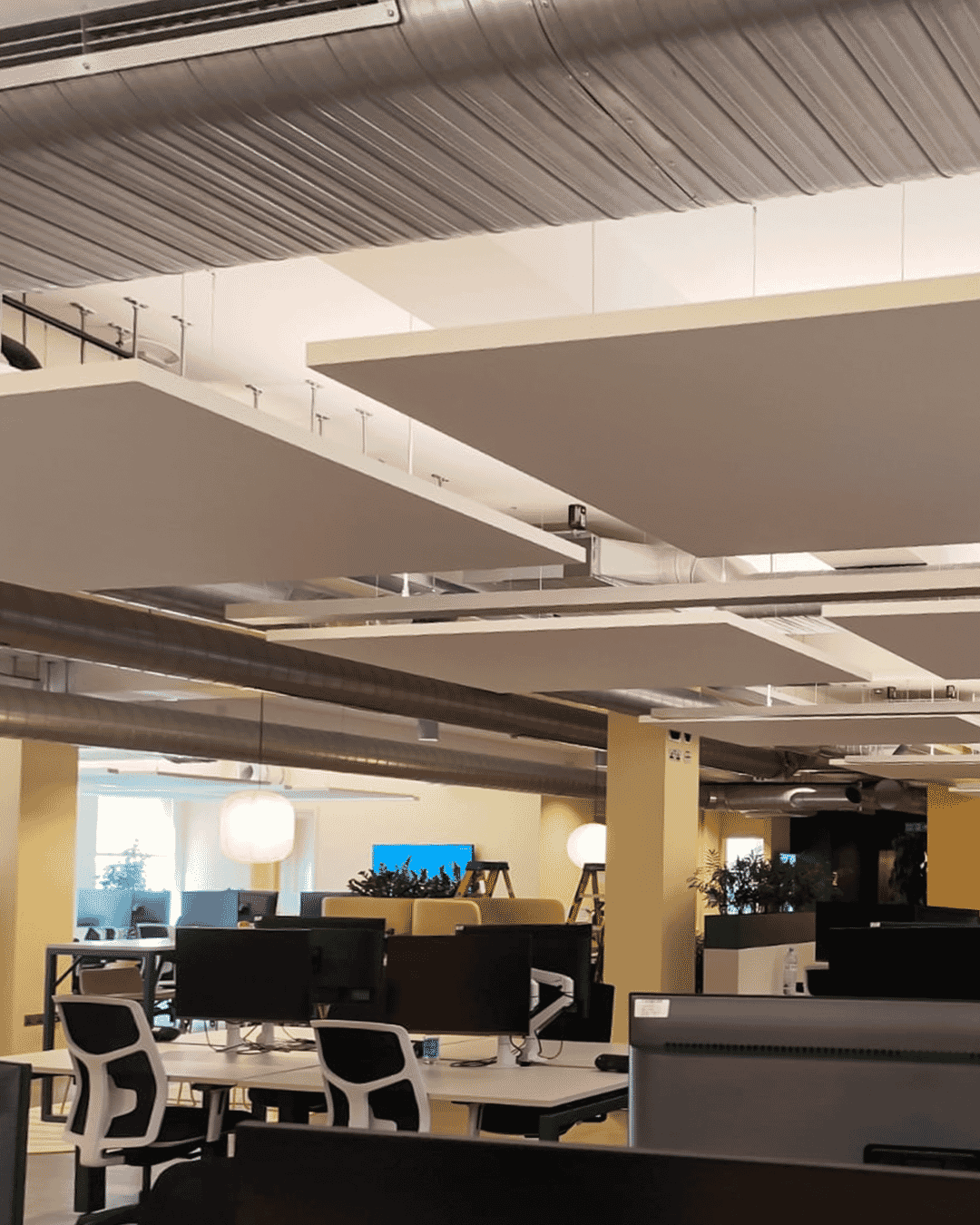
After analysing the results, we specified a combination of Ecophon Solo hanging acoustic panels and Ecophon Akusto-C wall panels. Both are Class A sound absorbers, designed to reduce reverberation and improve speech intelligibility in noisy environments.
Once the installation was complete, we returned to carry out post-treatment testing.
| Position | Condition | Post-treatment | |
| Decibels | Number of Calls | ||
| 1 | Operational | 53.4 | 30 |
| 2 | Operational | 54.7 | 32 |
| 3 | Operational | 50.3 | 32 |
| 4 | Operational | 49.7 | 25 |
| Average (Log) | 52.5 | 30 | |
The outcome? A significant improvement.
Average noise levels dropped by 11.8 dB.
In acoustics, this is a major shift—typically, a 10 dB reduction is the threshold where people perceive sound as being half as loud.
Final Thoughts
Small changes can make a big difference.
Call centre acoustics don’t need to be perfect to be effective, but they do need to be intentional. With a few thoughtful upgrades, you can create a workspace that supports focus, reduces stress and improves the experience for both staff and customers.
Looking for help with your call centre acoustics? Resonics offer tailored solutions and on-site surveys to help you find the right balance for your space.